Source Right Front Turn Signal Light for Cars, Trucks, and Motorcycles
Compare 30 available Right Front Turn Signal Light options from verified suppliers. Buyers can evaluate specifications like IP67 rating, 12V DC voltage, and Epistar LED chips to find suitable units for automotive and motorcycle applications.
Key considerations
Products List


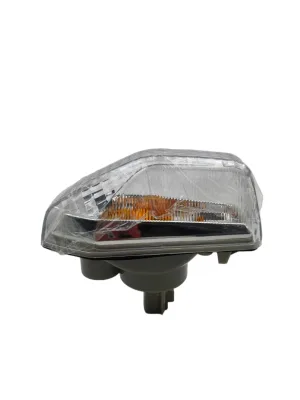


Comprehensive Sourcing Guide
Strategic Sourcing Guide for Right Front Turn Signal Lights
Technical Specifications and Component Analysis
When sourcing a Right Front Turn Signal Light for B2B procurement, the primary objective is to align component specifications with the operational requirements of the intended vehicle platform. The market offers a diverse array of units, but a rigorous analysis of the technical attributes is essential to ensure compatibility and performance. Based on current market observations, the electrical architecture for these components frequently centers on a 12V DC power source, although some variants support a dual-voltage configuration of 12V/24V to accommodate both passenger and heavy-duty commercial vehicles. The power consumption for standard units is typically observed at 3W, which suggests a design optimized for energy efficiency while maintaining sufficient luminosity for safety compliance.
The optical performance is dictated by the LED chips and the housing materials. High-frequency procurement data indicates that Epistar LED chips are a prevalent choice, known for their reliability and consistent color temperature. The emitting color for these units is generally described as a full range, implying versatility in color output or specific spectral tuning for visibility. The light source configuration often involves an array of 30 LEDs, which provides a broad illumination pattern necessary for turn signals. To protect these sensitive components, the encapsulation is frequently fully sealed by epoxy resin, ensuring resistance to moisture and dust ingress. The housing material is commonly black, offering a neutral aesthetic that fits various vehicle designs, while the lens material is often specified as PMMA (Polymethyl methacrylate) or the diffuser as Polycarbonate. Both materials are selected for their high impact resistance and optical clarity.
Physical dimensions are a critical constraint in the sourcing process. Observed specifications reveal a wide variance in size, with some units measuring approximately 103mm by 51mm, while others are more compact at 99.6mm by 37mm. These dimensional differences directly impact the mounting hardware and the available space on the vehicle's fender or bumper. The installation method is typically screw-based, requiring precise alignment of mounting holes. Buyers must verify that the specific model number, such as HR088LED-11 or RJ-RACE series variants, matches the physical footprint of the existing fixture to avoid costly retrofitting. The product condition is universally listed as brand new, ensuring that the procurement process yields fresh inventory with full functional integrity.
Compliance and Certification Verification
Navigating the regulatory landscape is perhaps the most critical aspect of sourcing automotive lighting components. Non-compliant parts can lead to shipment seizures, legal liabilities, and vehicle registration issues. The supply chain for right front turn signal lights is characterized by a mix of certifications, including CCC (China Compulsory Certification), CE, E-mark, and ISO9001. The presence of CCC certification is a significant indicator of compliance with Chinese domestic safety standards, while E-mark certification is essential for vehicles operating within the European Economic Area. It is imperative for buyers to verify that the specific unit carries the relevant certification for the target market, as the absence of an E-mark, for instance, would render the part illegal for road use in Europe.
The standards associated with these products vary by origin and intended application. Some units are explicitly certified under ECE standards, which governs the photometric and mechanical requirements for motorcycle and automotive lights. Other products may reference ISO9001, which certifies the manufacturer's quality management system rather than the product itself, though this is a strong indicator of a reliable production process. The product origin is frequently noted as Guangdong or Hebei in China, regions known for their automotive parts manufacturing clusters. However, the place of origin alone does not guarantee compliance; the certification documents must be reviewed to ensure they cover the specific model number being procured.
Buyers should also be aware of the distinction between product-specific certifications and material certifications. For example, some listings may cite ISO9001 in the context of the material (ABS) used in the housing, while others cite it for the entire motorcycle light assembly. The "1" standard mentioned in some contexts requires further clarification to ensure it refers to a recognized safety or performance standard rather than an internal code. When evaluating a supplier, the request for valid, up-to-date certification certificates that match the batch of goods is a non-negotiable step in the due diligence process.
Cost Drivers and Pricing Dynamics
The pricing structure for right front turn signal lights is influenced by a complex interplay of factors, including material costs, certification fees, and order volume. The observed price range in the market spans from $0.10 to $65.17 USD, a variance that reflects differences in quality, brand reputation, and technical complexity. The lower end of this spectrum typically corresponds to generic, unbranded units with standard Epistar chips and basic Polycarbonate or PMMA lenses. These units often have minimal packaging and may lack extensive certification documentation. Conversely, the higher price points are associated with specialized models that feature advanced optical designs, robust epoxy sealing, and comprehensive certification packages like E-mark or CCC.
Order volume plays a pivotal role in determining the final unit cost. The Minimum Order Quantity (MOQ) ranges widely from 1 unit to 20,000 units. Suppliers offering an MOQ of 1 are typically catering to sample requests or small-scale repair shops, commanding a higher per-unit price to cover administrative and logistical overhead. In contrast, bulk orders approaching the 20,000-unit threshold can unlock significant economies of scale, reducing the cost per unit substantially. However, the buyer must balance the cost savings against the capital expenditure required for such large inventories.
Additional cost drivers include the packaging specifications. Units shipped in standard cartons are generally less expensive than those packaged in individual white boxes, which are often required for retail distribution or high-end aftermarket applications. The inclusion of a warranty also impacts the price; products with a "Yes" warranty status often carry a premium to cover potential return costs and liability. Furthermore, the complexity of the model number, such as the RJ-RACE series, may imply a specialized design that commands a higher price compared to generic replacement parts. Buyers should analyze the total cost of ownership, including shipping, duties, and potential inventory holding costs, rather than focusing solely on the unit price.
Typical Applications and Vehicle Compatibility
Right front turn signal lights are integral components for a wide range of vehicle types, from passenger cars to heavy-duty trucks and motorcycles. The specific application dictates the required specifications, particularly regarding voltage and mounting configuration. The 12V DC specification is standard for most passenger vehicles and light trucks, while the 12V/24V dual-voltage capability is crucial for sourcing parts for commercial trucks and buses that operate on 24V electrical systems. The "Motorcycle Light" designation found in some product attributes indicates that these units are designed to meet the specific vibration and environmental standards required for two-wheeled vehicles.
The purpose of these lights is often explicitly stated as "for replace/repair," highlighting their role in the aftermarket maintenance sector. This suggests that a significant portion of the market demand comes from vehicle owners and repair shops looking to restore original functionality to aging fleets. The "Brand Name: SAIC Yuejin" reference points to a specific OEM or aftermarket brand, indicating that some units are designed as direct replacements for specific vehicle models produced by this manufacturer. For buyers sourcing for fleet maintenance, identifying the exact model number (e.g., C00179679) is essential to ensure compatibility with the specific vehicle chassis.
The operating temperature range of -40°C to +80°C is a critical specification for vehicles operating in extreme climates. This wide range ensures that the turn signal lights remain functional in harsh winter conditions or hot desert environments, preventing failure due to thermal stress on the LED chips or the epoxy encapsulation. The "Full Range" emitting color suggests that these lights are versatile enough to be used in various lighting conditions, providing clear visibility to other road users. Whether for a commercial fleet in Hebei or a private vehicle in Guangdong, the application requirements must be matched precisely with the product's technical capabilities to ensure safety and regulatory compliance.
Supplier Evaluation and Quality Assurance
Evaluating suppliers for right front turn signal lights requires a multi-faceted approach that goes beyond simple price comparison. The first step is to verify the supplier's ability to provide consistent product quality, as evidenced by their adherence to standards like ISO9001. While ISO9001 certifies the management system, it is a strong proxy for the consistency of the manufacturing process. Buyers should request evidence of this certification and verify its validity for the specific product line. Additionally, the "Brand New" and "New" condition attributes listed in product descriptions should be confirmed through physical inspection of samples to ensure that no refurbished or used parts are being passed off as new.
Quality control measures should be a central part of the supplier evaluation. The "Fully Sealed by Epoxy Resion" (note: likely a typo for Resin) encapsulation is a key quality indicator, as it protects the internal electronics from moisture and dust. Buyers should inspect samples for the integrity of this seal, looking for any signs of leakage or incomplete curing. The "IP Rating" of IP67 is a critical specification for water and dust resistance, meaning the unit is dust-tight and can withstand temporary immersion in water. Verification of this rating through third-party testing reports is highly recommended, as claims of IP67 protection must be substantiated to ensure the lights will survive in real-world conditions.
The warranty status is another vital factor in supplier selection. A "Yes" warranty indicates that the supplier stands behind their product, offering protection against defects. This reduces the financial risk for the buyer and suggests a higher level of confidence in the product's durability. However, the terms of the warranty, including the duration and coverage, must be clearly defined in the contract. The "Standard Packing" and "Individual White Box" options also reflect the supplier's attention to detail; proper packaging is essential to prevent damage during transit, especially for fragile components like LED lenses.
Long-Term Procurement and Lifecycle Management
Sourcing right front turn signal lights is not merely a transactional activity but a strategic decision that impacts long-term operational efficiency. The expected life of these components is typically cited as 50,000 hours, a figure that significantly exceeds the average lifespan of many other automotive electrical components. This longevity translates to reduced maintenance costs and fewer replacement cycles over the life of the vehicle fleet. However, buyers must remain vigilant about the consistency of this performance claim, as actual lifespan can be influenced by operating conditions, voltage stability, and thermal management.
Inventory management is a key consideration for long-term procurement. The wide range of MOQs, from single units to 20,000 units, allows buyers to tailor their inventory strategy to their specific needs. For large fleets, a bulk purchasing strategy with a high MOQ can secure lower unit costs and ensure a steady supply of replacement parts. For smaller operations, a just-in-time approach with lower MOQs may be more appropriate to minimize holding costs. The "Selling Units: Single item" attribute suggests flexibility in purchasing, allowing buyers to acquire parts as needed without committing to large stockpiles.
The "Condition: Brand New" and "Warranty: Yes" attributes provide a baseline for quality assurance, but buyers should also consider the availability of spare parts and the supplier's ability to support the product over time. The "Standard Packing" and "Carton" options indicate that the supplier has established logistics channels, which is crucial for maintaining a reliable supply chain. As vehicle models evolve, the demand for specific model numbers like HR088LED-11 or RJ-RACE-203 may fluctuate. Buyers should establish long-term relationships with suppliers who can adapt to these changes and provide updated specifications as needed.
Comparative Analysis of Product Attributes
To facilitate a clearer understanding of the available options, the following table summarizes the key technical and compliance attributes observed in the market for right front turn signal lights. This comparison highlights the variability in specifications and helps buyers identify the most suitable options for their specific requirements.
| Attribute | Observation A | Observation B | Observation C |
|---|---|---|---|
| Voltage | 12V DC | 12V/24V | 12V |
| Power | 3W | N/A | N/A |
| LED Chips | Epistar | Epistar | N/A |
| IP Rating | IP67 | IP (General) | N/A |
| Dimensions | 103*51mm | 99.6*37mm | N/A |
| Certification | CCC, CE | ECE, ISO9001 | CCC, E-mark |
| Material | Polycarbonate/PMMA | ABS | N/A |
| Encapsulation | Epoxy Resin | Fully Sealed | N/A |
| Warranty | Yes | Yes | N/A |
| Origin | Guangdong | China | Hebei, China |
| Model Series | HR088LED-11 | RJ-RACE Series | C00179679 |
This table illustrates that while core technologies like Epistar LEDs and epoxy sealing are common, the specific combination of voltage, dimensions, and certifications varies significantly. Buyers must carefully cross-reference these attributes with their vehicle requirements to ensure a successful procurement outcome. The diversity in model numbers and origins underscores the importance of detailed specification verification before placing any order.
FAQs
What certifications are available for right front turn signal lights?
Available certifications include CCC, CE, E-mark, and ISO9001. Some units are specifically certified under ECE standards for motorcycle applications, while others carry ISO9001 for quality management systems. Buyers must verify the specific certification matches the target market regulations.
How is the voltage specification configured for these lights?
Most units operate on a 12V DC power source, which is standard for passenger vehicles. Some variants support a dual-voltage configuration of 12V/24V to accommodate heavy-duty commercial vehicles and buses. Always check the specific model to ensure compatibility with your vehicle's electrical system.
Which LED chips are commonly used in right front turn signal lights?
Epistar LED chips are a prevalent choice known for reliability and consistent color temperature. The light source often features an array of 30 LEDs to provide broad illumination. These chips are typically fully sealed by epoxy resin to ensure resistance to moisture and dust ingress.
Can I find right front turn signal lights with an IP67 rating?
Yes, some models feature an IP67 rating, indicating they are dust-tight and can withstand temporary immersion in water. This protection is achieved through fully sealed epoxy resin encapsulation. Verify the specific product listing to confirm the IP rating matches your environmental requirements.
What is the typical minimum order quantity for these lights?
The minimum order quantity ranges widely from 1 unit to 20,000 units depending on the supplier. Lower MOQs cater to sample requests or small repair shops, while bulk orders unlock significant economies of scale. Check individual supplier terms to find the best fit for your volume needs.
How are these lights packaged for shipment?
Packaging options include standard cartons, individual white boxes, or simple boxes depending on the product. Some listings specify 100 pieces per carton for standard packing. The packaging choice often correlates with the intended use, such as retail distribution versus bulk industrial supply.
Where are these right front turn signal lights manufactured?
Products originate from manufacturing clusters in Guangdong and Hebei, China. The specific place of origin is listed as either Guangdong or Hebei for different models. Buyers should verify the origin details against the specific model number to ensure accurate sourcing.