Source Right Front Drive Shaft for Cars, Trucks, and SUVs
Compare 30 listings for the Right Front Drive Shaft from verified Chinese manufacturers. Buyers can evaluate specifications, prices, and customization options for Japanese and Korean vehicle applications.
Key considerations
Products List





Comprehensive Sourcing Guide
Right Front Drive Shaft Sourcing Guide
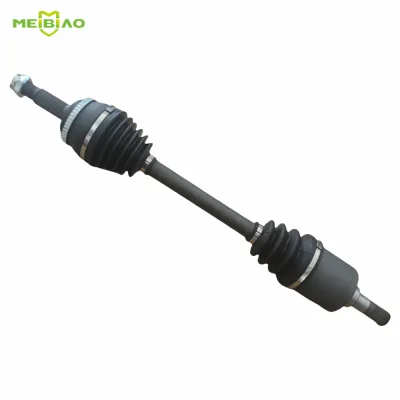
Sourcing a Right Front Drive Shaft requires a precise understanding of the specific vehicle architecture and the exact OEM part numbers associated with the target fleet. The available market data indicates that these components are primarily designed for Japanese and Korean car models, with a strong emphasis on compatibility with a wide range of vehicle configurations. Buyers must cross-reference their specific vehicle identification numbers (VIN) against the extensive list of OE numbers provided by suppliers, such as 48820-47010 or 43420-20281, to ensure the replacement part will fit the transmission system without modification. The product listings confirm that these shafts are intended for the repair and replacement of existing units, serving as critical components within the auto transmission system to transfer power from the differential to the wheel.
The procurement strategy must account for the variability in product specifications, as the market offers items ranging from generic kits to highly specific OEM-numbered assemblies. While some listings suggest a broad application for 95% of car models, the technical reality demands that the buyer verify the exact drive shaft position, distinguishing between the right and left configurations, as the internal geometry and spline counts differ significantly. The observed product attributes highlight that these are new condition items, often constructed from a combination of rubber and steel, which dictates the handling and storage requirements during the logistics phase. Understanding that the "Right Drive Shaft" is a distinct SKU from its left-hand counterpart is the first critical step in avoiding costly return cycles and installation failures.
Product Scope and Observed Listing Signals
The product scope for right front drive shafts encompasses a variety of configurations, including complete kits that feature CV joints, CV boot kits, and the driving shaft itself. Buyers should expect to encounter listings that describe the product as a "Front Drive Shaft Kit," which implies that the assembly includes the necessary flexible components to accommodate suspension movement while maintaining torque transmission. The material composition is consistently noted as rubber and steel, suggesting a design that balances durability with the flexibility required for steering and suspension articulation. This combination of materials is essential for the shaft's ability to function as a flexible shaft, absorbing the torsional and bending stresses encountered during normal vehicle operation.
Listing signals in the current market reveal a diverse range of packaging and customization options that can influence the total landed cost. Suppliers frequently offer packaging in cartons, pallets, or woven bags, with some vendors willing to customize the packing according to specific buyer requests. This flexibility in packaging is particularly relevant for buyers managing large inventory volumes or those with specific logistical constraints regarding pallet dimensions and stacking. Additionally, the presence of customization options indicates that suppliers are prepared to adapt the product to specific client needs, whether that involves branding, specific packaging requirements, or minor modifications to the shaft assembly to suit unique fleet applications.
Technical Specifications to Verify
Verifying the dimensional accuracy of the journal diameter is a non-negotiable step in the technical evaluation of a Right Front Drive Shaft. The market data references specific dimensional accuracy ranges, such as IT01-IT5 or IT6, which indicate the precision required for the shaft's mating surfaces. Buyers must confirm that the supplier can guarantee these tolerances, as even minor deviations can lead to premature wear, vibration, or complete failure of the transmission system. The surface roughness of the journal is another critical parameter, with observed specifications ranging from 0.63 to 0.16μm, ensuring a smooth interface that minimizes friction and heat generation during operation.
Beyond dimensional tolerances, the mechanical properties of the shaft material and its structural integrity must be rigorously assessed. The raw material is identified as high carbon steel wire, often with a hardness rating between 70# and 75#, which provides the necessary tensile strength and flexibility for the application. Buyers should verify that the shaft exhibits the correct twist of direction, accommodating both levorotation and dextrorotation to handle the complex torque loads of a front-wheel-drive vehicle. The design must also ensure that the shaft remains flexible yet stiff enough to transmit power efficiently, a balance achieved through the specific engineering of the real axis and the round appearance of the shaft body.
Compliance and Safety Documentation
Compliance with international quality management standards is a primary indicator of a supplier's reliability and the consistency of their manufacturing processes. The available data points to ISO9001:2008 certification as a standard benchmark for the production facilities supplying these drive shafts. This certification suggests that the manufacturer adheres to a systematic approach for quality control, ensuring that every batch of right front drive shafts meets consistent specifications. Buyers should request current copies of these certificates to verify that the certification is active and covers the specific manufacturing site where the order will be produced, rather than a generic corporate document.
Safety and performance documentation must also include evidence of third-party validation, such as SGS testing, to confirm the material integrity and functional safety of the product. While some listings mention CE certification, which is relevant for products entering the European market, buyers must ensure that the specific product batch carries the appropriate markings and test reports. The safety design of the drive shaft is critical, as it must withstand high loads without catastrophic failure. Documentation should explicitly state that the product is designed for the specific purpose of replacing or repairing existing units, confirming that it meets the safety requirements for automotive transmission systems.
Cost Drivers and Commercial Terms
The cost of a Right Front Drive Shaft is influenced by several factors, including the complexity of the OE number matching, the material quality, and the level of customization required. The observed price range in the market is broad, spanning from $0.09 to $5000, which reflects the difference between individual components, such as a single CV boot, and complete drive shaft assemblies. Buyers must be cautious when comparing prices, as the lowest cost option may not include the necessary OE number verification or the specific dimensional tolerances required for their vehicle fleet. The MOQ (Minimum Order Quantity) also plays a significant role, with observed ranges from 1 to 1000 units, allowing for flexibility in procurement strategies for both small repair shops and large fleet operators.
Commercial terms regarding warranty and lead times are essential components of the procurement agreement that directly impact the total cost of ownership. Most suppliers offer a one-year warranty, which provides a baseline guarantee against manufacturing defects and premature failure. However, buyers should negotiate specific terms that align with their operational needs, such as extended warranty periods for high-volume contracts or specific clauses regarding the replacement of defective units. The selling units are typically listed as single items, but bulk purchasing can often secure better pricing and more favorable shipping terms, making it crucial to evaluate the total cost per unit rather than just the unit price.
Supplier Qualification and Quality Control
Supplier qualification begins with verifying the geographic origin and the specific manufacturing capabilities of the vendor. The market data indicates that suppliers are located in key manufacturing hubs such as Zhejiang, Shandong, and Liaocheng in China, each with its own industrial ecosystem and supply chain advantages. Buyers should assess the supplier's proximity to raw material sources, such as the high carbon steel wire used in production, to ensure a stable supply chain that can withstand market fluctuations. The presence of multiple origin locations suggests a competitive market, but buyers must verify that the specific factory they are engaging has the capacity to meet their volume requirements and quality standards.
Quality control processes must be transparent and documented, with a focus on the specific manufacturing steps involved in producing the drive shaft. The data mentions processes such as "Egde Machine" operations, which likely refer to edge finishing or machining steps critical to the shaft's performance. Buyers should request a detailed quality control plan that outlines how the supplier manages the transition from raw material to finished product, including inspection points for journal diameter accuracy, surface roughness, and material hardness. The ability to build a variety of products and the acceptance of OEM numbers indicate a flexible manufacturing environment, but this flexibility must be balanced with rigorous quality checks to prevent defects.
Long-Term Procurement Checks
Establishing a long-term procurement relationship requires regular audits of the supplier's performance against key performance indicators (KPIs) such as defect rates, on-time delivery, and responsiveness to quality issues. The "Unique Selling Point" of a long lifetime for these drive shafts must be validated through real-world field data and customer feedback rather than marketing claims. Buyers should implement a system for tracking the performance of the right front drive shafts in their fleet, collecting data on mileage, failure modes, and maintenance costs to assess the true value of the product over time. This data-driven approach allows for continuous improvement in the selection of suppliers and the specification of future orders.
Continuous verification of the supplier's compliance with standards and their ability to adapt to changing market conditions is essential for long-term success. As automotive standards evolve, suppliers must demonstrate their ability to update their manufacturing processes and product designs to meet new requirements. Buyers should maintain open communication channels with their suppliers to stay informed about any changes in material sourcing, certification status, or production capacity. The goal is to build a resilient supply chain that can deliver high-quality right front drive shafts consistently, ensuring the safety and reliability of the vehicles in the fleet while minimizing the risk of supply disruptions.
FAQs
How can I confirm the Right Front Drive Shaft fits my vehicle?
You can confirm fitment by providing the OEM number or your VIN, since listings such as the MTZ T80 front drive shaft kit accept model number matching. The product covers Japanese and Korean cars and claims compatibility with around 95% of car models. Send the OE number, such as 48820-47010 or 43420-20281, to the seller before ordering so they can verify exact fitment for your application.
What is the minimum order quantity for a Right Front Drive Shaft?
The minimum order quantity varies by listing, with observed values ranging from 1 to 1000 units, and the MTZ T80 kit lists an MOQ of 2. Smaller MOQs typically apply to single-item sales sold as individual units, while bulk orders of rubber and steel shafts may require pallet or carton quantities. Confirm the exact MOQ with the supplier for your specific OE number.
What warranty applies to these front drive shaft kits?
The listed front drive shaft kits carry a 1-year warranty. This warranty generally covers manufacturing defects under normal use for replacement and repair purposes. Because warranty handling can differ between sellers, ask the supplier to confirm warranty terms in writing, including whether shipping costs for returns or replacements are covered before you finalize the order.
Can the drive shaft be customized for specific requirements?
Yes, customization is available on these listings. Suppliers accept OEM requests, and the shaft specifications list options such as left or right drive shaft position, journal diameter accuracy of IT01-IT5, and flexible shaft construction. Provide your OEM number or VIN, required dimensions from 2mm to 60mm where applicable, and packaging preferences so the manufacturer can quote a customized solution.
What materials are used in the Right Front Drive Shaft construction?
The shafts are made from rubber and steel, with some listings specifying 70 to 75 grade high carbon steel wire as the raw material. This combination provides a flexible shaft with wear-resistant, highly elastic properties for transmission system use. If your application requires specific material grades or surface roughness around 0.63 to 0.16 micrometers, request material documentation from the supplier before ordering.
Which OE numbers are covered by these drive shaft products?
Listed OE numbers include 48820-47010, 43420-20281, 43410-20440, 43430-35030, 43430-0C010, 43420-06700, 43410-06670, 43420-12670, 43410-12490, 43410-02610, 43420-02690, 43410-0R050, 43410-0E040, 43420-48060, 43420-02B10, 43410-06760, MD19-25-60XA, and UF9T-25-60X. Match your vehicle's OE number against this list, or provide your VIN so the seller can confirm which shaft variant suits your car.
How are the drive shafts packaged for shipping?
Packaging options include cartons, pallets, and woven bags, and suppliers can arrange packaging according to your request. Single-item orders are typically shipped as individual units, while bulk orders use pallets or cartons for protection during transit. If you need specific export packaging, such as reinforced pallets for sea freight, state your requirement when requesting a quote so the supplier confirms feasibility and any cost difference.
Which certifications do the manufacturers hold?
Listings reference ISO9001:2008 and SGS standards, and some products carry CE certification. These certifications indicate quality management systems and product compliance at the manufacturer level. Certification scope can vary between individual suppliers and product lines, so ask each candidate for current, valid certificate copies covering the specific drive shaft model you intend to purchase before placing an order.