Source Rip-Stop Breathable Tactical Jacket for Hunting, Outdoor, Patrol
Find 30 verified options for a Rip-Stop Breathable Tactical Jacket designed for outdoor activities, hunting, and patrol duties. Buyers can compare features like windproof, waterproof, and rip-stop capabilities across models from Nanjing, China, with customization and OEM support available.
Key considerations
Products List


Outdoor Professional Tactical Windbreaker Breathable G8 Ripstop Jacket
$14.00 - $15.50
MOQ: 200 Pieces


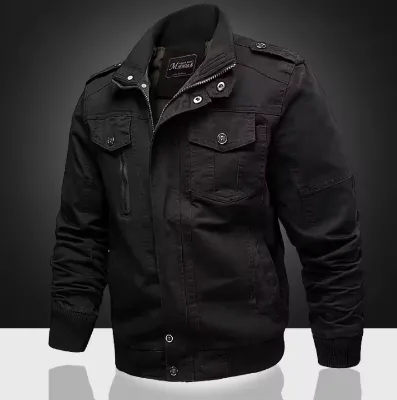
Manufacturer wholesale of customizable waterproof fleece-lined tactical jackets
$12.98 - $13.80
MOQ: 100 pieces


Men′ S Combat Jacket Water Repellent Rip-Stop Jacket Outdoor Tactical Jacket
$28.00 - $29.00
MOQ: 1000 PCS


Comprehensive Sourcing Guide
Strategic Sourcing Guide for Rip-Stop Breathable Tactical Jackets
Understanding Core Material and Construction Specifications
When sourcing a rip-stop breathable tactical jacket, the primary focus must be on the interplay between fabric durability and air permeability. The supplied product data indicates that Chinlon and Polyester are the dominant materials utilized in this category. Chinlon, a nylon variant, is frequently cited for its high tensile strength and resistance to abrasion, which is essential for tactical environments where gear rubs against rough surfaces. Polyester offers a complementary profile, often providing better moisture management and colorfastness. The specific "Rip-Stop" designation observed in the listings refers to a weaving technique where thicker threads are interlaced at regular intervals to create a grid pattern. This construction prevents small tears from propagating across the garment, a critical safety feature for outdoor and hunting applications.
The breathability of these jackets is a non-negotiable attribute for tactical use, ensuring that body heat and moisture vapor can escape during high-intensity activity. The data confirms that breathability is a standard feature across multiple product models, including those designated as YM-475 and YM-453. However, buyers must distinguish between "breathable" as a marketing term and verified fabric performance. In the context of the provided specifications, breathability is often paired with windproof and waterproof claims. This combination suggests a membrane or coating technology that blocks external elements while allowing internal vapor transmission. The "Medium" thickness specification found in several entries implies a balance between insulation and flexibility, suitable for Spring/Autumn or variable Winter conditions. Buyers should verify that the fabric weight and weave density align with the intended operational climate, as a jacket designed for mild Spring/Autumn use may lack the thermal retention required for harsh Winter scenarios.
Technical Variations in Model Specifications and Sizing
The tactical jacket market presents a fragmented landscape of model numbers and sizing standards, requiring precise verification during the sourcing process. The observed data reveals a range of model identifiers, such as YM-475, YM-453, YM-543, YM1-556, YM-409, and YM1-903. Each of these models corresponds to specific standard size ranges. For instance, the YM-475 model is associated with a standard range of M-5XL, while the YM-453 and YM-543 models align with S-3XL and M-3XL respectively. The YM-409 entry lists a size range of S-2XL. This variation indicates that suppliers often produce distinct cuts or target different demographic segments with specific sizing architectures.
A critical observation in the provided facts is the existence of both "Men" and "Unisex" gender classifications. While some listings specify "Men," others explicitly state "Unisex," suggesting that the cut of the jacket may be adaptable for various body types. The "Regular" length specification is common, but the YM-409 entry notes a "Long-Sleeved" attribute, which is a baseline expectation for tactical jackets but warrants confirmation for specific thermal needs. Furthermore, the "Medium" thickness is listed for multiple models, yet the "Winter" season designation appears alongside "Spring/Autumn" in different entries. This discrepancy highlights the importance of matching the specific model's seasonal rating to the procurement requirement. A jacket labeled for "Winter" with "Medium" thickness may utilize different insulation layers or lining materials compared to a "Spring/Autumn" version, even if the outer shell material remains consistent.
Compliance, Certification, and Standard Verification
Navigating the compliance landscape for tactical gear requires a rigorous approach to verifying standards and certifications. The supplied data mentions "SGS" as a product standard in one instance, which is a significant indicator of third-party testing capability. SGS is a globally recognized inspection, verification, testing, and certification company. When a supplier lists SGS as a standard, it implies that the product has undergone specific quality or safety assessments, though the exact nature of the test (e.g., colorfastness, tensile strength, or chemical compliance) must be clarified. Buyers should not assume that a single mention of SGS covers all regulatory requirements for their target market.
Additionally, the data references "M-5XL" and "S-3XL" as product standards. In this context, these likely refer to sizing standards rather than safety certifications. However, the presence of "SGS" alongside material specifications suggests a potential for broader compliance. Buyers must verify if the supplier holds valid, current certificates for the specific batch being ordered. The "Customization: Available" and "OEM/ODM: Support" attributes indicate that suppliers are willing to adapt products to meet specific client requirements, which often includes custom labeling, packaging, or minor design modifications. This flexibility is a strong indicator of a supplier's capability to meet unique compliance needs, such as specific logo placement or packaging requirements for retail distribution. However, buyers must explicitly request copies of all relevant certificates before finalizing an order, as the presence of a standard in a general product description does not guarantee that every unit in a large order meets that standard.
Cost Drivers and Economic Parameters
The economic landscape for sourcing rip-stop breathable tactical jackets is influenced by several variables, including material composition, customization levels, and order volume. The observed price range in the data spans from $4.18 to $46.58 USD. This wide variance suggests that factors such as material quality, the complexity of the waterproofing or windproofing technology, and the degree of customization significantly impact the final cost. A jacket priced at the lower end of this spectrum may utilize standard polyester or Chinlon with basic rip-stop weaving, while the higher-end options likely incorporate advanced membranes, reinforced stitching, or specialized tactical features like anti-static properties, which are explicitly mentioned in the data.
The Minimum Order Quantity (MOQ) is another critical cost driver. The data indicates an MOQ range of 1 to 2000 units, with a specific high-confidence fact noting an MOQ of 50 PCS. This variability allows buyers to scale their procurement strategy based on their budget and inventory needs. Smaller MOQs are ideal for testing new designs or fulfilling urgent, low-volume requirements, while larger orders can leverage economies of scale to reduce the unit cost. The "Polybag" and "Carton" packaging options also influence logistics costs. The specific packing dimensions, such as 60x40x30cm for 10 or 20 pieces, provide a clear basis for calculating freight costs. Buyers should factor in the density of the packaging and the total volume to optimize shipping efficiency. Furthermore, the "Customization: Available" attribute implies that additional costs may be incurred for branding, custom packaging, or unique colorways like the "Green Camo" or "Camouflage" patterns observed in the listings.
Typical Applications and Functional Performance
The functional profile of these jackets is tailored for demanding environments, with "Outdoor" and "Hunting" listed as primary usage categories. The combination of "Windproof," "Waterproof," and "Rip-Stop" features makes these garments suitable for activities where weather protection and durability are paramount. The "Breathable" attribute ensures that the wearer remains comfortable during physical exertion, preventing overheating and sweat accumulation. The "Comfortable" and "Warmth" functions further enhance the utility of these jackets for extended periods in the field.
The "Anti-Static" feature noted in the data is particularly relevant for tactical applications where static electricity could interfere with electronic equipment or pose a safety risk in certain environments. The "Wearproof" attribute reinforces the durability required for rugged use. The "Green Camo" and "Camouflage" color options are specifically designed for blending into natural environments, a key requirement for hunting and military-style operations. The "Long-Sleeved" design and "Medium" thickness provide a baseline level of protection against the elements, while the "Regular" length ensures a full range of motion. Buyers should consider the specific operational context when selecting a model; for instance, a jacket with "Winter" seasonal rating and "Warmth" function is preferable for cold-weather hunting, whereas a "Spring/Autumn" model with "Breathable" focus may be better for high-intensity summer operations.
Supplier Evaluation and Quality Control Protocols
Evaluating suppliers for tactical gear requires a multi-faceted approach that goes beyond price and basic specifications. The data indicates that the origin of these products is primarily "Nanjing, China," with the province identified as "Jiangsu." This region is known for its textile manufacturing capabilities, but buyers must still conduct thorough due diligence. The "OEM/ODM: Support" and "Customization: Available" attributes suggest that suppliers are capable of adapting to client needs, but this capability must be validated through sample reviews and communication clarity.
Quality control should be a central component of the sourcing strategy. Given the "Rip-Stop" and "Waterproof" claims, buyers should request physical samples to test the fabric's resistance to tearing and water penetration. The "SGS" standard mentioned in the data provides a benchmark, but buyers should verify the scope of the certification. Additionally, the "60X40X30cm/10PCS" and "60X50X40/20PCS" packing specifications highlight the importance of consistent packaging standards. Inconsistent packaging can lead to damage during transit and increase logistics costs. Buyers should establish clear quality control checkpoints, including pre-production sample approval, in-process inspections, and final random inspections (AQL standards). The "Age Group: Adults" specification confirms that the products are designed for mature users, but buyers should ensure that the sizing and fit meet the specific demographic requirements of their target market.
Long-Term Procurement and Supply Chain Resilience
Sourcing tactical jackets is not merely a transactional activity but a strategic partnership that requires long-term planning. The "OEM/ODM: Support" and "Customization: Available" attributes indicate that suppliers are positioned to grow with their clients. As a buyer's business scales, the ability to adjust production volumes, modify designs, and maintain consistent quality becomes increasingly important. The observed MOQ range of 1 to 2000 units offers flexibility, but buyers should negotiate terms that allow for scalable growth without prohibitive cost increases.
Lead times and supply chain resilience are critical considerations. While specific lead times are not provided in the data, the complexity of producing waterproof and windproof garments suggests that production cycles may vary. Buyers should establish clear communication channels with suppliers to monitor production progress and anticipate potential delays. The "Nanjing, China" origin provides a stable manufacturing base, but geopolitical factors and logistics disruptions can impact delivery schedules. To mitigate these risks, buyers should consider diversifying their supplier base or maintaining safety stock levels. Furthermore, the "Customization" aspect allows for brand differentiation, which can be a key competitive advantage in the tactical gear market. By investing in a relationship with a supplier that supports long-term customization and quality assurance, buyers can ensure a steady supply of high-performance tactical jackets that meet evolving market demands.
FAQs
What materials are used for rip stop breathable tactical jackets?
Chinlon and Polyester are the dominant materials used for these jackets. Chinlon offers high tensile strength and abrasion resistance, while Polyester provides better moisture management and colorfastness for tactical environments.
Which models support customization and OEM services?
All listed models support customization and OEM services. Buyers can request specific branding, packaging, or design modifications, though explicit confirmation of certificate validity for specific batches is required before ordering.
Can I find jackets with anti-static and waterproof features?
Yes, some models feature both anti-static and waterproof capabilities alongside breathability. These attributes are essential for tactical applications where static interference must be avoided and weather protection is critical for safety.
How do sizing standards vary across different jacket models?
Sizing standards vary significantly by model, ranging from S-2XL to M-5XL. For instance, model YM-475 offers M-5XL sizes, while YM-453 and YM-543 typically align with S-3XL and M-3XL ranges respectively.
What is the typical MOQ for sourcing these tactical jackets?
The Minimum Order Quantity ranges from 1 to 2000 units, with a common baseline of 50 pieces. This flexibility allows buyers to scale procurement based on budget and inventory needs without prohibitive initial costs.
Where are these jackets manufactured and what is the origin?
These jackets are primarily manufactured in Nanjing, Jiangsu, China. This region is known for textile capabilities, but buyers must still conduct due diligence on quality control and certification validity for specific production batches.