Source Ripped Breathable Denim Shorts for beach, travel, and casual wear
Explore 30 listings for Ripped Breathable Denim Shorts with features like water washing, low waist, and loose fit. Buyers can compare styles, materials, and customization options from verified suppliers offering OEM services.
Key considerations
Products List


Women's Pants Summer Wear Fashion High Waist Ripped Straight Leg Denim Shorts
$9.90 - $16.40
MOQ: 100 Pieces

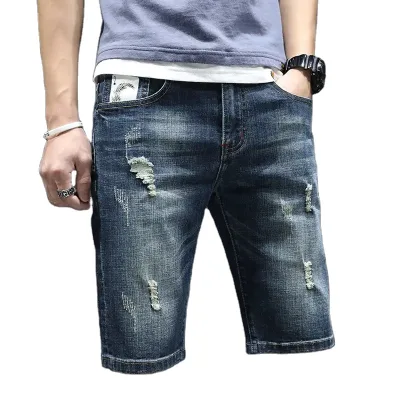


Summer Street Style Trendy Distressed Comfortable Ripped Casual Denim Shorts
$6.90 - $11.99
MOQ: 200 Pieces


Comprehensive Sourcing Guide
Strategic Sourcing Guide for Ripped Breathable Denim Shorts
The global demand for casual wear has consistently elevated the profile of denim shorts, with a specific niche emerging around "ripped breathable" designs that balance aesthetic appeal with functional comfort. For B2B procurement professionals, sourcing these items requires a nuanced understanding of material composition, manufacturing processes, and supply chain variables. The market offers a diverse array of options, ranging from standard cotton blends to specialized fabric treatments designed for summer wear. This guide provides a structured approach to evaluating suppliers and products, ensuring that procurement decisions are grounded in verified product attributes and industry best practices rather than unverified marketing claims.
Understanding Material Composition and Fabric Technology
The foundation of any successful denim short procurement lies in the fabric selection. The core keyword "breathable" implies a specific performance requirement that must be verified against the actual material composition listed in product specifications. In the current market, a significant portion of denim shorts utilizes a blend of Polyester, Cotton, and Denim. This combination is often chosen to balance the durability and texture of denim with the moisture-wicking and lightweight properties of polyester. However, buyers must also consider products where the main fabric component is explicitly listed as Denim, which may offer a more traditional aesthetic but requires specific weaving or finishing techniques to achieve breathability.
Another critical variable is the fabric type. While many products are described as standard denim, some listings specify "Satin Fabric" or "Cotton" as the primary material. Satin weaves can offer a distinct sheen and softness, potentially enhancing the "breathable" claim through looser thread counts, whereas pure cotton offers natural breathability but may lack the quick-dry properties found in synthetic blends. The "Feature" attributes observed in the market often include "Anti-Wrinkle," "Quick Dry," "Breathable," and "Eco-Friendly." When evaluating a supplier, procurement teams should request physical swatches to confirm that the "Quick Dry" and "Breathable" claims are not merely marketing terms but are intrinsic to the fabric's weave density and fiber blend. The presence of "Water Washing" as a popular element suggests that the fabric undergoes specific chemical or mechanical treatments to soften the hand feel and potentially enhance airflow, which is a crucial step in the production of summer-weight denim.
Technical Specifications and Design Attributes
Beyond the raw material, the technical specifications of the garment dictate its fit, durability, and suitability for the intended market. The "Style" of the shorts is a primary differentiator, with "Loose" fits being a dominant trend for summer collections. This silhouette not only aligns with current fashion preferences but also inherently supports the "breathable" requirement by allowing for greater air circulation between the fabric and the skin. The "Waist Shape" is another critical specification; "Low" waist designs are prevalent in the observed data, catering to a specific demographic that prefers a relaxed, casual look. Buyers must ensure that the low waist design does not compromise the structural integrity of the garment, particularly when combined with "Ripped" details.
The "Weaving Process" and "Decorative Method" are equally important. While many denim shorts utilize standard weaving, the market also features "Machine-embroidered" processes and "Striped or Checked" patterns. The "Ripped" aesthetic, often achieved through mechanical distressing or laser cutting, must be executed carefully to prevent excessive fraying that could lead to premature garment failure. The "Decorative Method" of "Spliced" construction suggests that different fabric panels or textures may be joined together, which requires precise quality control to ensure seam strength. Furthermore, the "Thickness and Thinness" specification is vital; "Thickened" options are observed in the market, which may contradict the "breathable" requirement for summer wear. Procurement teams should prioritize listings that specify lighter weights or explicitly mention summer suitability to avoid receiving garments that are too heavy for the intended season.
Compliance, Certification, and Standard Verification
Navigating the compliance landscape is essential for B2B buyers, especially when dealing with international suppliers. The supplied data indicates that "prod_standard" is often listed as "no" or "customized," which signals that buyers cannot rely on a blanket certification status for all products in a category. Instead, procurement professionals must treat compliance as a verification step rather than an assumption. While background knowledge suggests certifications like GOTS or OEKO-TEX are relevant for eco-friendly claims, the specific product data does not confirm their presence. Therefore, buyers must explicitly request certification documentation for any lot they intend to purchase.
The "OEM" (Original Equipment Manufacturer) attribute is listed as "Yes" for many suppliers, indicating a high degree of customization capability. This includes "Customized Logo Printing" and the ability to tailor the "prod_standard" to meet specific buyer requirements. When dealing with "Eco-Friendly" features, it is imperative to verify the specific standards the supplier adheres to, as the term is not legally defined in all jurisdictions. Buyers should ask for third-party test reports regarding chemical usage, particularly in the "Water Washing" process, to ensure compliance with international environmental regulations. The absence of a standardized "prod_standard" in the general data means that each order requires a specific quality agreement outlining acceptable tolerances for color fastness, seam strength, and chemical residues.
Cost Drivers and Supply Chain Dynamics
The pricing structure for denim shorts is influenced by several factors, including material costs, labor intensity, and customization requirements. The observed price range in the market spans from $0.50 to $26.80 USD, a wide variance that reflects differences in fabric quality, brand positioning, and order volume. The "MOQ" (Minimum Order Quantity) is another significant cost driver, with observed ranges from 1 to 300 units, though some suppliers list a specific MOQ of 500 units for customized orders. Buyers must balance the desire for low unit costs with the need to meet minimum order thresholds.
The "Supply Type" is identified as "OEM Service," which implies that the cost structure will vary based on the level of customization. Customized logo printing, specific fabric blends, and unique "Weaving Processes" like machine embroidery will increase the unit cost compared to standard stock items. The "prod_packing" method, ranging from "Sack" to "OPP Bag" and "Sea Transportation," also impacts logistics costs. Bulk packaging in sacks may be cheaper for the supplier but might require additional repacking at the destination, whereas individual OPP bagging adds to the unit cost but improves retail readiness. Buyers should factor in the "Lead Time" associated with these customization options, as OEM services often require longer production windows than ready-to-ship inventory.
Supplier Evaluation and Quality Control Protocols
Selecting the right supplier requires a rigorous evaluation process that goes beyond the initial product listing. The "prod_origin" is listed as "China" for the majority of the data, indicating a concentration of manufacturing capacity in this region. However, the specific location and factory capabilities should be verified to ensure they meet the buyer's ethical and quality standards. The "Feature" list includes "Breathable," "Anti-Wrinkle," and "Quick Dry," but these claims must be validated through physical testing. A robust quality control protocol should include pre-production sample approval, in-line inspections during the weaving and distressing processes, and final random inspections before shipment.
Given the "Ripped" nature of the product, quality control must focus on the consistency of the distressing. Variations in the size and placement of rips can lead to customer dissatisfaction and returns. The "Elasticity" of the fabric, noted as "Slightly Elastic," should be tested to ensure it provides the necessary comfort without losing its shape after repeated wear. For suppliers offering "Customized Logo Printing," a proofing stage is essential to verify the placement, color accuracy, and durability of the logo. Buyers should also verify the "prod_model" numbers, such as "419," "20," or "Men's Denim Shorts-093R," to ensure that the specific design requested is being manufactured and not a generic substitute.
Long-Term Procurement and Market Adaptation
Sourcing "Ripped Breathable Denim Shorts" is not a one-time transaction but part of a long-term supply chain strategy. The market is dynamic, with trends shifting rapidly regarding "Popular Elements" like "Water Washing" and "Pattern" decorations. Buyers must maintain a flexible relationship with suppliers who can adapt to these changes. The "Season" attribute is explicitly listed as "Summer," which means that procurement planning must align with seasonal demand cycles. Overstocking in the off-season can lead to significant inventory costs, while understocking can result in missed sales opportunities.
The "prod_packing" and "prod_standard" customization options offer opportunities for long-term differentiation. By establishing a consistent standard for packaging and labeling, buyers can build a recognizable brand identity in the retail market. Furthermore, the ability to customize the "prod_model" allows for a diverse product line that can cater to different segments, such as "Male" and "Female" demographics, as indicated by the various model numbers. As the market moves towards more sustainable practices, buyers should proactively work with suppliers to adopt eco-friendly materials and processes, ensuring that the "Eco-Friendly" claims are backed by verifiable data. This proactive approach not only mitigates risk but also positions the brand as a leader in sustainable fashion.
Comparative Analysis of Product Variants
To facilitate decision-making, it is helpful to compare the key attributes of different product variants available in the market. The following table summarizes the observed specifications for a selection of models, highlighting the diversity in materials, styles, and features.
| Product Model | Gender | Main Fabric | Style | Key Features | Packing | MOQ |
|---|---|---|---|---|---|---|
| Men's Denim Shorts-093R | Male | Denim | Loose | Breathable, Quick Dry | OPP Bag | 500 |
| Women's Denim Shorts-015U | Female | Other | Loose | Anti-Wrinkle, Eco-Friendly | Sack | Variable |
| WDS-04 | Unisex | Cotton | Loose | Breathable | Sea Transportation | Variable |
| WDS-18 | Unisex | Polyester Cotton | Loose | Quick Dry | OPP Bag | Variable |
| Men's Denim Shorts-024X | Male | Denim | Loose | Water Washing | Sack | Variable |
This comparison illustrates that while the "Loose" style is consistent across many models, the fabric composition and specific features vary significantly. Buyers should use this data to align their product selection with their target market's specific needs, ensuring that the chosen variant offers the optimal balance of breathability, durability, and aesthetic appeal. By carefully analyzing these attributes, procurement professionals can make informed decisions that drive value and minimize risk in the competitive denim shorts market.
FAQs
What fabric blends are available for these shorts?
The available fabric blends include Polyester, Cotton, and Denim combinations. Some listings specify Satin Fabric or pure Cotton as the main component. Buyers should verify the specific blend in the product details to ensure the desired balance of durability and breathability for summer wear.
Can I request customized logo printing on the shorts?
Yes, customized logo printing is available as an OEM service option. Many suppliers offer this feature alongside other customization capabilities like tailored fabric types. Buyers should confirm the specific logo placement and printing method during the order negotiation phase to ensure brand alignment.
What is the minimum order quantity for these products?
The minimum order quantity ranges from 1 to 300 units, with some suppliers requiring a specific MOQ of 500 units for customized orders. The exact threshold depends on the supplier and whether the order involves standard stock or custom specifications. Buyers must check the specific listing for the applicable limit.
Which styles and waist shapes are offered for men?
Men's options typically feature a loose style with a low waist shape. These designs are intended for summer wear and often include decorative elements like spliced construction or patterned details. The fabric may also be slightly elastic to enhance comfort while maintaining the structured denim aesthetic.
How are the products packed for shipping?
Packaging methods vary and include Sack, OPP Bag, or Sea Transportation options depending on the order volume and supplier. Individual OPP bagging improves retail readiness, while sack packing is common for bulk shipments. Buyers should specify their preferred packing method to avoid additional repacking costs at the destination.
What are the observed price ranges for these shorts?
The observed price range spans from 0.5 to 26.8 USD per unit. This wide variance reflects differences in material quality, customization levels, and order volume. Buyers should consider that higher customization, such as machine embroidery or specific fabric treatments, may push prices toward the upper end of this range.
Are there eco-friendly features available in the product line?
Some products list eco-friendly as a feature alongside breathable and quick-dry properties. However, specific certifications like GOTS or OEKO-TEX are not confirmed in the general product data. Buyers should explicitly request third-party test reports to verify the eco-friendly claims and chemical usage standards before placing an order.