Source RoHS Compliant Tact Switch for Microwave Ovens and Appliances
Compare 25 RoHS Compliant Tact Switch options from Zhejiang suppliers. Buyers can evaluate models like WK-983 and WK-1000 with varying sizes, current ratings, and customization features for microwave oven and appliance applications.
Key considerations
Products List


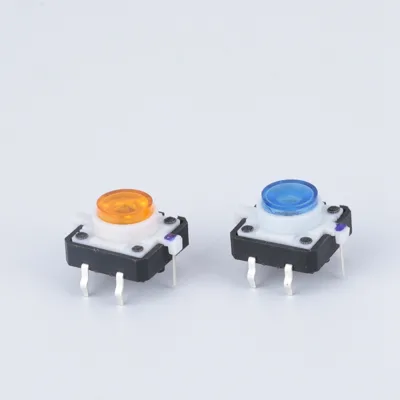


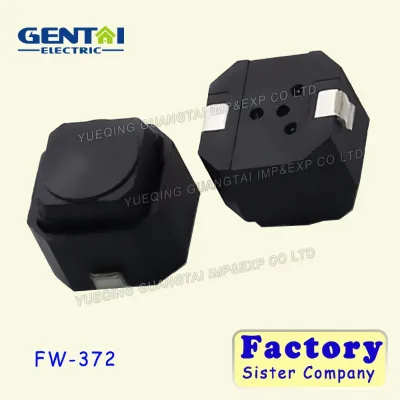


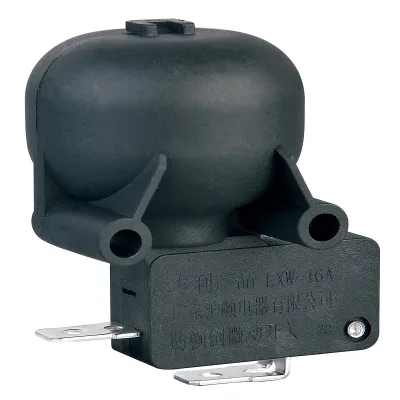
Comprehensive Sourcing Guide
Strategic Sourcing Guide for RoHS Compliant Tact Switches
Understanding the Technical Landscape of Tactile Switches
The procurement of tactile switches, specifically those designed for compact electronic assemblies, requires a precise understanding of their mechanical and electrical architecture. In the current market, these components are frequently categorized by their actuation mechanism, which relies on a push-button design to complete a circuit. The observed product attributes indicate a prevalence of the "Single Control Switch" and "Multi Control Switch" configurations, suggesting that buyers must carefully distinguish between single-circuit and multi-circuit requirements based on their specific application needs. The core mechanical feature is the "Tactile Feedback," a critical characteristic that ensures the user receives a distinct physical sensation upon actuation, confirming the switch has been pressed.
Electrical specifications are equally vital for ensuring compatibility with the target system. The data reveals a range of circuit types, with "Spst-No" (Single Pole Single Throw - Normally Open) being a standard configuration. This implies that the switch remains open until pressed, at which point it closes the circuit. Buyers must verify the maximum voltage and current ratings for their specific design. While some observed units list a maximum voltage of 12V and a maximum current of 0.5A, these figures represent specific product instances rather than universal limits. A robust sourcing strategy involves confirming that the selected switch can handle the peak load of the application without degradation. Furthermore, the "Breaking Capacity" is noted as "High-Current" in certain listings, indicating that some variants are engineered to interrupt higher electrical loads, a feature that may be essential for power-sensitive applications.
The physical dimensions of the switch are a primary constraint in modern electronics. The market offers both "Small-Sized" and "Normal Size" variants, allowing for flexibility in board space allocation. Specific dimensions, such as a height of 6mm, are available for low-profile designs, while other models may require more vertical clearance. The material composition is predominantly plastic, which offers a balance of durability and cost-effectiveness. The "Protection" attributes range from "Dust-Proof" to specific ratings like "IP45," which indicates a level of protection against solid objects larger than 1mm and water spray. When sourcing, the buyer must match the protection level to the environmental conditions of the final product, ensuring that the switch will not fail due to dust ingress or moisture exposure.
Navigating Compliance and Certification Standards
Compliance with environmental and safety regulations is a non-negotiable aspect of modern B2B procurement, particularly for products destined for international markets. The core keyword "RoHS compliant" refers to the Restriction of Hazardous Substances directive, which limits the use of specific hazardous materials in electrical and electronic equipment. The provided product facts confirm the presence of "RoHS" and "CCC" (China Compulsory Certification) as observed certifications. Additionally, "CE" marking and "ISOEnvironment" standards are noted, suggesting that suppliers in this category are increasingly aligning with global safety and environmental benchmarks.
However, buyers must exercise caution when interpreting these certifications. The presence of a certification label in a product listing does not automatically guarantee that every unit in a batch is compliant. The "High-confidence facts" list certifications as observed attributes, but the verification process requires direct confirmation from the supplier. For RoHS compliance specifically, the buyer should request a current Certificate of Compliance (CoC) or a test report from an accredited third-party laboratory. This document should explicitly list the tested materials and confirm that the concentration of restricted substances, such as lead, mercury, cadmium, and hexavalent chromium, falls within the permissible limits defined by the directive.
The "CCC" certification is particularly relevant for products entering the Chinese market, while "CE" is mandatory for the European Economic Area. The "ISOEnvironment" reference suggests adherence to environmental management systems, which can be a proxy for a supplier's commitment to quality and sustainability. When evaluating a potential supplier, the procurement team should verify that the certifications listed on the product page match the actual manufacturing facility's capabilities. It is also important to note that some products may be labeled as "Standard" or "Customised," and the certification status might vary between these categories. A standard product might have pre-existing certifications, whereas a customized unit may require a new compliance assessment.
Analyzing Cost Drivers and Pricing Structures
The pricing of tactile switches is influenced by a complex interplay of factors, including volume, customization, and technical specifications. The observed price range in the market spans from $0.01 to $1.02 USD, indicating a highly competitive landscape with significant variance based on product tier. This wide range suggests that the lowest prices are likely associated with high-volume, standard specifications, while the upper end of the spectrum reflects specialized features, lower volumes, or custom configurations.
The Minimum Order Quantity (MOQ) is a critical cost driver. The observed MOQ range is substantial, spanning from 10 to 5000 units. This variability allows for flexibility for different buyer profiles, from prototyping startups to large-scale manufacturers. However, the "MOQ: 1000pcs" observation highlights a common threshold for standard production runs. Buyers seeking to minimize initial capital expenditure should look for suppliers offering lower MOQs, though they must be prepared for a higher unit cost. Conversely, suppliers with higher MOQs often provide more competitive pricing per unit, making them suitable for established production lines.
Customization is another significant factor affecting cost. The product attributes indicate that "Customization" and "Colour" are available, and the "Delivery Term" is often "Customized." Customizing a switch, whether it involves changing the actuator color, modifying the mounting style, or altering the electrical characteristics, inevitably adds to the production cost and lead time. The "Lead Time" is listed as "in Stock" for some items, which can reduce inventory holding costs and expedite time-to-market. However, for custom orders, the lead time will extend significantly. Buyers must balance the immediate need for components against the long-term savings of bulk purchasing.
Supply ability also plays a role in pricing stability. One observed attribute mentions a "Supply Ability" of 30,000 pieces per day. This high capacity suggests that the supplier can handle large orders without significant delays, which can help stabilize pricing during periods of high demand. However, buyers should verify if this capacity is consistent across all product lines or if it applies only to standard models. The "Packaging Details," such as "1000pcs/ polybag per box," also impact logistics costs. Efficient packaging reduces shipping volume and damage risk, contributing to the overall cost of ownership.
Identifying Typical Applications and Use Cases
Tactile switches are versatile components found in a wide array of electronic devices, and their application dictates the specific requirements for performance and durability. The provided facts explicitly mention "Microwave Oven" as a primary application, indicating that these switches are robust enough to withstand the demanding environments of kitchen appliances. In such applications, the "Dust-Proof" and "IP45" protection levels are essential to prevent failure from grease, steam, and frequent cleaning. The "High-Current" breaking capacity is also crucial here, as microwave ovens often involve higher power loads during operation.
Beyond kitchen appliances, the "Tact Switch" and "Tactile Switch" designations suggest widespread use in consumer electronics, industrial control panels, and medical devices. The "Single Control Switch" and "Multi Control Switch" options allow for integration into user interfaces ranging from simple on/off buttons to complex control panels with multiple functions. The "Small-Sized" and "Normal Size" variants accommodate different form factors, from compact handheld devices to larger industrial equipment. The "Tactile Feedback" feature is particularly important in applications where user confirmation is necessary, such as in medical equipment or automotive controls, where accidental activation must be minimized.
The "Standard" and "Customise" types indicate that these switches can be adapted for specialized uses. For instance, the "WK-983" and "WK-1000" model numbers suggest specific product lines that may be tailored for particular industries. The "Plastic" material is suitable for general-purpose applications, but for environments requiring higher chemical resistance or temperature tolerance, alternative materials might be necessary. The "Whether The Smart: No" attribute clarifies that these are mechanical switches rather than smart or IoT-enabled components, which simplifies the integration process for traditional electronic designs.
Evaluating Supplier Capabilities and Reliability
Selecting the right supplier is as critical as selecting the right component. The sourcing guide emphasizes the importance of verifying supplier attributes such as origin, production capacity, and quality assurance. The "prod_origin" is listed as "Zhejiang, Wenzhou" and "Place of Origin: Zhejiang, China," identifying a specific manufacturing hub known for its electronics industry. While this location provides access to a robust supply chain, buyers should not assume that all products from this region meet the same quality standards.
The "Brand Name: GENTAI" is observed in the data, but buyers should avoid relying on a single brand name as a proxy for quality. Instead, the focus should be on the supplier's ability to provide consistent quality and compliance. The "Quality: Good" and "Quality: High" attributes are subjective and should be validated through objective means, such as third-party audits or sample testing. The "Supply Ability" of 30,000 pieces per day is a strong indicator of capacity, but buyers must confirm that this capacity is maintained during peak seasons and that the supplier has the infrastructure to handle large orders without compromising quality.
The "Delivery Term" being "Customized" suggests that the supplier is flexible but also that lead times may vary. Buyers should establish clear communication channels to confirm delivery schedules and ensure that the supplier can meet their production timelines. The "Packaging Details" and "prod_packing: Box" indicate standard packaging practices, but for sensitive electronic components, additional protective measures may be required. The "Standard" and "Carton" specifications suggest that the products are shipped in standard cartons, which is suitable for most logistics needs.
Implementing Quality Control and Long-Term Procurement Strategies
Quality control is the backbone of a successful procurement strategy for tactile switches. Given the wide range of observed specifications, from "IP45" protection to "High-Current" breaking capacity, buyers must implement a rigorous quality assurance process. This process should include incoming inspection, where a sample of the received goods is tested against the agreed-upon specifications. Key tests should include mechanical actuation force, electrical continuity, and environmental resistance.
The "Lead Time: in Stock" attribute is beneficial for reducing inventory costs, but it also requires careful management to prevent obsolescence. For long-term procurement, buyers should establish a relationship with suppliers that offers both flexibility and stability. This involves negotiating contracts that cover volume discounts, priority production, and consistent quality standards. The "Customization" availability allows for long-term adaptation of the product to changing market needs, but it requires a clear understanding of the customization process and its impact on lead time and cost.
Long-term considerations also include the lifecycle of the product. The "RoHS" and "CCC" certifications ensure that the product meets current environmental and safety standards, but buyers should be aware that regulations evolve. A proactive supplier will keep their customers informed of any changes in compliance requirements. The "Material: Plastic" and "Height: 6mm" specifications are static, but the underlying material formulations may change over time. Buyers should request updates on material changes to ensure continued compliance and performance.
Final Considerations for Strategic Sourcing
In conclusion, sourcing RoHS compliant tactile switches requires a balanced approach that considers technical specifications, compliance, cost, and supplier reliability. The observed data provides a solid foundation for understanding the market, but buyers must go beyond the surface-level attributes to ensure a successful procurement outcome. By verifying certifications, understanding cost drivers, and implementing robust quality control measures, buyers can secure a reliable supply of high-quality tactile switches that meet their specific application needs. The flexibility offered by customization and the wide range of specifications available in the market provide ample opportunities for strategic sourcing, provided that the buyer remains diligent in their evaluation and selection process.
| Feature Category | Observed Attributes | Verification Requirement |
|---|---|---|
| Certification | RoHS, CCC, CE, ISOEnvironment | Request current CoC and test reports |
| Electrical | Spst-No, Max 12V, Max 0.5A, High-Current | Confirm load requirements and breaking capacity |
| Mechanical | Push-Button, Tactile Feedback, Single/Multi | Test actuation force and feedback sensation |
| Physical | Small/Normal Size, 6mm Height, Plastic | Verify dimensions and material compatibility |
| Protection | Dust-Proof, IP45 | Test against environmental conditions |
| Supply | MOQ 10-5000, 30k/day capacity | Confirm lead times and capacity during peak |
| Origin | Zhejiang, China | Verify factory location and audit reports |
By adhering to these guidelines and maintaining a focus on evidence-based decision-making, buyers can navigate the complexities of the tactile switch market and secure components that enhance the reliability and performance of their electronic products.
FAQs
What certifications are available for these tact switches?
Available certifications include RoHS, CCC, CE, and ISOEnvironment. These marks indicate compliance with environmental and safety standards, though buyers should request specific test reports to verify each unit's status.
Can I find tact switches with high current breaking capacity?
Yes, some models feature a high-current breaking capacity suitable for demanding applications. This specification is critical for devices like microwave ovens where the switch must safely interrupt significant electrical loads.
What is the typical lead time for stock items?
Lead times for certain models are listed as in stock for immediate availability. Customized orders or specific configurations may require longer delivery terms, so confirming stock status is essential before ordering.
Which minimum order quantities are offered for these switches?
Minimum order quantities range from 10 to 5000 units depending on the supplier and model. A common threshold for standard production runs is 1000 pieces, though lower MOQs exist for prototyping needs.
How are these switches protected against environmental factors?
Protection levels vary from dust-proof to specific ratings like IP45. These features ensure durability against solid objects and water spray, making them suitable for kitchen appliances and industrial environments.
What customization options are available for color and design?
Customization is available for color and other design aspects to meet specific requirements. Buyers should note that customized delivery terms and specifications may impact the overall lead time and unit cost.