Source Saltwater Fishing Pencil Lure for Sea, River, Lake
Compare 30 Saltwater Fishing Pencil Lure options from Chinese manufacturers with customizable weights, sizes, and hook types. Buyers can review specifications for slow sinking or sinking actions in various colors and packaging styles to find suitable models for different water conditions.
Key considerations
Products List


Artificial Pencil Hard Fishing Lure Slow Sinking for Saltwater Freshwater
$0.60 - $0.80
MOQ: 100 Pieces


Wholesale ABS Plastic 200mm Floating Saltwater Fishing Bait Pencil Lure
$4.40 - $4.60
MOQ: 1500 Pieces


Fishing Tackle Floating Artificial Hard Bait Trolling Pencil Fishing Lure
$3.20 - $3.40
MOQ: 1500 Pieces

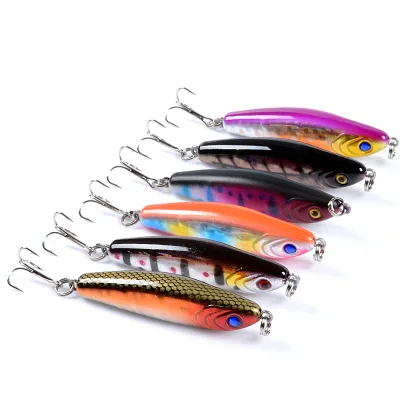

40g Larger Saltwater Sea Factory Wholsale OEM Pencil Popper Fishing Lure
$1.02 - $1.28
MOQ: 100 Pieces

Factory Wholesale OEM 83G/17cm Larger Salterwater Pencil Popper Fishing Lure
$4.32 - $5.40
MOQ: 100 Pieces







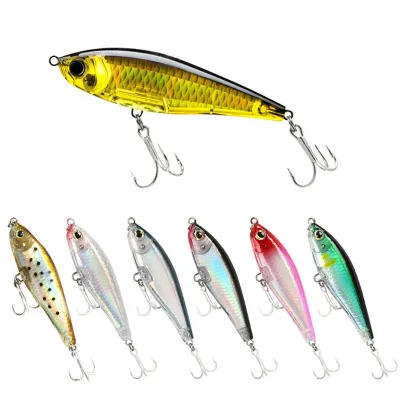
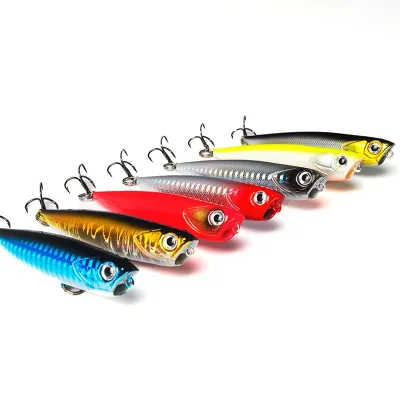
Comprehensive Sourcing Guide
Strategic Sourcing Guide for Saltwater Fishing Pencil Lures
Understanding the Technical Profile of Pencil Lures
The procurement of saltwater fishing pencil lures requires a precise understanding of the specific attributes that define their performance in marine environments. Based on the available product data, these artificial baits are engineered with specific physical characteristics to mimic prey and trigger strikes from predatory fish. The core material composition observed in the supply chain is primarily ABS (Acrylonitrile Butadiene Styrene) or ABS Plastic. This material choice is critical for saltwater applications as it offers a balance of durability, buoyancy control, and resistance to corrosion from salt exposure. The structural integrity of the lure is maintained through this hard plastic construction, which allows for the creation of the distinct "pencil" shape—a slender, elongated body designed to create a specific surface disturbance.
The action of the lure is a defining technical specification. The observed market data indicates a "Slow Sinking Water" action for certain models, while others are categorized simply as "Sinking." This distinction is vital for buyers targeting specific fishing techniques. A slow-sinking profile is often preferred for covering water columns gradually, whereas a sinking action may be utilized for deeper presentations or specific retrieval speeds. The physical dimensions vary significantly across the catalog, with observed standard lengths ranging from 6.4 cm (64mm) to 200 mm (200mm). Weight specifications are equally diverse, with examples ranging from 8.5g to 107g. For instance, a model with a length of 80mm is paired with a weight of 8.5g, while larger variants reach 160mm with 58g or 195mm with 44g. These variations dictate the casting distance and the depth at which the lure operates.
The hook configuration is another critical technical element. The supply data highlights the use of high-performance treble hooks, specifically mentioning brands such as VMC (e.g., model 9650 Bn#4), BKK, Mustad, and Origin. Some listings specify a "Vmc Treble Hook" as a standard fit, while others allow for customization. The hook size and type must be matched to the lure's weight and the target species. For a 107g lure, a larger hook is necessary to ensure a secure hookset, whereas an 8.5g lure requires a more delicate hook to prevent the fish from spitting the bait. The availability of customization for hooks allows buyers to tailor the terminal tackle to their specific regional requirements or target fish species.
Compliance, Certification, and Origin Verification
When sourcing artificial baits from international markets, verifying the origin and adherence to shipping and safety standards is paramount. The primary point of origin for the observed supply is China, with specific manufacturing hubs noted in the Shandong province. This geographic concentration suggests a mature supply chain with established logistics networks for exporting fishing tackle. However, the origin data also notes a general "Sea" location for production, which may refer to the intended marine environment or a specific logistical hub, requiring buyers to clarify the exact manufacturing facility location during due diligence.
Regarding certifications and standards, the provided data does not list specific third-party safety certifications (such as ISO or CE) or environmental compliance marks. Instead, the "standard" field in the product data often refers to the physical specifications of the lure itself, such as "13g 10cm" or "10g 14g 18g 24g, 80mm 100mm." Buyers must be aware that these numerical values represent product dimensions and weights rather than regulatory compliance standards. Consequently, procurement teams should not assume that the listed products automatically meet international safety or environmental regulations without explicit verification.
To ensure compliance, buyers should request documentation regarding the materials used, specifically confirming that the ABS plastic is free from harmful substances like lead or BPA, which are often scrutinized in fishing gear. Since the data mentions "OEM/ODM: Acceptable" and "OEM Service Accepted," there is a significant opportunity for buyers to work with suppliers to ensure that the final product meets the specific regulatory requirements of the destination market. This includes verifying that the packaging materials, such as OPP bags or Pet boxes, comply with local waste and labeling laws. The absence of explicit certification data in the source material necessitates a proactive approach where the buyer defines the compliance requirements as a condition of the purchase order.
Cost Drivers and Pricing Dynamics
The pricing structure for saltwater pencil lures is influenced by several variables, including material costs, customization levels, and order volume. The observed listed price range in the market spans from $0.29 to $5.40 USD. This wide variance indicates that the final cost is highly dependent on the specific model, the complexity of the paint job, the quality of the hooks, and the packaging chosen. Lower-priced items in the $0.29 range likely correspond to basic models with standard packaging (such as OPP bags) and minimal customization. Conversely, the higher end of the spectrum, approaching $5.40, likely reflects premium models with advanced action profiles, custom hook configurations, and more elaborate packaging like "Slided Blister+Paper Card" or "Pet Box + Card."
Material costs play a significant role in the base price. The use of ABS plastic is a standard industry practice, but the quality of the resin and the precision of the molding process can affect the cost. Furthermore, the inclusion of branded hooks, such as VMC, adds a tangible cost component compared to generic hooks. The "Customisation: Available" attribute suggests that buyers can influence the price by requesting specific colors, logos, or hook types. For example, a request for "OEM Colores" or a specific color palette of "5 Colour" or "8 Colors Available" may incur additional setup fees or higher unit costs due to the complexity of the painting process.
Order volume is a critical factor in determining the final landed cost. The Minimum Order Quantity (MOQ) varies significantly across the supply base, ranging from as low as 2 pieces to as high as 1500 pieces. Some suppliers set an MOQ of 300 pieces, while others specify 300 pieces per color, which can drastically increase the total order volume required. A buyer ordering a single SKU might find an MOQ of 2 pieces, making it accessible for sampling, but a full-scale procurement for a retail line would likely require adhering to the 300-piece or 300-piece-per-color thresholds. Understanding these MOQ structures is essential for budgeting, as the unit price often decreases as the order volume approaches the higher tiers of the MOQ range.
Typical Applications and Target Scenarios
The application of saltwater pencil lures is dictated by their physical design and action. The data indicates that these lures are suitable for various aquatic environments, specifically listed as "STREAM, River, Lake." While the core keyword is "saltwater fishing," the inclusion of river and lake environments suggests that these lures are versatile and can be used in brackish waters or estuaries where saltwater and freshwater mix. The "Slow Sinking Water" action makes them particularly effective for targeting species that hunt near the surface or in the upper water column, such as snook, redfish, or tarpon in coastal areas.
The size and weight of the lure determine its specific application. Smaller lures, such as the 6.4 cm or 80mm models weighing 8.5g to 10g, are ideal for targeting smaller predatory fish or for use in shallow, structured waters where a subtle presentation is required. These smaller profiles allow for a more natural swimming action that mimics small baitfish. In contrast, larger lures like the 195mm/44g or 200mm/107g models are designed for heavy-duty saltwater fishing. These larger profiles are capable of casting long distances and are intended to attract larger, more aggressive predators. The "Sinking" action of these heavier lures allows them to reach deeper depths quickly, making them suitable for offshore applications or when fishing over drop-offs.
The customization options also play a role in application. The availability of "8 Colors Available" or "5 Colour" options allows buyers to stock lures that match the local forage fish in different regions. For example, a silver or white color profile might be preferred in clear water conditions, while a darker or more vibrant color might be necessary in stained water. The "Free Sample: Support" attribute indicates that buyers can test these lures in their specific target environments before committing to large orders, ensuring the action and color profile are effective for their intended market.
Supplier Evaluation and Sourcing Strategy
Evaluating suppliers for saltwater pencil lures requires a focus on their ability to meet customization and quality standards. The data shows that "OEM/ODM: Acceptable" and "OEM Service Accepted" are common attributes, indicating that many suppliers are willing to work with buyers to create branded products. This is a significant advantage for buyers looking to establish a unique brand identity. However, the variability in lead times and MOQs necessitates a careful selection process.
Lead times are a critical factor in supply chain planning. The observed lead time ranges from 50 to 60 days, or "Negotiate." This extended timeframe suggests that production is not immediate and may involve complex molding and painting processes. Buyers must account for this lead time in their inventory planning to avoid stockouts. The "Negotiate" aspect implies that there may be flexibility for expedited production, but this likely comes at a premium cost.
When evaluating suppliers, buyers should verify the consistency of their hook sourcing. The data mentions specific hook brands like VMC, BKK, and Mustad, but also notes "Custom" options. A reliable supplier should have a consistent supply chain for these high-quality hooks to ensure that the final product performs as expected. Additionally, the packaging options, ranging from simple "OPP Bag" to more protective "Slided Blister+Paper Card" or "Box," should be evaluated based on the fragility of the lures and the shipping conditions. The "Customise" attribute for packing suggests that buyers can request packaging that aligns with their retail requirements, which can be a differentiator in the market.
Quality Control and Long-Term Procurement Considerations
Quality control for artificial baits must focus on the integrity of the molding, the durability of the paint, and the strength of the hooks. Since the material is ABS plastic, buyers should inspect samples for any flash, uneven surfaces, or weak points that could lead to breakage during casting or retrieval. The "Slow Sinking" and "Sinking" actions must be verified to ensure the lure swims true and does not wobble excessively, which could reduce its effectiveness. The hook attachment points must be robust, as the force of a strike from a large saltwater fish can easily pull a hook out of a poorly molded lure.
Long-term procurement considerations involve building a relationship with suppliers who can maintain consistency over time. The "Customisation: Available" feature is a double-edged sword; while it offers flexibility, it also introduces variability. Buyers should establish clear quality standards for custom colors and hook types to ensure that every batch meets the same performance criteria. The "Free Sample: Support" is a valuable tool for ongoing quality assurance, allowing buyers to periodically test new batches against established benchmarks.
Furthermore, the "Lead Time: 50-60 Days or Negotiate" suggests that buyers should plan for a longer supply chain cycle. This necessitates maintaining a buffer stock or working with multiple suppliers to mitigate the risk of delays. The "MOQ" variability, from 2 pieces to 1500, offers flexibility for different stages of the business, from initial sampling to full-scale production. However, buyers should be mindful of the "300PCS*5colors" requirement, which implies that a diverse color range may require a larger total order volume.
In conclusion, sourcing saltwater fishing pencil lures involves a careful balance of technical specifications, cost management, and supplier reliability. By leveraging the observed data on materials, dimensions, and customization options, buyers can make informed decisions that align with their market needs. The focus should remain on verifying quality, ensuring compliance, and establishing clear communication channels with suppliers to navigate the complexities of international procurement.
| Feature | Observed Specification | Procurement Implication |
|---|---|---|
| Material | ABS / ABS Plastic | Durable, corrosion-resistant; verify resin quality. |
| Action | Slow Sinking / Sinking | Matches target species; verify swimming action in samples. |
| Length Range | 6.4cm to 200mm | Select size based on target fish and casting distance. |
| Weight Range | 8.5g to 107g | Heavier lures for deeper/offshore; lighter for surface/shallow. |
| Hook Options | VMC, BKK, Mustad, Custom | Ensure hook strength matches lure weight; verify brand availability. |
| MOQ | 2 pcs to 1500 pcs | Plan inventory based on tiered MOQs; 300 pcs is common baseline. |
| Lead Time | 50-60 Days (Negotiable) | Plan production cycles accordingly; negotiate for urgency. |
| Packaging | OPP Bag, Pet Box, Blister, Box | Choose based on retail needs and product protection. |
| Origin | China (Shandong) | Verify facility location and shipping logistics. |
| Customization | Available (Color, Hook, Pack) | Leverage for branding; define strict quality standards. |
FAQs
What materials are used for saltwater fishing pencil lures?
These lures are primarily constructed from ABS plastic, which offers durability and corrosion resistance suitable for marine environments. The hard plastic body allows for the creation of the distinct pencil shape designed to mimic prey effectively in saltwater conditions.
How do the dimensions and weights vary across models?
Standard lengths range from 6.4 cm to 200 mm with weights spanning from 8.5g to 107g. Specific models include an 80mm lure weighing 8.5g and a larger 200mm variant weighing 107g to accommodate different casting distances and target species.
Which hook brands are typically included with these lures?
High-performance treble hooks from brands like VMC, BKK, Mustad, and Origin are commonly used. Specific configurations may include VMC 9650 Bn#4 hooks, and customization options are available to match the lure weight and target fish requirements.
Can buyers customize the colors and packaging for orders?
Yes, customization is available for colors, with options like 5 or 8 specific colors, and packaging can be tailored to needs. Buyers can request OEM colors and choose from packing types such as OPP bags, Pet boxes, or slided blister cards.
What is the typical lead time for manufacturing these lures?
The standard lead time ranges from 50 to 60 days, though this can be negotiated depending on order specifics. Buyers should account for this extended production window when planning inventory, as the timeframe reflects complex molding and painting processes.
What are the minimum order quantities for purchasing these lures?
Minimum order quantities vary significantly, ranging from as low as 2 pieces up to 1500 pieces depending on the supplier. Some specific requirements include an MOQ of 300 pieces or 300 pieces per color, affecting the total volume needed for a full order.
Where are these saltwater fishing lures typically manufactured?
The primary origin for these products is China, with specific manufacturing hubs located in the Shandong province. Some data also notes a general sea location, but the confirmed production base is within China for the observed supply chain.