Source Saltwater Surf Fishing Rods for Beach, Stream, and Sea
Find 26 Saltwater Surf Fishing Rod options for beach, stream, and sea applications. Compare carbon construction, heavy power ratings, and customizable colors from Chinese manufacturers. Evaluate lure weights, section counts, and packing details to select the right gear for your sourcing needs.
Key considerations
Products List


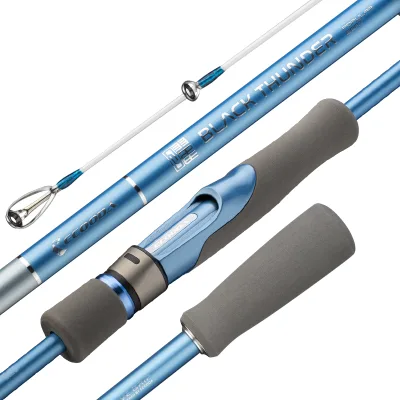


Telescopic Carbon Surf Rod for Inshore Saltwater Freshwater Bank Fishing
$28.00 - $49.00
MOQ: 10 Pieces


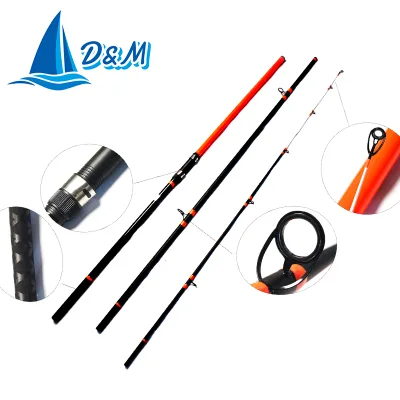

Saltwater Trout Bass Walleye Pike Travel Fishing Surf Casting Ultralight Spinning Rods
$1.60 - $2.00
MOQ: 500 Pieces
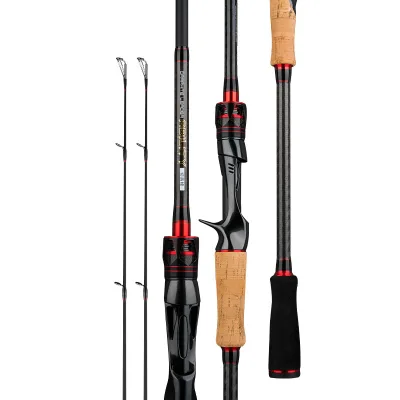
Comprehensive Sourcing Guide
Saltwater Surf Fishing Rod Sourcing Guide
Buyers must first distinguish between fixed-section and telescopic designs, as the observed listings reveal distinct structural profiles for different deployment scenarios. The data indicates a split between two-piece models suited for heavy-duty beach casting and six-piece telescopic units designed for portability in stream or sea environments. Understanding this fundamental mechanical difference is critical before evaluating specific performance metrics, as the section count directly influences the rod's action, casting distance, and storage logistics.
Procurement decisions should also account for the specific customization capabilities observed in the market, where color and branding options are frequently available. Suppliers indicate that OEM services are standard, allowing buyers to tailor the product name and visual identity to their brand requirements. However, the variation in grip types, ranging from full wells to split backs, suggests that ergonomic preferences must be matched to the intended fishing style, whether it involves standing on a beach or operating from a boat.
Product Scope and Observed Listing Signals
The observed product range spans a wide spectrum of lure weights, with specific listings supporting loads between 100 and 250 grams, which defines the heavy power category. This high-power rating is essential for surf fishing, where anglers must cast heavy lures against strong currents and wind. Buyers should verify that the listed power rating aligns with their target species, as the heavy classification implies a stiff backbone necessary for fighting large saltwater fish rather than light inshore species.
Listing signals also highlight significant variability in collapsed lengths, ranging from 0.6 meters for compact telescopic rods to 1.2 meters for larger two-piece models. This dimension is a primary driver for logistics planning, as the packed size determines shipping costs and storage requirements for the buyer. The presence of specific packing methods, such as cloth bags or sea freight containers, further indicates that the physical dimensions of the finished product will heavily influence the total landed cost and supply chain efficiency.
Technical Specifications to Verify
Verification of the rod's material composition is the first technical step, with carbon fiber identified as the primary construction material for the observed listings. Carbon provides the necessary stiffness-to-weight ratio required for heavy surf applications, but buyers must confirm the specific grade and weave pattern to ensure durability against saltwater corrosion. The handle material, typically EVA foam, should be inspected for density and grip texture to ensure it remains secure in wet conditions during extended use.
Buyers must also scrutinize the guide system specifications, as the listings explicitly mention stainless steel guides which are critical for resisting saltwater degradation. The top diameter of the guides, observed in the range of 1.0mm to 1.1mm, dictates the line capacity and casting performance, requiring precise matching to the intended fishing line type. Additionally, the action rating, which varies between fast, medium, and moderate, must be cross-referenced with the lure weight range to ensure the rod loads correctly during the cast and retrieves fish efficiently.
Compliance and Safety Documentation
While specific certification documents are not explicitly detailed in the provided product facts, buyers should request evidence of material safety and environmental compliance for all carbon and EVA components. Saltwater fishing gear often requires adherence to international standards regarding the use of heavy metals and chemical treatments in manufacturing processes. Procurement teams must ensure that the supplier can provide documentation proving that the materials used do not leach harmful substances into the marine environment, which is increasingly a requirement for B2B buyers in regulated markets.
Safety documentation should also cover the structural integrity of the rod under load, particularly given the heavy power classification observed in the listings. Buyers should verify that the supplier has conducted internal stress tests to confirm the rod can withstand the maximum lure weight without failure. Although specific test results are not listed, the expectation of a robust build quality implies that the manufacturer must have protocols in place to validate the rod's performance against the stated specifications before shipping.
Cost Drivers and Commercial Terms
The minimum order quantity (MOQ) is a significant commercial factor, with observed ranges extending from 200 units up to 500 units depending on the specific model and customization level. This threshold directly impacts the unit cost and the initial capital outlay required for a new buyer entering the market. Buyers must calculate whether their projected sales volume justifies the MOQ, as ordering below the threshold may result in higher per-unit costs or require the purchase of mixed SKUs to meet the supplier's production requirements.
Pricing structures are further influenced by the level of customization, including color selection and OEM branding, which are noted as available options in the listings. Custom colors and specific branding often incur additional tooling or setup fees that are not reflected in the base price range of 1.6 to 68 USD. Buyers should negotiate these variable costs carefully, as the final landed price will depend on the complexity of the customization and the volume of the order, requiring a clear understanding of the cost drivers before finalizing the purchase agreement.
Supplier Qualification and Quality Control
Supplier qualification should begin with a review of their production origin, as the data confirms that these products originate from China, a major hub for fishing tackle manufacturing. Buyers must assess the supplier's capacity to maintain consistent quality across large batches, especially given the variation in specifications like collapsed length and section count. A robust quality control process is essential to ensure that every rod meets the stated material and performance standards, minimizing the risk of defects in the final shipment.
Quality control protocols must also address the specific packaging requirements observed, such as the use of cloth bags or specific sea freight containers. Proper packaging is vital to prevent damage during transit, particularly for telescopic rods with multiple sections that are prone to breakage if not secured correctly. Buyers should request a detailed quality assurance plan that outlines how the supplier inspects the guides, handles, and carbon blanks to ensure they meet the agreed-upon specifications before the goods leave the factory.
Long-Term Procurement Checks
Establishing a long-term relationship requires regular audits of the supplier's ability to maintain the specific product standards observed, such as the 4.2m and 4.5m lengths. Consistency in these dimensions is crucial for brand reliability, as customers expect uniform performance across all units of a specific model. Buyers should implement a system for periodic sampling and testing to verify that the carbon material and guide systems continue to meet the heavy power and lure weight requirements over time.
Procurement teams must also monitor the supplier's responsiveness to customization requests, as the market demand for specific colors and branding may evolve. The ability to supply samples and adjust production lines for new designs is a key indicator of a supplier's flexibility and long-term viability. Regular communication regarding lead times and production capacity will help buyers manage inventory levels effectively, ensuring they can meet market demand without facing delays or stockouts.
FAQs
What customization options are available for saltwater surf fishing rods?
Customization is available for these rods, allowing buyers to specify details such as color and branding. The product supports OEM services, enabling tailored designs for specific market needs. This flexibility ensures that the final product aligns with unique buyer requirements and brand identity.
What materials are used in the construction of these surf rods?
The rods are constructed using carbon material for the main body, providing strength and sensitivity. The handle material is EVA, offering a comfortable and durable grip for extended use. This combination ensures performance suitable for heavy power applications in saltwater environments.
What are the available sizes and specifications for these fishing rods?
Available sizes include 4.2m and 4.5m lengths. The product is designed for saltwater surf fishing, with specific models like 115 and surf rods 073. These specifications cater to different casting distances and target species, ensuring versatility for various fishing conditions and techniques.
Can suppliers provide samples of the saltwater surf fishing rods?
Yes, suppliers could supply samples for evaluation before bulk orders. This allows buyers to verify quality, material, and performance firsthand. Sampling is a practical step to ensure the product meets specific requirements before committing to larger quantities, reducing risk in the sourcing process.
What is the typical MOQ for ordering these surf fishing rods?
The typical MOQ is 200 units, though observed ranges vary from 1 to 500. Buyers should confirm specific MOQs with suppliers, as they may depend on customization levels and production schedules. Understanding MOQs helps in planning inventory and managing initial investment costs effectively.
How are these fishing rods packed for shipping?
Packing options include cloth bags for individual rod protection. Some listings indicate sea freight packaging standards, ensuring safe transit. Proper packing is crucial to prevent damage during long-distance shipping, maintaining product integrity upon arrival at the destination port or warehouse.