Source Samsung Led Grow Light Tube for Seed Starting, Bloom, VEG
Find 30 Samsung Led Grow Light Tube options tailored for seed starting, bloom, and vegetative growth. Compare models with varying wattages, full spectrum capabilities, and dimming features to match your specific plant cultivation needs.
Key considerations
Products List
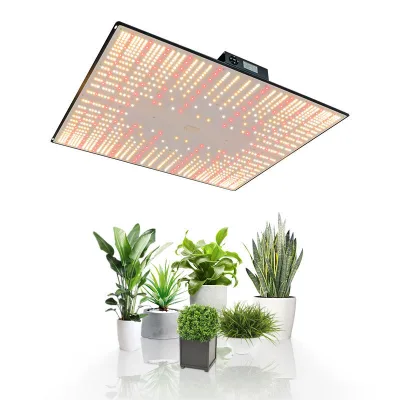
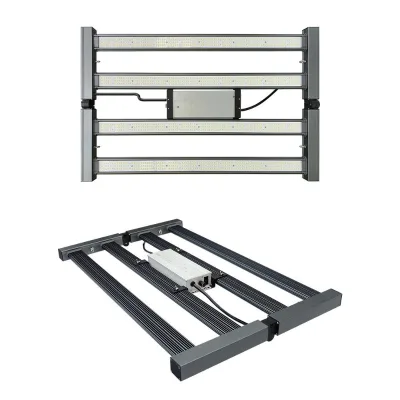


Samsung LED Grow Lights Full Spectrum Foldable LED Bar for Veg and Flower
$119.00 - $149.00
MOQ: 1 Pieces


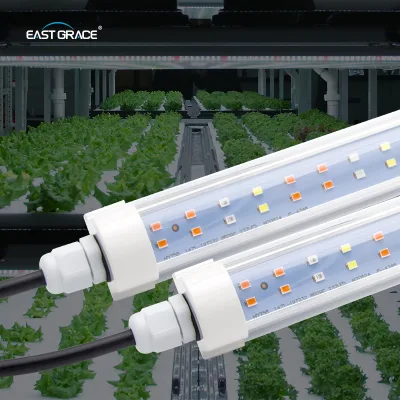


3.2μMol/J High Efficacy LED Grow Light Linear Bar for Commercial Cultivation
$118.00 - $140.00
MOQ: 1 Pieces


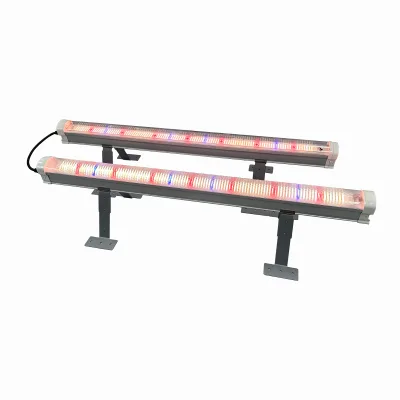


Comprehensive Sourcing Guide
Strategic Sourcing Guide for Samsung LED Grow Light Tubes
Understanding the Technical Architecture of Samsung LED Grow Tubes
When sourcing Samsung LED grow light tubes, buyers must first distinguish between the core light-emitting component and the final product assembly. The supplied product data confirms that the light source is consistently identified as "Samsung" or "Samsung SMD LED," indicating the use of specific semiconductor chips known for high efficiency and reliability in horticultural applications. These tubes are not generic fixtures; they are engineered for specific plant growth stages, ranging from vegetative growth and seed starting to flowering and fruiting. The technical architecture relies on a full-spectrum approach, often combining white light with specific wavelengths like 660nm plant red light to optimize photosynthesis.
The power configuration for these tubes varies significantly, with observed lamp power ratings including 100W, 200W, 400W, 240W, 320W, and 480W. This variance allows procurement teams to select units that match the specific canopy density and plant type. For instance, lower wattage units may be suitable for seedling propagation, while higher wattage models are designed for mature flowering stages. The luminous flux is a critical metric, with observed values ranging from 10,000 lumens to 115,200 lumens depending on the model. Furthermore, the efficacy is notable, with specific models reporting a luminous efficiency of 240 lm/W and a Photosynthetic Photon Efficacy (PPE) of 2.5 µmol/J. These figures suggest a high conversion rate of electrical energy into usable light for plants, a key indicator of operational cost efficiency.
The physical construction of these tubes typically utilizes an aluminum or aluminum alloy body, providing necessary heat dissipation for high-power LEDs. The housing material often includes a PC sheet, contributing to the structural integrity and light diffusion. The IP rating is observed as IP65, which signifies a dust-tight enclosure and protection against water jets, making these units suitable for humid greenhouse environments or indoor vertical farming setups. The operating temperature range is generally specified between -20°C and 40°C, or -10°C to 40°C, with some models supporting a broader range of -40°C to +45°C. This thermal resilience is essential for maintaining consistent performance in varying climate-controlled environments.
Compliance, Certification, and Safety Verification
In the B2B procurement of horticultural lighting, verifying compliance with international safety and environmental standards is non-negotiable. The supplied product attributes explicitly list certifications such as CE, RoHS, and SAA. While the general background notes CE and RoHS as common certifications, the specific product data confirms their presence on the listed items. Buyers must treat these certifications as mandatory verification points rather than optional features. CE certification indicates conformity with health, safety, and environmental protection standards for products sold within the European Economic Area. RoHS compliance ensures that the product is manufactured without specific hazardous materials, which is critical for environmental sustainability and worker safety. SAA certification is particularly relevant for the Australian market, indicating compliance with local electrical safety standards.
However, buyers should exercise caution regarding the scope of these certifications. The presence of a certification mark on a product listing does not automatically guarantee that every batch or every specific configuration meets the standard. Procurement teams must request valid, up-to-date test reports from the supplier to verify that the specific model number, such as HJT-P127 or HJT-P139, has been tested against the relevant standard. The input voltage range is observed as 100-277V AC, with some models supporting 200-480V AC. This wide voltage range suggests compatibility with various global power grids, but the specific frequency (AC 50-60Hz) must be confirmed to ensure grid compatibility in the destination country.
Additionally, the warranty terms provide a secondary layer of compliance assurance. The observed warranty periods range from 1 year to 5 years. A longer warranty period, such as the 5-year option, often implies a higher confidence in the product's durability and the supplier's commitment to quality. However, the warranty terms should be scrutinized for exclusions, particularly regarding environmental factors like humidity or temperature extremes that exceed the specified operating ranges. Buyers should ensure that the warranty covers the LED driver and the light source itself, as these are the most common points of failure in grow light systems.
Cost Drivers and Pricing Dynamics in LED Procurement
The pricing for Samsung LED grow light tubes is influenced by a complex interplay of technical specifications, volume, and customization requirements. The observed price range in the market is substantial, spanning from $2 to $530 USD. This wide disparity indicates that the cost is not linear but rather driven by specific product attributes. Lower-priced items may correspond to smaller form factors, lower wattage, or basic configurations, while the higher end of the spectrum likely represents high-power units (e.g., 480W), advanced drivers, or models with custom spectrum options.
Volume is a primary cost driver, as evidenced by the observed Minimum Order Quantity (MOQ) ranging from 1 to 1000 units. Buyers purchasing small quantities may face a higher per-unit cost due to the lack of economies of scale in manufacturing and logistics. Conversely, orders approaching the 1000-unit MOQ threshold often unlock significant price reductions. The customization factor also plays a crucial role in pricing. The product data indicates that customization is available for spectrum and potentially other features. Custom orders typically incur additional engineering and setup costs, which are passed on to the buyer.
Other cost drivers include the lamp body material and the complexity of the driver circuitry. Units with aluminum alloy bodies and high-efficiency drivers (240 lm/W) will naturally command a premium over basic aluminum models. The inclusion of dimming capabilities, such as knob dimming or LCD monitor models, adds to the component cost. Furthermore, the lifespan of the product, observed at 50,000 hours, is a long-term cost factor. While a higher upfront cost for a 50,000-hour unit may seem steep compared to a shorter-life alternative, the total cost of ownership over time is often lower due to reduced replacement frequency and maintenance labor.
Typical Applications and Spectrum Optimization
The versatility of Samsung LED grow light tubes makes them suitable for a diverse array of agricultural applications. The product attributes explicitly list applications including vegetative growth, flowering, seed starting, and fruiting. This broad applicability is achieved through the full-spectrum design, which mimics natural sunlight and covers the photosynthetically active radiation (PAR) range. The specific mention of "Leafy, Fruit and Vegetable, Flowers, Fruit, Seedling, Special Crops" in the product data highlights the adaptability of these lights for different crop types.
For seed starting and seedling propagation, the lower wattage options and specific spectrum tuning are critical. The ability to provide a balanced spectrum without excessive heat allows for delicate young plants to thrive without stress. In the vegetative stage, the focus shifts to blue light content to promote compact, sturdy growth. The full-spectrum tubes support this by ensuring the necessary blue wavelengths are present. During the flowering and fruiting stages, the inclusion of 660nm red light becomes paramount. The observed spectrum data confirms the presence of this specific red wavelength, which is essential for triggering flowering and increasing fruit yield.
The mounting requirements are also application-specific. The data specifies a "Hanging Mounting" method with a recommended mounting height greater than 6 inches (15.2 cm) above the plant canopy. This distance is crucial for preventing light burn while ensuring the plants receive adequate intensity. The shape of the light, described as square, and the single package size (XX cm) suggest that these units are designed for uniform light distribution across a rectangular growing area. For commercial growers, the ability to design lighting and circuitry solutions is a significant advantage, allowing for optimized layouts that maximize light coverage and minimize energy waste.
Supplier Evaluation and Quality Control Protocols
Evaluating suppliers for Samsung LED grow light tubes requires a rigorous approach that goes beyond the initial product listing. The brand name "HJT" is observed in the product data, but buyers should not limit their search to a single brand. Instead, the focus should be on the supplier's ability to deliver consistent quality and technical support. Key evaluation criteria include the supplier's experience with Samsung LED components, their manufacturing capacity, and their track record with international certifications.
Quality control should be a central part of the procurement process. Buyers must verify that the supplier implements strict quality assurance measures at every stage of production. This includes incoming quality control for Samsung LED chips, in-process testing for driver stability, and final product testing for light output and spectrum accuracy. The observed lifespan of 50,000 hours at 25°C is a benchmark that must be validated through accelerated life testing. Buyers should request test reports that demonstrate the product's ability to maintain light output over time, ensuring that the L70 or L80 values meet industry standards.
The supplier's ability to provide lighting and circuitry design services is another critical factor. This capability indicates a deeper level of technical expertise and the ability to offer tailored solutions for specific growing environments. Buyers should assess the supplier's responsiveness to technical inquiries and their willingness to provide custom spectrum options. The presence of a 5-year warranty option suggests a supplier with confidence in their product's longevity, but the terms of the warranty must be clear and enforceable.
Long-Term Procurement and Operational Considerations
Sourcing Samsung LED grow light tubes is not merely a transactional purchase but a strategic investment in the long-term productivity of a farming operation. The observed lifespan of 50,000 hours is a significant asset, but it is contingent on proper installation and maintenance. Buyers must consider the operating temperature range and ensure that the installation environment stays within the specified limits of -20°C to 40°C or -10°C to 40°C. Exceeding these limits can significantly reduce the lifespan of the LEDs and the driver components.
The dimming capability is a key feature for long-term operational flexibility. The support for dimming, whether through knob control or LCD monitor models, allows growers to adjust light intensity based on the plant's growth stage and environmental conditions. This flexibility can lead to energy savings and improved crop quality. However, the compatibility of the dimmer with the driver must be verified to prevent flickering or premature failure.
Supply chain stability is another long-term consideration. The observed place of origin is Fujian, China, a major hub for electronics manufacturing. While this location offers access to a robust supply chain, buyers should assess the supplier's logistics capabilities and lead times. The wide range of MOQs (1-1000) suggests flexibility, but buyers should plan for potential lead time variations, especially for custom orders. Establishing a long-term partnership with a reliable supplier can mitigate these risks and ensure a steady supply of high-quality lighting solutions.
| Feature | Observed Range/Value | Procurement Consideration |
|---|---|---|
| Lamp Power | 100W - 480W | Match to canopy density and crop stage |
| Lifespan | 50,000 Hours | Verify test reports for L70/L80 values |
| IP Rating | IP65 | Ensure suitability for humid environments |
| Certifications | CE, RoHS, SAA | Request valid test reports for specific models |
| Warranty | 1 Year - 5 Years | Review terms for exclusions and coverage |
| Input Voltage | 100-277V / 200-480V | Confirm compatibility with local grid |
| Spectrum | Full Spectrum + 660nm | Verify red light content for flowering |
| Mounting | Hanging (>6" height) | Plan structural support and height adjustment |
In conclusion, sourcing Samsung LED grow light tubes requires a balanced approach that combines technical verification, compliance checks, and strategic supplier evaluation. By focusing on the specific attributes observed in the product data and maintaining a rigorous quality control process, buyers can secure lighting solutions that deliver high efficiency, reliability, and long-term value for their horticultural operations.
FAQs
What certifications do Samsung LED grow light tubes have?
These tubes typically hold CE, RoHS, and SAA certifications for safety and environmental compliance. Buyers must verify valid test reports for specific model numbers like HJT-P127 to ensure batch consistency with these international standards.
Which power options are available for Samsung LED grow tubes?
Available lamp power ratings include 100W, 200W, 400W, 240W, 320W, and 480W to match different crop needs. Lower wattage suits seedlings while higher wattage models support mature flowering stages with increased luminous flux.
How long is the lifespan of these Samsung LED grow lights?
The observed lifespan is 50,000 hours at 25 degrees Celsius for the listed models. This duration assumes operation within the specified temperature range of -20 to 40 degrees Celsius to maintain performance integrity.
Can these tubes be customized for specific plant spectra?
Customization is available for spectrum and other features to meet specific agricultural requirements. Buyers should note that custom orders may incur additional engineering costs and require confirmation of lead times before production.
What is the minimum order quantity for Samsung LED grow tubes?
The observed minimum order quantity ranges from 1 to 1000 units depending on the supplier configuration. Smaller orders may have higher per-unit costs while larger volumes often unlock significant price reductions.
Which materials are used for the lamp body construction?
The lamp body is constructed from aluminum or aluminum alloy for effective heat dissipation. Housing materials often include a PC sheet to ensure structural integrity and proper light diffusion within the fixture.
What warranty periods are offered for these grow light tubes?
Warranty terms range from 1 year to 5 years depending on the specific product model and supplier. A longer warranty often indicates higher confidence in durability but requires scrutiny of exclusions regarding environmental factors.