Source Scalp Scrubber for Home, Salon, and Travel Use
Find 30 Scalp Scrubber options for home, salon, and travel use. Compare features like silicone bristles, bamboo handles, and custom branding to select the right hair care tool for your business needs.
Key considerations
Products List

Silicone Scalp Scrubber Head Scrubber Hair Wash Cleansing Hair Shampoo Brush
$0.51 - $0.57
MOQ: 3000 Pieces


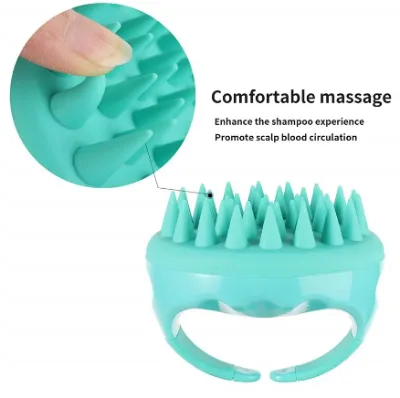


Ergonomic Design Scalp Scrubber Easy Grip Comfortable Using Experience Scalp Brush
$0.41 - $0.51
MOQ: 3000 Pieces

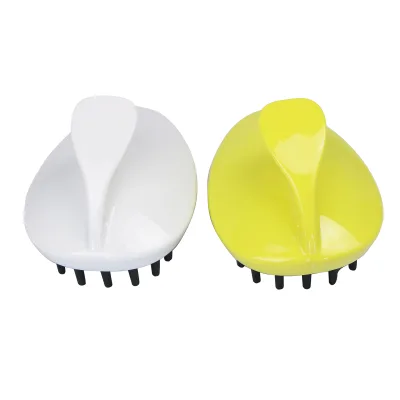
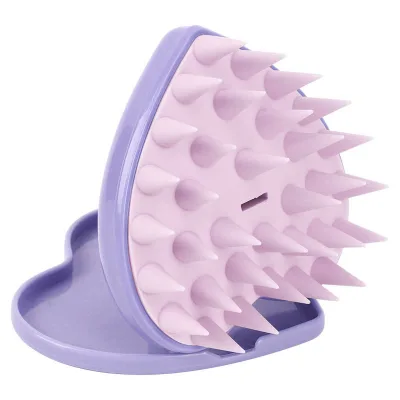
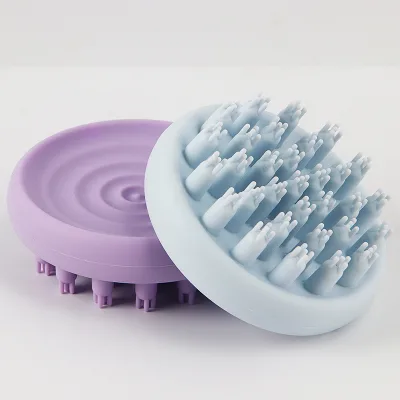

Comprehensive Sourcing Guide
Strategic Sourcing Guide for Scalp Scrubber Procurement
The global demand for specialized hair care tools has driven a significant shift toward products that offer both mechanical exfoliation and therapeutic benefits. The Scalp Scrubber, a device designed to cleanse the scalp while stimulating blood circulation, has emerged as a high-value category within the broader hair comb and brush market. For B2B buyers, navigating this sector requires a disciplined approach to verifying technical specifications, understanding material composition, and ensuring supplier compliance. This guide synthesizes observed market data to provide a framework for sourcing these devices effectively, focusing on the intersection of functional design, material safety, and supply chain reliability.
Technical Specifications and Material Composition
When evaluating scalp scrubbers, the primary technical differentiator lies in the material composition of the bristles or contact surface. The supplied data indicates a diverse range of materials, with Silicone and Plastic being the most prevalent. Silicone-based models are often highlighted for their flexibility and ability to provide a gentle massage, which aligns with the observed function of "Scalp Relaxer and Essential Oil Massage." In contrast, products utilizing ABS Plastic or generic Plastic tooth materials offer a more rigid structure, suitable for deep cleaning or detangling. Buyers must verify the specific "Brush Material" or "Tooth Material" for each SKU, as the tactile experience and durability vary significantly between these options.
Dimensions are another critical specification that dictates the product's usability and packaging efficiency. Observed standard sizes include compact dimensions such as 7x7.8cm, 2.82in * 3.113in, and 6.7*7.7cm. Larger or specialized models may feature dimensions like 92.49030.6mm or 4.84.87.8cm. The variation in size suggests that buyers should not assume a universal form factor. Instead, procurement teams must request specific dimensional drawings to ensure the product fits the intended retail packaging or travel kit requirements. Furthermore, the "Folded" attribute is noted as "Unfolded" in several listings, indicating that while some units may be collapsible, many are rigid structures. Verifying the physical state of the product upon delivery is essential to avoid disputes regarding portability.
Functional Applications and Target Demographics
The versatility of scalp scrubbers allows them to serve multiple applications across different settings. The data confirms that these products are suitable for Home, Salon, Hotel, and Travel environments. This multi-environment suitability is a key selling point for distributors looking to create bundled offerings. For instance, a compact model with dimensions around 85cm (likely referring to a handle or specific length variant) might be marketed for travel, while larger, ergonomic designs are better suited for professional salon use.
Target demographics also vary, with products explicitly labeled for Female, Unisex, and All Ages or Adult groups. This segmentation is crucial for marketing alignment. A product marketed as "Naturally Eco-Friendly" with a Bamboo Handle and Silicone bristles may appeal to a demographic seeking sustainable, unisex solutions. Conversely, a brightly colored ABS plastic comb in Pink, Green, Purple, and Black might be targeted specifically at female consumers or children. Buyers must cross-reference the "Gender" and "Age Group" attributes with their specific market strategy to ensure the product mix aligns with their customer base. The "Function" is consistently described as "Hair Beauty Care," but specific sub-functions like "Scalp Relaxer" and "Essential Oil Massage" should be verified against the physical design of the bristles to ensure the marketing claims are physically supported by the product.
Compliance, Certification, and Standards Verification
In the personal care tool sector, regulatory compliance is non-negotiable. The supplied facts highlight ISO9001 and BSCI as high-confidence certifications associated with certain suppliers. These certifications indicate a commitment to quality management systems and social compliance in the supply chain, respectively. While CE and RoHS are mentioned in the background context, they should be treated as potential requirements rather than guaranteed attributes unless explicitly confirmed in the supplier's documentation.
Buyers must verify the "prod_standard" against the specific product model. Observed standards include metric measurements like 90x90x96.7H(mm) and imperial equivalents like 2.82in * 3.113in. These standards often relate to the physical dimensions or specific manufacturing tolerances. It is imperative to request the full test reports associated with these standards to ensure the product meets safety requirements for electrical components (if applicable) or material safety for skin contact. The "prod_packing" standard, such as 1PC/OPP Bag or 12PCS /Box, also plays a role in compliance, as packaging materials must often meet specific environmental or safety regulations depending on the destination market.
Cost Drivers and Pricing Dynamics
The pricing landscape for scalp scrubbers is influenced by material costs, customization levels, and order volume. The observed price range in the market spans from $0.15 to $2.80 USD. This wide variance is primarily driven by the choice of materials; a basic ABS plastic comb will naturally be at the lower end of the spectrum, while a model featuring a Bamboo Handle and Silicone bristles will command a higher price point. Additionally, the "Customized" color and "Private Label" options significantly impact the final cost.
Minimum Order Quantity (MOQ) is another critical cost driver. The data shows an observed MOQ range of 2 to 5000 units, with a specific high-confidence fact noting an MOQ of 1000 for certain listings. Buyers should be aware that unit costs typically decrease as order volume increases, but the initial investment required to meet the MOQ can be substantial. The "Advantage" of "Facoty Directly" suggests that sourcing directly from the manufacturer may reduce intermediary markups, but this must be balanced against the logistical complexity of managing direct relationships. Buyers should also consider the "Service" offerings, such as Sample+OEM+ODM+Private Label, as these services often carry additional fees that should be factored into the total landed cost calculation.
Supplier Evaluation and Customization Capabilities
Selecting the right supplier requires a thorough evaluation of their customization capabilities and logistical strengths. The data indicates that OEM and ODM services are widely accepted, with many suppliers offering Acceptable Customized Label and Logo options, including Laser Engraved branding. This flexibility allows buyers to create unique brand identities without needing to invest in their own manufacturing infrastructure. However, the "prod_packing" varies from Individual OPP Packaging to Kraft Paper Box or Carton configurations. Buyers must ensure the supplier can accommodate their specific packaging requirements, as this affects both the aesthetic presentation and the shipping efficiency.
Geographic location is a significant factor in lead times and shipping costs. The supplied facts list origins in China, specifically Jiangsu and Guangdong. These regions are known for their robust manufacturing ecosystems, but buyers should verify the specific factory location to assess the proximity to major shipping ports. The "prod_origin" being listed as China is a general indicator, but the specific province can influence the type of materials available and the expertise of the workforce. When evaluating suppliers, buyers should request a detailed breakdown of the production timeline, as "lead times" are not explicitly provided in the data but are critical for inventory planning.
Quality Control and Long-Term Procurement Strategy
Maintaining product quality over time requires a robust quality control (QC) protocol. Given the diverse materials involved, from Silicone to Bamboo and ABS Plastic, buyers should establish clear acceptance criteria for each material type. For silicone products, flexibility and resistance to tearing are key metrics. For bamboo handles, the finish and resistance to moisture are critical. The "Feature" of being "Naturally Eco-Friendly" should be validated through material certificates, as this claim can be easily misused without proper documentation.
Long-term procurement success depends on the supplier's ability to maintain consistency. The "prod_model" numbers, such as HSM600 and JLY-HB-008, serve as unique identifiers for specific product iterations. Buyers should lock in these model numbers for repeat orders to ensure that the product specifications do not drift over time. Additionally, the "Service" aspect of Sample+OEM+ODM suggests that suppliers are willing to collaborate on product development. Buyers should leverage this by requesting pre-production samples that match the final production batch to verify color accuracy, material feel, and packaging integrity before committing to large volumes.
Summary of Key Procurement Parameters
To facilitate quick decision-making, the following table summarizes the critical parameters observed in the market for scalp scrubbers. This comparison highlights the variability in specifications that buyers must navigate.
| Parameter | Observed Range / Options | Verification Requirement |
|---|---|---|
| Material | Silicone, ABS Plastic, Bamboo, Plastic | Confirm "Brush Material" and "Handle Material" per SKU. |
| Dimensions | 7x7.8cm to 92.49030.6mm | Request technical drawings for specific models. |
| Certifications | ISO9001, BSCI (High Confidence) | Verify specific certificates for target markets (e.g., CE, RoHS). |
| MOQ | 2 to 5000 units (Common: 1000) | Negotiate based on volume and initial sample needs. |
| Pricing | $0.15 - $2.80 USD | Correlate price with material complexity and customization. |
| Customization | Logo, Color, Packaging, OEM/ODM | Confirm feasibility of "Private Label" and "Laser Engraved" options. |
| Origin | China (Jiangsu, Guangdong) | Verify factory location for logistics planning. |
| Function | Hair Beauty Care, Scalp Massage | Ensure physical design supports claimed functions. |
In conclusion, sourcing scalp scrubbers requires a meticulous approach to aligning technical specifications with market demands. By rigorously verifying material composition, dimensions, and certification status, buyers can mitigate risks associated with product quality and compliance. The flexibility offered by OEM and ODM capabilities allows for significant brand differentiation, but this must be balanced against the constraints of MOQ and lead times. Ultimately, a successful procurement strategy relies on clear communication with suppliers, detailed quality control protocols, and a deep understanding of the specific attributes that define the product's value proposition in the competitive hair care market.
FAQs
What materials are used for Scalp Scrubber bristles?
Scalp scrubbers typically use silicone or plastic for bristles. Silicone models offer gentle massage and flexibility, while plastic options provide a rigid structure for deep cleaning. Buyers must verify the specific brush material per SKU to ensure the tactile experience matches their needs.
Which certifications do Scalp Scrubber suppliers hold?
High-confidence certifications include ISO9001 and BSCI for quality and social compliance. While CE and RoHS are potential requirements, they are not guaranteed attributes unless explicitly confirmed in supplier documentation. Buyers should request full test reports to ensure safety for skin contact.
How much is the minimum order quantity for these products?
The observed MOQ range spans from 2 to 5000 units, with a common high-confidence value of 1000 units. Unit costs typically decrease as order volume increases, but the initial investment required to meet the MOQ can be substantial for new buyers entering the market.
Can I customize the logo and packaging on scalp scrubbers?
Yes, customization is available for logos, colors, and packaging. Suppliers accept private labels, laser engraving, and custom packaging like kraft paper boxes or OPP bags. Buyers must confirm feasibility of specific options like OEM and ODM services to ensure brand alignment.
Where are Scalp Scrubber manufacturers located?
Manufacturers are located in China, specifically in Jiangsu and Guangdong provinces. These regions offer robust manufacturing ecosystems, but buyers should verify the specific factory location to assess proximity to major shipping ports and influence on lead times and logistics planning.
What is the price range for scalp scrubbers?
The observed price range is between 0.15 and 2.8 USD per unit. This variance is driven by material costs, such as bamboo handles versus ABS plastic, and customization levels. Buyers should correlate price with material complexity and specific customization requirements to estimate landed costs.
Which dimensions are standard for scalp scrubbers?
Standard dimensions vary, including sizes like 7x7.8cm, 2.82in by 3.113in, and 92.4 by 90 by 30.6mm. Buyers should not assume a universal form factor and must request technical drawings to ensure the product fits intended retail packaging or travel kit requirements.