Source Seamless Tummy Control Yoga Jumpsuit for fitness, pilates, and recovery
Compare 30 listings for Seamless Tummy Control Yoga Jumpsuit options featuring quick-dry and four-way stretch properties. Buyers can evaluate material blends like spandex and cotton, customization services, and pricing from verified suppliers in China.
Key considerations
Products List
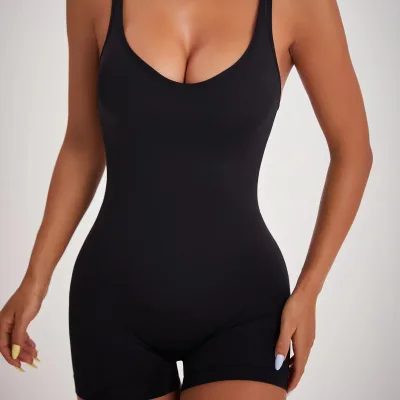
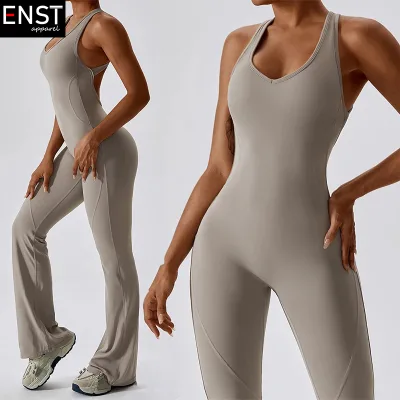


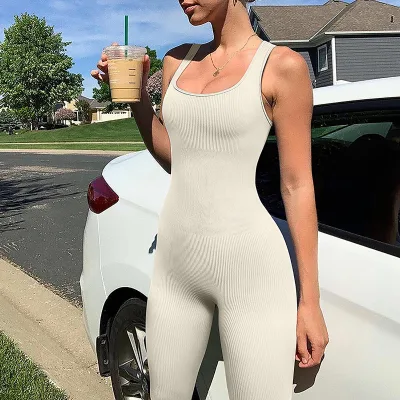


Slimming Seamless Yoga Jumpsuit, off-Shoulder Flared Leg One-Piece Gym Outfit
$11.50 - $12.30
MOQ: 30 piece

Seamless Flared Yoga Jumpsuit, Sleeveless Square Neck One-Piece Workout Outfit
$12.00 - $13.50
MOQ: 30 piece

Your New Fave: off-Shoulder Flared Yoga Jumpsuit with Seamless & Tummy Control
$11.50 - $12.30
MOQ: 30 piece


Comprehensive Sourcing Guide
Strategic Sourcing Guide for Seamless Tummy Control Yoga Jumpsuits
Understanding Product Construction and Technical Specifications
When sourcing seamless tummy control yoga jumpsuits, buyers must first distinguish between the manufacturing techniques that define the final garment's performance. The core keyword implies a specific construction method where the fabric is knitted directly on a circular knitting machine without side seams, reducing friction and enhancing the aesthetic of a continuous silhouette. Based on available product data, the "Seamless" technic is a verified attribute for specific listings, often paired with "Automated cutting" for other variations. This distinction is critical because seamless construction typically utilizes high-elasticity materials like Spandex blends to achieve the necessary compression and recovery required for tummy control.
The material composition is a primary driver of performance. Observed specifications indicate that successful seamless yoga jumpsuits frequently utilize blends of Spandex with Cotton, Polyester, or Nylon. For instance, a Spandex/Cotton blend offers a softer hand feel, while Spandex/Polyester or Spandex/Nylon combinations often provide superior durability, moisture-wicking capabilities, and four-way stretch. The "Four-Way Stretch" feature is a recurring high-confidence attribute, ensuring the garment moves with the body in all directions, which is essential for deep yoga poses. The fabric must also possess quick-drying and sweat-wicking properties to manage moisture during high-intensity sessions.
Fit and sizing are equally technical considerations. The observed size ranges extend from XS to 5XL, indicating a market that accommodates diverse body types, including plus-size consumers. The "Tummy Control" aspect is often achieved through specific knitting density or the inclusion of a high-waist design, though explicit compression metrics are not universally listed in standard product descriptions. Buyers should verify the specific knit density and the percentage of elastane (Spandex) in the blend, as higher elastane content generally correlates with stronger compression and better shape retention. The "Simple" style and "Solid" or "Pure Colour" pattern types suggest a focus on the garment's form and function rather than complex graphic overlays, which can sometimes interfere with the seamless knitting process.
Compliance, Certification, and Material Safety Standards
In the B2B apparel sector, compliance is not merely a formality but a prerequisite for market access. While specific certification names are not universally attached to every listing in the provided data, buyers must verify that suppliers adhere to international safety standards for textiles. The origin of these products is frequently listed as Zhejiang or Guangdong, China, regions known for high-volume textile manufacturing. However, the location of origin does not guarantee compliance; it merely indicates the supply chain node.
Buyers should request documentation regarding chemical restrictions, particularly concerning azo dyes, formaldehyde, and heavy metals, which are common concerns in textile imports. The "Customized Logo Printing" and "Heat-Transfer Printing" methods observed in the data introduce additional compliance layers. Heat-transfer inks and adhesives must be non-toxic and compliant with regulations such as REACH in Europe or CPSIA in the United States. Furthermore, the "Automated cutting" process suggests a high degree of precision, but the resulting cut edges must be sealed or finished to prevent fraying, which could be a quality issue if not managed correctly.
Regarding standards, the provided data mentions a "prod_standard" of 0.3kg, which likely refers to a specific weight classification or a packaging standard rather than a regulatory safety standard. Buyers should not assume this number represents a safety certification. Instead, they must explicitly ask suppliers for test reports from accredited third-party laboratories (e.g., SGS, Intertek) that verify the material meets the specific safety requirements of the destination market. The absence of explicit certification names in the product listings means the onus is on the buyer to define the required standards in the purchase order and verify them through pre-shipment inspections.
Cost Drivers and Pricing Dynamics
The pricing of seamless tummy control yoga jumpsuits is influenced by a complex interplay of material costs, manufacturing complexity, and order volume. The observed price range of $3.51 to $18.34 USD reflects significant variance in product quality, brand positioning, and order quantity. The lower end of this spectrum likely corresponds to basic Spandex/Polyester blends with standard packaging, while the higher end may include premium Spandex/Nylon blends, advanced seamless knitting technology, or customized branding services.
Material costs are a primary driver. Spandex is a commodity with fluctuating prices, and the percentage of Spandex in the blend directly impacts the unit cost. A jumpsuit with a higher elastane content for superior tummy control will inherently cost more than one with a lower percentage. Additionally, the "Seamless" technic requires specialized machinery and skilled operators, which can increase the base manufacturing cost compared to traditional cut-and-sew methods. The "Automated cutting" mentioned in some listings can reduce labor costs but requires significant capital investment in equipment, a cost that may be passed on to the buyer or absorbed depending on the supplier's scale.
Order volume is another critical factor. The observed MOQ (Minimum Order Quantity) ranges from 1 to 1000 units, with a specific listing noting an MOQ of 50 sets. Suppliers often offer tiered pricing structures where the unit cost decreases as the order quantity increases. The "7 days sample order lead time" and "7-10 Workdays" sample time suggest that small orders or samples can be processed quickly, but larger production runs will require longer lead times. Buyers should also consider the cost of customization, such as "Customized Labels" and "Customized Logo Printing," which may incur additional setup fees or per-unit charges. The "Single gross weight" varies from 0.330 kg to 1.000 kg, affecting shipping costs, which are a significant component of the landed cost for international buyers.
Typical Applications and Market Positioning
Seamless tummy control yoga jumpsuits serve a dual purpose in the market: they are functional athletic wear and fashionable activewear. The primary application is in yoga, pilates, and general fitness training, where the four-way stretch and seamless construction provide unrestricted movement and comfort. The "Quick Dry" and "Sweat-Wicking" features make these garments suitable for high-intensity interval training (HIIT) and hot yoga sessions where moisture management is crucial.
Beyond the gym, these jumpsuits have found a niche in athleisure, where consumers seek the comfort of activewear for casual daily wear. The "Simple" style and "Solid" or "Pure Colour" patterns align with current fashion trends that favor minimalist aesthetics. The availability of sizes up to 5XL and the "Plus Size" feature indicate a strong market positioning toward inclusivity, catering to a broader demographic that has historically been underserved in the activewear sector. The "Women" gender specification confirms the target audience, though the design principles often translate well to unisex markets with minor adjustments.
The "Kits" style mentioned in the data suggests that these jumpsuits are sometimes sold as part of a set, potentially including matching tops or accessories, which can increase the average order value. The "Customized Samples Accepted" attribute highlights the flexibility of the supply chain to adapt to specific market trends, allowing buyers to create unique products that stand out in a crowded marketplace. The "Product Name: Womens Yoga Clothes" reinforces the primary categorization, but the versatility of the design allows for cross-category usage in dance, barre, and even light outdoor activities.
Supplier Evaluation and Verification Protocols
Evaluating a supplier for seamless yoga jumpsuits requires a rigorous assessment of their technical capabilities and operational reliability. The presence of "Oem Service" and "Customization: Available" indicates that the supplier is capable of private labeling and design modifications. However, buyers must verify the depth of this capability. Does the supplier have in-house design teams, or do they rely on third-party designers? Can they handle complex seamless knitting patterns, or are they limited to basic structures?
The "Place of Origin" being listed as both Zhejiang and Guangdong suggests a robust manufacturing ecosystem, but buyers should verify the specific factory location to ensure it aligns with their compliance and logistics requirements. The "Shipping" options listed, including DHL, EMS, UPS, FedEx, and sea/air freight, indicate a supplier with established logistics networks. However, buyers should confirm the supplier's ability to handle the specific shipping method required for their business model, such as FCL (Full Container Load) for large orders or LCL (Less than Container Load) for smaller shipments.
Quality control is paramount. The "Sample time" of 7-10 workdays allows for a thorough evaluation of the product before committing to a large order. Buyers should request multiple samples to test the fabric's recovery, the durability of the seams (or lack thereof), and the accuracy of the tummy control compression. The "Packaging Details" vary from single polybags to carton configurations, and buyers should ensure the packaging meets their retail requirements, including labeling and barcoding. The "Payment" methods listed, such as PayPal, Western Union, TT, and Trade Assurance, offer various levels of security, with Trade Assurance providing the most protection for international buyers.
Quality Control and Long-Term Procurement Strategy
Implementing a robust quality control (QC) strategy is essential for maintaining brand reputation when sourcing seamless yoga jumpsuits. Given the "Seamless" technic, common defects include laddering (runs in the fabric), uneven knitting density, and issues with the waistband elasticity. Buyers should establish clear acceptance criteria for these defects and conduct pre-shipment inspections to ensure consistency. The "Single package size" and "Single gross weight" data points are useful for calculating shipping costs and verifying that the packaging is consistent with the product specifications.
For long-term procurement, building a strategic partnership with the supplier is more beneficial than a transactional relationship. The "Customized Logo Printing" and "Label: Accept Customized Labels" features suggest that the supplier is open to long-term branding collaborations. Buyers should negotiate volume-based pricing tiers and secure capacity for peak seasons. The "Available Quantity: 0" in some listings may indicate stock fluctuations, so buyers should maintain a safety stock or establish a production schedule that aligns with their sales forecasts.
Finally, buyers should consider the environmental impact of their sourcing decisions. The "Spandex / Cotton" and "Spandex / Polyester" blends raise questions about recyclability and sustainability. While the provided data does not explicitly mention eco-friendly certifications, buyers should inquire about the use of recycled polyester or organic cotton options if sustainability is a brand priority. The "7 days sample order lead time" and "Support" for samples indicate a responsive supply chain, which is a positive indicator for long-term collaboration. By focusing on technical specifications, compliance, and supplier reliability, buyers can successfully source high-quality seamless tummy control yoga jumpsuits that meet the demands of the modern activewear market.
FAQs
How long does sample production take for seamless jumpsuits?
Sample orders typically require 7 to 10 workdays for completion. Some suppliers support a faster 7-day lead time for specific sample requests, while others may require the full 10-day window depending on customization needs.
What material blends are used for four-way stretch?
Common materials include Spandex blended with Cotton, Polyester, or Nylon. These blends provide the necessary elasticity and durability, with specific listings confirming Spandex Polyester and Spandex Nylon compositions for enhanced performance.
Which size ranges are available for plus size buyers?
Available sizes extend from XS up to 5XL to accommodate diverse body types. Specific listings confirm a range including XS, S, M, L, XL, XXL, 3XL, 4XL, and 5XL, ensuring inclusivity for plus size consumers.
Can I request customized logos and labels on the product?
Yes, customized logo printing and customized labels are accepted by suppliers. The service includes options for heat-transfer printing and specific packaging details that allow for branding integration on the final garment.
What is the minimum order quantity for seamless yoga sets?
The minimum order quantity varies, with some listings requiring 50 sets as a baseline. Other suppliers may accept orders starting from 1 unit, while maximum observed MOQs can reach up to 1000 units depending on the vendor.
How do I verify the technical specifications of the fabric?
Specifications such as seamless technics and automated cutting are verified through product attributes. Buyers should check for features like quick-dry, sweat-wicking, and four-way stretch to ensure the fabric meets performance requirements.