Source Short Sleeve Patchwork Denim Dress for Casual Wear
Explore 30 verified options for the Short Sleeve Patchwork Denim Dress suitable for casual outings, parties, and leisure activities. Buyers can compare customization, materials, and packaging details across suppliers in China.
Key considerations
Products List


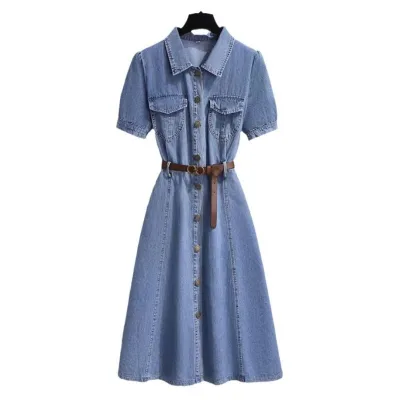


Customizable Stylish Cropped Denim Fashion Dress for Effortless Summer Looks
$8.90 - $15.00
MOQ: 30 Pieces


Comprehensive Sourcing Guide
Strategic Sourcing Guide for Short Sleeve Patchwork Denim Dresses
Understanding Product Attributes and Variability in the Denim Sector
When sourcing a Short Sleeve Patchwork Denim Dress, buyers must first navigate the inherent variability within the product category. The supplied data indicates that while "Denim" is a primary material, the market also features significant overlap with "Cotton" and "Polyester" blends, suggesting that patchwork construction often involves mixed materials to achieve specific aesthetic or functional goals. The term "patchwork" implies a construction method where different fabric pieces are sewn together, which directly influences the selection of materials. The observed data confirms that "Denim" is a core material attribute, yet "Cotton" and "Polyester" are also listed, indicating that a single supplier may offer variations where the denim is blended or paired with other textiles.
Seasonality is a critical factor in defining the product specifications. The data presents a wide range of seasonal attributes, including "Summer," "Spring/Summer," "Autumn/Winter," and general "Leisure" or "Casual" styles. This suggests that a "short sleeve" designation does not strictly limit the garment to warm weather; rather, the weight of the denim and the layering potential determine the actual seasonal suitability. For instance, while "Short Sleeve" is explicitly listed, other entries in the dataset show "Long Sleeve" and "Sleeveless" options, highlighting that the "short sleeve" requirement is a specific filter within a broader catalog. Buyers must verify that the specific patchwork design aligns with the intended season, as the "High-Waisted" and "Loose" style attributes often correlate with warmer weather comfort, whereas "Straight" or "Long" length variants might be intended for cooler seasons despite the sleeve length.
The "Style" attribute further complicates the sourcing landscape. The dataset lists "Casual," "Sexy," "Leisure," and "Straight" styles. A Short Sleeve Patchwork Denim Dress could be marketed as a casual everyday item or a "Sexy" party wear piece, depending on the cut, neckline, and patchwork pattern. The "Neckline" options, including "V-Neck," "Round Neck," "Square Neck," and "Low Neck," allow for significant customization in the final look. Buyers should not assume a single style definition; instead, they must define whether the priority is a "Loose" fit for comfort or a "Straight" cut for a more structured appearance. The presence of "Zipper up" as a characteristic suggests that some patchwork designs may feature front closures, which adds a technical dimension to the sewing process and affects the overall durability and fit.
Technical Specifications and Construction Standards
Technical specifications for short sleeve patchwork denim dresses require a granular understanding of length, fit, and model variations. The dataset reveals a diverse range of lengths, from "Short" to "Midi" and "Long." For a specific request for a "short sleeve" dress, the length is not automatically defined as "short"; it could be a midi-length dress with short sleeves, which is a common fashion trend. The "High-Waisted" attribute is a recurring specification, indicating a prevalent design trend that buyers should expect to find. However, the "Straight" style suggests a different silhouette that may not be high-waisted, requiring buyers to explicitly confirm the waist type during the negotiation phase.
Model numbers provided in the data, such as "S211," "S210," "S220," "S242," "S221," "202650221," "QJ251103-11," "QJ251104-04," and "Clothing-029P," serve as unique identifiers for specific SKUs. These codes likely correspond to specific combinations of the attributes mentioned above. For example, a model like "S211" might represent a specific short sleeve, high-waisted, denim patchwork design, while "QJ251103-11" could denote a different variation. Buyers must treat these model numbers as references to specific product configurations rather than generic categories. The "Standard" attribute lists "0.3kg" for some items and "Customizable" for others, indicating that weight specifications can vary significantly based on the density of the denim and the amount of patchwork. This variation is crucial for logistics planning, as the weight of the finished garment directly impacts shipping costs.
The "Sleeve Length" specification is explicitly listed as "Short Sleeve" in the core requirement, but the dataset also includes "Long Sleeve," "Sleeveless," and "Sleeve Type" variations. This confirms that "Short Sleeve" is a distinct category within the broader denim dress market. The "Pattern" attribute, specifically "Letters," suggests that some patchwork designs may incorporate graphic elements or text-based patches, adding a layer of complexity to the design approval process. Buyers should verify if the "Letters" pattern is a standard offering or a custom request, as this may affect the lead time and minimum order quantity (MOQ). The "Color" attribute lists "Blue," which is the traditional denim color, but patchwork designs often introduce multiple colors or washes. Buyers must clarify if the "Blue" specification refers to the base denim or if the patchwork includes contrasting colors.
Compliance, Certification, and Material Safety Verification
Compliance and certification checks are paramount when sourcing denim garments, particularly those involving patchwork construction which may involve multiple fabric types. The dataset mentions "Standard" attributes such as "0.3kg" and "Customizable," but it does not explicitly list international safety certifications like OEKO-TEX or GRS. Buyers must treat the absence of explicit certification data in the provided facts as a signal to verify these standards directly with the supplier. The "Customizable" standard attribute suggests that suppliers may be willing to adapt their production to meet specific buyer requirements, including safety standards.
Material safety is a primary concern, especially given the mix of "Denim," "Cotton," and "Polyester" observed in the dataset. Denim production often involves chemical treatments for dyeing and finishing, which can leave residues if not properly managed. Buyers should request test reports for color fastness, pH levels, and formaldehyde content, particularly for garments intended for children or sensitive skin. The "Washable" and "Breathable" attributes indicate that the fabric is designed for regular use, but the durability of these properties must be verified through actual testing. The "Anti Pilling" characteristic is a specific performance claim that requires validation; buyers should ask for test results demonstrating that the patchwork seams and fabric blends resist pilling after multiple wash cycles.
The "OEM" (Original Equipment Manufacturer) status is listed as "Yes" in the dataset, which implies that suppliers are capable of producing goods under the buyer's brand. This is a significant advantage for buyers looking to create a unique product line. However, OEM capabilities often come with stricter compliance requirements, as the buyer assumes responsibility for the final product's adherence to market regulations. Buyers should ensure that the supplier's quality management system is certified to relevant standards, such as ISO 9001, even if not explicitly mentioned in the initial data. The "Customized Logo" attribute further supports the OEM model, but it also introduces the need for intellectual property protection and accurate logo placement verification during the production process.
Cost Drivers and Minimum Order Quantity Analysis
The cost structure for short sleeve patchwork denim dresses is influenced by several key factors, including material complexity, customization level, and order volume. The observed price range of 0.5 to 34.8 USD indicates a wide spectrum of product tiers, from basic, mass-produced items to high-end, custom-designed garments. The lower end of the range likely corresponds to simple denim dresses with minimal patchwork and standard packaging, while the higher end may reflect complex patchwork designs, premium materials, or extensive customization. Buyers must understand that the "Patchwork" aspect inherently increases production costs due to the additional labor required to cut, align, and sew multiple fabric pieces.
The Minimum Order Quantity (MOQ) is another critical cost driver. The observed MOQ range of 30 to 500 units suggests that suppliers are flexible, catering to both small startups and large retailers. However, one specific entry lists an "Mqq" (likely a typo for MOQ) of 10,000, which indicates that some suppliers or specific high-volume items may require significantly larger orders. This discrepancy highlights the importance of clarifying the MOQ for the specific model and customization level before committing to an order. The "Customizable" packing attribute and "Bag" or "Carton" options also influence costs; custom packaging typically incurs higher fees but can enhance brand value.
Lead times and production capacity are also factors that affect the overall cost. While specific lead times are not provided in the dataset, the "Customizable" nature of the product suggests that production times may vary based on the complexity of the design. Buyers should anticipate longer lead times for custom patchwork designs compared to standard stock items. The "Standard Transport Packaging" and "Customizable" packing options also play a role in logistics costs. Buyers should calculate the total landed cost, including shipping, duties, and packaging, to ensure the final price remains competitive. The "0.3kg" standard weight mentioned in the data can be used as a baseline for shipping cost calculations, but buyers must verify the actual weight of their specific order, as patchwork and hardware (like zippers) can add weight.
Supplier Evaluation and Production Capability Assessment
Evaluating suppliers for short sleeve patchwork denim dresses requires a focus on their ability to handle complex construction and customization. The dataset indicates that suppliers are located in "China," a major hub for denim production. Buyers should verify the supplier's specific location within China, as different regions may have different expertise in denim manufacturing. The "Customization: Available" attribute is a strong indicator of a supplier's flexibility, but buyers must assess the depth of this capability. Can the supplier handle complex patchwork designs, or are they limited to simple fabric combinations?
The "OEM: Yes" status confirms that suppliers are open to working with buyers on private label projects. However, buyers should evaluate the supplier's experience with similar projects. Do they have a portfolio of patchwork denim dresses? Can they provide samples of previous work? The "Customized Logo" attribute suggests that the supplier has the equipment for logo application, but buyers should verify the quality of this work, especially if the logo is to be embroidered or printed on denim. The "Standard" attribute of "S-XL" indicates that the supplier can produce a range of sizes, but buyers should confirm if they can accommodate extended sizing or custom sizing requests.
Quality control is a critical aspect of supplier evaluation. The "Durable: Anti Pilling" and "Washable" attributes suggest that the supplier claims certain performance standards. Buyers should request evidence of these claims, such as test reports or references from previous clients. The "Zipper up" characteristic adds a mechanical component to the dress, and buyers should ensure that the supplier uses high-quality zippers that do not fail after repeated use. The "Bag" and "Carton" packing options indicate that the supplier has experience with different packaging methods, but buyers should verify that the packaging is sufficient to protect the garment during transit, especially for delicate patchwork designs.
Quality Control Protocols and Long-Term Procurement Strategy
Implementing robust quality control protocols is essential for ensuring the consistency and durability of short sleeve patchwork denim dresses. Given the "Patchwork" nature of the product, visual inspection is critical to ensure that the fabric pieces are aligned correctly and that the seams are secure. Buyers should establish a clear inspection plan that includes checks for fabric defects, stitching quality, and the integrity of the "Zipper up" closure. The "Anti Pilling" attribute requires specific testing to ensure that the fabric maintains its appearance after washing. Buyers should request pre-shipment inspections that include a wash test to verify the durability of the patchwork and the resistance to pilling.
Long-term procurement considerations involve building a sustainable relationship with suppliers who can consistently deliver high-quality products. The "Customizable" nature of the product suggests that buyers may need to iterate on designs over time. Buyers should look for suppliers who are willing to collaborate on design improvements and who can adapt to changing market trends. The "Season" attributes, ranging from "Summer" to "Autumn/Winter," indicate that buyers may need to source different variations of the dress throughout the year. A supplier with a broad range of capabilities can help buyers manage this seasonal variation without needing to switch suppliers.
The "Standard Transport Packaging" and "Customizable" packing options offer flexibility in logistics, but buyers should consider the environmental impact of their packaging choices. The "Bag" and "Carton" options may have different sustainability profiles, and buyers should evaluate which option aligns with their brand values. The "0.3kg" weight specification can be used to optimize shipping costs, but buyers should monitor this metric over time to ensure that the supplier is not increasing the weight of the product, which could erode profit margins.
Final Procurement Considerations and Risk Mitigation
In conclusion, sourcing short sleeve patchwork denim dresses requires a balanced approach that considers technical specifications, compliance, cost, and supplier capabilities. The data provided highlights a diverse market with significant variability in materials, styles, and specifications. Buyers must navigate this complexity by clearly defining their requirements and verifying that suppliers can meet them. The "Customization: Available" and "OEM: Yes" attributes offer opportunities for differentiation, but they also require careful management to ensure quality and consistency.
Risk mitigation strategies should include thorough supplier vetting, clear communication of specifications, and rigorous quality control. Buyers should be prepared to invest in sample development and testing to ensure that the final product meets their expectations. The "0.5-34.8" price range and "30-500" MOQ range indicate that there are options for various budget levels and order sizes, but buyers must be vigilant to avoid hidden costs or quality compromises. By focusing on the key attributes identified in the data, such as "Denim," "Short Sleeve," "Patchwork," and "High-Waisted," buyers can effectively source products that align with their brand and market needs. The "China" origin suggests a robust supply chain, but buyers should remain aware of potential logistical challenges and ensure that their contracts include clear terms for delivery and dispute resolution.
FAQs
Can I customize the logo on the Short Sleeve Patchwork Denim Dress?
Yes, customized logos are available for this product. Suppliers offer OEM services allowing you to add your branding to the denim fabric. This customization is typically applied to the front or back of the dress depending on the design.
What is the minimum order quantity for short sleeve patchwork denim dresses?
The minimum order quantity ranges from 30 to 500 units for most standard models. However, some specific high-volume items may require an order of 10,000 units. Buyers should verify the exact MOQ for their selected model number before placing an order.
How is the Short Sleeve Patchwork Denim Dress packaged for shipping?
Packaging options include standard bags, cartons, or fully customizable packaging solutions. Some items use standard transport packaging while others allow for custom branding on the bag or carton. The specific packing method depends on the supplier and your order requirements.
Which materials are used to make the Short Sleeve Patchwork Denim Dress?
The dresses are primarily made from denim, but cotton and polyester blends are also available in the market. Patchwork construction often involves mixing these materials to achieve specific aesthetic or functional goals. Buyers should confirm the exact material composition for their chosen style.
Can I find short sleeve patchwork denim dresses with high-waisted styles?
Yes, high-waisted styles are a common attribute for these dresses. The market also offers loose, straight, and sexy fits with various necklines like V-neck or round neck. Buyers should specify their preferred waist type when requesting samples from suppliers.
What are the seasonal options for short sleeve patchwork denim dresses?
These dresses are suitable for Summer, Spring/Summer, and Autumn/Winter seasons depending on the fabric weight. While short sleeves are common, the design can be adapted for different weather conditions. Buyers should check the specific seasonal rating for each model before purchasing.
How much does a Short Sleeve Patchwork Denim Dress cost per unit?
The observed price range is between 0.5 and 34.8 USD per unit. Prices vary based on material complexity, customization level, and order volume. Simple designs are cheaper, while complex patchwork or premium customization will increase the cost significantly.