Source Silicone Ice Tray for Drinks, Desserts, and Cocktails
Compare 30 listings of custom Silicone Ice Tray options featuring FDA and LFGB certifications. Buyers can evaluate prices, MOQs, and shapes for food and beverage applications.
Key considerations
Products List
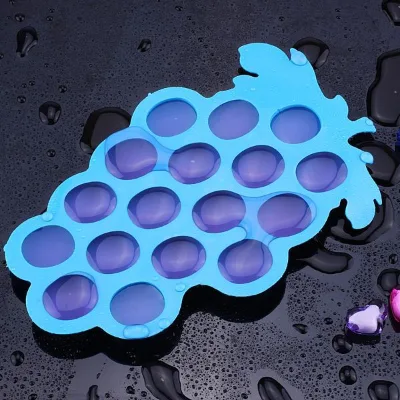


Silicone Ice Cube Mold Ice Cube Trays with Covers Silicone Rose Ice Ball Maker
$0.59 - $1.12
MOQ: 100 Pieces

Silicone Ice Cube Tray with Lid Reusable Maker Ice Mold Daily Supply Ice Mould
$0.39 - $0.69
MOQ: 100 Pieces


Comprehensive Sourcing Guide
Strategic Sourcing Guide for Silicone Ice Trays
Understanding Product Specifications and Material Integrity
When sourcing silicone ice trays, the primary objective is to identify products that balance flexibility, durability, and food safety. The market offers a diverse array of options, but the core material composition remains the defining factor for performance. High-quality units are constructed from food-grade silicone rubber, a material renowned for its thermal stability and non-toxic properties. Buyers must verify that the product is explicitly labeled as "Silicone Rubber" or "Silicon" to distinguish it from lower-grade plastic alternatives that may leach chemicals under heat stress.
The physical characteristics of the tray significantly influence its utility. Observed specifications indicate that these trays are available in various sizes, including Small (S), Medium (M), and Large (XL), as well as specific designations like "Large" and "Medium." The shape is another critical variable; while some models feature creative styling to produce unique ice forms, others maintain a practical rectangular design. The internal structure is equally important, with some units boasting a high cell count, such as forty-eight to fifty cells, which allows for the production of numerous small cubes in a single batch.
Thermal resistance is a non-negotiable specification for silicone ice trays. The material must withstand extreme temperature fluctuations without degrading. Verified data points to a temperature range of -40 to 230 degrees Celsius, ensuring the tray can transition safely from a freezer environment to a dishwasher or even an oven if required for specific cleaning protocols. This wide operating range confirms the material's resilience against thermal shock, a common failure point in inferior plastic molds. Furthermore, the texture of the silicone should be soft, facilitating the easy release of ice cubes without the need for excessive force that could damage the tray or the user's hands.
Compliance and Certification Verification
In the B2B procurement of food-contact products, regulatory compliance is the gatekeeper to market access. Buyers must rigorously verify that the silicone ice trays meet international safety standards. The most prevalent certifications observed in this category include FDA (Food and Drug Administration) and LFGB (German Food and Feed Code). These certifications confirm that the materials do not contain harmful substances like BPA, phthalates, or heavy metals that could migrate into food or beverages.
Some suppliers may also present CE/EU certification, indicating compliance with European safety, health, and environmental protection requirements. Additionally, SGS (Société Générale de Surveillance) is a recognized standard for testing and verification, often used to validate the purity and safety of the silicone material. It is crucial for buyers to request current, valid certificates for each production batch rather than relying on generic marketing claims. The presence of these certifications should be documented in the product specification sheet and verified against the supplier's quality assurance records.
The distinction between "Stocked" and "Custom" products also impacts compliance. While stocked items often come with pre-verified certifications, custom orders involving specific colors or logos require additional scrutiny. For instance, the use of custom inks for logos must be verified to ensure they are food-safe and do not compromise the integrity of the silicone surface. Buyers should explicitly ask for test reports regarding the ink and the base material when ordering custom-branded units.
Cost Drivers and Pricing Dynamics
The pricing of silicone ice trays is influenced by a complex interplay of material costs, manufacturing complexity, and order volume. The observed price range in the market spans from $0.10 to $4.89 USD, reflecting the vast difference between basic, mass-produced units and premium, feature-rich designs. Several key factors drive these price variations.
First, the complexity of the mold design plays a significant role. Trays with "Creative Styling" or unique shapes require more intricate molding processes and higher precision tooling, which increases the unit cost compared to standard rectangular trays. Second, the inclusion of accessories, such as covers, adds to the material and packaging costs. Products listed with "With Cover" or "Accessories: Cover" will naturally command a higher price point than bare trays.
Third, the customization level is a major cost driver. While the base product may be inexpensive, adding a custom logo, selecting specific colors like Red, Ivory, Green, or Blue, and altering the packaging from standard OPP bags to branded boxes incurs additional setup and production fees. The "Customization: Available" attribute indicates that these services are possible, but they come at a premium.
Finally, the Minimum Order Quantity (MOQ) significantly affects the effective unit price. The market shows an MOQ range from 1 to 3000 units, with specific listings indicating MOQs of 100 or 200 pieces. Larger orders typically benefit from economies of scale, reducing the per-unit cost. However, buyers must balance the desire for lower unit prices against the capital tied up in inventory. For small businesses or trial runs, the higher per-unit cost of smaller MOQs may be acceptable, whereas large retailers should aim for the higher volume tiers to maximize margins.
Typical Applications and Usage Scenarios
Silicone ice trays are versatile tools designed for a wide range of culinary and beverage applications. The primary function, as indicated by the product name "any shape Silicone Ice Tray," is to make ice cubes for cooling drinks. However, the material properties allow for expanded use cases beyond simple water freezing.
The "Usage" attribute highlights applications in food, ice cream, wine, and drinks. The non-stick nature of silicone makes these trays ideal for freezing not just water, but also fruit juices, cocktails, soups, and baby food. The ability to withstand temperatures down to -40 degrees Celsius ensures that the trays perform reliably in commercial freezers and home units alike. The "Cold Time" specification, noted as greater than 6 hours, suggests that the trays are effective at maintaining the frozen state of the contents for extended periods, which is beneficial for parties or events where ice needs to be prepared in advance.
The "Ice Cream Makers" classification further expands the utility of these products. They can be used to create frozen treats, such as sorbet or ice cream pops, provided the mixture is poured into the molds and frozen. The "Soft" texture of the silicone allows for easy removal of these delicate frozen items without breaking them. Additionally, the "Non-Disposable" nature of the product underscores its suitability for repeated use, making it an environmentally friendly alternative to single-use plastic ice bags or disposable containers.
Supplier Evaluation and Production Capabilities
Selecting the right supplier requires a deep dive into their production capabilities and logistical reliability. The "Place of Origin" for many of these products is Guangdong, China, a region known for its robust manufacturing ecosystem. Buyers should verify that the supplier has the capacity to handle both "Stocked" items and "Custom" orders. The "Customization: Available" attribute suggests flexibility, but the supplier must demonstrate the ability to manage the entire process from design to mass production.
Lead times are a critical component of supplier evaluation. The data indicates a "Sample Time" of 10-15 days and a "Mass Order" lead time of 12-15 days. These timelines are relatively tight and suggest an efficient production line. However, buyers must confirm if these times are consistent or if they vary based on order complexity. For custom orders involving new molds or specific color formulations, the lead time may extend beyond the standard 12-15 days.
The "Shipping" attribute mentions "International Express" for mini orders, which is beneficial for buyers needing small quantities quickly. For larger orders, the supplier should offer cost-effective shipping solutions, such as sea freight, to minimize logistics costs. The "Selling Units" being listed as "Single item" implies that the supplier is willing to sell individual units, which is helpful for sampling, but buyers should negotiate bulk shipping rates for larger orders.
Furthermore, the "Sample: Stock Sample Free" policy is a positive indicator of supplier confidence. It allows buyers to test the product quality before committing to a large order. Buyers should utilize this opportunity to verify the "Silicone: Soft" texture, the "Temperature Range" performance, and the overall build quality.
Quality Control and Long-Term Procurement Strategy
Ensuring consistent quality is paramount in long-term procurement. The "Feature" attributes, such as "Eco-Friendly" and "Stocked," indicate a focus on sustainability and availability. However, buyers must implement a robust quality control (QC) process to ensure that every batch meets the specified standards. This includes checking for defects in the silicone material, such as bubbles, uneven thickness, or discoloration.
The "Packaging" specifications, ranging from "Single" to "Box/Carton" or "1PCS/OPP," should be clearly defined in the purchase order. Proper packaging is essential to prevent damage during transit and to maintain the product's appearance. For custom orders, the "Logo: Custom Logo" or "Print Logo" must be applied with precision, ensuring that the ink adheres well and does not rub off during use.
Long-term procurement strategies should focus on building a relationship with a supplier who can scale with the buyer's needs. The "MOQ" of 200 pieces or 100 pieces provides a starting point, but the supplier should be capable of handling orders up to 3000 units or more as demand grows. Buyers should also consider the "Standard" attributes, such as "silicone" or "SGS," as benchmarks for ongoing quality assurance. Regular audits and re-testing of samples from new batches can help maintain high standards.
Finally, the "Disposable: Non-Disposable" attribute reinforces the need for durable products. Buyers should evaluate the tray's resistance to tearing and its ability to maintain its shape after repeated freezing and thawing cycles. A product that degrades quickly will lead to higher replacement costs and potential waste, negating the "Eco-Friendly" benefits. By prioritizing suppliers who demonstrate a commitment to quality and sustainability, buyers can secure a reliable supply chain for their Silicone Ice Tray needs.
Summary of Key Product Attributes
To facilitate quick reference, the following table summarizes the critical attributes identified in the sourcing analysis:
| Attribute Category | Key Specifications & Observations |
|---|---|
| Material | Silicone Rubber, Silicon (Soft texture) |
| Temperature Range | -40 to 230 Degree Celsius |
| Certifications | FDA, LFGB, CE/EU, SGS |
| Sizes | S, M, XL, Large, Medium |
| Shapes | Creative Styling, Rectangular |
| Customization | Available (Logo, Color, Shape) |
| MOQ Range | 1 to 3000 (Commonly 100 or 200 pcs) |
| Lead Time | Sample: 10-15 days; Mass Order: 12-15 days |
| Origin | Guangdong, China |
| Features | Eco-Friendly, Stocked, With Cover, Non-Disposable |
| Usage | Food, Ice Cream, Wine & Drink, Make Ice Cube |
By adhering to these guidelines and verifying the specific attributes against supplier documentation, buyers can make informed decisions that ensure product quality, regulatory compliance, and cost-effectiveness in their Silicone Ice Tray procurement.
FAQs
What certifications do these silicone ice trays have?
These trays hold FDA, LFGB, CE/EU, and SGS certifications. Buyers must verify current certificates for each batch to ensure materials meet international safety standards and do not contain harmful substances like BPA or phthalates.
Can I order custom logos and colors for these trays?
Yes, customization is available for logos and colors like Red, Ivory, Green, or Blue. However, custom orders require additional scrutiny to ensure inks are food-safe and do not compromise the silicone surface integrity.
How long does it take to receive samples and mass orders?
Sample time is 10-15 days, while mass orders take 12-15 days. These timelines are efficient but may extend for custom orders involving new molds or specific color formulations beyond the standard production schedule.
What is the minimum order quantity for these silicone trays?
The MOQ ranges from 1 to 3000 units, with common listings at 100 or 200 pieces. Larger orders typically benefit from economies of scale, reducing the per-unit cost compared to smaller trial runs.
Which temperature range can these silicone trays withstand?
The trays operate safely from -40 to 230 degrees Celsius. This wide range ensures resilience against thermal shock, allowing safe transitions from freezers to dishwashers or ovens without degrading the material.
What sizes and shapes are available for these ice trays?
Available sizes include S, M, XL, Large, and Medium with shapes like Rectangular or Creative Styling. Some models feature high cell counts, such as forty-eight to fifty cells, for producing numerous small cubes.
How are these silicone ice trays packaged for shipping?
Packaging options range from Single OPP bags to Box/Carton configurations. Proper packaging is essential to prevent damage during transit and to maintain the product's appearance, especially for custom branded units.