Source Silvery Bullet Lead Weights for fishing, hunting, and industrial uses
Compare 30 listings of Silvery Bullet Lead Weights featuring customization options and various sizes. Buyers can evaluate specifications like weight standards, packaging, and OEM services from suppliers in China.
Key considerations
Products List



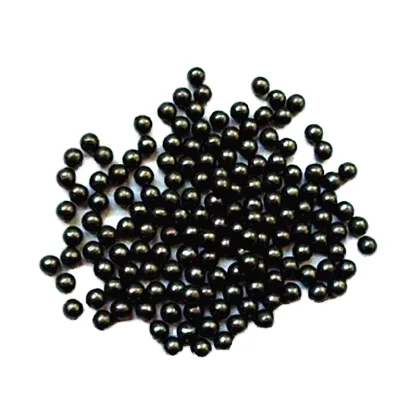
Large Supply of 5.5mm Lead Beads Precision Lead Beads Counterweight Lead Shots
$3.82 - $5.58
MOQ: 1 kilograms


New 1/2--1/16oz Multi Size Reaction Tackle Tungsten Bulk Worm Weights Bullet Sinkers
$0.56 - $0.66
MOQ: 1500 Pieces

Comprehensive Sourcing Guide
Sourcing Guide for Silvery Bullet Lead Weights
Understanding Product Specifications and Variants
When sourcing Silvery Bullet Lead Weights, buyers must first navigate the diverse landscape of product specifications that define this category. The core keyword "Silvery Bullet Lead Weights" typically refers to fishing sinkers designed with a streamlined, aerodynamic profile to minimize water resistance and maximize casting distance. Based on observed market data, these products are available in varying sizes, ranging from small configurations suitable for light tackle to larger units designed for heavy-duty applications. The physical dimensions are critical; observed listings indicate specific size classifications such as "Small" and "Big," which directly influence the weight capacity and the intended fishing environment.
The material composition is a primary differentiator. High-quality silvery bullet weights are predominantly manufactured from lead, often with a purity level exceeding 99.99% to ensure optimal density and casting performance. The "silvery" descriptor in the product name often correlates with specific surface treatments, such as white painting or a natural gray metallic finish, rather than a distinct alloy like silver. Buyers should verify the specific finish, as some listings note a "Gray" lead composition while others specify "White Painting" or "Lead" as the primary attribute. The shape is consistently described as "Bullet with Double Swivel," a design feature that allows for rotational movement, preventing line twist and ensuring the weight maintains its orientation during retrieval.
Packaging standards also vary significantly depending on the supplier and order volume. While some products are packaged in individual bags, larger commercial orders often utilize a combination of bag, carton, and pallet systems. Standard packaging dimensions observed in the market include measurements like 242410cm, which serves as a baseline for logistics planning. However, buyers must confirm that the specific supplier's packaging aligns with their storage and shipping requirements, as variations exist between "Bag Carton Pallet" configurations and simpler carton-only options. The model numbers associated with these products, such as ZDSB, ZDSH, or specific weight codes like "weight 00020," provide a unique identifier for inventory management but do not inherently dictate performance without cross-referencing the specific technical data sheet provided by the manufacturer.
Compliance, Certification, and Material Standards
Ensuring compliance with international standards is paramount when sourcing lead-based products, particularly given the environmental and safety regulations surrounding heavy metals. The supply chain for Silvery Bullet Lead Weights often originates from manufacturing hubs in China, specifically regions like Guang Dong, which is a known center for metal casting and fishing tackle production. When evaluating suppliers, buyers should look for certifications that validate the manufacturing process and material quality. ISO9001 is a frequently cited certification in this sector, indicating that the supplier adheres to a recognized quality management system. This certification suggests a commitment to consistent production standards, though it does not guarantee specific product performance without further verification.
Material purity is another critical compliance factor. For fishing applications, the lead content is often required to be high to ensure the weight-to-volume ratio is efficient. Observed data points to a purity specification of greater than 99.99% for certain high-grade lead shot and weights. Buyers must verify if the supplier can provide test reports or certificates of analysis confirming this purity level, as lower purity lead can introduce impurities that affect the casting properties and durability of the weight. Additionally, the alloy composition should be scrutinized; while pure lead is common, some products may utilize specific alloys to enhance hardness or reduce toxicity, though the primary material listed is typically lead.
Standards compliance extends beyond material purity to include manufacturing and trade standards. The industry often references a suite of international standards including AISI, ASTM, BS, DIN, GB, and JIS. These standards cover everything from chemical composition to mechanical properties. When a supplier lists "SGS" as a standard or verification method, it implies that the product has undergone third-party testing for quality and safety. Buyers should request specific SGS reports or equivalent documentation to confirm that the silvery bullet weights meet the necessary safety and performance benchmarks. It is also important to note that while some listings mention standards like "80-100-120G" or "220G/PCS," these are often weight classifications rather than formal industry standards, and buyers must clarify whether these figures represent the actual product weight or a grading standard.
Cost Drivers and Pricing Dynamics
The pricing structure for Silvery Bullet Lead Weights is influenced by a complex interplay of factors, including raw material costs, manufacturing complexity, and order volume. The observed price range in the market is extensive, spanning from $0.06 to $3,667. This wide disparity is not indicative of a single product type but rather reflects the difference between purchasing individual units or small retail packages versus bulk industrial orders. The lower end of the spectrum typically corresponds to small quantities of standard weights, while the higher end may reflect large palletized orders, custom specifications, or specialized packaging requirements.
Minimum Order Quantity (MOQ) is a significant driver of unit cost. Suppliers often enforce MOQs ranging from as low as 1 unit for sampling to as high as 50,000 units for full production runs. Understanding the MOQ structure is essential for budgeting; a buyer purchasing a small batch will face a significantly higher per-unit cost compared to a buyer committing to a large volume. The observed MOQ of 5 units for certain lead shot products suggests that small-scale procurement is possible, but buyers should be prepared for higher unit prices in these scenarios. Conversely, larger orders often unlock economies of scale, reducing the cost per unit but requiring a substantial upfront capital commitment.
Additional cost factors include customization services and payment terms. Many suppliers offer OEM and ODM services, allowing buyers to customize the weight, shape, or packaging. These customizations invariably add to the base cost of the product. Payment terms, such as TT (Telegraphic Transfer), are standard in the industry, but buyers should negotiate terms that align with their cash flow. Shipping costs, determined by trade terms like FOB, CFR, or CIF, also play a crucial role in the total landed cost. Buyers must calculate the total cost of ownership, including freight, insurance, and customs duties, rather than focusing solely on the ex-factory price. The origin of the product, typically China or Guang Dong, influences shipping logistics and potential tariffs, which must be factored into the financial analysis.
Typical Applications and Usage Scenarios
Silvery Bullet Lead Weights are primarily designed for fishing applications, serving as essential components in various angling techniques. The "Bullet" shape is specifically engineered for casting through vegetation and heavy cover, making these weights ideal for bass fishing, freshwater, and saltwater environments. The "Double Swivel" feature is a key functional attribute, allowing the fishing line to rotate freely and preventing the line from twisting during retrieval, which is a common issue when using spinning reels. This design ensures that the weight maintains its streamlined profile, reducing drag and improving casting accuracy.
Beyond fishing, the versatility of lead weights extends to other industrial and commercial applications. While the primary market is recreational and commercial fishing, the material properties of lead make it suitable for applications in the chemical, medical, industrial, electronics, and aviation sectors. In these contexts, lead weights may be used for radiation shielding, ballast, or counterweight systems. The "Lead Shot" designation in some listings points to these broader industrial uses, where the spherical or granular form of lead is required for specific density needs. However, for the specific "silvery bullet" form factor, the fishing application remains the dominant use case.
The usage environment also dictates the required durability and finish of the weights. For home, hotel, hospital, and cafe settings, lead weights might be used in decorative or functional contexts, such as curtain weights or stabilizers, where the "Jacquard" pattern or "Printed" style of associated products suggests a focus on aesthetics. However, for fishing, the functional attributes like "Hollow" or "Solid" construction are more relevant. Solid weights offer maximum density and durability, while hollow weights may be designed for specific buoyancy or weight distribution needs. Buyers should align the product selection with the specific usage scenario, ensuring that the weight's design matches the intended environment, whether it is a turbulent river, a calm lake, or an industrial facility.
Supplier Evaluation and Quality Control
Evaluating suppliers for Silvery Bullet Lead Weights requires a rigorous approach to ensure product consistency and reliability. Buyers should prioritize suppliers who demonstrate transparency in their manufacturing processes and provide clear documentation regarding their certifications and standards. The presence of ISO9001 certification is a strong indicator of a supplier's commitment to quality management, but it should be verified through current, valid certificates. Additionally, suppliers who offer SGS testing or similar third-party verification provide an extra layer of assurance regarding product safety and performance.
Quality control measures should be a central part of the supplier evaluation process. Buyers must inquire about the supplier's internal quality control protocols, including how they handle material inspection, production monitoring, and final product testing. For lead weights, this includes verifying the purity of the lead, checking for surface defects, and ensuring that the dimensions and weight specifications match the order requirements. The observation of specific standards like "AISI, ASTM, BS, DIN, GB, JIS" suggests that reputable suppliers adhere to a comprehensive set of international guidelines. Buyers should request sample batches to test these attributes firsthand before committing to a large order.
Supplier reliability is also assessed through their ability to meet delivery timelines and handle logistics. While specific lead times are not universally standardized, buyers should establish clear expectations regarding production and shipping schedules. The origin of the product, often Guang Dong, China, is a significant factor in logistics planning, as it involves international shipping and potential customs clearance. Suppliers who offer flexible trade terms like FOB, CFR, or CIF can help buyers manage these logistical complexities. Furthermore, the availability of customization services, such as OEM and ODM, indicates a supplier's flexibility and ability to meet unique buyer requirements. Buyers should evaluate the supplier's responsiveness and communication skills, as these are critical for resolving any issues that may arise during the procurement process.
Long-Term Procurement Considerations
Sourcing Silvery Bullet Lead Weights is not merely a transactional activity but a strategic decision that impacts long-term operational efficiency and supply chain stability. Buyers should consider the scalability of their supplier relationship, ensuring that the supplier can accommodate growth in demand without compromising quality. The wide range of observed MOQs, from 1 to 50,000 units, suggests that suppliers are capable of handling both small and large orders, but buyers must confirm the supplier's capacity to scale up production quickly when needed.
Sustainability and environmental compliance are increasingly important factors in long-term procurement. As regulations regarding lead usage become more stringent, buyers must ensure that their suppliers adhere to the latest environmental standards. This includes verifying that the lead used is sourced responsibly and that the manufacturing process minimizes environmental impact. Suppliers who can provide evidence of compliance with environmental regulations and offer eco-friendly alternatives or recycling programs will be better positioned for long-term partnerships.
Finally, buyers should plan for the total cost of ownership over the lifecycle of the product. This includes not only the initial purchase price but also the costs associated with storage, handling, and potential returns. The packaging specifications, such as the 242410cm carton size, should be optimized for efficient storage and transport to minimize logistics costs. By focusing on these long-term considerations, buyers can build a resilient supply chain that supports their business objectives and ensures a steady supply of high-quality Silvery Bullet Lead Weights.
FAQs
What certifications do Silvery Bullet Lead Weights suppliers typically hold?
Suppliers typically hold ISO9001 certification to validate their quality management systems. Some listings also reference SGS verification for product safety and material purity. Buyers should request current certificates to confirm these standards apply to the specific order.
How does the MOQ affect the unit price of lead weights?
The minimum order quantity ranges from 1 to 50,000 units, directly influencing the per-unit cost. Smaller orders like 5 units often carry higher prices, while bulk purchases unlock economies of scale. Buyers must balance volume needs against upfront capital requirements.
Which material purity levels are available for these lead weights?
High-grade options often feature lead purity exceeding 99.99% to ensure optimal density and casting performance. Some products specify a gray or white painted finish while maintaining this high purity. Buyers should verify test reports to confirm the lead content matches specifications.
Can buyers request customization for the weight shape and packaging?
Yes, OEM and ODM services are available for customizing shape, weight, and packaging configurations. Suppliers offer options like bag, carton, or pallet systems with specific dimensions such as 24 by 24 by 10 cm. Customization adds to the base cost but allows for tailored inventory solutions.
What are the standard packaging dimensions for bulk orders?
Standard packaging often measures 24 by 24 by 10 cm for individual cartons. Larger commercial orders may utilize a combination of bag, carton, and pallet systems. Buyers must confirm specific packaging aligns with their storage and shipping logistics before placing an order.
Which international standards apply to the lead alloy composition?
Products may comply with international standards including AISI, ASTM, BS, DIN, GB, and JIS. These guidelines cover chemical composition and mechanical properties for industrial and fishing applications. Buyers should request documentation proving adherence to these specific standards for quality assurance.
How is the price range determined for Silvery Bullet Lead Weights?
Prices range from 0.06 to 3667 USD depending on order volume and customization. The lower end reflects small retail packages, while the higher end covers bulk industrial orders. Total cost must include freight and trade terms like FOB or CIF to determine the final landed price.