Source Single Temperature Fruit Display Cooler for Retail, Bars, and Cafes
Explore 30 Single Temperature Fruit Display Cooler options designed for retail shops, bars, and cafes. Compare features like smart thermostats, auto defrost, and ventilated cooling systems to find the right unit for your business needs.
Key considerations
Products List


Beverage Display Cooler Multideck Showcase Air Chiller Open Display Refrigerator
$1499.00 - $2899.00
MOQ: 2 Pieces

Commercial Standing Environment-Friendly Display Fruit Counter Cooler
$1170.00 - $3300.00
MOQ: 1 Pieces

Supermarket Multideck Open Chiller Vegetable Fruit Display Showcase Drink Cooler Refrigerator
$1499.00 - $2899.00
MOQ: 2 Pieces

Beverage Fridge Cooler Drink Display Fridge Freezer Refrigerator Display Chiller
$1499.00 - $2899.00
MOQ: 2 Pieces

Custom Size Fruits Vegetables Open Multideck Display Showcase Chiller
$1499.00 - $2899.00
MOQ: 2 Pieces


Optional Colors 2.5m Fruit Showcase Cooler for Supermarket
$2133.00 - $2550.00
MOQ: 1 Pieces
Guangdong Green & Health Intelligence Cold Chain Technology Co., Ltd.

Supermarket Display Chiller/Fruit Display Chiller
$1666.00 - $1800.00
MOQ: 1 Pieces
Guangdong Green & Health Intelligence Cold Chain Technology Co., Ltd.

Supermarket Open Fruit / Vegetable Display Showcase
$1600.00 - $3400.00
MOQ: 1 Pieces
Guangdong Green & Health Intelligence Cold Chain Technology Co., Ltd.

2.0 Meters Fruit and Vegetable Display Showcase for Supermarket
$10338.00 - $11460.00
MOQ: 1 Pieces
Guangdong Green & Health Intelligence Cold Chain Technology Co., Ltd.

New Supermarket Fruit Vegetable Reach in Display Showcase
$2638.00 - $3150.00
MOQ: 1 Pieces
Guangdong Green & Health Intelligence Cold Chain Technology Co., Ltd.
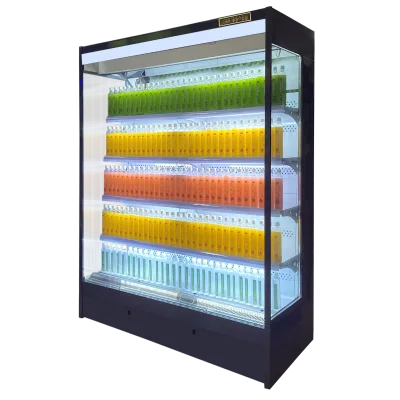

Supermarket Showcase Refrigerators Commercial Beverage Beer Vegetable Fruit Display Cooler
$1200.00 - $1350.00
MOQ: 50 Pieces


Comprehensive Sourcing Guide
Single Temperature Fruit Display Cooler Sourcing Guide
Sourcing a Single Temperature Fruit Display Cooler requires a disciplined approach to balancing aesthetic appeal with precise environmental control. These units are engineered to maintain a narrow thermal window, typically between 2°C and 8°C, which is critical for preserving the crispness, color, and shelf life of fresh produce. Unlike general-purpose refrigeration, fruit displays must manage humidity and airflow to prevent dehydration or condensation damage, making the selection of the cooling system and insulation materials a primary procurement decision. Buyers must prioritize units that offer consistent temperature stability across all shelves, as fluctuations can lead to rapid spoilage and increased waste in high-traffic retail environments.
The procurement process also involves evaluating the physical design and operational efficiency of the unit. Modern display coolers often feature smart thermostats and auto-defrost mechanisms to reduce manual maintenance and ensure continuous operation. Additionally, the choice of lighting, door configuration, and energy consumption directly impacts the total cost of ownership. Buyers should assess whether the unit supports customization options, such as selectable colors or integrated light boxes, to align with brand identity. Understanding these technical and commercial variables early in the sourcing journey helps mitigate risks associated with product performance and long-term operational costs.
Product Scope and Observed Listing Signals
The current market for single temperature fruit display coolers presents a diverse range of models, with observed listing prices spanning from $110 to $11,460 USD. This wide variance reflects differences in capacity, material quality, and technological features, such as the inclusion of advanced cooling systems or premium finishes. Buyers should note that the minimum order quantity (MOQ) typically ranges from 1 to 50 units, offering flexibility for both small boutique retailers and large chain stores. The presence of multiple product models, such as G1, A1-CH, and LG-218b, indicates that suppliers offer tiered solutions catering to different spatial constraints and merchandising needs.
Observed listing signals also highlight specific technical configurations that define product value. For instance, some units are designed with a single door and swing door mechanisms, while others feature double sliding doors for larger capacities. The cooling system is predominantly a ventilated or fan-cooled type, ensuring even air distribution throughout the display area. Insulation materials, such as C-P foam agents, and panel thicknesses, like 36mm panels, are key indicators of thermal efficiency. Buyers should carefully review these specifications to ensure the selected model meets their specific storage volume requirements, which can range from compact units to those with capacities between 251 and 300 liters.
Technical Specifications to Verify
Verifying the technical specifications of a Single Temperature Fruit Display Cooler is essential to ensure it meets operational demands. Key attributes to confirm include the voltage compatibility, which often supports both 220V/50Hz and 110V/60Hz standards, ensuring global usability. The power source is typically electricity, with power consumption varying based on the unit size and efficiency, ranging from 165W to 450W. Buyers should also verify the refrigerant type, with R404A and R134A being common choices, as these impact environmental compliance and long-term maintenance costs. Additionally, the condenser type, such as copper fin, affects heat dissipation efficiency and durability.
The physical dimensions and structural materials are equally critical for integration into existing retail spaces. Standard dimensions observed include models measuring 18759502080mm and 5505001820mm, allowing for precise floor space planning. The construction material is often painting steel, providing durability and a sleek finish that can be customized in various colors. The number of shelves, typically four, and the door type, whether swing or sliding, should be matched to the expected foot traffic and product turnover rate. Buyers must also check for optional features like night blind capabilities and LED lighting, which enhance visibility and energy efficiency during off-hours.
Compliance and Safety Documentation
Compliance with international safety and environmental standards is a non-negotiable aspect of sourcing fruit display coolers. Buyers should verify that units carry CE and RoHS certifications, which indicate adherence to European health, safety, and environmental protection standards. These certifications are crucial for importing goods into regulated markets and ensure that the product does not contain hazardous substances. Additionally, the origin of the product, often from manufacturing hubs like Qingdao, China, should be documented to assess supply chain reliability and potential trade implications. Buyers must request valid certification documents from suppliers to avoid customs delays or legal issues.
Beyond certifications, buyers should inquire about the manufacturing standards and quality control processes employed by the supplier. While specific standards may vary, the use of standardized dimensions and consistent material specifications suggests a structured production environment. Buyers should also verify the packaging method, which often includes plywood or wooden frames, to ensure the units arrive without damage. Understanding the supplier’s commitment to quality assurance helps mitigate risks associated with product defects. Buyers should also consider the availability of after-sales support and warranty terms, which are critical for maintaining compliance and operational continuity over the product’s lifespan.
Cost Drivers and Commercial Terms
The cost of a Single Temperature Fruit Display Cooler is influenced by several key drivers, including material quality, technological features, and order volume. Higher-end models with smart thermostats, advanced cooling systems, and premium finishes will command higher prices. Buyers should also consider the energy efficiency of the unit, as lower power consumption can lead to significant savings over time. The MOQ and pricing structure should be clearly defined, with bulk orders potentially offering discounts. Buyers must also account for shipping costs, which can vary based on the unit’s dimensions and weight, as well as the chosen shipping method, such as sea freight.
Commercial terms, including payment methods, lead times, and warranty policies, play a significant role in the total cost of ownership. Buyers should negotiate clear terms regarding customization options, such as OEM services or specific color selections, which may incur additional costs. It is also important to clarify the responsibilities for installation and maintenance, as well as the availability of spare parts. Buyers should seek suppliers who offer flexible commercial terms and transparent pricing to avoid hidden costs. Understanding these financial aspects helps in creating a realistic budget and ensuring a smooth procurement process.
Supplier Qualification and Quality Control
Selecting a qualified supplier is critical to ensuring the reliability and performance of single temperature fruit display coolers. Buyers should verify the supplier’s manufacturing capabilities, including their production capacity and quality control processes. Suppliers with a proven track record in producing refrigeration units are more likely to deliver consistent quality. Buyers should also assess the supplier’s ability to provide customization options, such as specific dimensions or branding, to meet unique retail requirements. Additionally, the supplier’s responsiveness to inquiries and their willingness to provide detailed product information are indicators of their professionalism and commitment to customer service.
Quality control measures, such as pre-shipment inspections and testing protocols, should be clearly defined and agreed upon with the supplier. Buyers should request samples or visit the manufacturing facility if possible to verify the quality of materials and construction. It is also important to establish clear communication channels for addressing any issues that may arise during production or delivery. Buyers should prioritize suppliers who demonstrate a strong commitment to quality and continuous improvement. By thoroughly evaluating supplier qualifications, buyers can mitigate risks and ensure they receive products that meet their standards and expectations.
Long-Term Procurement Checks
Long-term procurement success depends on establishing ongoing relationships with reliable suppliers and continuously monitoring product performance. Buyers should implement regular quality audits and feedback loops to ensure that the display coolers continue to meet operational standards. This includes monitoring energy consumption, temperature stability, and overall durability over time. Buyers should also stay informed about industry trends and technological advancements that could impact future procurement decisions, such as more energy-efficient refrigerants or smart monitoring systems. Maintaining a proactive approach to supplier management helps in adapting to changing market conditions and customer needs.
Additionally, buyers should regularly review commercial terms and pricing to ensure they remain competitive and aligned with market rates. This includes renegotiating contracts based on volume discounts or improved service levels. Buyers should also consider the environmental impact of their procurement choices, opting for suppliers who adhere to sustainable practices and use eco-friendly materials. By focusing on long-term value creation, buyers can build resilient supply chains that support their business growth and sustainability goals. Continuous evaluation and adaptation are key to maintaining a competitive edge in the retail refrigeration market.
FAQs
What temperature range does the Single Temperature Fruit Display Cooler maintain?
The unit maintains a temperature range of 2 to 8 degrees Celsius for optimal fruit preservation. This stable environment is achieved using a ventilated cooling system and smart thermostat control to ensure consistent freshness.
Can the Single Temperature Fruit Display Cooler be customized for specific needs?
Yes, customization is available for this display cooler to meet specific business requirements. Buyers can select colors and add optional features like night blinds to tailor the unit to their retail environment.
Which certifications does the Single Temperature Fruit Display Cooler hold?
The product holds CE and RoHS certifications ensuring compliance with safety and environmental standards. These certifications verify that the unit meets international requirements for electrical safety and restriction of hazardous substances.
How is the Single Temperature Fruit Display Cooler powered and defrosted?
It operates on electricity with voltage options of 220V/50Hz or 110V/60Hz. The unit features an auto defrost system and frost-free operation to maintain efficiency without manual intervention.
What material is used to construct the Single Temperature Fruit Display Cooler?
The cooler is constructed from painting steel for durability and a professional appearance. This material choice ensures the unit can withstand frequent use in commercial settings like snack shops and restaurants.
Which cooling system is integrated into the Single Temperature Fruit Display Cooler?
The unit utilizes a ventilated cooling system with fan cooling for even temperature distribution. It uses R404A or R134A refrigerant depending on the specific model configuration for effective heat removal.
What is the standard packing method for the Single Temperature Fruit Display Cooler?
Products are packed in plywood cases or wooden frames to ensure safe transport. This robust packaging protects the unit during shipping via sea freight from the origin in Qingdao, China.