Source Plus Size Printed Jumpsuits for Work, Travel, and Events
Explore 30 options for plus size printed jumpsuits, featuring woven and seamless styles with custom colors and OEM support. Compare specs for round neck, sleeveless, and short sleeve designs suitable for adult women, with MOQs starting at 100 pieces and sample lead times of 3-7 days.
Key considerations
Products List




Comprehensive Sourcing Guide
Plus Size Printed Jumpsuits Sourcing Guide
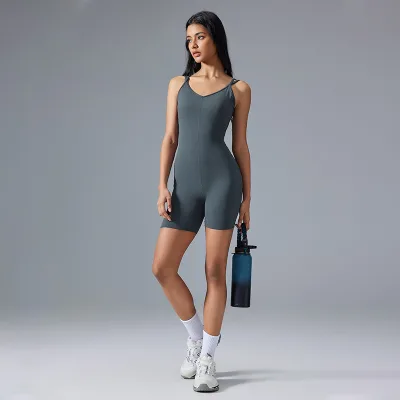
Procuring plus size printed jumpsuits requires balancing aesthetic versatility with structural integrity, as the garment must accommodate diverse body shapes while maintaining the integrity of complex print patterns. Buyers should prioritize suppliers who demonstrate experience with wide-leg and relaxed fits, ensuring the fabric drapes correctly without clinging or distorting the printed design. The observed market data indicates a strong presence of woven and seamless options, suggesting that material selection is critical for achieving the desired silhouette and comfort levels in larger sizes.
When evaluating listings, focus on the specific customization capabilities regarding fabric and print, as standard off-the-shelf options may not meet the unique fit requirements of the plus-size demographic. The availability of custom colors and patterns allows brands to differentiate their offerings, but this necessitates a rigorous review of the supplier's ability to maintain color consistency across large production runs. Verify that the supplier explicitly supports the "Customized" fabric attribute and offers sample times that align with your product development timeline to avoid delays in launching new collections.
Product Scope and Observed Listing Signals
The current market landscape for plus size printed jumpsuits reveals a diverse range of styles, from simple solid-colored designs to more complex printed variations, though specific print availability must be confirmed per design. Listings frequently highlight attributes such as "Round Neck" and "Short Sleeve" configurations, alongside "Sleeveless" options, indicating that buyers must carefully filter for the specific cut that suits their target demographic. The presence of "Wide Leg" and "Skinny" trouser leg styles suggests that fit type is a primary differentiator, requiring buyers to specify their preferred silhouette to ensure the garment meets the intended fashion standard.
Observations of supply types show a mix of "In-Stock Items" and custom manufacturing models, which significantly impacts lead times and inventory risk for the buyer. While some suppliers offer immediate availability, the majority of specialized plus-size designs rely on OEM and ODM capabilities, necessitating a clear understanding of the minimum order quantities (MOQ) which can range from 100 to 300 pieces per design. Buyers should note that "Custom Color" options are widely available, but this flexibility often comes with higher MOQ thresholds and longer sample lead times compared to standard stock items.
Technical Specifications to Verify
Technical verification must begin with the material composition, as the blend of Spandex and Nylon is frequently cited for its ability to provide stretch and recovery essential for plus-size garments. Buyers should confirm that the fabric possesses the "Quick Dry," "Breathable," and "Lightweight" features observed in high-performing listings, as these attributes directly influence customer satisfaction and wearability. Additionally, the "Seamless" technical method is a notable specification that can enhance comfort by reducing friction points, but it requires strict quality control to ensure the structural integrity of the jumpsuit remains intact during movement.
Dimensional accuracy and packaging specifications are equally critical, with single package sizes and weights varying significantly based on the design complexity. The observed "Single gross weight" of 0.350 kg and specific package dimensions like 30x36x3 cm provide a baseline for logistics planning, but buyers must verify these metrics for their specific custom orders. Furthermore, the "Medium" thickness specification suggests a balance between durability and breathability, yet this should be validated against the intended season of sale to ensure the garment performs adequately in the target climate.
Compliance and Safety Documentation
While specific certifications like GOTS or Oeko-Tex are mentioned in background contexts, buyers must explicitly request and verify current compliance documentation rather than assuming their presence. The industry standard for quality control often references AQL 2.5/4, which serves as a benchmark for acceptable defect rates, but this must be formally agreed upon in the purchase agreement to ensure consistent product safety and quality. Without explicit certification status from the supplier, buyers should conduct their own third-party testing to verify that the materials and dyes used in the printed jumpsuits meet the safety regulations of their target export markets.
Documentation regarding the "Customized" product standard and origin from China requires careful review to ensure alignment with local import regulations and labor standards. Buyers should demand a detailed bill of materials and a declaration of conformity that explicitly addresses the safety of the printing methods and the chemical composition of the fabric. It is essential to treat all product attributes as observations until verified, ensuring that the supplier can provide tangible proof of compliance rather than relying on general claims about "High Quality" or "Eco-Friendly" status.
Cost Drivers and Commercial Terms
Cost structures for plus size printed jumpsuits are heavily influenced by the level of customization, particularly regarding fabric selection and print complexity. The availability of "Custom Color" and "Customized" fabric options typically commands a higher price point compared to standard solid colors, and buyers should anticipate that the MOQ of 100 to 300 pieces will directly impact the unit cost. Understanding the relationship between the "Premium Gold Factory" designation and pricing is crucial, as higher-tier suppliers may offer better quality control but at a premium that must be weighed against the brand's margin requirements.
Commercial terms must clearly define the sample lead time, which is observed to be between 3 to 7 working days, and the production lead time for bulk orders. The "7 days sample order lead time" support indicates a capability for rapid prototyping, but buyers should clarify if this applies to all customizations or only standard configurations. Additionally, the "Carton" and "Polybag" packing methods affect shipping costs and must be factored into the total landed cost, ensuring that the packaging protects the garment during transit while remaining cost-effective for the buyer's logistics strategy.
Supplier Qualification and Quality Control
Supplier qualification should prioritize those with a proven track record in "Repeat Buyers Choice" scenarios, indicating a history of reliability and consistent quality delivery. The "High Quality" attribute observed in listings is a strong signal, but it must be backed by concrete quality assurance protocols, such as the AQL 2.5/4 standard, to ensure that the final product meets the buyer's expectations. Buyers should verify the supplier's capacity to handle "OEM & ODM" requests, ensuring they have the technical expertise to manage complex customizations without compromising the structural integrity of the jumpsuit.
Quality control processes must extend beyond the final inspection to include pre-production sample approvals and in-line monitoring of the weaving and printing methods. The "Woven" method and "Seamless" techniques require specific machine settings and operator skills, making it essential to audit the supplier's production floor to confirm their capability to execute these processes consistently. Establishing a clear communication channel for addressing defects and ensuring that the "Care Label / Hang Tag" customization is accurate is vital for maintaining brand integrity and customer trust throughout the supply chain.
Long-Term Procurement Checks
Establishing a long-term partnership requires regular performance reviews that track the supplier's ability to meet lead times and maintain quality standards over multiple production cycles. Buyers should monitor the consistency of the "Single package size" and "Single gross weight" to ensure that logistics planning remains accurate as order volumes scale up. Regular audits of the supplier's inventory management for "In-Stock Items" versus custom production can help identify potential bottlenecks and ensure that the supply chain remains resilient against market fluctuations.
Continuous improvement initiatives should focus on refining the customization process, particularly regarding the "Custom Color" and "Pattern Type" options to better align with evolving consumer trends. Buyers should maintain open dialogue with suppliers to leverage their "OEM & ODM" capabilities for future product innovations, ensuring that the jumpsuits remain competitive in the plus-size market. By systematically tracking performance metrics and fostering a collaborative relationship, buyers can secure a reliable supply chain that supports sustainable growth and brand development.
FAQs
Can I customize the fabric and color for plus size printed jumpsuits?
Yes, customization is available for fabric and color. You can select from options like black, dragon fruit, or oil blue, or request custom colors. The weaving method is woven, and the material typically includes spandex and nylon for comfort. This allows you to tailor the product to your specific brand requirements and design preferences.
What is the minimum order quantity for these jumpsuits?
The minimum order quantity varies by supplier. Some suppliers require 100 pieces, while others may ask for 300 pieces per design. It is essential to confirm the specific MOQ with the manufacturer before placing an order. This ensures you meet their production thresholds and aligns with your inventory planning needs.
How long does it take to get a sample?
Sample production typically takes 3 to 7 working days. Some suppliers support a 7-day sample order lead time. This allows you to verify quality, fit, and print details before committing to a larger bulk order. Expedited options may be available depending on the factory's current capacity and your specific urgency.
What features do these jumpsuits offer for comfort?
These jumpsuits feature quick-dry, breathable, and lightweight properties. They are often seamless and eco-friendly, with anti-pilling and anti-shrinkage qualities. The material blend of spandex and nylon ensures stretch and durability. These attributes make them suitable for active wear or casual styles, providing comfort and longevity for the wearer.
Are these jumpsuits suitable for adult women?
Yes, these jumpsuits are designed for adult women. They come in various sizes including S, M, L, and XL, with some options for custom sizing. The styles range from wide-leg to skinny trouser legs, and necklines include round necks. This variety ensures a fit for different body types and fashion preferences.
What packaging options are available for bulk orders?
Packaging options include carton packing or individual polybag packing. Each item is typically packed in a single polybag for protection. The single package size is approximately 30x36x3 cm, with a gross weight of 0.350 kg. This ensures safe transit and efficient storage for your inventory management needs.