Source Skateboard Protective Glove for Cycling Skiing Shoveling Snow
Find and compare 30 Skateboard Protective Glove options from factories in Zhejiang. Buyers can review materials like polyester and leather, customization features, and MOQs ranging from 1 to 1000 units for sport protection needs.
Key considerations
Products List


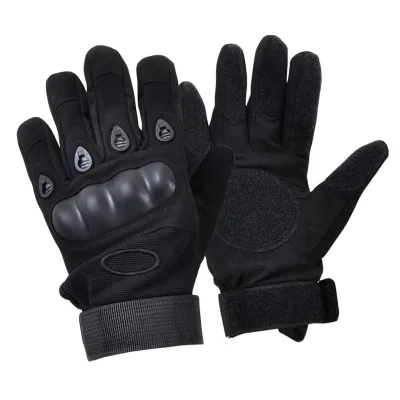


Custom Winter Windproof Touchscreen Gloves Snowboard Ski Sports Gloves with Buckle
$5.00 - $7.00
MOQ: 1000 Pairs
Comprehensive Sourcing Guide
Strategic Sourcing Guide for Skateboard Protective Gloves
Understanding Product Specifications and Material Composition
When sourcing skateboard protective gloves, the primary objective is to identify products that balance impact absorption with dexterity. The market offers a diverse range of specifications, often categorized by the target demographic and the specific protective needs of the activity. A critical observation in the current supply landscape is the variation in age groups served. Manufacturers produce distinct lines for adults and children, necessitating a clear definition of the target user base before initiating a procurement order. For adult users, the focus is often on robust protection for high-impact scenarios, while children's models prioritize fit and comfort during learning phases.
Material composition is the second pillar of specification analysis. The supply data indicates a bifurcation in material choices, with some products utilizing Polyester as the primary fabric, while others employ a composite structure of PP (Polypropylene), Pearl Cotton, and Mesh Fabric. This combination suggests a design intent focused on breathability and cushioning. In contrast, other listings point to Genuine Leather as the outer material, which typically offers superior abrasion resistance and durability for high-speed applications. The presence of Leather as a material also correlates with specific usage profiles, such as racing or skiing, which may overlap with advanced skateboarding disciplines. Buyers must verify the exact material breakdown for each SKU, as the distinction between a Polyester-based glove and a Leather-based glove significantly alters the product's lifecycle and protective rating.
Furthermore, the structural design varies between "Full Finger Gloves" and other configurations. The specification "Full Finger Gloves" implies complete coverage, which is generally preferred for skateboarding to protect the entire hand against road rash and impact. The length of the glove is another variable, with options ranging from "Medium" to "Free Size." The "Free Size" standard often implies an elasticated design intended to fit a broad range of hand dimensions, whereas "Medium" suggests a more tailored fit. Understanding these dimensional constraints is essential for inventory planning, particularly when serving a mixed demographic of adult and child skaters.
Compliance, Certification, and Safety Standards Verification
In the realm of protective sports equipment, compliance and certification are not merely administrative hurdles but fundamental indicators of product safety. While the supplied context lists several potential standards, including ASTM F1492, EN 1078, and EN1078, these are presented as background information rather than confirmed attributes of every listed product. Consequently, buyers must exercise extreme caution and avoid assuming that any specific glove in the catalog automatically meets these rigorous international safety benchmarks.
The distinction between "Sterile" and "Non-Sterile" is also noted in the product data, though this is more relevant to medical or industrial applications than recreational skateboarding. However, the presence of such data points suggests a level of manufacturing detail that should be scrutinized. Buyers should actively request certification documents from suppliers to verify if the gloves have undergone testing against impact resistance, abrasion resistance, and flexibility standards. The absence of a confirmed certification status in the general product listing means that the burden of verification falls entirely on the procurement team.
It is crucial to understand that "Customized Designs" and "Can Be Made as Customers" (sic) logos do not inherently imply compliance with safety standards. A customized aesthetic does not replace the need for functional safety testing. When evaluating potential suppliers, buyers should explicitly ask for test reports related to the specific standards mentioned in the background data, such as EN 1078 for protective helmets and gloves in cycling and skating. If a supplier cannot provide evidence of testing against these standards, the product should be considered for non-competitive or low-risk recreational use only. The "Factory" designation in the supply chain indicates a direct manufacturing source, which can be advantageous for quality control but requires rigorous due diligence to ensure that the factory's internal quality management systems align with international safety expectations.
Cost Drivers and Pricing Structure Analysis
The pricing landscape for skateboard protective gloves exhibits a wide variance, with observed listed prices ranging from $0.20 to $60.00 USD. This broad spectrum is driven by several key cost drivers, primarily material selection, manufacturing complexity, and order volume. The lower end of the price range likely corresponds to products made from basic Polyester or PP+Pearl Cotton+Mesh Fabric, which are cost-effective materials suitable for entry-level or high-volume promotional items. Conversely, the higher price points are associated with Genuine Leather construction, which involves more expensive raw materials and more labor-intensive manufacturing processes.
Order Volume is another significant factor influencing the final unit cost. The data indicates a Minimum Order Quantity (MOQ) range spanning from 1 to 1000 units, with a specific high-confidence fact noting an MOQ of 500 PCS for certain models. This suggests that while some suppliers may accommodate small trial orders, the most competitive pricing is likely reserved for orders meeting the 500-unit threshold. Buyers should be aware that the "Is It in Stock: Yes" attribute may apply to specific SKUs, but the availability of custom orders often depends on the production cycle.
Additional cost components include customization fees. The availability of "Customized Designs" and logo placement ("Can Be Made as Customers") typically incurs additional charges beyond the base unit price. The complexity of the customization, such as the number of colors or the intricacy of the logo, will directly impact the cost. Furthermore, packaging requirements, such as "Mesh Bag" versus "1PCS/PVC Bag" or "Carton" packing, can influence the final landed cost. Bulk packaging options like "12pairs/polybag, 120 PAIRS/carton" are designed to reduce shipping volume and handling costs, which can be a strategic lever for buyers looking to optimize their total procurement spend.
Typical Applications and Usage Scenarios
The versatility of skateboard protective gloves extends beyond simple skateboarding, as evidenced by the diverse applications listed in the product data. While the core keyword is "Skateboard Protective Glove," the specifications reveal that many models are marketed for "Skating," "Cycling," "Skiing," "Shoveling Snow," and "Sport" in general. This multi-disciplinary appeal suggests that the design features of these gloves, such as impact protection and grip enhancement, are transferable across various winter and action sports.
For skateboarders specifically, the "Function: Sport Protection" attribute is paramount. The gloves are designed to mitigate injuries from falls, which are common in the sport. The "Full Finger" design ensures that the fingers are protected from abrasion and impact, while the "With Buckle" feature on some models suggests a secure fit that prevents the glove from slipping during high-intensity maneuvers. The "Plain" style and "Customized Designs" options allow brands to align the product with their specific aesthetic, whether for a professional team or a casual retail line.
The distinction between "Adults" and "Children" age groups also dictates the application context. Adult gloves are likely intended for serious practitioners who engage in high-speed skating or street skating, where the risk of injury is higher. Children's gloves, on the other hand, are designed for beginners and recreational use, where safety is balanced with ease of movement and comfort. The "Disposable: Non-Disposable" attribute confirms that these are durable goods intended for repeated use, reinforcing their role as essential safety equipment rather than temporary accessories. Buyers should ensure that the selected product aligns with the specific intensity and frequency of the intended usage scenario.
Supplier Evaluation and Manufacturing Capabilities
Evaluating suppliers for skateboard protective gloves requires a deep dive into their manufacturing capabilities and operational transparency. The supply data identifies the source as a "Factory," which implies a direct relationship with the production line. This is generally preferable to trading companies, as it allows for better control over quality and customization. However, the "Factory" designation alone does not guarantee quality; it must be validated through site audits and sample evaluations.
Key operational metrics to consider include the "Sample Time" of 5-7 days and the "Delivery Time" of 20-30 days. These timelines indicate a standard production cycle that buyers must factor into their inventory planning. The "Standard: 50000PCS/Week" capacity suggests a high-volume manufacturing capability, which is beneficial for large-scale orders but may require significant lead time for customization. Buyers should verify if this capacity is consistent across all product lines or if it varies based on material complexity.
Payment terms such as "T/T" (Telegraphic Transfer) and "L/C" (Letter of Credit) are standard in international trade and offer varying levels of security for both parties. The availability of "Free Provide" samples is a positive indicator of supplier confidence, allowing buyers to physically inspect the product before committing to a large order. However, the "Sample Time" of 5-7 days should be accounted for in the overall project timeline. Buyers should also assess the supplier's ability to handle "Customized Designs" and "Logo" placement, as these are critical for brand differentiation. The "Place of Origin: China" and "Zhejiang" location provide context for logistics and shipping costs, which should be calculated into the total cost of ownership.
Quality Control and Long-Term Procurement Strategy
Implementing a robust quality control (QC) strategy is essential for maintaining product integrity in the skateboard glove market. Given the wide range of materials and specifications, buyers should establish clear acceptance criteria before production begins. This includes verifying the material composition, checking the stitching quality, and ensuring that the "Free Size" or specific size dimensions meet the required tolerances. The "Standard: Customized" attribute for some products highlights the need for precise communication of specifications to avoid discrepancies in the final output.
Long-term procurement considerations involve building a sustainable relationship with suppliers who can consistently deliver high-quality products. The "Is It in Stock: Yes" attribute suggests that some suppliers maintain inventory, which can be advantageous for replenishing stock quickly. However, for custom orders, the lead time of 20-30 days must be managed carefully to avoid stockouts. Buyers should also consider the "Package: 1 Set Per Bag" or "12PCS/OPP Bag" options to ensure that the product arrives in optimal condition, minimizing damage during transit.
Finally, the "Customized Designs" and "Logo" capabilities offer opportunities for brand building. Buyers should work closely with suppliers to ensure that the customization process does not compromise the structural integrity of the glove. Regular quality audits and feedback loops with the supplier can help maintain high standards over time. By focusing on these strategic elements, buyers can secure a reliable supply of skateboard protective gloves that meet both safety requirements and brand expectations.
FAQs
What materials are used for skateboard protective gloves?
Products utilize Polyester, PP with Pearl Cotton and Mesh Fabric, or Genuine Leather. The material choice depends on the specific model and intended protection level, ranging from basic fabric blends to durable leather for high-speed applications.
Can buyers customize logos and designs on these gloves?
Yes, customization is available for logos and designs on most models. Buyers can request specific branding, though this typically requires meeting the minimum order quantity and adhering to the factory's production timeline for custom orders.
What is the minimum order quantity for these gloves?
The minimum order quantity is 500 pieces for certain models, while other listings may accept orders starting from 1 unit. Buyers should verify the specific MOQ for the desired model before placing an order to ensure compliance.
How long does it take to receive a sample?
Sample preparation typically takes 5 to 7 days. Suppliers often provide free samples, but the delivery time for the final bulk order generally ranges from 20 to 30 days after sample confirmation and payment.
Which age groups are served by these protective gloves?
Manufacturers produce distinct lines for both adults and children. Adult models focus on robust protection, while children's models prioritize fit and comfort, ensuring safety across different user demographics for skating and related sports.
What packaging options are available for bulk orders?
Packaging varies by model, including Mesh Bags, PVC Bags, or Cartons with specific pair counts. Options like 12 pairs per polybag or 120 pairs per carton help optimize shipping volume and handling costs for large procurement orders.