Source Skin Booster for Wrinkles, Acne, and Dry Skin
Find 30 Skin Booster options with hyaluronic acid for reducing wrinkles, firming skin, and repairing acne-prone areas. Compare OEM/ODM suppliers, certifications, and packaging specs to select the right product for your needs.
Key considerations
Products List




Comprehensive Sourcing Guide
Strategic Sourcing Guide for Skin Booster Products
Understanding Product Specifications and Formulations
When sourcing Skin Booster products, buyers must first establish a clear understanding of the technical specifications that define the core offering. The primary active ingredient identified in the current market landscape is Hyaluronic Acid, a substance critical for hydration and tissue repair. The product form is consistently observed as a liquid, designed for specific application methods such as injection or topical treatment. Volume specifications vary significantly across different listings, ranging from 1ml to 5ml per unit, with some packaging configurations offering multi-dose sets such as 3ml×5 vials per box.
The physical characteristics of the product are equally important for operational planning. The color is typically transparent, which allows for visual inspection of the solution's clarity before use. Packaging standards also vary; some suppliers offer a standard configuration of 5 vials in one box, while others provide custom packaging solutions. A specific model observed in the market is the "Skin Booster-24," which may indicate a specific formulation or batch type. Additionally, the cross-linked agent used in the formulation is a critical technical detail; some listings explicitly state "No Bdde," which is a significant differentiator for buyers concerned with specific chemical compositions. The storage requirements are generally noted as room temperature, simplifying logistics and warehousing needs.
Compliance and Certification Verification
Regulatory compliance is the cornerstone of safe procurement in the medical and cosmetic supply chain. Buyers must rigorously verify that suppliers possess valid certifications before proceeding with any order. The observed market data indicates that products often carry CE and FDA certifications, which are essential for market access in Europe and the United States, respectively. Furthermore, ISO certification is frequently mentioned alongside CE, suggesting a commitment to international quality management standards.
It is crucial to distinguish between different types of certifications. While "CE" and "FDA" are regulatory approvals, "ISO" refers to a quality management system. The presence of these marks does not automatically guarantee that every single SKU from a supplier meets these standards; rather, they indicate the supplier's capability to produce compliant goods. Buyers should request specific documentation for the exact model number they intend to purchase, such as the "CS-1" model or the "Skin Booster-24," to ensure the certification applies to the specific batch. The product standard is often listed as "5ML" or "19× 7.5× 2.5" for packaging dimensions, but the regulatory standard for the medical device itself must be verified independently.
Cost Drivers and Pricing Structures
The pricing of Skin Booster products is influenced by several variable factors, making it difficult to predict a single market rate without specific context. The observed price range in the current market spans from 0.1 USD to 55 USD, a wide disparity that reflects differences in volume, packaging, certification status, and supplier location. The minimum order quantity (MOQ) also plays a significant role in the final unit cost, with observed ranges spanning from 1 unit to 500 units.
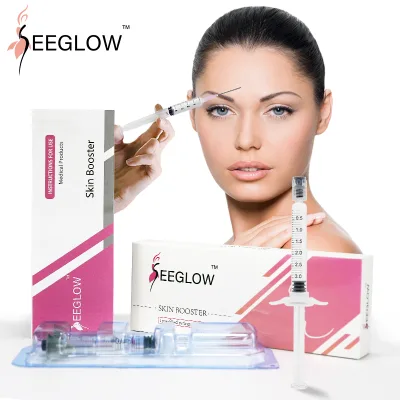
Buyers should anticipate that lower MOQs, such as 1 unit, may come with a higher per-unit cost due to the lack of economies of scale. Conversely, larger orders, potentially up to 500 units, may offer more favorable pricing tiers. The supply type is another major cost driver; suppliers offering OEM (Original Equipment Manufacturing) or ODM (Original Design Manufacturing) services typically charge a premium for custom branding and formulation adjustments compared to those offering OBM (Original Brand Manufacturing) with pre-existing brands like "SEEGLOW" or "Reforteha Skin Booster." Additionally, the inclusion of value-added services, such as logo printing or custom packaging, will increase the overall procurement cost. The shelf life of the product, observed as 6 months in some listings, may also impact pricing, as shorter shelf lives can necessitate faster turnover and potentially higher logistics costs.
Typical Applications and Clinical Indications
The functional scope of Skin Booster products is extensive, targeting a wide array of aesthetic and dermatological concerns. The primary applications include reducing wrinkles, firming the skin, and tightening pores. Beyond these surface-level improvements, the products are designed to repair acne-prone skin and address issues related to dryness and dehydration. The mechanism of action often involves the stimulation of collagen production and the renewal of youthful glow, which are critical for long-term skin health.
The target areas for application are diverse, extending beyond the face to include the lips, nose, neck, breasts, hands, and buttocks. This versatility allows buyers to market these products to a broader demographic, including those seeking body contouring or rejuvenation. The treatment protocol is another key consideration; some listings suggest a regimen of 2 sessions conducted one month apart, while the duration of the effects is estimated to last between 3 to 6 months. The product is suitable for all skin types and is primarily targeted at female adults, though the specific suitability for different skin conditions should be verified with clinical data. The feature set includes anti-wrinkle, anti-aging, moisturizing, lightening, nourishing, and skin revitalizing properties, making it a comprehensive solution for various skin care treatments.
Supplier Evaluation and Sourcing Strategy
Evaluating suppliers requires a multi-faceted approach that goes beyond simple price comparison. Buyers should prioritize suppliers that offer customization options, as this indicates flexibility in meeting specific market needs. The availability of OEM/ODM services is a strong indicator of a supplier's capability to handle private label projects. However, buyers must also be aware of the distinction between OBM and ODM; OBM suppliers may offer established brands like "SEEGLOW," while ODM suppliers provide the infrastructure for creating new brands.
Geographic location is another critical factor in supplier evaluation. The majority of observed products originate from China, with specific mentions of Shandong and Mainland China as production hubs. While these regions are known for robust manufacturing capabilities, buyers should verify the specific factory location to assess logistics costs and lead times. The quality guarantee period is another metric to consider, with some suppliers offering a two-year guarantee, which suggests confidence in product stability. Buyers should also check for the presence of a "Without Disinfection" or "Disinfection" attribute, as this impacts the readiness of the product for immediate clinical use.
Quality Control and Risk Management
Implementing a robust quality control (QC) strategy is essential for mitigating risks associated with sourcing medical and cosmetic supplies. The first step is to verify the "Quality Guarantee Period," which is listed as two years for some products. This period should align with the expected shelf life of 6 months to ensure that the product remains effective throughout its intended use. Buyers must also scrutinize the disinfection status; while some products are listed as "Without Disinfection," others explicitly state "Disinfection," which is a critical safety factor for injectable or invasive procedures.
Risk management also involves checking the consistency of product attributes. For instance, the cross-linked agent is listed as "No Bdde" in some contexts, which is a specific chemical constraint that must be adhered to for regulatory compliance. Buyers should request batch-specific test results to confirm that the Hyaluronic Acid content and other ingredients match the specifications. The packaging integrity is another area of focus; whether the product comes in a box containing 5 vials or a syringe with 2 needles, the packaging must be designed to maintain sterility and prevent leakage during transit.
Long-Term Procurement Considerations
Sourcing skin boosters is not merely a transactional activity but a strategic partnership that requires long-term planning. Buyers should consider the supply type and the supplier's ability to scale. The observed supply types include OEM, ODM, and OBM, each offering different levels of control and flexibility. For buyers looking to build a long-term brand, an ODM partnership may be ideal, allowing for custom formulations and branding. However, for those seeking immediate market entry, an OBM partnership with a recognized brand like "Reforteha Skin Booster" may be more efficient.
The shelf life of 6 months necessitates a careful inventory management strategy to prevent product expiration. Buyers should calculate their sales velocity to ensure that orders are placed frequently enough to maintain stock without risking spoilage. Additionally, the treatment duration of 3 to 6 months suggests that customers may require repeat purchases, creating a recurring revenue stream. Buyers should also monitor the market for changes in certifications, such as new FDA or CE updates, to ensure continued compliance. Finally, the ability to customize packaging and offer logo printing allows buyers to differentiate their offerings in a competitive market, ensuring long-term brand loyalty and market relevance.
FAQs
What certifications do Skin Booster products typically hold?
Products often carry CE and FDA certifications, with some also holding ISO certification. These marks indicate regulatory compliance and quality management standards, but buyers must verify that the specific model number, such as CS-1 or Skin Booster-24, is covered by the documentation.
How is the Skin Booster product packaged and stored?
Packaging varies from 5 vials in one box to custom configurations like 1 syringe with 2 needles. The product is stored at room temperature and typically has a shelf life of 6 months, requiring careful inventory management to prevent expiration before use.
Which specifications are available for the hyaluronic acid volume?
Volume specifications range from 1ml to 5ml per unit, with some listings offering multi-dose sets like 3ml times 5 vials. The product form is liquid and transparent, designed for application on various target areas including lips, face, and neck.
Can buyers request customization for branding and packaging?
Yes, customization is available with options for logo printing and custom packaging solutions. Suppliers offer OEM, ODM, and OBM supply types, allowing buyers to either create a new brand or utilize established names like SEEGLOW or Reforteha Skin Booster.
What are the primary functions and target areas for treatment?
Functions include reducing wrinkles, firming skin, and repairing acne-prone or dehydrated skin. Target areas extend beyond the face to include lips, nose, neck, breasts, hands, and buttocks, with treatment protocols often suggesting two sessions one month apart.
Where are these Skin Booster products typically manufactured?
The majority of observed products originate from China, with specific production hubs in Shandong and Mainland China. Buyers should verify the specific factory location to assess logistics costs, lead times, and the quality guarantee period, which is listed as two years for some items.