Source Slim Fit Straight Mens Jeans for casual, streetwear, and hiking
Compare 30 listings of Slim Fit Straight Mens Jeans from Chinese manufacturers. Buyers can evaluate customization options, material blends like stretch denim, and packaging details for casual, streetwear, and hiking uses.
Key considerations
Products List




Comprehensive Sourcing Guide
Strategic Sourcing Guide for Slim Fit Straight Men's Jeans
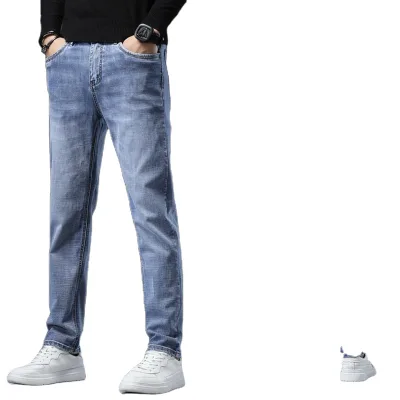
Navigating the global market for slim fit straight men's jeans requires a disciplined approach that balances aesthetic requirements with rigorous technical verification. The term "slim fit straight" describes a specific silhouette that tapers from the thigh to the knee before running straight down the leg, offering a modern profile without the extreme taper of skinny fits. When sourcing this category, buyers must distinguish between marketing descriptions and actual product attributes, as the supply chain often presents a wide variance in materials, construction methods, and finishing techniques. This guide outlines the critical factors for evaluating suppliers and products, grounded in the observable data points available in the current market landscape.
Technical Specifications and Material Composition
The foundation of any denim product lies in its material composition and weaving process. In the current market, buyers encounter a diverse range of fabric types, from traditional stretch denim to blended options. A critical observation in the supply data indicates the presence of "Stretch Denim" as a primary material, which is essential for the slim fit silhouette to ensure comfort and mobility. However, the market also lists "Polyester Cotton Denim" as a viable alternative, suggesting that buyers must verify the exact blend ratio to ensure the desired hand feel and durability. The presence of "Jacquard" weaving processes alongside "Machine-embroidered" techniques highlights that the construction method varies significantly between suppliers.
Furthermore, the finishing processes play a pivotal role in the final appearance. The data reveals "Water Washing" as a common craft, which is standard for achieving specific color depths and softness. Buyers should also note the existence of "Striped or Checked" weaving processes, which, while less common for traditional solid denim, may appear in fashion-forward iterations. The "Dyed Color" spectrum is equally broad, ranging from "Light Blue" and "Indigo Blue" to "White" and "Apricot Yellow." When sourcing slim fit straight jeans, the buyer must confirm that the dyeing process aligns with the requested color, as the "Dyed Color" attribute is not uniform across all listings. Additionally, the "Waist Type" is observed as "MID," which is a standard fit for this category, but customization options are frequently available, allowing for adjustments to high or low-rise profiles.
Design Attributes and Customization Capabilities
The design of slim fit straight men's jeans is defined by a combination of style, pattern, and decorative elements. The "Style" attribute is explicitly listed as "Straight," confirming the silhouette requirement. However, the "Pattern Type" can vary, with "Solid" being the most common for classic looks, while "Spliced" decorative methods offer a more complex design language. Buyers must carefully review the "Decorative Method" and "Decoration" attributes, as the market includes options such as "Patch," "Beads," "Button," "Crystal," "Embroidery," and "Hollow out" features. These elements can significantly impact the production cost and lead time.
Customization is a dominant feature in this sector. The "Customization" attribute is marked as "Available," and "OEM" (Original Equipment Manufacturer) services are confirmed as "Yes" or "OEM Service." This indicates that suppliers are generally willing to adapt designs to meet specific buyer requirements. The "Standard" attribute shows a mix of "MTM Size" (Made-to-Measure), "customized," and "Standard Specifications Or Customized." This variability means that a buyer cannot assume a standard size run exists for every supplier; some may require specific model numbers like "Men's Jeans-012O" or "HY01101C2204306" to proceed. The "Size" attribute ranges from "Free Size" to specific measurements like "L," and the "Length" is confirmed as "Long Pants." Buyers must clarify whether the supplier offers a full size range or relies on a limited set of standard sizes.
Compliance, Standards, and Certification Verification
When entering the B2B market for denim, verifying compliance and standards is non-negotiable. The supply data presents a fragmented view of standards, with entries ranging from "MTM Size" and "customized" to "Standard Specifications Or Customized" and even a generic "no" under the standard attribute. This inconsistency underscores the necessity for buyers to conduct their own due diligence rather than relying on supplier assertions. There is no universal certification status listed in the provided facts, meaning buyers must explicitly request proof of compliance with international safety and quality standards, such as REACH for chemical restrictions or ISO standards for management systems.
The "Standard" attribute also includes weight specifications like "0.9 KG," which likely refers to the packaging weight or a specific product benchmark. Buyers should verify if this weight aligns with the actual garment weight or if it includes packaging materials. Furthermore, the "prod_packing" attribute varies from "Carton and Plastic Bag" to "OPP Bag" and "Sack," indicating that packaging standards are not uniform. For export markets, buyers must ensure that the packaging meets destination-specific requirements, such as fumigation certificates for wood packaging or specific labeling regulations. The absence of explicit certification data in the source material necessitates a proactive approach where the buyer defines the required standards before finalizing any order.
Cost Drivers and Pricing Dynamics
Understanding the cost structure of slim fit straight men's jeans is vital for budgeting and margin analysis. The observed price range in the market spans from 0.8 to 60 USD, a wide disparity that reflects differences in material quality, labor intensity, and decorative complexity. The lower end of the spectrum likely corresponds to basic "Polyester Cotton Denim" with minimal decoration, while the higher end may involve "Stretch Denim" with intricate "Machine-embroidered" details or "Crystal" and "Bead" embellishments. The "MOQ" (Minimum Order Quantity) is another significant cost driver, with observed ranges from 1 to 1000 units. Specific listings indicate an MOQ of 500, which is a common threshold for OEM services.
Buyers must recognize that customization increases costs. The availability of "OEM Service" and "Customized" standards often comes with a premium, especially when dealing with unique "prod_model" numbers or specific "Dyed Color" requests. The "Sample Time" of 5-7 days suggests that prototyping is relatively quick, but the transition from sample to bulk production can introduce delays. Additionally, the "Supply Tye" is listed as "OEM Service," implying that the supplier's capacity and pricing are tied to their ability to manage custom orders. Buyers should negotiate based on volume tiers, as the wide MOQ range suggests flexibility, but higher volumes typically yield better unit prices.
Supplier Evaluation and Operational Capabilities
Evaluating suppliers requires a focus on their operational capabilities and geographic location. The data indicates that products originate from "China," with specific mentions of "Guangzhou" as a production hub. Guangzhou is a well-known center for garment manufacturing, offering access to a robust supply chain for denim and accessories. However, the "Location" attribute varies, with some entries specifying "Guangzhou" and others simply "China." Buyers should verify the exact factory location to assess logistics and potential risks associated with regional disruptions.
The "prod_packing" and "prod_standard" attributes reveal the operational maturity of the supplier. Some suppliers use "Standard Shipping Packaging," while others offer "Customized" options. The presence of specific model numbers like "HY006 Black High Damage Jeans" suggests a catalog of pre-existing designs, but the "Customization" availability indicates flexibility. Buyers should assess the supplier's ability to handle "Sample Time" requirements and their responsiveness to "OEM" requests. The "Occasion" attribute, listing "Casual Home/Fashionable Streetwear, Hiking, Camping," shows that suppliers are targeting diverse market segments. A supplier capable of producing for multiple occasions demonstrates versatility, but buyers must ensure the quality matches the intended use, particularly for outdoor activities where durability is paramount.
Quality Control and Long-Term Procurement Strategy
Implementing a robust quality control (QC) strategy is essential for maintaining brand integrity. The "Weaving Process" and "Craft" attributes provide initial indicators of quality, but physical inspection is necessary. Buyers should verify the "Stretch" properties of the denim and the durability of the "Machine-embroidered" or "Patch" decorations. The "Decorative Method" of "Spliced" or "Hollow out" requires close inspection to ensure that the structural integrity of the garment is not compromised. Additionally, the "Water Washing" process must be consistent to prevent color bleeding or uneven fading.
For long-term procurement, buyers should prioritize suppliers who offer "Standard Specifications Or Customized" options, as this allows for scalability. The "Sample Time" of 5-7 days is a positive indicator of efficiency, but buyers must establish clear protocols for sample approval before bulk production begins. The "MOQ" of 500 units suggests that buyers should plan for inventory management carefully to avoid overstocking. Finally, the "Supply Tye" being "OEM Service" implies a partnership model; buyers should build relationships with suppliers who can adapt to changing fashion trends, such as the shift from "Spring / Autumn" to "Summer" seasons, ensuring a steady supply of relevant products.
Comparative Analysis of Product Attributes
To facilitate decision-making, the following table summarizes the key attributes observed in the market for slim fit straight men's jeans. This comparison highlights the variability in specifications that buyers must navigate.
| Attribute Category | Observed Variations | Key Verification Points |
|---|---|---|
| Material | Stretch Denim, Polyester Cotton Denim | Verify blend ratio and stretch recovery. |
| Weaving Process | Jacquard, Machine-embroidered, Striped or Checked | Confirm texture and structural integrity. |
| Dyed Color | Light Blue, Indigo Blue, White, Apricot Yellow | Ensure color fastness and consistency. |
| Style | Straight, Loose | Verify fit against the "slim fit" requirement. |
| Decoration | Patch, Beads, Button, Crystal, Embroidery, Hollow out | Check durability of embellishments. |
| Packing | Carton/Plastic Bag, OPP Bag, Sack, Standard Shipping | Confirm packaging meets export standards. |
| Origin | China, Guangzhou | Assess logistics and supply chain stability. |
| MOQ | 1-1000, Specific 500 | Negotiate based on volume and customization. |
Conclusion
Sourcing slim fit straight men's jeans in the B2B market demands a meticulous approach to verifying technical specifications, material quality, and supplier capabilities. The data reveals a highly flexible market with extensive customization options, ranging from material blends to decorative methods. However, this flexibility comes with the responsibility of rigorous quality control and compliance verification. Buyers must move beyond surface-level attributes and engage in detailed discussions regarding standards, packaging, and production timelines. By focusing on the specific needs of their target market and maintaining clear communication with suppliers, buyers can secure a reliable supply chain that delivers high-quality denim products consistently. The wide range of observed prices and MOQs offers opportunities for strategic sourcing, provided that the buyer remains vigilant about the quality and compliance of the final product.
FAQs
What materials are used for Slim Fit Straight Mens Jeans?
The primary materials observed are Stretch Denim and Polyester Cotton Denim. Buyers must verify the exact blend ratio to ensure the desired hand feel and durability, as the market offers diverse fabric types beyond traditional denim.
Which customization options are available for these jeans?
Customization is available with OEM services confirmed for many suppliers. Buyers can request specific model numbers, customized standards, and adjustments to waist types, though they must clarify size ranges before ordering.
How does the MOQ vary for Slim Fit Straight Mens Jeans?
The Minimum Order Quantity ranges from 1 to 1000 units, with specific listings showing an MOQ of 500. Buyers should negotiate based on volume tiers, as higher volumes typically yield better unit prices for custom orders.
Can I find jeans with specific decorative methods like patches?
Yes, decorative methods include Patch, Beads, Button, Crystal, Embroidery, and Hollow out features. These elements significantly impact production costs and lead times, so buyers must confirm the durability of embellishments during inspection.
What is the typical sample time for these products?
The sample time is typically 5 to 7 days, indicating relatively quick prototyping capabilities. However, buyers must establish clear protocols for sample approval before bulk production begins to avoid delays in the supply chain.
Where are the manufacturers of these jeans located?
Products originate from China, with specific production hubs noted in Guangzhou. Buyers should verify the exact factory location to assess logistics and potential risks associated with regional disruptions in the garment supply chain.
What standards apply to the packaging of these jeans?
Packaging standards vary from Carton and Plastic Bag to OPP Bag and Sack options. For export markets, buyers must ensure that the packaging meets destination-specific requirements, such as fumigation certificates for wood packaging.