Source Slim Fit Vintage Denim Skirt for daily wear, travel, and parties
Explore 30 listings for the Slim Fit Vintage Denim Skirt, comparing features like high waist styles, cotton materials, and customization options from verified suppliers. Buyers can evaluate seasonal suitability and packaging details before contacting vendors.
Key considerations
Products List


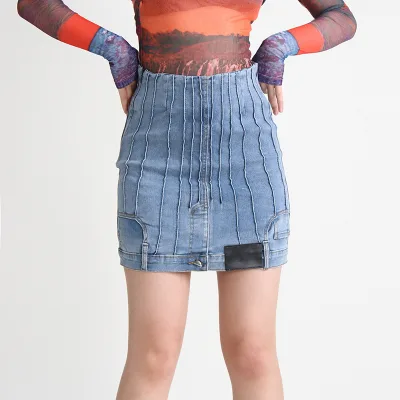
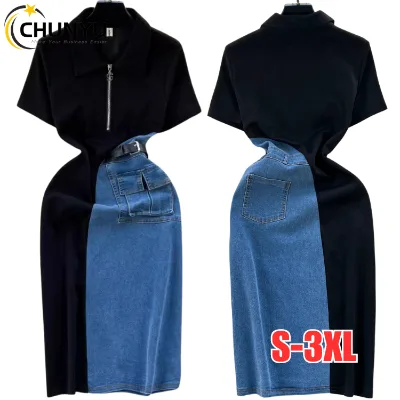
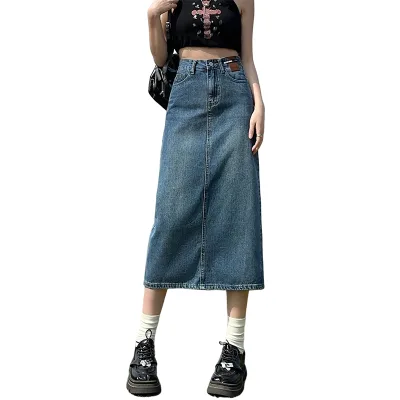
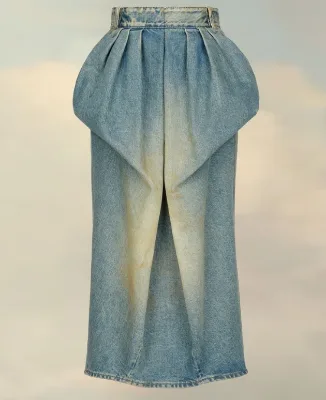
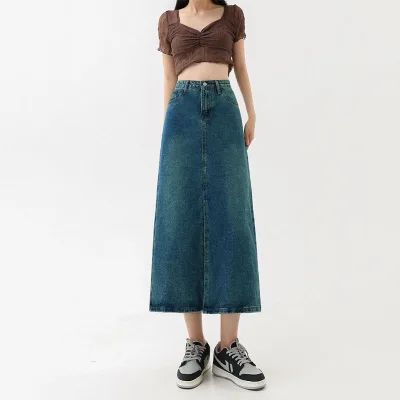
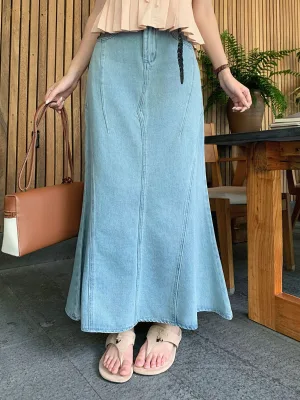
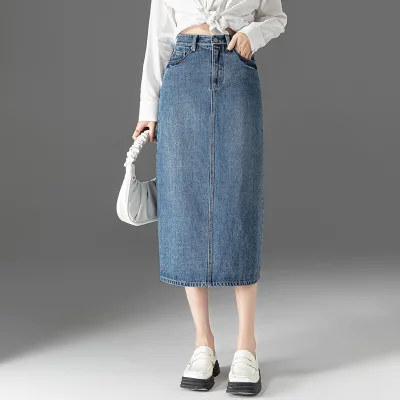
Women's Vintage Denim Skirt with High Waisted, Ruched Front, Bodycon Fit
$14.00 - $16.00
MOQ: 100 piece


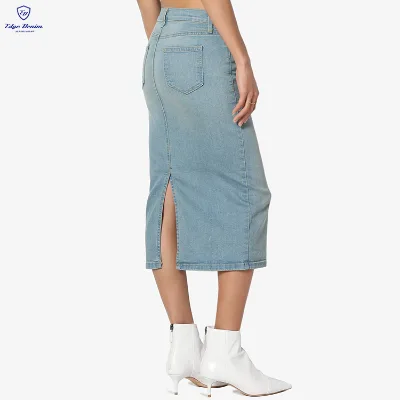
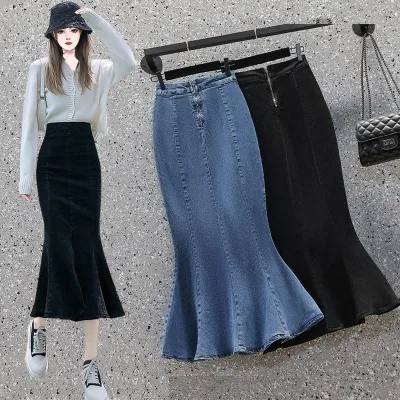
Elegant Retro Washed Denim Maxi Skirt for Women with Unique Tiered Look
$14.00 - $16.00
MOQ: 100 piece






Comprehensive Sourcing Guide
Strategic Sourcing Guide for Slim Fit Vintage Denim Skirts
Understanding Product Specifications and Variability
When sourcing a Slim Fit Vintage Denim Skirt, buyers must navigate a landscape where specific design attributes often vary significantly between suppliers. The core keyword implies a specific silhouette and aesthetic, yet the actual product data reveals a diverse range of materials, lengths, and construction methods that must be carefully aligned with procurement goals. The term "vintage" in a B2B context often refers to a washed or distressed finish, but technically, it can also imply specific cuts or fabric weights that mimic historical styles.
The provided product data indicates that "Slim Fit" is not a universal standard but a specific style attribute that competes with other variations like "Straight," "Full Skirt," or "Denim Skirt" in general listings. A buyer seeking a slim fit must explicitly verify the "Style" attribute in supplier catalogs, as the data shows options ranging from "Straight" to "Full Skirt." Furthermore, the "Length" specification is critical; the data lists both "Below Knee" and "Long" lengths. A vintage aesthetic often favors specific proportions, such as a mini or midi length, but the available data highlights "Below Knee" and "Long" as primary categories. Buyers must ensure the supplier's "prod_model" or specific SKU matches the desired length, as a "Long" denim skirt may not fulfill the visual requirements of a classic vintage look unless specifically styled.
Material composition is another pivotal factor. While denim is traditionally cotton, the supply data shows a mix of "Cotton," "Polyester," and "Cotton/Spandex." The inclusion of "Spandex" suggests a stretch component, which is essential for a "slim fit" to ensure comfort and mobility. A 100% cotton denim skirt may be rigid and difficult to wear in a slim cut, whereas a "Cotton/Spandex" blend offers the necessary elasticity. The data also notes a fabric weight of "210GSM," which is a specific observation for certain listings. Buyers should request this metric for all potential suppliers, as 210GSM represents a medium-weight denim suitable for year-round wear, whereas lighter weights might be too flimsy for a structured vintage look.
| Attribute Category | Observed Variations in Supply | Procurement Verification Requirement |
|---|---|---|
| Style | Straight, Full Skirt, Denim Skirt | Confirm "Slim Fit" or equivalent cut in technical drawings. |
| Length | Below Knee, Long | Verify exact measurement from waist to hem against size chart. |
| Material | Cotton, Polyester, Cotton/Spandex | Request fabric composition ratio; prioritize Spandex for fit. |
| Waist Shape | High Waist, Medium Waist | "High Waist" is often associated with vintage styles; confirm preference. |
| Pattern | Dyed, Other, Single Color, Multicolor | Define desired wash effect (e.g., acid wash, stone wash) explicitly. |
Compliance and Certification Verification Protocols
In the global apparel market, compliance is not merely a regulatory hurdle but a critical component of brand reputation and market access. The supplied data mentions "Regular size" as a standard and "Safe Export Packaging," but it does not provide definitive certification status for the products listed. While background knowledge suggests certifications like GOTS or OEKO-TEX are relevant to sustainable denim, the provided facts do not confirm that any specific supplier possesses these. Therefore, buyers must treat certification claims as unverified until documented proof is presented.
Buyers should not assume that a product labeled as "Cotton" is organic or free from harmful substances without explicit certification. The data notes "Feature: Breathable, Anti-Static," which are performance attributes rather than compliance standards. When evaluating suppliers, procurement teams must request third-party test reports for chemical restrictions, particularly regarding azo dyes and heavy metals, which are common concerns in denim production. The "Standard" field in the data lists dimensions like "40303" and "583630 cm," which appear to refer to packaging dimensions rather than garment standards. This distinction is vital; buyers must ensure that "Standard" refers to garment sizing consistency (e.g., ASTM, ISO) rather than just box dimensions.
Furthermore, the "Supply Type" is listed as "OEM Service," indicating that suppliers are willing to customize. This opens the door for buyers to specify their own compliance requirements, such as specific dyeing processes or fabric treatments. However, the "7 Days Sample Customization" support suggests that the customization process is relatively quick, which is beneficial for testing compliance samples before bulk production. Buyers should verify that the "Sample Time" of 7-15 days includes the time required for compliance testing of the sample itself. If a supplier claims to meet a specific standard, the buyer must ask for the certificate number and the date of issuance, ensuring the certification is current and covers the specific factory location.
Cost Drivers and Pricing Structure Analysis
The pricing for slim fit vintage denim skirts is influenced by a complex interplay of material costs, labor intensity, and customization requirements. The observed price range in the data spans from 1 to 36 USD, a significant variance that reflects differences in quality, brand positioning, and order volume. A price at the lower end of this spectrum likely corresponds to basic polyester blends or simpler constructions, while the higher end may indicate premium cotton, complex washing processes, or detailed vintage distressing.
Material cost is a primary driver. The data shows materials ranging from "Polyester" to "Cotton/Spandex." Cotton is generally more expensive than polyester, and the addition of Spandex adds to the cost. The "Weight: 210GSM" observation suggests a specific fabric density that impacts the raw material cost per unit. Buyers should understand that a "vintage" look often requires additional processing steps, such as enzyme washing, stone washing, or laser distressing, which increase the unit cost beyond the base fabric price.
Order volume is another critical cost factor. The "MOQ" (Minimum Order Quantity) observed ranges from 1 to 1000 pieces. Suppliers with an MOQ of 100 PCS or 1000 PCS may offer lower per-unit costs for bulk orders but require higher capital investment upfront. Conversely, suppliers offering an MOQ of 1 allow for smaller, more flexible orders but at a higher unit price. The "Supply Ability" of 50,000 pieces per month indicates that high-volume suppliers can accommodate large orders, potentially stabilizing costs through economies of scale.
Packaging also influences the final landed cost. The data lists various packaging details, including "Clear Plastic Bag," "Carton," "Cardboard Box," and "Polybag and Carton." More robust packaging, such as a "Carton" with specific dimensions like "583630 cm," adds to the shipping weight and volume, thereby increasing freight costs. Buyers must calculate the total cost of ownership, including packaging, rather than focusing solely on the FOB price. The "Single Gross Wei: 0.500kg" provides a baseline for weight calculations, but this may vary based on the specific model and packaging method selected.
Typical Applications and Market Segmentation
The versatility of the Slim Fit Vintage Denim Skirt allows it to serve multiple market segments, from casual daily wear to fashion-forward seasonal collections. The data indicates that the "Occasion" is primarily "Daily," suggesting a strong foundation in everyday wear. However, the "Season" attributes listed include "Summer," "Spring/Summer," and "Spring / Autumn," indicating that these skirts are designed for transitional weather and warmer months. This seasonal flexibility is a key selling point for buyers targeting year-round inventory.
The "Gender" attribute is listed as "Unisex," which expands the potential market beyond traditional women's wear to include gender-neutral fashion lines. This is particularly relevant in the current market where unisex and gender-fluid clothing is gaining traction. The "Age Group" is specified as "Adults," confirming that the target demographic is mature consumers rather than children or teenagers.
For buyers in the fashion retail sector, the "Style" variations like "Straight" or "Full Skirt" offer opportunities to cater to different customer preferences within the same product line. A "Slim Fit" version appeals to customers seeking a modern, streamlined look, while a "Full Skirt" might appeal to those preferring a more retro or voluminous silhouette. The "Color" options, ranging from "Single Color" to "Multicolor," allow buyers to diversify their assortments. The "Pattern" attribute, which includes "Dyed" and "Other," suggests that color washes and finishes are a significant differentiator in the vintage denim category.
| Application Segment | Key Product Attributes | Strategic Value |
|---|---|---|
| Daily Casual | Occasion: Daily, Season: Summer/Spring | High volume, repeat purchase potential. |
| Seasonal Fashion | Season: Spring/Summer, Style: Slim Fit | Trend-driven, higher margin potential. |
| Unisex Markets | Gender: Unisex, Age Group: Adults | Expands market reach, aligns with modern trends. |
| Custom Collections | Customization: Available, Model No.: LM688288 | Brand differentiation, exclusive designs. |
Supplier Evaluation and Capability Assessment
Selecting the right supplier for a Slim Fit Vintage Denim Skirt requires a rigorous evaluation of their capabilities, particularly regarding customization and production capacity. The data highlights that "Customization" is available and that "7 Days Sample Customization" is supported. This indicates a responsive supply chain capable of adapting to specific buyer requests, which is crucial for brands looking to differentiate their products.
The "Supply Type" is listed as "OEM Service," meaning suppliers are equipped to manufacture products under the buyer's brand. However, buyers must verify the extent of this service. Does the supplier handle design, pattern making, and sampling, or do they only provide manufacturing? The "Model No.: LM688288" and "prod_model: women's denim skirt" suggest that suppliers have existing templates, but the ability to modify these for a "slim fit" vintage look is the key differentiator.
Production lead times are another critical evaluation metric. The data specifies a "Sample Time" of 7-15 days and a "Bulk Leadtime" of 20-30 days. These timelines are relatively standard but must be factored into the overall supply chain planning. Buyers should assess whether these lead times are consistent across different suppliers or if they vary based on order complexity. The "Supply Ability" of 50,000 pieces per month is a strong indicator of capacity, but buyers should confirm if this capacity is dedicated to their specific order or if it is shared with other clients.
Quality control is inherent in the supplier evaluation process. The "Feature: Breathable, Anti-Static" and "Feature: Warm" attributes suggest that suppliers are attentive to fabric performance. However, buyers should not rely solely on these claims. Instead, they should request quality assurance protocols, such as in-line inspections and final random inspections (FRI). The "Standard" of "Regular size" implies a baseline for sizing, but buyers must ensure that the supplier has a robust system for maintaining size consistency across batches, especially for a "slim fit" garment where fit is paramount.
Quality Control and Long-Term Procurement Considerations
Maintaining consistent quality in vintage denim skirts requires a proactive approach to quality control and long-term relationship management. The "prod_packing" attributes, such as "Safe Export Packaging," "Cardboard Box," and "Polybag and Carton," highlight the importance of protecting the product during transit. However, quality control extends beyond packaging to include the integrity of the denim fabric, the durability of the stitching, and the consistency of the vintage wash.
Buyers should implement a multi-stage quality control process. First, verify the fabric composition and weight (e.g., 210GSM) against the agreed specifications. Second, inspect the sample for fit and silhouette, ensuring the "slim fit" is achieved without compromising comfort. Third, test the durability of the vintage wash to ensure it does not fade excessively or bleed during washing. The "Feature: Anti-Static" and "Breathable" claims should be validated through laboratory testing if these are critical selling points.
Long-term procurement considerations involve building a resilient supply chain. The "MOQ" range of 1-1000 offers flexibility, but buyers should aim to negotiate favorable terms for repeat orders. Establishing a long-term partnership with a supplier who understands the specific nuances of "vintage" denim can lead to better pricing, faster lead times, and higher quality consistency. The "7 Days Sample Customization" support is a valuable asset for maintaining agility in the supply chain, allowing buyers to quickly adapt to changing fashion trends.
Finally, buyers should consider the environmental impact of their procurement. While the data does not explicitly confirm GOTS or OEKO-TEX certification, the availability of "Cotton/Spandex" and "Cotton" materials suggests opportunities for sustainable sourcing. Buyers can work with suppliers to implement eco-friendly practices, such as water-saving washing techniques or the use of organic cotton, even if these are not currently highlighted in the standard product descriptions. By focusing on these long-term considerations, buyers can ensure that their procurement of slim fit vintage denim skirts is not only profitable but also sustainable and aligned with evolving market expectations.
FAQs
Can I get custom samples for slim fit vintage denim skirts?
Yes, 7 days sample customization is supported for these skirts. Buyers can request specific modifications to the style or material before placing a bulk order, ensuring the final product matches the desired vintage aesthetic and fit requirements.
What is the minimum order quantity for these skirts?
The minimum order quantity ranges from 1 to 1000 pieces depending on the supplier. Some vendors accept single items for sampling, while others require a bulk order of 100 pieces or more to activate production lines for custom designs.
Which materials are used for slim fit vintage denim skirts?
Common materials include cotton, polyester, and cotton spandex blends. The cotton spandex option provides necessary stretch for a slim fit, while 210GSM weight fabric is observed for medium-weight durability suitable for daily wear.
How long does it take to receive bulk orders?
Bulk lead time typically spans 20 to 30 days after sample approval. This duration allows for production and quality checks, though it may vary based on the specific supplier capacity and the complexity of the customization requested.
What packaging options are available for export?
Products are shipped using safe export packaging such as clear plastic bags, cardboard boxes, or polybags within cartons. Specific carton dimensions like 58 by 36 by 30 cm are noted for standard bulk shipments to ensure safe transit.
Can I find suppliers with high production capacity?
Yes, some suppliers offer a supply ability of 50,000 pieces per month. This high capacity ensures that large orders can be fulfilled efficiently without significant delays, provided the order volume aligns with their stated monthly limits.
Which waist shapes are available for these skirts?
Available waist shapes include high waist and medium waist options. High waist styles are often preferred for vintage aesthetics, while medium waist cuts offer a different silhouette, allowing buyers to select based on their target customer preferences.