Source Slim Fit Y2K Crop Top for fashion, events, and daily wear
Compare 30 listings for Slim Fit Y2K Crop Top featuring silk, cotton, and French terry fabrics with options for custom printing and OEM services. Buyers can evaluate prices, MOQs, and lead times from suppliers in Zhejiang, Jiangxi, and Guangdong.
Key considerations
Products List
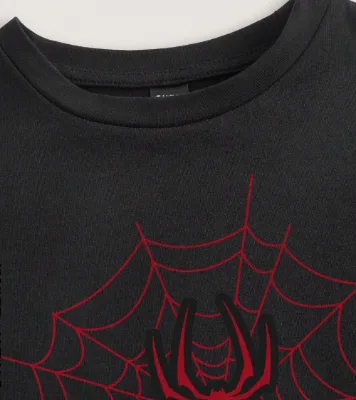
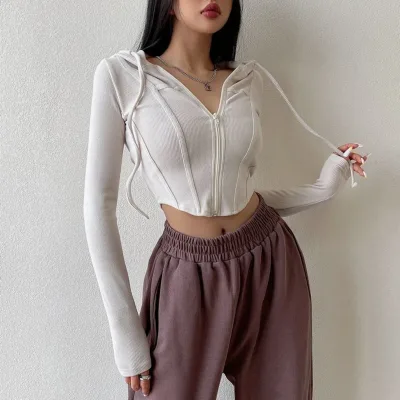
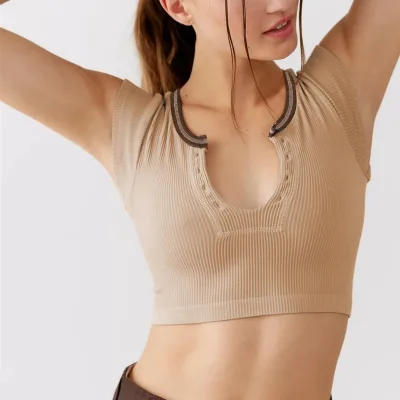
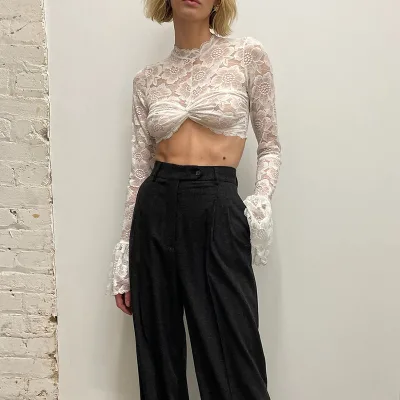
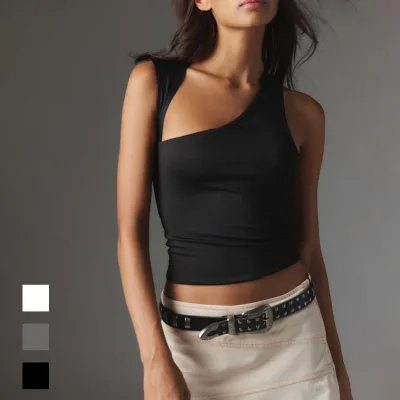
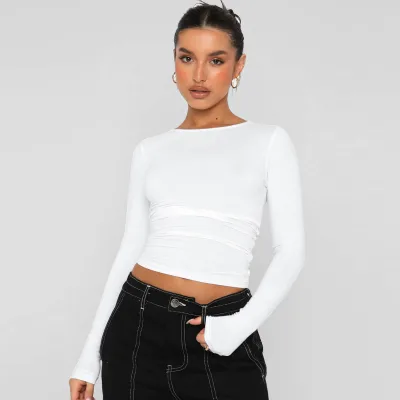
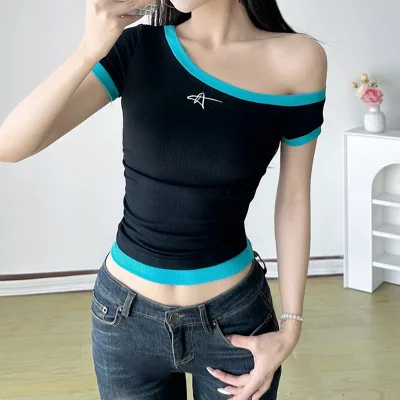
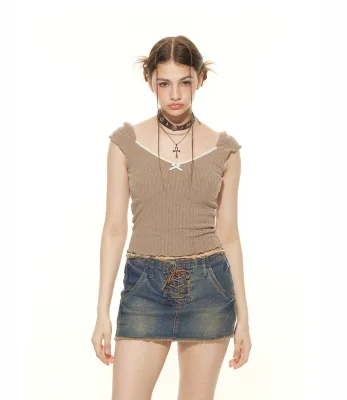
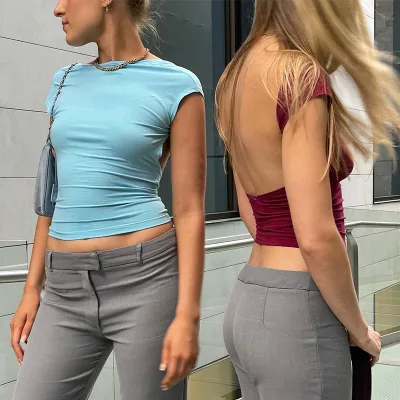
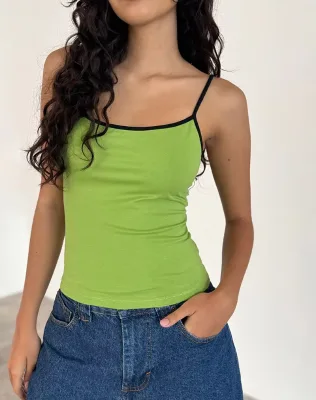


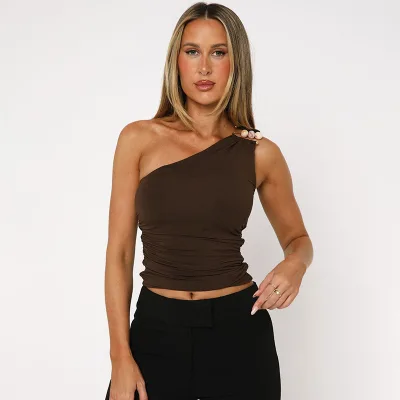


Comprehensive Sourcing Guide
Strategic Sourcing Guide for Slim Fit Y2K Crop Tops
The contemporary fashion landscape has witnessed a significant resurgence of Y2K aesthetics, characterized by bold silhouettes, vibrant colors, and a distinct emphasis on body-conscious tailoring. For procurement professionals and brand owners seeking to source "Slim Fit Y2K Crop Top" inventory, the market offers a diverse array of manufacturing capabilities, particularly within the Chinese textile sector. This guide synthesizes observed product attributes, technical specifications, and supply chain realities to provide a disciplined framework for sourcing these specific garments. The focus remains on verifying actual product data against buyer requirements, ensuring that the final procurement strategy aligns with both design intent and operational feasibility.
Technical Specifications and Material Composition
The foundation of a successful procurement strategy for slim fit crop tops lies in a precise understanding of material composition and construction details. Observed data indicates a wide variance in fabric choices, ranging from natural blends to specialized synthetic treatments. Buyers must distinguish between products listed with a "Silk / Cotton" blend and those specified as "100% Cotton." The latter is often preferred for its breathability and eco-friendly profile, aligning with the "Eco-Friendly" feature frequently cited in supplier listings.
Fabric weight is another critical technical parameter that dictates the drape and structure of the garment. Listings reveal a spectrum of weights, from 180 grams to as high as 440 grams. For a slim fit crop top, a weight between 180 and 300 grams is typically optimal to ensure the garment hugs the body without becoming overly stiff or heavy. Heavier weights, such as 380 to 440 grams, are often associated with French Terry or fleece constructions, which may be better suited for casual, oversized styles rather than the structured slim fit required for Y2K aesthetics.
The weaving method also plays a pivotal role in the final look. Data points to both "knitted" and "woven" (implied by "Worsted" fabric type) options. A knitted jersey construction is generally preferred for slim fit tops as it offers superior stretch and recovery, essential for the tight fit characteristic of the Y2K era. Conversely, woven fabrics may provide a more formal or structured appearance but lack the elasticity required for a true slim fit. Buyers should verify the specific fabric type listed as "Jersey" or "Worsted" to ensure it matches the desired silhouette.
Design Attributes and Customization Capabilities
The Y2K aesthetic is defined by specific design elements, including collar types, sleeve lengths, and graphic treatments. Observed product attributes highlight a variety of collars, such as "O-Neck" and "Crew Neck," both of which are compatible with the crop top style. The sleeve length is predominantly "Full," with sleeve styles ranging from "Regular" to "Drop-shoulder." While drop-shoulder sleeves are popular in streetwear, a "Regular" sleeve style often provides the cleaner, more tailored line required for a slim fit silhouette.
Graphic design and printing methods are central to the Y2K look. The market offers extensive customization options, including "Silk screen printing," "digital printing," "Heat-Transfer Printing," "embroidery," "Puff Printing," and "Embossed" techniques. The "Pattern Type" is frequently listed as "Letter," reflecting the typography-heavy designs popular in the early 2000s. Suppliers indicate support for logo placement on the "Front, back, Left Sleeve, Right Sleeve," allowing for versatile branding strategies.
When evaluating customization, buyers must consider the "Supply Type," which is often listed as "OEM service" or "OEM ODM Custom." This implies that manufacturers are equipped to handle private label production, including the acceptance of "Custom Lables." The "Service" attribute confirms that these suppliers are prepared to manage the entire production cycle from design to final packaging. However, the specific "Logos/graphic design" capabilities vary by supplier, and buyers should confirm which specific printing methods are available for their chosen fabric weight and type.
Sizing, Fit, and Production Standards
Achieving the correct fit is paramount for slim fit garments. The observed size ranges vary significantly between suppliers. Some listings offer a standard range of "S,M,L,XL," while others provide an extensive spectrum including "one size, XXS, XS, S, M, L, XL, 2 XL, 3 XL, 4 XL, 5 XL, 6XL." For a slim fit crop top, a comprehensive size range is essential to accommodate diverse body types while maintaining the intended silhouette. Buyers should verify if the "Fit Type" is explicitly listed as "slim fit" rather than generic terms like "Regular" or "Casual," as the latter may result in a looser, less accurate fit.
Clothing length is another critical specification. The data distinguishes between "Regular" and "Short" lengths. For a crop top, a "Short" length is the definitive requirement. Buyers must ensure that the supplier's definition of "Short" aligns with their specific design measurements, as variations in cut can significantly impact the final look. The "Single package size" also varies, with some listings specifying dimensions like "30X30X0.2 cm," which is crucial for calculating shipping costs and storage requirements.
Cost Drivers and Minimum Order Quantities
The pricing structure for slim fit Y2K crop tops is influenced by several factors, including material composition, printing complexity, and order volume. The observed price range in the market spans from 2.9 to 29.1 USD, a wide disparity that reflects differences in quality, branding, and production scale. Lower prices often correlate with simpler designs, standard cotton blends, and basic printing methods. Higher price points may indicate premium materials like silk blends, complex multi-step printing processes, or specialized fabric weights.
Minimum Order Quantities (MOQ) are a significant consideration for procurement planning. While some listings indicate an MOQ of "50pcs," the observed range extends from 1 to 500 units. This flexibility allows buyers to test the market with smaller initial orders or commit to larger volumes for established brands. The "Selling Units" are typically listed as "Single item," which simplifies inventory management. However, buyers must confirm the specific MOQ for their chosen customization level, as complex embroidery or multi-color printing may require higher volume commitments to be economically viable.
Payment terms also impact the financial logistics of the transaction. Commonly observed methods include "Paypal," "Western Union," "MoneyGram," "T.T," and "Trade Assurance." Utilizing "Trade Assurance" can provide an additional layer of security for international buyers, ensuring that funds are released only upon fulfillment of agreed-upon terms.
Supplier Evaluation and Geographic Considerations
Geographic location plays a vital role in supply chain efficiency and cost management. The observed data indicates production hubs in "Zhejiang, China," "Jiangxi, China," and "Guangdong, China." Each region has its own strengths; Zhejiang and Guangdong are known for their advanced textile manufacturing capabilities and export infrastructure, while Jiangxi may offer competitive labor costs. Buyers should evaluate suppliers based on their specific location to optimize lead times and shipping logistics.
Supplier reliability is further assessed through their lead times and sample policies. A "7 days sample order lead time" is a common feature, allowing buyers to quickly prototype and validate designs before committing to full production. The "Sample time" is consistently listed as "7 Days," indicating a standardized turnaround for pre-production samples. This efficiency is crucial for maintaining agile supply chains in the fast-paced fashion industry.
When evaluating suppliers, buyers should verify their "Weaving method" and "Fabric Type" claims. For instance, a supplier claiming to produce "knitted" garments should be able to demonstrate expertise in jersey production. Additionally, the "Feature" list, which includes "Breathable," "Eco-Friendly," "Anti-wrinkle," "Quick Dry," "Waterproof," "Anti-pilling," "Windproof," and "Anti-Shrink," should be treated as potential capabilities rather than guaranteed attributes for every product. Buyers must request specific test results or certifications to validate these claims, as not all listed products may satisfy every feature simultaneously.
Quality Control and Long-Term Procurement Strategy
Quality control is essential for maintaining brand integrity, especially for garments with specific fit and aesthetic requirements. Buyers should implement a rigorous inspection process that covers fabric weight consistency, printing clarity, and stitching quality. The "Fabric Weight" can vary significantly, from 180 grams to 440 grams, and even small deviations can affect the drape and fit of the garment. Establishing clear tolerance limits for weight and dimensions is necessary to ensure consistency across batches.
Long-term procurement considerations involve building a relationship with suppliers who can scale with demand. The "Supply Type" of "OEM service" suggests that suppliers are capable of handling growth, but buyers should verify their capacity to manage increased volumes without compromising quality. The "Season" attribute, listing "Winter" and "Autumn," indicates that these products are suitable for cooler weather, which may influence inventory planning and seasonal marketing strategies.
Finally, buyers should remain vigilant regarding compliance and certification. While specific certification statuses are not provided in the observed data, the "Eco-Friendly" feature suggests a potential focus on sustainable practices. Buyers should inquire about relevant environmental standards and labor compliance certifications to ensure their supply chain aligns with corporate social responsibility goals. By combining technical verification, strategic supplier selection, and robust quality control, buyers can successfully source high-quality slim fit Y2K crop tops that meet both market demands and operational standards.
FAQs
What fabric weights are available for slim fit y2k crop tops?
Fabric weights range from 180 grams to 440 grams depending on the specific product listing. Lighter weights around 180 to 300 grams are typically used for slim fit styles, while heavier options like 380 to 440 grams often feature French Terry or fleece for casual wear.
Can I order samples with a 7-day lead time?
Yes, sample orders with a 7-day lead time are supported by many suppliers. This allows buyers to quickly validate designs and fabric quality before committing to larger production runs, ensuring the final product meets the required slim fit specifications.
Which printing methods are supported for custom designs?
Suppliers offer multiple printing methods including silk screen printing, digital printing, heat-transfer printing, embroidery, puff printing, and embossed techniques. These options allow for versatile branding on the front, back, or sleeves of the garment.
What are the minimum order quantities for these tops?
Minimum order quantities vary significantly, with observed ranges from 1 to 500 units. Some specific listings indicate an MOQ of 50 pieces, providing flexibility for both small market tests and larger volume orders.
How do I verify the fit type for a slim fit top?
You must explicitly check if the product listing specifies a slim fit type rather than generic terms like regular or casual. The data confirms that some items are listed with a slim fit attribute to ensure the garment hugs the body correctly.
What locations are the manufacturers based in?
Manufacturers are located in key Chinese textile hubs including Zhejiang, Jiangxi, and Guangdong provinces. These regions offer advanced manufacturing capabilities and export infrastructure to support efficient supply chain logistics.