Source Slim O-Neck College Dress for Office, Daily, and Party
Find a selection of 30 Slim O-Neck College Dress options suitable for office, daily, and party occasions. Buyers can compare styles including business, casual, and leisure designs with varying lengths and materials like cotton and polyester.
Key considerations
Products List




Comprehensive Sourcing Guide
Strategic Sourcing Guide for Slim O-Neck College Dress Procurement
Understanding Product Variability and Core Specifications
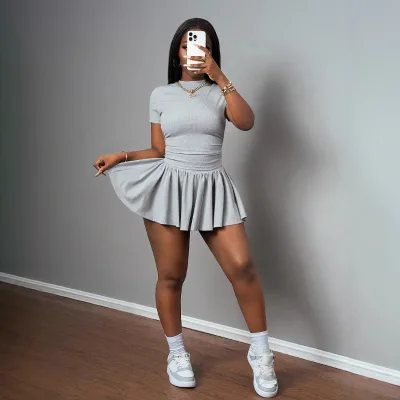
When sourcing a "slim o-neck college dress," buyers must first recognize that this keyword represents a broad category rather than a single, uniform SKU. The market data indicates significant variability in product attributes, meaning a single supplier may offer multiple distinct configurations under this general description. The "slim" fit and "O-neck" collar are foundational design elements, but the execution varies widely based on material, length, and sleeve type.
Current market observations reveal that "slim" silhouettes are often paired with diverse sleeve options. While some listings specify "Sleeveless" designs, others clearly indicate "Short Sleeve" or "Long Sleeve" variants. Similarly, length definitions fluctuate between "Short," "Medium," and "Long" classifications. For a college context, the "Short" or "Medium" length options are frequently observed, yet "Long" variants also exist in the supply chain. Buyers must explicitly define these dimensions during the inquiry phase to avoid receiving a product that does not match the intended aesthetic.
The material composition is another critical variable. The available supply chain includes "Cotton," "Polyester," and blended options such as "Polyester/Cotton." Cotton offers breathability suitable for daily wear, while Polyester provides durability and shape retention. The choice between these materials directly impacts the "slim" fit; a 100% cotton blend may drape differently than a high-polyester content fabric. Furthermore, the "Style" attribute ranges from "Casual" and "Business" to "Sexy" and "Leisure." A procurement strategy for a college dress typically prioritizes the "Casual" or "Business" style attributes, ensuring the garment aligns with an academic or semi-formal environment rather than a "Party" or "Leisure" context.
Compliance, Certification, and Standard Verification
In the realm of B2B apparel procurement, compliance is a non-negotiable pillar. While the supplied data mentions "customized" standards and a general reference to "OEKO-TEX" in background notes, no specific certification status is confirmed for the listed products. This absence of explicit certification data in the product facts requires buyers to treat certification as a verification step rather than an inherent feature.
Buyers should not assume that any listed product meets international safety or environmental standards without direct confirmation. The "prod_standard" is listed as "customized" for several items, which implies that the manufacturer is willing to tailor production to meet specific buyer requirements, including compliance with regional regulations. However, this customization capability does not automatically equate to pre-existing certification.
For college dress procurement, particularly if targeting Western markets, verifying compliance with textile safety standards is essential. Buyers must explicitly request documentation regarding chemical restrictions, such as the absence of harmful azo dyes or formaldehyde. The background mention of "OEKO-TEX" suggests that this standard is relevant to the category, but it should be treated as a target for verification rather than a guaranteed attribute. Procurement teams should require suppliers to provide valid test reports from accredited third-party laboratories to confirm that the "Cotton" or "Polyester" materials used are free from prohibited substances.
Additionally, the "Standard" attribute being "customized" offers an opportunity for buyers to define their own quality benchmarks. If a buyer has specific internal standards for fabric weight, colorfastness, or seam strength, these can be incorporated into the "customized" standard clause. This approach ensures that the final product aligns with the buyer's specific risk management and quality assurance protocols.
Cost Drivers and Pricing Dynamics
The pricing structure for slim o-neck college dresses is influenced by a complex interplay of material costs, order volume, and customization requirements. The observed price range in the market spans from $0.50 to $2,020 USD. This vast disparity indicates that the unit price is highly sensitive to the specific configuration of the order. The lower end of the spectrum likely corresponds to basic, high-volume orders of standard materials like Polyester, while the higher end may reflect complex customizations, premium materials, or very small sample batches.
A primary cost driver is the Minimum Order Quantity (MOQ). The data shows an MOQ range from 1 to 202,000 units, with specific high-confidence facts citing MOQs of 500 and 10,000 units. This suggests that suppliers operate on a tiered pricing model. Orders falling below the standard MOQ (e.g., 500 units) may incur a premium per unit or require a higher base price to cover setup costs. Conversely, orders approaching the upper limits of the observed range (202,000 units) may benefit from economies of scale, though the specific price point for such volumes is not explicitly defined in the provided facts.
Material selection also significantly impacts cost. "Cotton" is generally more expensive than "Polyester" due to raw material costs and processing requirements. Blends like "Polyester/Cotton" offer a middle ground, potentially balancing cost and performance. Buyers should anticipate that requests for "Customize" color or pattern, such as "Letters" or "Striped" designs, will add to the unit cost due to the setup required for specific printing or dyeing processes.
Furthermore, the "Supply Type" includes both "OEM Service" and "in-Stock Items." In-stock items typically command a lower price due to immediate availability and lack of production lead time, whereas OEM services involve design, sampling, and production cycles that may increase the overall cost. The "7 Days Sample Order Lead Time" mentioned in the data suggests that sample costs are a distinct line item, and buyers should factor this into their initial budgeting before committing to a bulk order.
Typical Applications and Occasion Matching
The versatility of the slim o-neck college dress is evident in the diverse "Occasion" attributes observed in the supply chain. The data lists "Daily," "Office," "Party," and "Leisure" as potential use cases. For a buyer targeting the college demographic, the "Daily" and "Office" occasions are the most relevant. The "Daily" attribute suggests a garment suitable for campus life, classes, and casual social interactions, while the "Office" attribute indicates a level of formality appropriate for internships, presentations, or professional settings on campus.
However, the presence of "Party" and "Sexy" style attributes in the data serves as a cautionary note. Not all products labeled as "college dress" will be suitable for a professional or academic environment. Buyers must carefully filter listings to ensure the "Style" aligns with the intended application. A "Sexy" style or "Party" occasion item may be too revealing or inappropriate for a college setting, even if it fits the "slim o-neck" description.
Seasonality is another critical factor in application. The data includes "Summer," "Spring/Summer," and "Winter" as seasonal attributes. A "slim o-neck" dress intended for year-round college wear must be evaluated against the local climate. "Short Sleeve" and "Sleeveless" variants are ideal for "Summer" and "Spring/Summer" applications, providing comfort in warmer weather. In contrast, "Long Sleeve" options are necessary for "Winter" or cooler climates. The "Medium" length option appears to be a versatile choice that can transition across seasons, provided the material weight is appropriate.
Supplier Evaluation and Operational Capabilities
Evaluating suppliers for slim o-neck college dress procurement requires a focus on their ability to handle customization and manage varying order volumes. The "OEM: Yes" attribute is a strong indicator of a supplier's capability to produce private-label goods, which is essential for buyers looking to build their own brand. The "Supply Type" of "OEM Service, in-Stock Items" suggests that some suppliers offer a hybrid model, allowing buyers to choose between immediate delivery of standard stock or custom production.
The "prod_origin" is listed as "China," which is a common hub for apparel manufacturing. Buyers should verify the specific location within China, as regional clusters may offer different advantages in terms of logistics, material sourcing, and labor costs. The "Available" attribute of 5,000 units for certain items indicates that suppliers may have existing inventory, which can be a significant advantage for reducing lead times.
Lead time is a critical operational metric. The data explicitly mentions "7 Days Sample Order Lead Time: Support," which is a positive indicator for the sampling phase. However, bulk production lead times are not specified in the provided facts. Buyers must request this information directly from potential suppliers, as it can vary significantly based on the complexity of the design, material availability, and current factory workload. The high MOQ of 10,000 units for some items suggests that these suppliers are geared toward large-scale production, which may not be suitable for startups or small businesses requiring lower initial volumes.
Quality Control and Inspection Protocols
Ensuring consistent quality is paramount when sourcing apparel from a market with high variability. The "prod_packing" attributes include "OPP Bag" and "Paper Box," indicating different levels of packaging protection. For bulk orders, the choice of packaging can impact the condition of the goods upon arrival. Buyers should specify their preferred packaging method to prevent damage during transit and to ensure the product meets their branding requirements.
Quality control should extend beyond visual inspection to include functional testing. Given the "Material" variations (Cotton, Polyester, Blend), buyers should verify the fabric's shrinkage rate, colorfastness, and tensile strength. The "Customized" standard attribute allows buyers to define specific quality thresholds. For instance, a buyer might require that the "Slim" fit maintains its shape after multiple wash cycles, or that the "O-neck" collar does not stretch out of shape.
The "Pattern" attributes, such as "Letters" and "Striped," introduce additional quality risks related to printing or weaving accuracy. Buyers should request pre-production samples to verify that the patterns are aligned correctly and that the colors match the agreed-upon specifications. The "Feature: Vintage" attribute suggests a specific aesthetic that may require unique finishing techniques, which should be validated during the sampling phase.
Long-Term Procurement Considerations
Sourcing a slim o-neck college dress is not merely a transactional activity but a strategic decision that impacts long-term brand consistency and supply chain resilience. The "Customization" availability is a key enabler for long-term growth, allowing buyers to adapt their product line to changing trends without switching suppliers. However, reliance on "Customized" standards requires clear communication and documentation to ensure that future production runs match the initial sample.
The "MOQ" variability presents a strategic challenge. Suppliers with high MOQs (e.g., 10,000 units) may limit a buyer's ability to test new designs or respond quickly to market shifts. Buyers should consider diversifying their supplier base to include partners with lower MOQs for initial testing and larger partners for volume production. This approach mitigates risk and ensures flexibility.
Finally, the "Lead Time" and "Supply Type" factors influence inventory management. The "7 Days Sample Order Lead Time" is a positive sign for rapid prototyping, but buyers must plan for longer lead times for bulk orders. Understanding the supplier's capacity to handle "in-Stock Items" versus "OEM Service" is crucial for maintaining a steady flow of products. Buyers should establish clear communication channels to monitor production status and address any potential delays proactively, ensuring that the supply chain remains robust and responsive to market demands.
Comparative Analysis of Product Attributes
To facilitate decision-making, the following table summarizes the key attribute variations observed in the market for slim o-neck college dresses. This comparison highlights the diversity buyers must navigate.
| Attribute Category | Observed Variations | Procurement Implication |
|---|---|---|
| Material | Cotton, Polyester, Polyester/Cotton | Determines breathability, durability, and cost. Verify blend ratios for performance. |
| Sleeve Type | Sleeveless, Short Sleeve, Long Sleeve | Must align with seasonal needs (Summer vs. Winter) and occasion (Daily vs. Office). |
| Length | Short, Medium, Long, Midi | "Short" and "Medium" are common for college wear; "Long" and "Midi" offer different silhouettes. |
| Style | Casual, Business, Sexy, Leisure, Vintage | Filter for "Casual" or "Business" to match college context; avoid "Party" or "Sexy" if inappropriate. |
| MOQ | 500, 10,000, up to 202,000 | High MOQs may require larger capital; low MOQs allow for testing but may have higher unit costs. |
| Packing | OPP Bag, Paper Box | Affects product protection and branding; specify requirement during order placement. |
| Origin | China | Standard manufacturing hub; verify specific factory capabilities and compliance standards. |
| Customization | Available (Yes) | Enables branding and specific design requirements; requires clear specification documentation. |
This table underscores the necessity of precise specification during the sourcing process. Buyers cannot rely on the keyword alone; they must actively define the material, style, and operational parameters to secure a product that meets their specific needs.
FAQs
Can I find slim o neck college dresses with custom standards?
Yes, suppliers offer customized standards for these dresses. You can specify unique requirements for fabric weight, colorfastness, or seam strength to align with your quality protocols and risk management needs.
What material options exist for slim o neck college dresses?
Available materials include Cotton, Polyester, and Polyester/Cotton blends. Cotton offers breathability for daily wear, while Polyester provides durability, and blends balance cost with performance for various seasonal needs.
Which sleeve types are available for slim o neck college dresses?
You can find Sleeveless, Short Sleeve, and Long Sleeve variants. Sleeveless and Short Sleeve options suit Summer and Spring/Summer seasons, while Long Sleeve designs are appropriate for Winter or cooler climates.
How do MOQs vary for Slim O-Neck College Dress orders?
Minimum Order Quantities range from 500 to 10,000 units depending on the supplier and product configuration. Lower MOQs may incur higher unit costs, while larger volumes benefit from economies of scale.
Can suppliers provide samples within a week for slim o neck college dresses?
Yes, many suppliers support a 7-day sample order lead time. This allows you to verify fabric quality and fit before committing to bulk production, though bulk lead times require direct confirmation.
What customization services are available for slim o neck college dresses?
Suppliers provide OEM services including custom colors, patterns like Letters or Striped, and tailored standards. This enables private-label production and adaptation to specific brand aesthetics without switching manufacturers.