Source SMA 905 Optical Bare Fiber for Telecom, FTTH, and LAN
Find and compare SMA 905 Optical Bare Fiber options from 30 verified suppliers. Explore single-mode and multi-mode variants with G657A2 specifications, customizable lengths, and various connector types for communication networks.
Key considerations
Products List


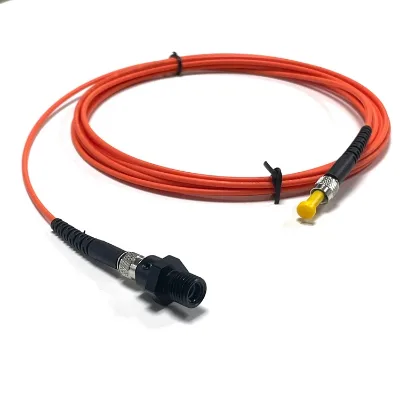

$35.00
MOQ: 1000 Square Meters


900um High Speed and Reliability Reinforcement Tight Wrapped Fiber Optic
$0.00 - $0.01
MOQ: 50000 Meters


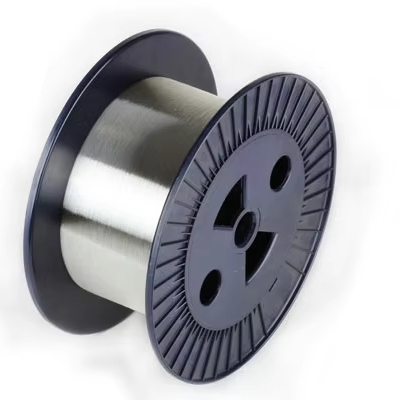
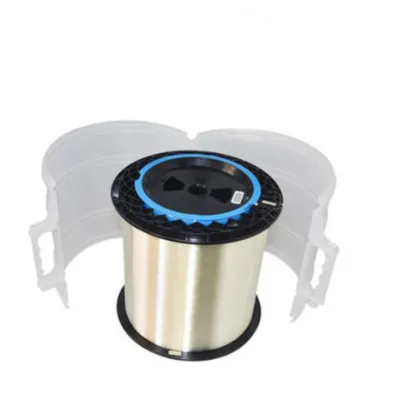
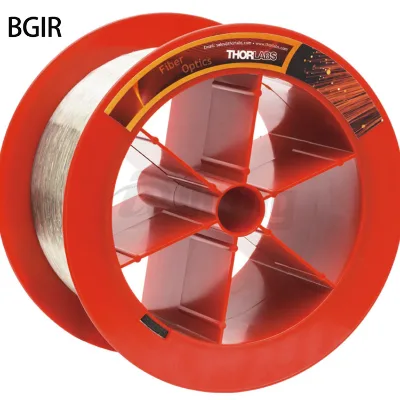



Comprehensive Sourcing Guide
Strategic Sourcing Guide for SMA 905 Optical Bare Fiber
Navigating the procurement landscape for SMA 905 Optical Bare Fiber requires a disciplined approach that balances technical precision with supply chain reliability. Buyers seeking this specific component often operate in telecommunications, data center interconnects, or specialized sensor manufacturing where signal integrity is paramount. The core keyword, SMA 905 Optical Bare Fiber, points to a specific configuration where optical fiber is terminated with an SMA 905 connector, a standard widely recognized for its robust mechanical coupling and suitability for high-vibration environments. However, the underlying fiber itself, often referred to as "bare fiber" in various listings, presents unique challenges regarding handling, splicing, and environmental durability. This guide synthesizes observed market data and technical attributes to provide a framework for evaluating potential suppliers and products without relying on unverified claims.
Technical Specifications and Fiber Architecture
The foundation of any successful procurement for optical fiber lies in understanding the precise physical and optical characteristics of the product. In the current market, the fiber core architecture often centers on bending-insensitive standards, specifically G.657.A2, which is frequently cited in product specifications. This standard is critical for applications requiring tight bend radii without significant signal loss. The observed data indicates that the cladding diameter is consistently standardized at 125μm, a universal metric for single-mode fibers, while the coating diameter typically ranges between 243±5μm.
When evaluating the fiber type, buyers must distinguish between single-mode and multi-mode capabilities. While some listings mention multi-mode fiber, the dominant specification for high-performance applications aligns with single-mode fiber, specifically the G.657.A2 variant. The attenuation characteristics are a primary metric for performance; observed values suggest an attenuation of 0.35 dB/Km at 1310nm and 0.21 dB/Km at 1550nm. These figures represent the expected signal loss over distance and are vital for calculating link budgets in long-haul or FTTH (Fiber to the Home) deployments.
The physical form of the fiber also varies. While the term "bare fiber" suggests unjacketed strands, the supplied data reveals a spectrum of packaging and protection levels. Some products are listed as "Bare Fiber" with a diameter of 0.25mm or 0.27mm, while others include a protective coating. The fiber color can be bare or come in a variety of options, including 12 standard colors, which aids in identification during complex cabling projects. The connector interface is another critical variable; while the core keyword specifies SMA 905, the market data shows a prevalence of FC, SC, and LC connectors, as well as hybrid structures like FC-LC. Buyers must verify that the specific SMA 905 termination is available, as the standard often co-exists with other connector types in the same product catalog.
Compliance, Certification, and Regulatory Standards
In the global supply chain, compliance is not merely a formality but a prerequisite for market access and operational safety. The observed product data highlights several key certifications that buyers should verify during the supplier evaluation process. The most frequently cited standards include RoHS (Restriction of Hazardous Substances) and CE (Conformité Européenne), indicating adherence to environmental and safety regulations in the European market. Additionally, ISO certification is mentioned, though the specific standard varies; some listings reference "ISOCore:Single Core" or general ISO compliance, while others mention "ISOSheath Material:PVC."
Buyers must exercise caution when interpreting these certifications. The presence of "ISO" in a product title does not automatically equate to a specific ISO standard like ISO 9001 for quality management. Instead, it often refers to the material or core structure. A rigorous due diligence process requires the buyer to request the actual certification documents from the supplier to confirm the scope of compliance. The material composition is another area requiring verification. The sheath material is noted as PVC in some contexts, which is a common choice for flexibility and cost-effectiveness, but buyers in harsh environments may require alternatives.
The product origin is consistently listed as China, which is a major manufacturing hub for optical components. This geographic concentration influences the supply chain dynamics, including lead times and logistics. While the origin is a fact, the quality control processes associated with manufacturing in this region vary significantly between suppliers. The "OEM" (Original Equipment Manufacturer) attribute suggests that many products are customizable, allowing buyers to specify their own branding or technical requirements. This customization capability is a significant advantage for large-scale procurement but necessitates clear communication of technical specifications to avoid mismatches.
Cost Drivers and Pricing Dynamics
Understanding the cost structure of optical fiber is essential for budgeting and negotiating effective contracts. The observed price range in the market spans from $0 to $650 USD, a wide variance that reflects differences in fiber type, length, connectorization, and packaging. This range indicates that pricing is not linear; a bare fiber reel may cost significantly less than a pre-terminated cable assembly with specialized connectors. The "Bare Fiber" designation often correlates with lower unit costs, as it eliminates the labor and material expenses associated with connectorization and jacketing.
The Minimum Order Quantity (MOQ) is a critical factor influencing the total cost of ownership. The observed MOQ range is extensive, from 1 reel to 3,024,000 units. This suggests a highly flexible market where small prototyping orders are feasible alongside massive industrial deployments. For buyers requiring small quantities, an MOQ of 1 reel is a favorable condition, allowing for low-risk testing. Conversely, large-volume buyers can leverage the high-end MOQ to negotiate better unit economics. The reel length is another cost driver, with options typically ranging from 25.2km to 50.4km per reel, and some OEM options extending to 60km. Longer reels reduce the number of splices required in a network, potentially lowering installation costs despite a higher upfront material cost.
Packaging and dimensions also impact logistics costs. Standard packaging includes carton boxes, with dimensions varying from 35x35x2 cm to 47x49x31 cm. The weight of a standard package is noted as 21kg, which is a key figure for freight calculations. Buyers should consider the "Single Package Size" option for smaller orders to minimize shipping volume. The warranty period, typically listed as 1 year, provides a baseline for risk mitigation, though buyers should negotiate extended terms for critical infrastructure projects.
Typical Applications and Network Integration
The versatility of SMA 905 Optical Bare Fiber makes it suitable for a diverse array of applications, primarily within the telecommunications and networking sectors. The "Communication" and "Telecom" use cases are the most prominent, with specific mentions of FTTH (Fiber to the Home), FTTB (Fiber to the Building), and FTTX (Fiber to the x) networks. These applications demand high reliability and low attenuation, which the G.657.A2 fiber standard supports through its bending insensitivity.
Beyond traditional telecom, the fiber is integrated into various network types, including Bluetooth, Wired LAN, IP, 4G, and 3G networks. This integration highlights the fiber's role as a backbone component in modern communication infrastructure. The "Allowed Lateral Pressure" of 100-1000 N/100mm and "Allowed Tensile Strength" of 100-1000 N indicate that the fiber is designed to withstand mechanical stress, making it suitable for outdoor installations or environments with potential physical strain.
The specific connector type, SMA 905, is particularly valuable in applications requiring secure, vibration-resistant connections. While the market data shows a mix of FC, SC, and LC connectors, the SMA 905 remains a niche but critical choice for military, industrial, and high-reliability sensor applications. Buyers should ensure that the fiber's "Fiber Color" and "Fiber Type" align with their specific network color-coding standards and performance requirements. The "Bending Insensitivity" feature is especially relevant for dense cabling environments where tight bends are unavoidable, such as in data center racks or building interiors.
Supplier Evaluation and Quality Assurance
Selecting the right supplier is perhaps the most critical step in the procurement process. Given the "OEM" nature of many products, buyers must evaluate the supplier's capability to meet specific customization needs. The "Customization: Available" attribute suggests that suppliers can tailor fiber diameter, color, and packaging to the buyer's specifications. However, this flexibility requires a robust quality assurance framework to ensure that custom orders do not deviate from the core technical standards.
Quality control should focus on verifying the consistency of the fiber's optical and mechanical properties. Buyers should request test results for attenuation, tensile strength, and lateral pressure to confirm that the product meets the observed standards of 0.35 dB/Km at 1310nm and 100-1000 N/100mm for lateral pressure. The "Warranty: 1year" clause provides a baseline, but buyers should inquire about the supplier's defect rate and return policy. The "Production Standard" of "Fiber cable" and specific dimensions like "46X30X35 cm" should be cross-referenced with the buyer's storage and handling requirements.
When evaluating suppliers, buyers should also consider the "Network" compatibility. A supplier claiming compatibility with "Bluetooth, Wired LAN, IP, 4G, 3G" must demonstrate that their fiber can be successfully integrated into these specific network architectures. The "Model No." variations, such as G652D, G657A1, and G657A2, indicate a broad product portfolio. Buyers should verify that the specific model they are purchasing matches their network design, as mixing standards can lead to compatibility issues.
Long-Term Procurement and Supply Chain Resilience
Long-term procurement strategies for optical fiber must account for supply chain resilience and future-proofing. The "Reel Length" options of 25.2km, 50.4km, and 60km offer flexibility for different project scales, but buyers should plan for future expansion. The "OEM" capability allows for branding and specification changes, which is beneficial for maintaining a consistent supply chain identity over time. However, buyers should ensure that the supplier has the capacity to scale production to meet increased demand without compromising quality.
The "Standard" of "Fiber cable" and the "Material Shape" of "Round Wire" are consistent attributes that simplify inventory management. However, the "Allowed Lateral Pressure" and "Allowed Tensile Strength" ranges suggest that the fiber's mechanical limits are variable. Buyers should establish a clear specification for these parameters in their contracts to ensure consistency across batches. The "Certification" status, particularly RoHS and CE, should be maintained throughout the product lifecycle to ensure ongoing compliance with international regulations.
In conclusion, sourcing SMA 905 Optical Bare Fiber requires a meticulous approach that balances technical specifications, compliance, and cost. By leveraging the observed data on fiber types, certifications, and packaging, buyers can make informed decisions that align with their specific network requirements. The market offers a wide range of options, from bare fiber to fully terminated assemblies, but the key to success lies in rigorous supplier evaluation and clear communication of technical needs. As the telecommunications landscape continues to evolve, maintaining a flexible and compliant supply chain will be essential for long-term operational success.
FAQs
What certifications are available for this fiber?
The product holds RoHS, CE, and ISO certifications. These ensure compliance with environmental and safety standards for European markets, though specific ISO standards may vary by listing.
Which fiber types are supported in this range?
The range includes single-mode G657A2 and G652D fibers. Some listings also mention multi-mode options, but G657A2 is the dominant standard for bending insensitivity.
How is the fiber typically packaged for shipment?
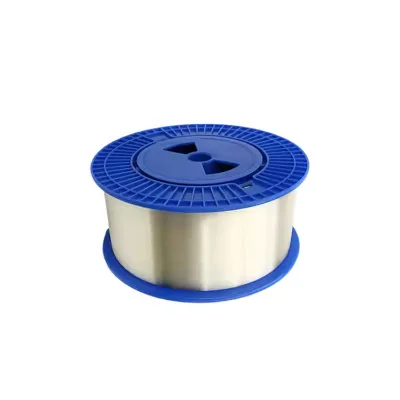
Fiber is packed in plastic reels inside carton boxes. Standard dimensions vary from 35x35x2 cm to 47x49x31 cm, with a typical weight of 21kg per package.
Can I customize the fiber specifications?
Yes, customization is available for branding and technical requirements. Buyers can specify fiber colors, diameters, and reel lengths, though OEM branding is the standard offering.
What is the minimum order quantity for reels?
The minimum order quantity starts at 1 reel. However, bulk orders can reach up to 3,024,000 units, allowing flexibility for both prototyping and large-scale deployments.
Where are these optical fibers manufactured?
All listed products originate from China. This location is a major hub for optical component manufacturing, influencing lead times and logistics for global buyers.
What is the attenuation rate at 1550nm?
The attenuation is 0.21 dB/Km at 1550nm. This low loss value supports long-distance transmission in FTTH and telecom networks using single-mode fiber.