Source Small Airless Pump Bottle for skincare, beauty, and cream packaging
Find and compare 30 Small Airless Pump Bottle options from verified manufacturers in China. Buyers can review materials like PP, capacities ranging from 5ml to 200ml, and customization features for skin care and personal care applications.
Key considerations
Products List


Portable High Quality Lightweight Compact 15/30/50ml Airless Pump Bottle
$0.20 - $1.00
MOQ: 10000 Pieces

Made of Thick Material Easy Clean Reusable Compact Size Airless Pump Bottle
$0.80 - $1.00
MOQ: 10000 Pieces

Clean Hygienic Convenient Travel Shock Resistant Durable Airless Pump Bottle
$0.80 - $1.00
MOQ: 10000 Pieces


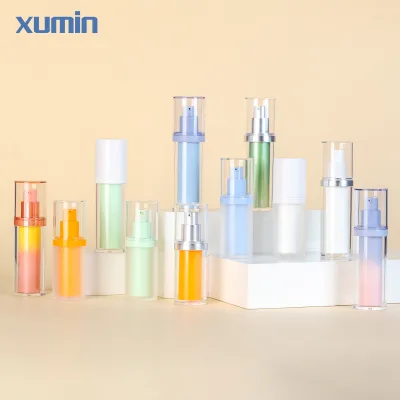


Multi Capacity Plastic Pump Bottle Cosmetic Cream Airless Bottles with Pump
$0.34 - $0.35
MOQ: 10000 Pieces


Comprehensive Sourcing Guide
Strategic Sourcing Guide for Small Airless Pump Bottles
Understanding Technical Specifications and Material Composition
When sourcing small airless pump bottles, the primary objective is to identify containers that preserve product integrity while offering functional reliability. Based on observed market data, the core material for these vessels is predominantly plastic, with a specific emphasis on Polypropylene (PP) for the body. This material choice is critical because PP offers excellent chemical resistance, ensuring that the bottle does not react with sensitive skincare formulations, creams, or lotions. The structural integrity of the bottle is often reinforced by a plastic cap, which works in tandem with the pump mechanism to create a hermetic seal.
The sealing method is a defining characteristic of airless technology. Unlike traditional screw caps, airless systems utilize a piston mechanism that rises as the product is dispensed, preventing air from entering the container. This "No Leakage" feature is a high-confidence attribute observed in current listings, ensuring that the product remains uncontaminated and that the pump does not drip or leak during transport. The sealing type often involves a pump sprayer or a standard airless pump head, which must be compatible with the specific viscosity of the product, ranging from light serums to thick creams.
Capacity specifications vary significantly across the market, influencing the design of the pump mechanism. Observed standards indicate a wide range of volumes, including 5ml, 15ml, 30ml, 50ml, 80ml, 100ml, 120ml, 150ml, and up to 200ml. Buyers must verify that the selected model, such as those designated by codes like A028, AB001, or SXMJ series, aligns with their specific volume requirements. The shape of the bottle is another technical variable; while round shapes are common for ergonomic handling, the molding process is often customized to meet unique brand aesthetics. Surface handling techniques, such as screen printing or silkscreen, are applied to the body to apply logos and branding, requiring careful consideration of the surface texture and material compatibility.
Compliance, Certification, and Regulatory Verification
In the personal care and beauty packaging sector, compliance is not merely a suggestion but a prerequisite for market entry. While specific certification statuses are not universally listed for every supplier, buyers must rigorously verify that the plastic materials used meet international safety standards for food and cosmetic contact. The "Recyclable" feature noted in several product attributes suggests an environmental consideration, but buyers should request specific documentation regarding the recyclability of the PP body and the plastic cap components.
Regulatory compliance often extends to the manufacturing location. Many suppliers originate from China, with specific hubs like Ningbo emerging as key production centers. This geographic concentration implies a mature supply chain, yet it necessitates a thorough check of the manufacturer's adherence to local and international regulations. Buyers should confirm that the supplier follows Good Manufacturing Practices (GMP) and that the facility holds relevant quality management certifications. Although specific certification names are not provided in the general data, the presence of "Manufacturer: Yes" indicates a direct factory source, which can facilitate more transparent communication regarding compliance protocols.
Furthermore, the "Customized" nature of the molding and processing means that any modifications to the standard design must be validated for safety. If a buyer requests a specific color or a unique shape, the supplier must ensure that the pigments and the new mold geometry do not compromise the chemical stability of the container. The "Application" field, which lists "Skin Care Packaging" and "Personal Care," reinforces the need for materials that are non-toxic and safe for direct contact with human skin. Buyers should explicitly ask for Material Safety Data Sheets (MSDS) or Declarations of Conformity to ensure the product meets the regulatory requirements of their target export markets, such as the FDA in the United States or the EU Cosmetics Regulation.
Cost Drivers and Economic Factors in Procurement
The economics of sourcing airless pump bottles are influenced by a complex interplay of material costs, customization levels, and order volumes. The observed price range for these products is between 0.17 and 1.26 USD per unit. This significant variance is driven primarily by the bottle size, the complexity of the pump mechanism, and the extent of customization. Smaller volumes, such as 5ml or 15ml, often carry a higher unit cost due to the precision required in molding and assembly, whereas larger capacities like 100ml or 120ml may benefit from economies of scale.
Minimum Order Quantity (MOQ) is a critical cost driver. The data indicates an MOQ range of 3,000 to 20,000 units. A standard MOQ of 20,000 units is frequently cited, which can be a barrier for startups or brands testing new products. However, some suppliers offer lower thresholds, such as 3,000 units, which may come with a higher per-unit price. Buyers must calculate the total landed cost, including the unit price, shipping, and any tooling fees for custom molds. The "Customization" attribute is available, but it is important to note that custom molds often incur a one-time setup cost that is amortized over the production run.
Payment terms also play a role in the financial planning of the procurement process. Common terms observed include Telegraphic Transfer (TT), Cash, Letter of Credit (LC), and Open Account (OA). The availability of "Free Samples" is a significant cost-saving factor, allowing buyers to validate quality before committing to a large order. However, while samples are free, shipping costs for these samples may still apply. Buyers should clarify whether the "Free Sample" offer includes the cost of the pump mechanism or just the bottle body, as this can affect the total cost of evaluation. Additionally, the "Well packed" attribute suggests that packaging costs are factored into the unit price, but buyers should verify if this includes export-grade protection or just standard carton packaging.
Typical Applications and Market Usage
The versatility of small airless pump bottles makes them suitable for a broad spectrum of applications within the personal care and beauty industry. The primary use case identified is for "cream" products, but the technology is equally effective for serums, lotions, gels, and even high-value skincare treatments. The airless mechanism is particularly advantageous for products containing active ingredients that are sensitive to oxidation, such as Vitamin C, retinoids, or natural extracts. By preventing air ingress, the bottle extends the shelf life of the product and maintains its efficacy, a critical selling point for premium skincare brands.
The "Industrial Use" classification includes "Personal Care" and "Beauty Packaging," indicating that these bottles are standard equipment for cosmetic manufacturers. The ability to customize the color and logo allows brands to align the packaging with their visual identity, enhancing shelf appeal. The "Shape" being round is a standard for ergonomic handling, but the "Customized" molding option allows for unique silhouettes that can differentiate a brand in a crowded market. The "Refill" attribute is listed as "No," suggesting that these are typically single-use containers, which aligns with the disposable nature of many cosmetic products, though this may vary depending on the specific pump design.
Furthermore, the "Application" extends beyond just the product type to the user experience. The "Sealing Type" of a pump sprayer or airless pump ensures a hygienic dispensing method, reducing the risk of contamination from fingers or external environments. This is particularly important for products applied to the face or sensitive areas. The "Advantage" of "No Leakage" is crucial for travel-sized products, ensuring that customers do not experience messes in their luggage. The "Packing" method, often involving paper cartons or five-layer corrugated brown cartons, provides the necessary protection during transit, making these bottles suitable for global distribution.
Supplier Evaluation and Manufacturing Capabilities
Evaluating a supplier for airless pump bottles requires a deep dive into their manufacturing capabilities and operational history. The presence of "Manufacturer: Yes" in the product attributes is a strong indicator that the supplier is a direct factory, which often translates to better pricing and more control over the production process. However, buyers should verify the specific location of the factory, as origins like China and Ningbo suggest established industrial clusters but also require careful logistics planning.
The "Making time" and "Lead time" are critical metrics for supply chain planning. Observed data shows a making time of around 40 days and a delivery time of 15-25 days. These timelines can vary based on the complexity of the order, the level of customization, and the current production load. Buyers must distinguish between the time required for mold creation and the time for mass production. For custom orders, the lead time may extend beyond the standard 35 days mentioned in some listings. It is essential to confirm the exact timeline for the specific order to avoid delays in product launches.
Quality control is another vital aspect of supplier evaluation. The "Customized" process and "Molding" capabilities suggest that the supplier has the technical expertise to handle bespoke requirements. Buyers should inquire about the supplier's quality assurance protocols, including in-process inspections and final product testing. The "Surface Handling" of screen printing and the "Logo" acceptance of customized designs indicate that the supplier has the necessary equipment for branding. However, buyers should request samples of previous work to verify the quality of the printing and the consistency of the molding.
Quality Control and Long-Term Procurement Considerations
Ensuring consistent quality in airless pump bottles requires a robust quality control strategy that covers both the initial sampling phase and ongoing production runs. The "Samples in stock: Free" and "Sample: One Free of Charge" attributes provide an excellent opportunity for buyers to test the functionality of the pump, the seal integrity, and the print quality before committing to a large order. During this phase, buyers should conduct stress tests to ensure the "No Leakage" claim holds true under various conditions, such as temperature fluctuations and physical shock.
Long-term procurement considerations involve building a sustainable relationship with the supplier. The "Payment" terms, including TT and LC, offer flexibility, but buyers should negotiate terms that protect their interests, such as milestone-based payments for large orders. The "Packing" standard of "well packed" or "Five Layer Corrugated Brown Carton" is essential for minimizing damage during shipping, but buyers should specify packaging requirements to ensure consistency. Additionally, the "Customization" aspect allows for continuous improvement of the product design, but buyers must ensure that any changes are documented and approved to maintain product consistency.
Finally, buyers should consider the environmental impact of their packaging choices. The "Recyclable" feature is a positive attribute, but buyers should verify the recyclability of the entire assembly, including the pump and the cap. As sustainability becomes a key driver in the beauty industry, suppliers who can provide eco-friendly solutions or support recycling initiatives will be more attractive partners. By focusing on these long-term factors, buyers can ensure a reliable supply chain that meets both current needs and future market demands.
Summary of Key Procurement Parameters
To facilitate a clear understanding of the sourcing landscape, the following table summarizes the key parameters observed in the market for small airless pump bottles. This comparison highlights the variability in specifications and the critical factors buyers must address during the procurement process.
| Parameter | Observed Range/Value | Verification Requirement |
|---|---|---|
| Material | Plastic (PP Body) | Confirm food-grade/cosmetic-grade certification. |
| Sealing Method | Press Cap / Airless Pump | Test for leakage and air-tightness. |
| Volume Capacity | 5ml to 200ml | Match specific product viscosity and usage needs. |
| MOQ | 3,000 - 20,000 Units | Negotiate based on order volume and budget. |
| Lead Time | 15-40 Days | Confirm exact timeline for custom vs. stock items. |
| Customization | Available (Color, Logo, Shape) | Verify mold costs and print quality standards. |
| Origin | China (e.g., Ningbo) | Assess logistics and import regulations. |
| Packing | Paper Carton / Corrugated | Ensure export-grade protection for shipping. |
| Payment | TT, Cash, LC, OA | Align with company financial policies. |
By adhering to these guidelines and verifying the specific details against the supplied product data, buyers can make informed decisions that balance cost, quality, and functionality in the competitive market for small airless pump bottles.
FAQs
What materials are used for small airless pump bottles?
The primary material is plastic, specifically Polypropylene (PP) for the body. This material offers excellent chemical resistance for skincare formulations. The cap is also made of plastic to ensure a secure seal.
Which customization options are available for these bottles?
Customization is available for color, logo, molding, and surface handling. Buyers can choose custom colors and apply logos via silkscreen or screen printing. The molding process can be tailored to specific brand aesthetics.
How much is the minimum order quantity for small airless pump bottles?
The minimum order quantity ranges from 3,000 to 20,000 units depending on the supplier. A standard MOQ of 20,000 is frequently cited, while some suppliers offer lower thresholds. This varies based on the specific product model and customization level.
Can I get free samples before placing a large order?
Yes, free samples are available in stock for many suppliers. One sample is provided free of charge to allow buyers to test quality. However, shipping costs for these samples may still apply depending on the supplier terms.
What are the typical lead times for production?
Lead times typically range from 15 to 40 days depending on the order specifics. Some listings show a making time of around 40 days, while others indicate a delivery time of 15 to 25 days. Custom orders may require additional time for mold creation.
Which capacities are standard for small airless pump bottles?
Standard capacities include 5ml, 15ml, 30ml, 50ml, 80ml, 100ml, 120ml, 150ml, and 200ml. Specific models like A028 or SXMJ series correspond to these volumes. Buyers should verify the exact capacity required for their product viscosity.
Where are these small airless pump bottles manufactured?
Most products originate from China, with specific hubs like Ningbo serving as key production centers. The manufacturing location indicates a mature supply chain. Buyers should verify the specific factory location to ensure compliance with local regulations.