Source Smart Meter for Kitchen, Industrial, and Energy Uses
Find 30 Smart Meter options for kitchen, industrial, and energy applications. Buyers can compare specifications, certifications, and prices from verified suppliers to select the right device for their needs.
Key considerations
Products List


$118.50 - $829.30
MOQ: 1 Pieces


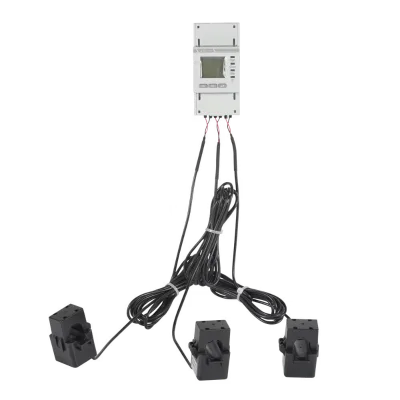
Smart 3 Phase Energy Meter with Ethernet Connectivity for Accurate Monitoring
$30.00 - $50.00
MOQ: 100 Pieces


Comprehensive Sourcing Guide
Smart Meter Sourcing Guide
Sourcing intelligent gas and energy meters requires a disciplined approach that balances technical precision with commercial viability. The market offers a diverse array of devices, ranging from basic summation counters to complex multi-functional energy meters capable of handling three-phase four-wire configurations. Buyers must navigate a landscape where product attributes vary significantly, including precision grades, explosion-proof ratings, and communication theories. This guide provides a structured framework for evaluating these devices, ensuring that procurement decisions are grounded in verified specifications rather than marketing claims. By focusing on observable listing signals and critical technical parameters, procurement teams can mitigate risk and secure equipment that aligns with specific operational requirements.
The following sections detail the essential steps for validating Smart Meter suppliers and products. Each section is designed to address a specific aspect of the procurement lifecycle, from initial scope definition to long-term quality assurance. The guidance relies on observed market data and trusted category knowledge to provide actionable insights. Buyers are encouraged to use this framework as a checklist during supplier evaluations, ensuring that no critical verification step is overlooked. The goal is to facilitate a transparent and efficient sourcing process that results in reliable, compliant, and cost-effective metering solutions.
Product Scope and Observed Listing Signals
The current market for smart meters exhibits a wide range of pricing and minimum order quantities, reflecting the diversity of available technologies. Observed listing prices span from approximately $2.50 to over $3,000 USD, indicating a spectrum that includes simple mechanical-electronic hybrids and advanced digital systems. Minimum order quantities (MOQs) typically range from 1 to 2,000 units, offering flexibility for both pilot projects and large-scale deployments. Buyers should interpret these ranges as indicative of the broader market rather than fixed benchmarks for every product. A lower price point may correspond to basic functionality or lower precision grades, while higher costs often reflect advanced features such as multi-rate watt-hour measurement or robust explosion-proof certifications.
Product listings reveal distinct categories of smart meters, each serving specific industrial and commercial needs. For instance, some devices are classified as intelligent gas meters with electronic theories and addition counter functions, suitable for civil applications. Others are designed as multi-functional energy meters, supporting reactive energy measurement and maximum demand monitoring for industrial and home use. The observed data also highlights variations in physical specifications, such as packing dimensions ranging from compact modules to larger industrial units. Buyers must carefully match these observed attributes to their operational requirements, ensuring that the selected meter supports the intended medium, whether it be liquid, solid powder materials, or standard gas and electricity flows.
Technical Specifications to Verify
Precision and accuracy are paramount when selecting a Smart Meter, as these factors directly impact billing integrity and operational efficiency. Buyers should verify the precision grade of the device, with observed values indicating high-accuracy models such as those with a 0.015 precision grade. For distance or level measurement applications, accuracy specifications such as ±3mm may be relevant, depending on the specific use case. It is crucial to distinguish between different types of meters, as a gas meter’s precision requirements differ significantly from those of an energy meter. Procurement teams must request detailed technical datasheets that explicitly state the accuracy class and measurement range, ensuring that the device meets the stringent tolerances required for their specific application.
Communication theory and connection types are other critical technical parameters that influence system integration. Observed listings indicate the use of electronic theories for both gas and energy meters, with some devices featuring contactless interfaces for enhanced durability and safety. Process connections, such as flange types, and power meter connections, like terminal blocks, must be verified to ensure compatibility with existing infrastructure. Additionally, the frequency range of communication modules, observed in some listings as 100MHz to 1.8GHz, should be checked to avoid interference with other industrial equipment. Buyers should also consider the medium temperature and pressure ratings, ensuring that the meter can withstand operational conditions, such as temperatures ranging from -40°C to 250°C and pressures up to 2MPa.
Compliance and Safety Documentation
Certification is a non-negotiable aspect of Smart Meter procurement, as it ensures that devices meet international safety and performance standards. Observed listings frequently cite CE, ISO, and RoHS certifications, which are essential for market access in many regions. Buyers must verify the validity of these certifications by requesting official documentation from the supplier, rather than relying solely on product descriptions. For devices intended for hazardous environments, explosion-proof grades such as Exidiict6 are critical. Procurement teams should confirm that the certification covers the specific model and variant being purchased, as compliance may vary across different product lines from the same manufacturer.
Standardization and origin information provide additional layers of assurance regarding product quality and regulatory adherence. While some listings reference specific standards like ISO4064 for water meters, buyers should confirm the applicability of such standards to gas or energy meters. The origin of manufacture, observed in locations such as Ningbo, Anhui, and Shenzhen, can also influence quality control practices and supply chain reliability. Buyers should assess the manufacturing capabilities of the supplier’s facilities, ensuring that they adhere to recognized quality management systems. Additionally, the presence of customization options should be verified, as some applications may require tailored features or configurations that are not available in standard off-the-shelf models.
Cost Drivers and Commercial Terms
The total cost of ownership for smart meters extends beyond the initial purchase price, encompassing installation, maintenance, and potential customization fees. Observed price ranges suggest that basic models are cost-effective, while advanced multi-functional meters command higher prices due to their complex features and higher precision. Buyers should analyze the cost structure in relation to the device’s functionality, ensuring that they are not overpaying for unnecessary features or underpaying for critical capabilities. Minimum order quantities also play a significant role in pricing, with larger orders often benefiting from volume discounts. Procurement teams should negotiate terms that align with their consumption patterns, avoiding excessive inventory costs while securing favorable pricing.
Customization and packaging requirements can significantly impact commercial terms. Some listings indicate that color and other aesthetic features can be customized, which may incur additional costs. Packaging standards, ranging from standard export packages to specific carton box dimensions, should be agreed upon in advance to avoid logistical surprises. Buyers should also consider the lead times associated with customized orders, as these can be longer than those for standard products. Clear communication regarding these variables is essential to prevent disputes and ensure that the final delivery meets all expectations. Procurement contracts should explicitly state the agreed-upon specifications, pricing, and delivery terms to protect both parties.
Supplier Qualification and Quality Control
Supplier qualification is a critical step in mitigating procurement risk, requiring a thorough assessment of the manufacturer’s capabilities and reputation. Buyers should verify the supplier’s production capacity, quality control processes, and after-sales support infrastructure. Observed listings indicate that suppliers may offer both customized and non-customized products, suggesting a flexible manufacturing approach. However, buyers must ensure that this flexibility does not compromise quality consistency. Requesting samples for testing is a recommended practice, allowing procurement teams to evaluate the device’s performance, accuracy, and durability before committing to a large order.
Quality control measures should be integrated into the procurement process, with clear criteria for acceptance and rejection. Buyers should establish a robust inspection protocol that includes visual checks, functional tests, and compliance verification. For devices with specific features such as corrosion resistance or stainless steel construction, material verification is essential. Additionally, buyers should assess the supplier’s ability to provide technical support and spare parts, ensuring long-term operational continuity. Regular audits of the supplier’s facilities can provide ongoing assurance of quality standards. By maintaining a rigorous qualification process, buyers can build a reliable supply chain that delivers consistent, high-quality smart meters.
Long-Term Procurement Checks
Long-term procurement success depends on continuous monitoring of supplier performance and product reliability. Buyers should establish key performance indicators (KPIs) to track metrics such as delivery timeliness, defect rates, and customer satisfaction. Regular reviews of these metrics can help identify potential issues early, allowing for proactive corrective actions. Additionally, buyers should stay informed about technological advancements and regulatory changes that may impact the Smart Meter market. This proactive approach ensures that the procurement strategy remains aligned with evolving industry standards and operational needs.
Feedback loops between procurement, engineering, and operations teams are essential for optimizing long-term procurement outcomes. Engineering teams can provide valuable insights into the technical performance of the meters, while operations teams can offer feedback on ease of installation and maintenance. This collaborative approach enables continuous improvement in the selection and deployment of smart meters. Buyers should also consider the lifecycle costs of the devices, including energy consumption and maintenance requirements, to ensure that the chosen solutions remain cost-effective over time. By fostering a culture of continuous improvement, procurement teams can drive value and efficiency in their Smart Meter sourcing activities.
FAQs
What is the precision grade of the intelligent gas meter?
The precision grade is 0.015 for the intelligent gas meter. This high accuracy supports civil applications and ensures reliable measurement for multifunctional and kitchen usage scenarios.
Can the Smart Meter be customized for specific needs?
Yes, customization is available for the Smart Meter. Buyers can request specific colors and models like NF-Pmb02-UK to match their unique operational requirements and installation environments.
Which certifications does the Smart Meter hold?
The Smart Meter holds CE, RoHS, and ISO certifications. These standards ensure the device meets international safety and quality requirements for industrial and home use applications.
How is the Smart Meter packaged for export?
The Smart Meter is packaged in standard export packages or carton boxes. Dimensions vary by model, such as 121*58*74mm for specific units, ensuring safe transport from Ningbo or Shenzhen.
What is the operating temperature range for the device?
The operating temperature range is -40 to 250 degrees Celsius. This wide range allows the meter to function reliably in diverse environments while maintaining its explosion-proof grade Exidiict6.
Which process connection type is used for the meter?
The meter uses a flange process connection type. This design supports high-pressure applications up to 2MPa and ensures secure integration with various industrial piping systems.