Source Snow Plow Truck for Highways, Streets, and Roads
Explore 30 Snow Plow Truck options for highway, street, and road applications. Buyers can compare specifications including working width, automation levels, and fuel types to find the right equipment for winter maintenance.
Key considerations
Products List


Hydraulic-Driven for Heavy Trucks Straight Blade Truck Snow Plow Machine
$1200.00 - $3000.00
MOQ: 1 Pieces

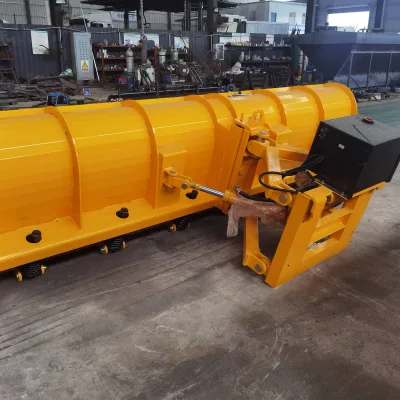
Winter Road Cleaning Snow Removal Plow for Truck Front Mounted Snow Shovel
$2000.00 - $4000.00
MOQ: 1 piece


New Snow Plow Truck with Front Snow Blade for Winter Road Cleaning
$18000.00 - $19000.00
MOQ: 1 Pieces

Heavy Snow Removal Winter Road Clearing Hydraulic Snow Plow for Trucks
$1400.00 - $5500.00
MOQ: 1 Sets


Controllable Snow Plow for Clearing Snow From Large Areas on Highways
$1500.00 - $4500.00
MOQ: 1 piece


Customized Snow Plow Truck 6*4 Multifunctional Snow Plough Sweeper Truck
$80400.00 - $82500.00
MOQ: 1 Pieces

Factory Supply Dongfeng 4X2 Winter Snow Plow Truck for Street Snow Clearing
$36000.00 - $39000.00
MOQ: 1 units

Snow Remover HOWO 4X4 6*6 Snowplow Snow Removal Vehicle Snow Remover Snowblower Truck
$110.00 - $150.00
MOQ: 100 Pieces


Qingdao Ruilan Customize High Quality Snow Plow for Small Wheel Loader
$300.00 - $350.00
MOQ: 5 Pieces




Comprehensive Sourcing Guide
Strategic Sourcing Guide for Snow Plow Truck Equipment
Understanding Technical Specifications and Operational Variability
When sourcing Snow Plow Truck equipment, buyers must first navigate a complex landscape of technical specifications that vary significantly across available inventory. The market does not offer a single monolithic product but rather a spectrum of machines designed for specific operational contexts. A critical observation from current product data reveals a divergence in automation levels. Some units are categorized as semi-automatic with hand-push operation types, utilizing PLC control systems, while others are fully automatic with remote control capabilities. This distinction fundamentally alters the procurement strategy, as the choice between manual and automated systems dictates the required operator skill set and the efficiency of the snow removal process.
The physical dimensions and working widths are equally variable. Specifications indicate working widths ranging from 80cm to a maximum of 300cm. Smaller units, often described as having a "Middle" size classification, may feature a single brush sweep mode with a working width of 1.3 meters. In contrast, larger industrial-grade models are designed with a "Large" size classification, offering a maximum working width of 300cm and a snow clearing depth capability of 70kg. Buyers must align these specifications with the physical constraints of their fleet and the specific terrain they intend to clear. For instance, a vehicle-mounted snow plow intended for highway or street snowshovelling requires a robust structure, often constructed from wear-resistant steel plates, with an obstacle avoidance height of 260mm to ensure safe navigation around road infrastructure.
Power sources also present a critical decision point. The observed inventory includes models powered by diesel engines, such as those rated at 7.5HP, alongside gasoline or petrol-powered variants. The selection between fuel types should be driven by local fuel availability, maintenance infrastructure, and emission regulations specific to the buyer's region. Furthermore, the operational speed of these machines varies, with some models capable of speeds between 5-30km/H, while others list a maximum speed of 40kN/H. It is imperative for buyers to verify these speed ratings against the actual requirements of their snow removal schedule to ensure the equipment can meet response time expectations without compromising safety.
Compliance, Certification, and Regulatory Standards
Navigating the regulatory landscape is a non-negotiable aspect of B2B procurement for heavy machinery. The supplied product data highlights several key certifications that serve as indicators of compliance with international safety and quality standards. The most frequently observed certifications include CE, CB, and ETL. The presence of CE marking suggests conformity with health, safety, and environmental protection standards for products sold within the European Economic Area. Similarly, CB certification indicates a mutual acceptance scheme for electrical equipment, while ETL marks denote compliance with North American safety standards.
However, buyers must exercise caution and verify that these certifications are current and applicable to the specific model being purchased. The data shows instances where products are listed with "CE,CB,ETL" and others with just "CE" or "CE,CB". This variance implies that not every unit in a supplier's catalog may carry the full suite of certifications. Procurement teams should explicitly request valid certification documents for the specific serial numbers or model numbers they intend to order, rather than relying on general catalog claims.
In addition to safety certifications, the structural standards of the equipment must be scrutinized. Some product listings reference specific standard dimensions, such as 245011001200 or 360166121cm, which likely refer to packaging or operational footprints. Others specify material standards, such as the use of "wear-resistant steel plate." Buyers should verify that the steel grade and thickness meet the demands of their local climate and the intensity of snowfall they expect to encounter. For applications involving highway or street snowshovelling, the structural integrity of the plow is paramount to prevent catastrophic failure during high-impact collisions with ice or debris.
Cost Drivers and Pricing Dynamics
The pricing for Snow Plow Truck equipment is highly variable, reflecting the diversity in specifications, automation levels, and build quality. The observed price range spans from 110 USD to 82,500 USD, a disparity that underscores the difference between small-scale manual attachments and large, fully automated vehicle-mounted systems. The lower end of this spectrum likely corresponds to smaller, semi-automatic units or basic attachments, while the upper end represents complex, automatic systems with advanced remote control features and larger working widths.
Several factors drive these costs. First, the level of automation is a primary cost driver. Units equipped with remote controls and automatic operation modes command a premium over those requiring hand-push operation or artificial control. Second, the power source and engine specifications influence the price; diesel engines often carry different cost structures compared to gasoline or petrol units. Third, the size and working width directly correlate with material costs and manufacturing complexity. A plow with a 300cm working width requires significantly more steel and a more robust mounting system than an 80cm unit.
Buyers should also consider the Minimum Order Quantity (MOQ) as a cost factor. The observed MOQ range is 1 to 100 units. For smaller municipalities or private contractors, an MOQ of 1 allows for the acquisition of a single unit without significant capital commitment. Conversely, larger organizations may benefit from negotiating bulk pricing, though the data suggests that suppliers may have a minimum threshold of 100 units for certain configurations. Packaging is another cost consideration; most units are shipped in wooden cases or wooden boxes, which adds to the overall shipping weight and cost but ensures protection during transit.
Typical Applications and Operational Contexts
The application of Snow Plow Truck equipment is diverse, ranging from small commercial properties to major highway networks. The product data explicitly identifies "Road Snow Cleaning" and "Highway/Street Snowshovelling Machine" as primary use cases. This indicates that the equipment is designed for public infrastructure maintenance, where reliability and speed are critical. The ability to adjust the shovel up, down, left, and right is a vital feature for these applications, allowing operators to adapt to varying road conditions and obstacles.
For smaller applications, such as parking lots or private driveways, semi-automatic or hand-push models may be sufficient. These units, often characterized by a "Single Brush" sweep mode and a working width of 1.3m, offer a cost-effective solution for clearing moderate snowfall. However, for large-scale operations, the fully automatic models with remote control and obstacle avoidance functions are essential. The obstacle avoidance function, specifically noted in the data, is crucial for preventing damage to the plow and the vehicle when encountering unexpected barriers like curbs or debris.
The operational speed of the equipment also dictates its suitability for different applications. Models with an operation speed of 5-30km/H are suitable for detailed clearing tasks where precision is required. In contrast, units capable of higher speeds are better suited for clearing long stretches of highway or major roads where rapid response is necessary. Buyers must match the operational speed and working width of the equipment to the specific demands of their service area to ensure optimal efficiency.
Supplier Evaluation and Origin Verification
When evaluating potential suppliers, buyers should prioritize transparency regarding the origin and manufacturing standards of the equipment. The supplied data indicates that products originate from regions such as Shandong, China, and generally from China. While this provides a baseline for sourcing, buyers should not assume that all products from these regions meet the same quality standards. The variation in certifications and specifications suggests a need for rigorous due diligence.
Suppliers should be evaluated based on their ability to provide detailed technical documentation, including valid certification copies, material specifications, and performance data. The presence of "Customized" or "Customization: Available" attributes in the product data suggests that many suppliers offer tailored solutions. Buyers should leverage this flexibility to request modifications that align with their specific operational needs, such as custom mounting systems or specific working widths.
Additionally, the condition of the equipment is a critical factor. All observed products are listed as "New," which is standard for B2B procurement. However, buyers should verify the warranty terms and after-sales support. The data mentions "Online Support" as an after-warranty service, which is a common offering but may not be sufficient for complex mechanical failures. Buyers should negotiate comprehensive service agreements that include on-site support or guaranteed response times for critical repairs.
Quality Control and Long-Term Procurement Considerations
Ensuring the quality of Snow Plow Truck equipment requires a proactive approach to quality control. Buyers should implement a verification process that includes inspecting the materials used, such as the wear-resistant steel plates, and checking the integrity of the control systems. For units with PLC control or remote operation, functional testing is essential to ensure that the automation features operate smoothly and safely.
Long-term procurement considerations also involve the availability of spare parts and the durability of the equipment. The "Wooden Case Packaging" and "Wooden Box" specifications indicate that the equipment is designed for robust shipping, but buyers should also consider the packaging for long-term storage. The "prod_standard" dimensions, such as 30014080cm, should be verified to ensure compatibility with storage facilities.
Furthermore, buyers should plan for the lifecycle of the equipment. Snow plows are subject to significant wear and tear, especially in harsh winter conditions. Establishing a relationship with a supplier that offers reliable after-sales support and a steady supply of replacement parts is crucial. The "Online Support" mentioned in the data should be expanded into a broader service agreement that covers maintenance, repairs, and technical assistance.
Summary of Key Procurement Factors
To summarize, sourcing Snow Plow Truck equipment requires a meticulous approach that balances technical specifications, regulatory compliance, cost, and supplier reliability. Buyers must carefully evaluate the automation level, working width, and power source to ensure the equipment meets their specific operational needs. Compliance with certifications like CE, CB, and ETL is essential for legal and safety reasons, while the price range and MOQ should be aligned with the buyer's budget and volume requirements.
The following table summarizes the key technical and operational factors observed in the market:
| Feature Category | Observed Variations | Key Considerations for Buyers |
|---|---|---|
| Automation | Semi-automatic, Automatic | Verify remote control availability and PLC integration. |
| Working Width | 80cm to 300cm | Match width to road type and vehicle capacity. |
| Power Source | Diesel (7.5HP), Gasoline/Petrol | Check local fuel availability and emission standards. |
| Certifications | CE, CB, ETL | Request valid documents for specific model numbers. |
| Operation Mode | Hand-Push, Wired Control in Cab | Assess operator training requirements and safety. |
| Material | Wear-resistant steel plate | Verify steel grade for durability in harsh climates. |
| Obstacle Avoidance | Yes/No | Essential for highway and street applications. |
By adhering to these guidelines and maintaining a disciplined approach to verification, buyers can secure high-quality Snow Plow Truck equipment that ensures safety, efficiency, and long-term value. The market offers a wide range of options, but success lies in the ability to match the right specifications to the specific operational context.
FAQs
What certifications are available for snow plow trucks?
Available certifications include CE, CB, and ETL marks. Buyers should verify specific model documents as not all units carry the full suite of certifications, ensuring compliance with regional safety standards before purchase.
How does automation level affect snow plow operation?
Units range from semi-automatic hand-push models to fully automatic systems with remote control. The choice dictates operator skill requirements, with automatic models offering enhanced efficiency and obstacle avoidance features for complex terrain.
What is the working width range for these machines?
Working widths vary from 80cm to a maximum of 300cm depending on the model size. Smaller units suit compact areas, while larger industrial models with 300cm width are designed for highway and street snowshovelling applications.
Which fuel types power the snow plow trucks?
Inventory includes both diesel engines rated at 7.5HP and gasoline or petrol-powered variants. Selection should depend on local fuel availability and emission regulations, as power source impacts maintenance infrastructure and operational costs.
Can buyers request customization for snow plow trucks?
Yes, customization is available for many models to meet specific operational needs. Buyers can request tailored solutions such as custom mounting systems or specific working widths to align with their unique fleet and terrain requirements.
What is the price range for Snow Plow Truck equipment?
Prices range from 110 USD to 82,500 USD based on specifications and automation. Lower costs typically cover smaller semi-automatic units, while higher prices reflect complex automatic systems with larger working widths and advanced control features.
Where are these snow plow trucks manufactured?
Products originate from regions such as Shandong and generally from China. Buyers must verify manufacturing standards and quality control measures, as origin alone does not guarantee uniform quality across all listed models.