Source SNMP Remote Access IP PDU for Data Centers
Find and compare 30 SNMP Remote Access IP PDU models from verified manufacturers. Evaluate options featuring 125A to 160A rated currents, C19/C13 sockets, and ETL/RoHS certifications for industrial and commercial power distribution needs.
Key considerations
Products List


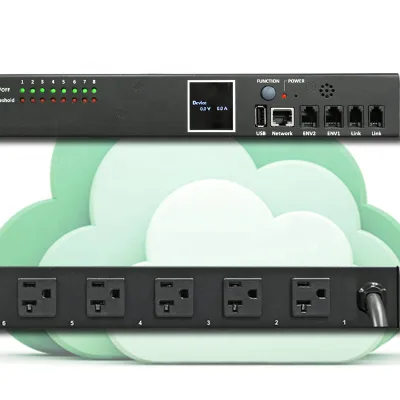
19 Inch 8 Ports Smart PDU Remote Control Network Server Rack Metered PDU
$160.20 - $213.60
MOQ: 5 pieces


Data Center PDU High Power PDU with 485 Protocol and Remote Access Control
$100.00 - $200.00
MOQ: 1 Pieces

Network Smart PDU High Power 4kw PDU with Remote Access Control Function
$100.00 - $200.00
MOQ: 1 Pieces


Intelligent Rack PDU with Dcim Integration Support: Snmp V2 /V3& Rest API
$30.00 - $50.00
MOQ: 50 Pieces



Comprehensive Sourcing Guide
SNMP Remote Access IP PDU Sourcing Guide
Procuring intelligent power distribution units (PDUs) with SNMP remote access capabilities requires a disciplined approach to technical verification and supplier qualification. These devices serve as critical infrastructure components in data centers, server rooms, and industrial environments, enabling granular control over power delivery. Buyers must distinguish between basic switched PDUs and advanced metered models that provide real-time energy monitoring via Simple Network Management Protocol (SNMP). The decision to implement SNMP-enabled units often hinges on the need for automated power cycling, precise energy auditing, and integration with existing data center infrastructure management (DCIM) software.
The sourcing landscape for these devices is diverse, ranging from generic sheet metal enclosures to specialized aluminum alloy constructions designed for high-density deployments. Observed market listings indicate a wide variance in rated currents, from 10A general-purpose units to 160A high-capacity industrial models. This variance necessitates a rigorous evaluation of electrical specifications against the actual load requirements of the target environment. Buyers should prioritize units that offer customizable socket configurations, such as IEC 320 C19 and C13 combinations, to ensure compatibility with existing server and networking hardware.
Product Scope and Observed Listing Signals
The current market for SNMP-enabled PDUs exhibits significant variation in physical construction and electrical ratings. Listings frequently highlight sheet metal shells for standard applications, while higher-end models utilize aluminum alloy for enhanced durability and thermal management. Observed product attributes indicate a strong emphasis on three-phase power distribution, with standard voltages ranging from 380V to 415V input and 220V to 240V output. Buyers should note that while many units are marketed as "smart" or "remote control" capable, the specific implementation of SNMP protocols and the depth of monitoring data can vary significantly between manufacturers.
Commercial signals in the market suggest a flexible ordering environment, with minimum order quantities (MOQ) often starting at just one piece for prototype or small-scale deployments. However, supply chain stability should be verified for larger orders, as some suppliers list monthly supply abilities around 20,000 pieces. Packaging details vary, with options including PE bags, carton boxes, and PVC bags, which can impact shipping costs and product protection during transit. Buyers must carefully review the single gross weight and package dimensions, as heavy-duty 16kg units require different logistics planning compared to lighter 2kg models.
Technical Specifications to Verify
Electrical capacity is the primary technical differentiator for IP PDUs, with observed rated currents spanning from 10A to 200A options. It is crucial to verify whether the unit supports single-phase or three-phase input, as this dictates the complexity of the installation and the required circuit protection. For high-density environments, models featuring 24 C19 sockets are common, providing the necessary power outlets for modern server racks. Buyers should confirm the breaker protection levels, noting that some units offer individual 1P 20A breakers for each outlet, which enhances safety by isolating faults to specific circuits rather than shutting down the entire unit.
Network connectivity and management features are equally critical for SNMP-enabled devices. While the core keyword implies remote access, buyers must verify the specific SNMP version supported (e.g., SNMPv1, v2c, or v3) and the availability of web-based management interfaces. The presence of an LCD display on some models provides local status monitoring, which is valuable for on-site troubleshooting. Additionally, the input voltage range should be confirmed to match the facility’s power infrastructure, with many industrial units designed to handle 380-415V inputs to ensure stable operation in regions with variable power quality.
Compliance and Safety Documentation
Safety certifications are non-negotiable for electrical equipment installed in commercial, industrial, and residential settings. Observed listings frequently cite ETL, RoHS, CE, and CCC certifications, indicating compliance with North American, European, and Chinese safety standards respectively. Buyers must request valid certification documents for the specific model being purchased, as certifications are often model-specific and may not cover the entire product range. The presence of ISO certification suggests a manufacturer’s adherence to quality management systems, which can be an indicator of consistent production quality and reliable supply chain practices.
Grounding and insulation standards are vital for preventing electrical hazards and ensuring equipment longevity. Standard grounding is typically included in most industrial PDUs, but buyers should verify the grounding configuration matches their rack infrastructure. The IP20 rating observed in many listings indicates protection against solid objects larger than 12.5mm but no protection against water, which is standard for indoor data center use. For environments with higher dust or moisture risks, buyers should inquire about higher IP ratings or additional protective coatings, as the default sheet metal or aluminum alloy shells may not suffice without proper environmental sealing.
Cost Drivers and Commercial Terms
Pricing for SNMP IP PDUs is influenced by several factors, including rated current, socket count, and the sophistication of the remote management features. Observed price ranges in the market span from approximately $5 for basic units to over $1,390 for high-capacity, fully metered models with advanced SNMP capabilities. The inclusion of individual circuit breakers, LCD displays, and aluminum alloy shells typically commands a premium over basic sheet metal units with standard breakers. Buyers should expect higher costs for units with higher rated currents, such as 125A or 160A models, which require more robust internal components and larger form factors.
Commercial terms often include a one-year warranty, which is standard for electronic power distribution equipment. Buyers should clarify the warranty coverage details, including whether it covers parts, labor, and shipping costs for replacements. Supply ability is another key commercial factor, with some suppliers offering up to 20,000 pieces per month, which is crucial for large-scale deployments. Lead times and customization options, such as specific socket types or branding, can also impact the final cost and delivery schedule, so these should be negotiated upfront to avoid delays in project timelines.
Supplier Qualification and Quality Control
Supplier verification is essential to ensure that the PDUs meet the specified technical and safety requirements. Buyers should prioritize suppliers who provide detailed product specifications, including model numbers, rated voltages, and current capacities, rather than generic descriptions. The origin of the product, often listed as Guangdong, China, should be cross-referenced with the supplier’s business license and export history to ensure legitimacy. Requesting sample units for testing is a recommended practice to verify the functionality of SNMP features, the accuracy of metering data, and the physical build quality of the shell and connectors.
Quality control processes should be explicitly discussed with the supplier, including incoming material inspections and final product testing. Buyers should inquire about the testing procedures for electrical safety, such as hipot tests and ground bond tests, to ensure the units are safe for deployment. The use of standardized packaging, such as carton boxes with PE bags, helps protect the units during shipping, but buyers should verify that the packaging is sufficient for international freight. Establishing a clear communication channel with the supplier, potentially through dedicated technical support contacts, can facilitate quicker resolution of any issues that arise during installation or operation.
Long-Term Procurement Checks
Long-term procurement success depends on the supplier’s ability to provide consistent product quality and ongoing technical support. Buyers should monitor the supplier’s response to warranty claims and their willingness to provide firmware updates for SNMP-enabled features, which may be necessary to address security vulnerabilities or add new management capabilities. The availability of spare parts, such as replacement breakers or power cords, is also important for maintaining uptime in critical infrastructure environments. Establishing a long-term partnership with a reliable supplier can lead to better pricing, priority production, and dedicated technical assistance.
Regular audits of the deployed PDUs should be conducted to ensure they continue to operate within specified parameters and that SNMP monitoring remains accurate. Buyers should plan for future scalability, considering whether the current PDU models can be easily integrated with expanding data center infrastructure. Keeping a record of all certification documents and test results is essential for compliance audits and insurance purposes. By maintaining a proactive approach to supplier management and equipment maintenance, organizations can maximize the return on investment from their SNMP Remote Access IP PDU deployments.
FAQs
Can I remotely control and monitor this PDU?
Yes, the product supports remote control and monitoring functions. This allows users to manage power distribution units from a distance. The system enables efficient energy management and device oversight. It is suitable for commercial and industrial applications. The feature ensures convenient operation without physical access to the unit.
What certifications does the PDU have?
The PDU holds ETL, RoHS, CCC, CE, and ISO certifications. These standards ensure safety and compliance for global markets. The certifications verify the product meets rigorous quality requirements. Users can trust the device for critical infrastructure applications. The documentation supports regulatory compliance in various regions.
What is the rated current capacity?
The rated current varies by model, offering options like 10A, 63A, 125A, 160A, or 200A. Specific models feature 140A or 125A capacities. This flexibility allows selection based on power needs. Higher current models support heavy industrial loads. Buyers should choose the rating that matches their equipment requirements.
What is the minimum order quantity?
The minimum order quantity is one piece. This low MOQ allows buyers to test the product easily. It supports small-scale procurement and sample evaluation. Buyers can order single units for immediate deployment. The policy facilitates flexible purchasing for various project sizes.
What materials are used in the shell?
The shell is constructed from sheet metal or aluminum alloy. These materials provide durability and structural integrity. Sheet metal offers cost-effective protection for internal components. Aluminum alloy provides robust shielding and heat dissipation. The choice depends on the specific model selected.
What is the warranty period?
The product comes with a one-year warranty. This coverage protects against manufacturing defects and issues. Buyers receive support for the specified duration. The warranty ensures confidence in the product's reliability. It covers standard operational conditions as defined by the supplier.
Where is the PDU manufactured?
The PDU is manufactured in China, specifically in Guangdong. This location is a hub for electronics production. The origin indicates the supply chain source. Buyers should consider logistics and shipping from this region. The manufacturing base supports large-scale production capabilities.