Source Wheat Straw Biodegradable Eyeshadow Palette for makeup, travel, and events
Find 30 options for the Wheat Straw Biodegradable Eyeshadow Palette featuring mineral and herbal ingredients. Buyers can compare certifications like ISO and GMP, packaging materials, and MOQs ranging from 1 to 12000 pieces for cosmetic applications.
Key considerations
Products List


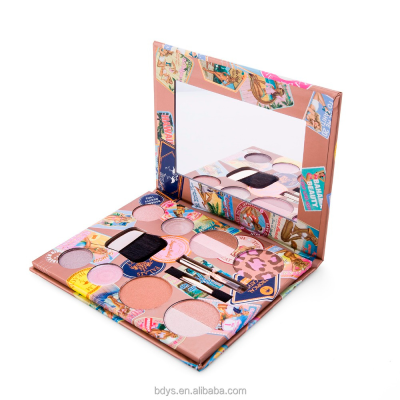


Eyeshadow Palette Packing 10 Pans Eyeshadow Compact Custom Private Label
$0.18 - $0.58
MOQ: 10000 Pieces


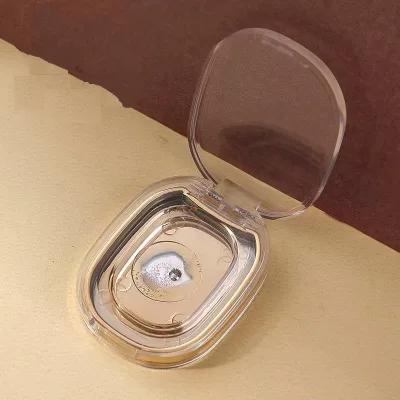

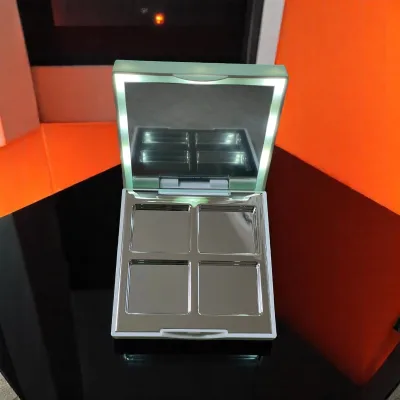

Comprehensive Sourcing Guide
Strategic Sourcing Guide for Wheat Straw Biodegradable Eyeshadow Palettes
Understanding the Product Category and Material Constraints
The search for a "Wheat Straw Biodegradable Eyeshadow Palette" requires a precise understanding of the intersection between sustainable packaging materials and cosmetic formulation standards. While the core keyword emphasizes wheat straw, a biodegradable substrate derived from agricultural byproducts, the supplied product data indicates a diverse landscape of materials currently available in the market. The observed product attributes reveal that packaging materials frequently listed include cardboard, plastic, and paper boxes. Specifically, the data confirms the existence of products with "Cardboard" and "Plastic" as primary packaging materials, alongside "Paper Box" configurations.
Buyers must recognize that while wheat straw is a desirable sustainable material, the immediate market inventory described in the provided facts does not explicitly confirm wheat straw as a standard material for the listed models (M-103, M-04, M-08, etc.). Instead, the data points to a mix of traditional and alternative materials. When sourcing, the primary technical distinction lies in the structural integrity of the palette shell versus the biodegradability of the inner components. The supplied specifications note a "Single package size" of 10x5x1 cm and a "Carton" size of 38x28x36 cm, indicating that physical dimensions vary significantly based on the number of colors and the structural design.
The "Eye Shadow Type" is consistently observed as "Dry" with a "Form" of "Powder," which is the industry standard for this category. The "Main Ingredient" is noted as "Mineral," though some listings also reference "Herbal" ingredients. This distinction is critical for buyers seeking a fully natural product profile. The "Color" attributes range from "Multi-Colored" to specific finishes like "Matte, pearl, baked, smoky, natural." A buyer requesting a wheat straw palette must verify if the supplier can source a biodegradable shell that matches the aesthetic requirements of "Multi-Colored" or specific custom color schemes while maintaining the structural rigidity required for a "Powder" form that does not crumble during transport.
Technical Specifications and Formulation Standards
The technical specifications for eyeshadow palettes are defined by a combination of physical dimensions, weight standards, and formulation characteristics. The supplied data provides concrete examples of these standards, which serve as a baseline for comparison. One specific model, identified by the standard "net wt 1.5g/color," suggests a compact, travel-friendly format. In contrast, another model adheres to a "net wt 27g" standard, indicating a larger, professional-grade palette. These weight differences directly impact the "Single gross weight," which is observed as low as 0.015 kg for individual items but scales up significantly for bulk shipping, where a "Carton weight" is recorded at 12.2 kg.
The "prod_model" identifiers (M-103, M-04, M-08, M-84, M-122, M-79, ESS98-1) represent distinct SKUs that likely correspond to different color counts and packaging configurations. For instance, the "Item" description "9 Colors cosmetic pallet eyeshadow palette" aligns with the "Single package size" of 10x5x1 cm. The "Printing Page" is noted as "Single," which implies that the outer packaging or the palette itself may feature single-sided branding or design. Buyers must verify if the "wheat straw" material can accommodate the necessary printing techniques without compromising the biodegradability of the substrate.
Furthermore, the "Packaging Details" reveal complex logistical requirements. A specific entry notes a "Weight: 545g/palette" with a "Carton weight: 12.2kg." This suggests that a single palette is substantial, and the "Small box" dimensions are 23.5x16.0x2.2 cm, while the master "Carton" is 38x28x36 cm. When evaluating a wheat straw palette, the buyer must ensure that the material's density and moisture resistance align with these weight and dimension constraints. The "Shelf Life" is listed as 36 months, with a "Pao" (Period After Opening) of 12 months, which are standard industry benchmarks that any sustainable alternative must meet or exceed. The "Life span" is also observed as 18 months in some contexts, highlighting the need for clear communication regarding product longevity expectations.
Compliance, Certification, and Regulatory Verification
Navigating the regulatory landscape for cosmetic packaging and products is essential for international trade. The supplied facts provide a robust list of certifications that are currently associated with the products in this category. The high-confidence data explicitly lists "ISO," "MSDS," "FDA," "GMP," and "GMPC" as available certifications. The presence of "GMPC" (Good Manufacturing Practice for Cosmetics) and "ISO" standards indicates that suppliers are adhering to rigorous quality management systems.
For a buyer specifically targeting "wheat straw biodegradable" products, the verification of these certifications becomes even more critical. The "MSDS" (Material Safety Data Sheet) is a mandatory document that details the safety hazards of the materials used, including the wheat straw composite. The "FDA" certification is particularly relevant for products entering the United States market, ensuring that the cosmetic ingredients and packaging materials meet safety standards. The "GMP" and "GMPC" certifications assure that the manufacturing process is controlled and consistent, which is vital when dealing with natural, biodegradable materials that may have more variability than synthetic plastics.
It is important to note that while the data lists "CE" and "REACH" under low-confidence background information, these should not be assumed as guaranteed attributes for every listed product without direct verification. "BSCI" is also mentioned in the background but lacks high-confidence status. Therefore, a prudent procurement strategy involves requesting specific certification documents for the wheat straw material itself, ensuring it meets the "GMPC" and "ISO" standards observed in the high-confidence list. The "prod_standard" of "net wt 1.5g/color" or "net wt 27g" must also be verified against local labeling laws, which often require precise weight declarations on the packaging.
Cost Drivers and Economic Factors in Sustainable Sourcing
The economic landscape for sourcing biodegradable eyeshadow palettes is influenced by several distinct factors, including material costs, minimum order quantities (MOQ), and supply chain logistics. The observed MOQ range in the provided data is extensive, spanning from 1 to 12,000 units. Specific entries highlight MOQs of 3,000 pieces, 10,000 pieces, and 12,000 pieces. This variance suggests that smaller orders may be available for custom prototypes or small-batch runs, while larger orders are required to achieve economies of scale, particularly for specialized materials like wheat straw composites.
The "Supply Ability" is noted as "2000 pallets per Day," which indicates a high-volume manufacturing capacity. However, the "Delivery" lead time is recorded as 35 days for certain items. For a specialized material like wheat straw, the lead time might be longer due to the sourcing of agricultural byproducts and the specific molding or pressing processes required. The "Payment" terms mention "Paypal accept," which is a common method for smaller transactions, but larger B2B orders typically involve letters of credit or bank transfers.
Cost drivers also include the "Customization" aspect. The data confirms that "Customization" is "Available," and the "brand name" is often "oem" (Original Equipment Manufacturer). Customizing the palette to use wheat straw, adding specific branding, or altering the color range (Matte, pearl, baked, smoky, natural) will likely increase the unit cost. The "Single gross weight" of 0.015 kg suggests that lightweight packaging is a priority, which can reduce shipping costs. However, the "Carton weight" of 12.2 kg for a bulk shipment indicates that the volume and density of the product must be optimized to minimize freight expenses. Buyers should calculate the total landed cost, including the premium for biodegradable materials, the MOQ requirements, and the 35-day delivery window, to determine the true cost of the procurement.
Supplier Evaluation and Operational Capabilities
Evaluating suppliers for wheat straw biodegradable eyeshadow palettes requires a focus on their ability to meet specific technical and logistical demands. The supplied data indicates that the "prod_origin" is "China," with a "Port of dispatch" listed as "Beijing." This geographic concentration suggests a specific supply chain ecosystem, but buyers should verify if the supplier has the infrastructure to handle the specific requirements of biodegradable materials. The "Supply Ability" of 2000 pallets per day is a strong indicator of capacity, but it must be matched with the ability to maintain quality control for natural materials.
The "feature" attribute is listed as "Other," which is a non-specific descriptor. Buyers should probe this to understand if it refers to unique selling points like the wheat straw composition, the biodegradability rate, or the specific molding technology used. The "brush mirror" attribute notes that it "could be custom," indicating that the supplier is flexible in adding accessories. This flexibility is a positive sign for a buyer looking to create a comprehensive, branded product.
When evaluating a supplier, the buyer must check the consistency of the "prod_packing" details. The data shows variations such as "Paper Box," "Cartons," and "Plastic" packaging. A supplier claiming to offer wheat straw palettes should demonstrate a clear understanding of how the biodegradable shell interacts with these different packing methods. The "Single package size" of 10x5x1 cm and the "Carton" dimensions of 38x28x36 cm provide a baseline for logistics planning. A reliable supplier will provide accurate "Packaging Details" that align with these dimensions to prevent damage during transit.
Quality Control and Performance Verification
Quality control for biodegradable eyeshadow palettes involves rigorous testing of both the packaging material and the cosmetic product within it. The "Shelf Life" of 36 months and "Pao" of 12 months are critical metrics that must be validated. For a wheat straw palette, the primary quality concern is the material's resistance to moisture and humidity, which can degrade the biodegradable substrate over time. The "Main Ingredient" being "Mineral" or "Herbal" adds another layer of complexity, as natural ingredients can be more sensitive to environmental conditions.
The "Function" of the product is listed as "Waterproof," which is a significant performance claim. Buyers must verify if the "Waterproof" attribute applies to the eyeshadow powder itself or the packaging. If the palette is designed to be waterproof, the wheat straw material must be treated or coated to prevent water absorption, which could compromise its biodegradability. The "Colors" listed as "Matte, pearl, baked, smoky, natural" require specific testing to ensure that the pigments adhere correctly to the powder form and do not fade or change texture over the "Life span" of 18 months.
The "prod_standard" of "net wt 1.5g/color" or "net wt 27g" must be strictly enforced during quality control to ensure consistency. Any deviation in weight could indicate issues with the filling process or the structural integrity of the palette. The "Single gross weight" of 0.015 kg serves as a benchmark for individual unit weight, which should be consistent across all units in a batch. Buyers should request test results that confirm the "Waterproof" claim and the stability of the "Mineral" or "Herbal" ingredients under various storage conditions.
Long-Term Procurement and Sustainability Considerations
Sourcing wheat straw biodegradable eyeshadow palettes is not just a transactional decision but a strategic move towards long-term sustainability. The "Customization" availability allows brands to align their product with their corporate social responsibility goals. However, the buyer must consider the entire lifecycle of the product, from the sourcing of the wheat straw to the end-of-life disposal. The "prod_origin" in China and the "Port of dispatch" in Beijing are factors that influence the carbon footprint of the supply chain.
The "Supply Ability" of 2000 pallets per day suggests that the supplier can scale production, which is essential for long-term procurement planning. However, the "MOQ" of 3,000 to 12,000 pieces means that buyers need to forecast demand accurately to avoid overstocking or understocking. The "Delivery" time of 35 days requires careful inventory management to ensure product availability.
The "Certification" list, including "ISO," "MSDS," "FDA," "GMP," and "GMPC," provides a foundation for trust, but buyers should also inquire about the specific biodegradability certifications for the wheat straw material. The "feature" of "Other" could encompass these sustainability claims, but they must be explicitly documented. The "brand name" being "oem" allows for branding that emphasizes the eco-friendly nature of the product, which can be a significant competitive advantage in the current market.
In conclusion, the procurement of wheat straw biodegradable eyeshadow palettes requires a meticulous approach that balances technical specifications, regulatory compliance, cost efficiency, and sustainability goals. By leveraging the high-confidence facts provided, such as the specific certifications, weight standards, and packaging details, buyers can make informed decisions that align with their brand values and market requirements. The diverse range of models and customization options available offers flexibility, but the verification of material properties and performance claims remains the cornerstone of a successful sourcing strategy.
FAQs
What certifications are available for these eyeshadow palettes?
High-confidence certifications include ISO, MSDS, FDA, GMP, and GMPC. Buyers should verify specific documents for the wheat straw material to ensure compliance with international safety standards before placing orders.
Can the packaging material be customized for biodegradability?
Customization is available for packaging and branding. While current listings show cardboard, plastic, and paper box options, buyers must confirm if the supplier can source wheat straw composites that meet structural rigidity requirements.
What is the minimum order quantity for these products?
The observed MOQ range spans from 1 to 12,000 pieces. Specific listings indicate MOQs of 3,000, 10,000, or 12,000 units, so buyers should confirm the exact threshold for specialized biodegradable materials.
How long is the shelf life of the cosmetic powder?
The standard shelf life is 36 months with a 12-month period after opening. Some listings note an 18-month lifespan, so verify the specific durability claims for the mineral or herbal ingredients used.
Which specifications define the net weight of the palette?
Specifications vary by model, with standards including 1.5g per color or a total net weight of 27g. Buyers must match the weight standard to their desired format, whether compact or professional-grade.
What is the typical lead time for delivery?
The documented delivery lead time is 35 days for certain items. Specialized materials like wheat straw may require longer production windows, so confirm the exact timeline with the manufacturer before finalizing the purchase.