Source Spring Roll Production Line for Factories, Restaurants, and Catering
Find 30 Spring Roll Production Line units from Chinese manufacturers with varying capacities and voltage options. Buyers can compare automatic models featuring CE and ISO certifications, customizations, and different output rates ranging from 3600 to 15000 pieces per hour.
Key considerations
Products List

Consistent Product High Quality Automatic Spring Roll Production Line
$47000.00 - $48400.00
MOQ: 1 Pieces

Automatic Spring Roll Forming Line Industrial High Efficiency Production Line
$47000.00 - $48400.00
MOQ: 1 Pieces

Spring Roll Production Line Commercial Automatic Continuous Processing Line
$47000.00 - $48400.00
MOQ: 1 Pieces

Automatic Spring Roll Production Line High Efficiency Stable Performance
$47000.00 - $48400.00
MOQ: 1 Pieces

Commercial Spring Roll Production Line High Efficiency Electric Processing Line
$47000.00 - $48400.00
MOQ: 1 Pieces

Commercial Spring Roll Forming Line Automatic High Capacity Production Line
$47000.00 - $48400.00
MOQ: 1 Pieces


Full Automatic Spring Roll Production Line Frozen Spring Roll Making Machine
$18000.00 - $42000.00
MOQ: 1 Pieces


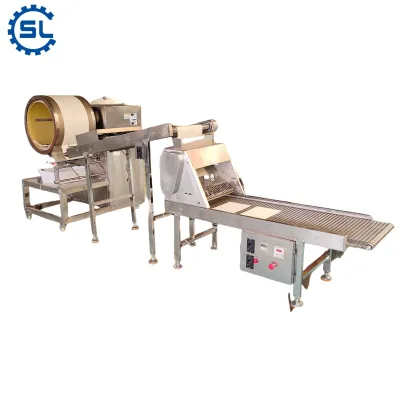
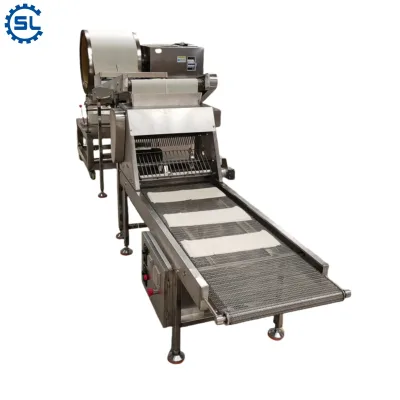
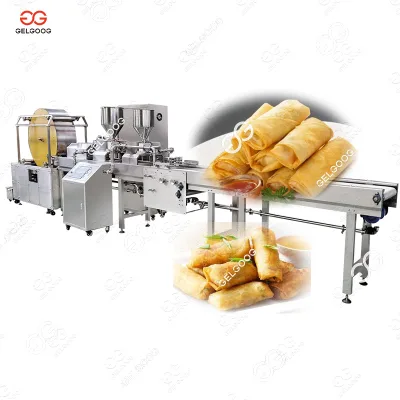
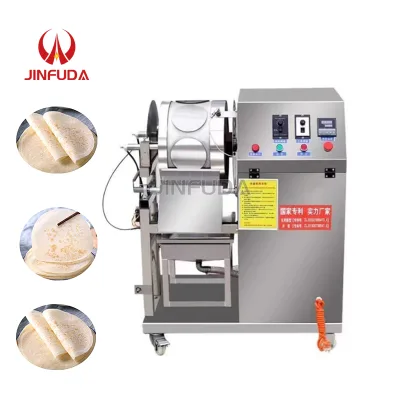
High-Efficiency Frozen Spring Roll Production Line | Customizable Size & Output
$1150.00 - $1300.00
MOQ: 1 pieces
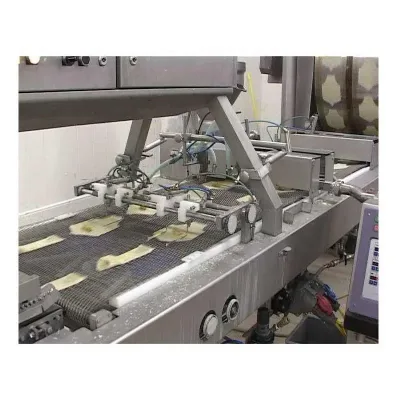
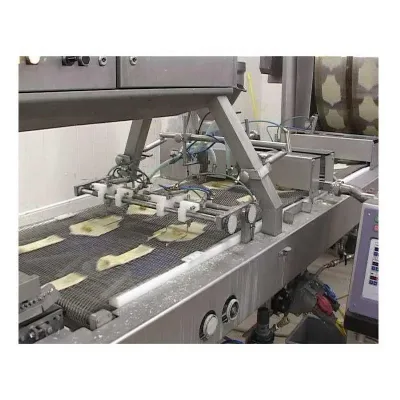
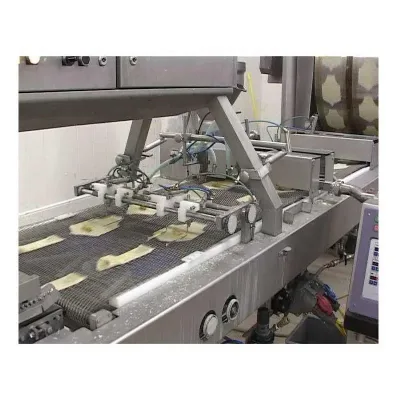
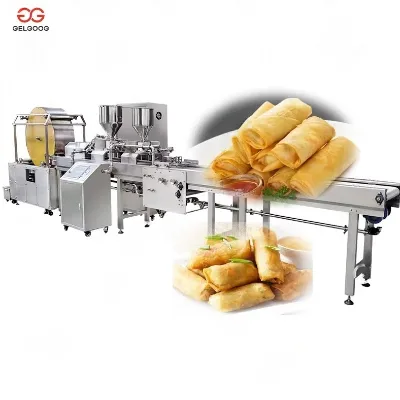
Comprehensive Sourcing Guide
Strategic Sourcing Guide for Industrial Spring Roll Production Lines
Acquiring an industrial automatic spring roll making machine requires a disciplined approach that balances production capacity, technical specifications, and regulatory compliance. The global market for food processing equipment offers a wide array of options, ranging from compact units to full-scale automatic production lines. For procurement professionals, the primary challenge lies in navigating the diverse technical parameters and ensuring that the selected machinery aligns with specific operational needs without compromising on safety or quality standards. This guide outlines the critical factors buyers must evaluate when sourcing a Spring Roll Production Line, drawing upon observed market data and technical requirements to facilitate informed decision-making.
Technical Specifications and Production Capacity
The core of any Spring Roll Production Line is its ability to consistently produce high-quality rolls at a specified rate. When evaluating potential machinery, buyers must scrutinize the production quantity metrics, which vary significantly across different models. Market observations indicate that capacity can range from 3,600 pieces per hour to as high as 15,000 pieces per hour, depending on the specific configuration and automation level. A production line with a capacity of 3,600 to 7,200 pieces per hour may suit small to medium-scale operations, whereas lines capable of 15,000 pieces per hour are designed for large-scale industrial manufacturing.
Power consumption is another critical technical parameter. The total power requirements often include the main engine, mold heating, and conveyor systems. For instance, specific models may list a main engine power of 0.75kW, a mold power of 200W, and a conveyor power of 1.7kW, alongside an electrothermal power of up to 100kW for the baking or drying process. The voltage requirements also vary, with some units operating on 380V while others support a broader range of 220-380V. Buyers must verify that their facility's electrical infrastructure can support the specific voltage and power load of the chosen machine to prevent operational failures.
Physical dimensions and weight are equally important for facility planning. The standard footprint for large production lines can be substantial, with some models measuring approximately 13,500mm in length, 1,350mm in width, and 2,200mm in height. In contrast, more compact units might have dimensions around 750mm by 800mm by 320mm. The weight of the machinery, which can reach up to 4,260kg for larger units, dictates the structural requirements of the installation floor. Additionally, the dough width specification, such as 250mm, and the baking wheel diameter, which may be 1,400mm, directly influence the size and shape of the final spring roll product.
Compliance and Certification Verification
Ensuring that the machinery meets international safety and quality standards is a non-negotiable aspect of the procurement process. Buyers should prioritize suppliers who can provide valid documentation for recognized certifications. Observed market data indicates that many industrial spring roll machines carry CE certification, which is essential for compliance with European health, safety, and environmental protection standards. Furthermore, ISO certifications are frequently cited, indicating adherence to international quality management systems. Some suppliers may also list CCC (China Compulsory Certification), which is relevant for domestic sales within China but may not be sufficient for international export without additional validation.
It is crucial for buyers to verify the authenticity of these certifications rather than accepting them as mere marketing claims. The presence of an "ISOCE" label in some listings suggests a combination of standards, but buyers must confirm the specific ISO standard number (e.g., ISO 9001) and the scope of the CE marking. Compliance is not just about the machine itself but also about the materials used in its construction, which must be food-grade and safe for contact with consumables. The absence of clear certification documentation should be treated as a red flag, regardless of the machine's apparent technical capabilities.
Cost Drivers and Pricing Structure
The pricing of spring roll production lines is influenced by a complex interplay of factors, including automation level, production capacity, and customization options. The observed price range in the market spans from approximately $1,150 to $240,000 USD. This vast disparity reflects the difference between basic semi-automatic units and fully integrated automatic production lines with advanced control systems. The "Automatic Grade" of the machine is a primary cost driver; fully automatic systems with 4-axis control and automated dough handling command a premium over simpler models.
Customization is another significant factor affecting the final cost. Many suppliers offer "Available" or "Customized" options, allowing buyers to tailor the machine to specific dough types, roll sizes, or packaging requirements. These bespoke solutions often incur additional charges and longer lead times. Buyers should also consider the "Condition" of the equipment; while the market is dominated by "New" units, the price point will differ significantly from refurbished or used machinery. The "MOQ" (Minimum Order Quantity) is typically low, often starting at 1 set, which allows for flexibility in purchasing but may impact the unit price if the order volume is small.
Typical Applications and Operational Scope
Industrial spring roll production lines are designed for a variety of applications, primarily focusing on the mass production of spring rolls for commercial food service, retail packaging, and frozen food distribution. The "Function" of these machines is explicitly to produce spring rolls, utilizing an automatic production line workflow that handles dough spreading, filling, rolling, and baking or drying. The "Key Selling Points" often highlighted by manufacturers include ease of operation, which is critical for minimizing training time and reducing operator error.
The versatility of these machines allows them to handle different dough widths and baking wheel speeds, typically ranging from 2 to 5 revolutions per minute. This adjustability enables manufacturers to produce spring rolls of varying sizes and textures to meet diverse consumer preferences. The "Product" type is consistently identified as "Spring Roll," but the underlying technology can often be adapted for similar rolled food products. The "Type" of machine, described as an "Automatic Production Line," implies a continuous flow process that integrates multiple stages of production, reducing the need for manual intervention and increasing overall efficiency.
Supplier Evaluation and Geographic Considerations
When evaluating potential suppliers, geographic origin plays a significant role in logistics, communication, and after-sales support. The majority of observed spring roll production lines originate from China, with specific manufacturing hubs noted in Shanghai, Henan, and Hebei provinces. These regions have established ecosystems for food machinery manufacturing, offering a wide range of options from basic models to high-end automated lines. However, the "prod_origin" being China does not automatically guarantee quality; buyers must assess the specific supplier's reputation, manufacturing history, and export experience.
Supplier evaluation should extend beyond the product listing to include an assessment of their "Customization" capabilities and "Control Type" technologies. Suppliers offering "Automatic" control systems with 4-axis configurations demonstrate a higher level of engineering sophistication. Buyers should also verify the "Warranty" terms, which can range from 1 to 2 years. A longer warranty period often indicates the supplier's confidence in the durability and reliability of their equipment. Additionally, the "prod_packing" method, whether it is a wooden box, wooden case, or wrapping film, is a proxy for how well the supplier protects the equipment during transit, which is vital for preventing damage during international shipping.
Quality Control and Long-Term Procurement Considerations
Implementing a robust quality control (QC) protocol is essential for ensuring the long-term success of the production line. Buyers should request detailed test results and performance data before finalizing a purchase. While specific test data may not always be publicly available, the "prod_standard" and physical dimensions provided in the specifications serve as benchmarks for verification upon delivery. For example, a standard dimension of 9m by 1.5m by 2.4m should be confirmed against the actual delivered unit to ensure it matches the order.
Long-term procurement considerations include the availability of spare parts and the supplier's responsiveness to maintenance requests. The "Weight" and "Power Source" specifications are critical for ongoing operational costs and energy efficiency. A machine with a high electrothermal power of 100kW will have significant energy implications, which must be factored into the total cost of ownership. Furthermore, the "Condition" of the machine upon arrival should be "New" and free from defects. Buyers should establish a clear acceptance criteria based on the "prod_model" and "prod_packing" standards to ensure that the equipment arrives in perfect working order.
Comparative Analysis of Key Models
To assist in the decision-making process, the following table summarizes the key technical and operational differences observed among various Spring Roll Production Line models. This comparison highlights the variability in capacity, dimensions, and certifications that buyers must consider.
| Feature | Model A (ST-980) | Model B (GYC-CJS-YG18) | Model C (GG-CJX5000) | Model D (SX-6QP-15000) |
|---|---|---|---|---|
| Production Capacity | 3600-7200 PCS/Hour | Not Specified | Not Specified | 15000 pieces/H |
| Voltage | 380V | Not Specified | 220-380V | Not Specified |
| Dimensions | Not Specified | 9m * 1.5m * 2.4m | 750 * 800 * 320mm | 13500mm * 1350mm * 2200mm |
| Weight | Not Specified | Not Specified | Not Specified | 4260kg (Total Line) |
| Certification | CE, ISO | CE | ISOCE | Not Specified |
| Warranty | 1 Year | 2 Years | Not Specified | Not Specified |
| Origin | China | Shanghai | Henan | Hebei China |
| Packing | Wooden Box | Wooden Case/Wrapping Film | Wooden Package | Wooden |
| Control Type | Automatic | Automatic | Automatic | Automatic |
This table illustrates that while all models share the core function of automatic spring roll production, they differ significantly in scale and specification. Model D, for instance, offers the highest production capacity but requires a substantial footprint and electrical infrastructure. Conversely, Model C is more compact, potentially suitable for facilities with limited space. Buyers must align these specifications with their specific production goals and facility constraints.
Final Procurement Recommendations
Sourcing an industrial automatic spring roll making machine is a strategic decision that impacts the efficiency and profitability of food production operations. By carefully analyzing technical specifications, verifying certifications, and understanding the cost drivers, buyers can select a production line that meets their specific needs. The observed market data provides a solid foundation for evaluation, but due diligence remains paramount. Buyers should prioritize suppliers who offer transparent documentation, robust warranties, and clear customization options. Ultimately, the goal is to invest in a reliable, high-capacity production line that ensures consistent product quality and operational efficiency for years to come.
FAQs
What certifications do spring roll production lines typically have?
Most industrial units carry CE and ISO certifications for safety and quality compliance. Some listings also include CCC marks for domestic standards, but buyers must verify specific ISO numbers and CE scope before purchase.
How much does a Spring Roll Production Line cost?
Prices range from 1150 to 240000 USD depending on automation and capacity. Fully automatic lines with high output like 15000 pieces per hour command higher prices than basic models.
Can I customize the Spring Roll Production Line specifications?
Yes, customization is available for many models to suit specific dough types or roll sizes. Buyers should expect potential changes in lead time and cost when requesting bespoke configurations.
What is the production capacity of these machines?
Capacities vary significantly, ranging from 3600 to 7200 pieces per hour for smaller units up to 15000 pieces per hour for large lines. The specific output depends on the model configuration and automation level.
Which voltage requirements apply to spring roll machines?
Units typically operate on 380V or a broader range of 220-380V. Buyers must ensure their facility's electrical infrastructure supports the specific voltage and power load, which can include up to 100kW for electrothermal processes.
What warranty periods are offered for these production lines?
Warranty terms generally range from 1 to 2 years depending on the manufacturer and model. A longer warranty period often indicates higher confidence in the equipment's durability and reliability.
How are spring roll production lines packaged for shipping?
Machines are typically packed in wooden boxes, wooden cases, or wrapped in film to meet export standards. This packaging protects the equipment during transit and is crucial for preventing damage during international shipping.