Source Stainless Steel Measuring Cups and Spoons Set for Baking, Cooking, and Powder Measuring
Compare 30 Stainless Steel Measuring Cups and Spoons Set options from verified suppliers. Products feature materials like stainless steel and aluminum alloy, with customizable logos and various packing styles for home, kitchen, and baking applications.
Key considerations
Products List


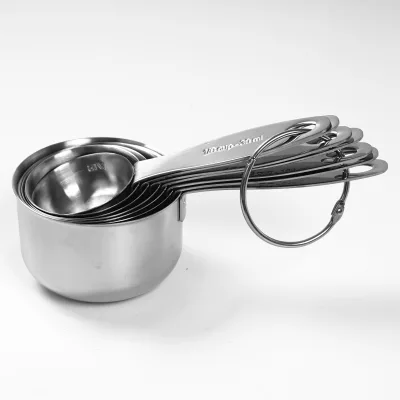
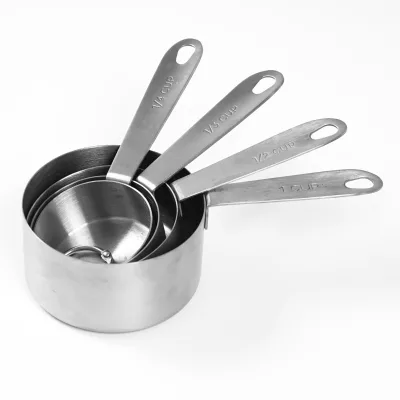


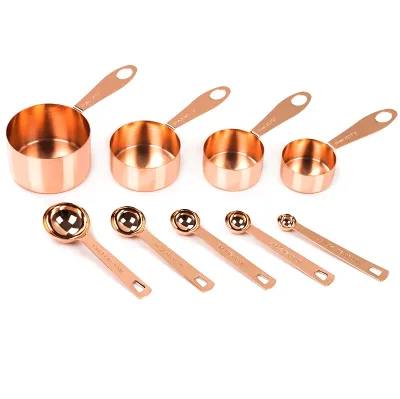
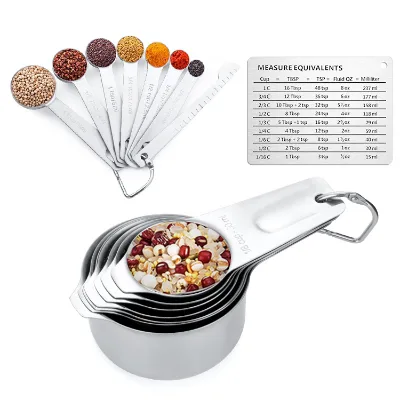
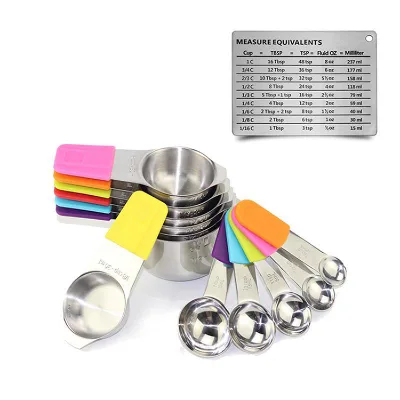
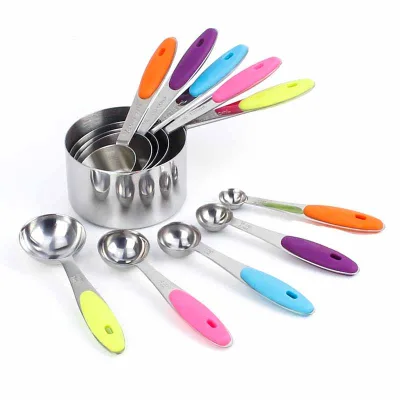


Comprehensive Sourcing Guide
Strategic Sourcing Guide for Stainless Steel Measuring Cups and Spoons Sets
Understanding Material Composition and Product Variants
When sourcing stainless steel measuring cups and spoons sets, the primary differentiator lies in the material composition and the specific alloy grade used. While the core keyword specifies stainless steel, the provided product data indicates a diverse market where aluminum alloy is also a prevalent material for similar measuring tools. Buyers must verify that the specific SKU they are evaluating explicitly lists "Stainless Steel" as the material attribute, as some listings may conflate the two or offer mixed-material sets. The observed product attributes highlight that stainless steel variants often feature a "Silver" color finish, which is a standard aesthetic for this metal class. In contrast, aluminum alloy options may present different visual characteristics or weight profiles.
The physical dimensions of these sets vary significantly depending on the manufacturer's design philosophy. Specific product models in the current market, such as the JH2412175- #0005, are listed with dimensions of 5 x 2.5 x 2.5 inches and a weight of 1.27 pounds. Other models, like the RH339 or RH305, may have different packing standards, ranging from color boxes to brown boxes, which can influence the perceived value and shipping costs. It is critical for buyers to distinguish between sets designed for "Home\Kitchen\Baking" usage and those intended for "Powder Measuring" or "Powder Liquid Measuring." The distinction is not merely semantic; it often dictates the precision of the spoon calibrations and the durability required for the intended application. For instance, a set labeled with "Spoon Capacity" as a feature may differ in structural integrity from a "Measuring Cup" set designed for high-volume liquid handling.
Technical Specifications and Dimensional Standards
Technical specifications are the backbone of any procurement decision for measuring tools. Accuracy is paramount, yet the provided data reveals that standardization varies by model. Some products adhere to specific dimensional standards, such as the 5 x 2.5 x 2.5 inches specification found in certain listings, while others operate under a "depends" standard, indicating that dimensions are customized or variable based on the order. This variability necessitates a rigorous review of the technical datasheet for every potential supplier.
The product models observed, including BM0314, RH495, OT20292, and OT20018, each carry unique dimensional profiles. For example, the OT20018 model is associated with a standard of 20.58.36cm, whereas the BM0314 model lists a standard of 456535. These figures likely refer to the packaging dimensions rather than the utensil size itself, highlighting the importance of distinguishing between product size and shipping volume. Buyers should verify whether the "Customized Size" attribute applies to the actual measuring capacity (e.g., 1/4 teaspoon, 1 tablespoon) or the physical footprint of the set. The "1 Cups" capacity mentioned in some location-based attributes suggests that some sets are single-unit or small-batch configurations, while others may be bulk sets.
Furthermore, the "Item Weight" is a critical specification for logistics planning. The observed weight of 1.27 pounds for a specific stainless steel model provides a baseline for shipping cost calculations. However, other models, such as those with a weight of 460g, offer lighter alternatives that may be preferable for certain supply chains. The "High-Quality Material" and "Design with Holes" features suggest that engineering details, such as ventilation or handle design, are also part of the technical specification. Buyers must ensure that the "Design with Holes" feature does not compromise the structural integrity of the measuring spoons, especially when dealing with wet or sticky ingredients.
Compliance, Certification, and Safety Standards
In the food contact equipment sector, compliance and certification are non-negotiable. The provided data explicitly mentions "LFGB" certification for specific models, such as the GS-MS010. LFGB (Lebensmittel-, Bedarfsgegenstände- und Futtermittelgesetzbuch) is a stringent German food safety law that serves as a high benchmark for material safety. When sourcing stainless steel sets, buyers should prioritize suppliers who can provide valid LFGB documentation or equivalent certifications like FDA (USA) or EU 10/2011. The absence of such certifications in a product listing should be treated as a red flag, regardless of the material claims.
The "Food Grade" attribute is frequently associated with these products, but it is a claim that must be substantiated by test results. The data indicates that some products are "Non-Disposable," implying they are designed for repeated use and must withstand rigorous cleaning cycles without degrading. This durability requirement often correlates with higher material grades of stainless steel, such as 304 or 316, which resist corrosion and staining. Buyers should verify that the "Sustainable" feature mentioned in some attributes is backed by verifiable lifecycle assessments or material recycling claims, rather than being a generic marketing term.
Additionally, the "Customized Logo Acceptable" attribute suggests that branding is a common requirement for B2B buyers. However, the application of logos must not compromise the food safety of the product. The ink or engraving process used for customization must also be food-safe and non-toxic. The "Brown Box" and "Color Box" packing standards indicate that packaging materials must also meet safety regulations if they come into direct contact with the food-grade utensils. Buyers should request material safety data sheets (MSDS) for all packaging components to ensure full compliance with international food safety standards.
Cost Drivers and Pricing Dynamics
The pricing landscape for stainless steel measuring cups and spoons sets is influenced by several dynamic factors. The observed price range in the market spans from $0.57 to $15.70 USD, a significant variance that reflects differences in material quality, manufacturing complexity, and branding. The lower end of this spectrum likely corresponds to basic aluminum alloy sets or simple stainless steel models with minimal packaging. The higher end typically represents premium stainless steel sets with custom branding, specialized packaging, and higher certification standards.
The Minimum Order Quantity (MOQ) is another critical cost driver. The data shows an MOQ range of 10 to 3000 units, with specific models like the GS-MS820 requiring an MOQ of 1000 sets. This wide range allows buyers to scale their orders based on their budget and storage capacity. However, higher MOQs often correlate with lower unit costs due to economies of scale. Buyers must balance the desire for a lower unit price against the risk of overstocking. The "Customized" attribute often incurs additional setup costs, which can impact the final price per unit, especially for smaller order volumes.
Packaging costs also play a significant role in the total landed cost. The difference between "Color Box" and "Brown Box" packaging can affect both the unit price and the shipping volume. Color boxes are generally more expensive to produce but offer better retail presentation, while brown boxes are more cost-effective for bulk distribution. The "1PC/Poly Bag, 1PC/White Box" packing standard for the GS-MS010 model suggests a tiered approach to packaging, where the inner protection is a poly bag and the outer presentation is a white box. Buyers should calculate the total cost including packaging, as this can significantly alter the profitability of the final product.
Typical Applications and Market Segmentation
The versatility of stainless steel measuring cups and spoons sets allows them to serve multiple market segments. The primary application identified in the data is "Home\Kitchen\Baking," where precision and durability are essential for home cooks and professional bakers. These sets are often used for measuring dry ingredients like flour, sugar, and spices, as well as liquids. The "Powder Measuring" and "Powder Liquid Measuring" attributes highlight the dual functionality of these tools, which must handle both fine powders and viscous liquids without clumping or sticking.
In the commercial sector, these sets are used in bakeries, restaurants, and catering services where high-volume usage requires robust equipment. The "High-Quality Material" and "Wide Applications" features suggest that these products are designed to withstand the rigors of a professional kitchen environment. The "Everyday" season attribute indicates that these are staple items with consistent demand throughout the year, rather than seasonal products. This consistency makes them a reliable choice for B2B buyers looking to maintain steady inventory levels.
The "Measuring Tools Type" classification further segments the market into "Measuring Spoons" and "Measuring Cups." While often sold as a set, the specific needs of a buyer may dictate a preference for one type over the other. For example, a bakery specializing in bread making may prioritize measuring cups for flour, while a confectionery shop may focus on measuring spoons for flavorings and extracts. The "Keyword: Professional Measuring Spoons" suggests that there is a niche market for high-precision tools that cater to professional chefs and food scientists.
Supplier Evaluation and Quality Control Protocols
Evaluating suppliers for stainless steel measuring sets requires a multi-faceted approach. The geographic origin of the products, such as "China," "Zhejiang, China," and "Guangdong, China," provides insight into the manufacturing ecosystem. Zhejiang and Guangdong are known for their strong manufacturing capabilities, but buyers must verify the specific factory's reputation and capacity. The "Customization" availability is a key indicator of a supplier's flexibility, but it should be paired with a clear quality control process.
Quality control should focus on several key areas: material verification, dimensional accuracy, and finish quality. Buyers should request samples to verify the "Stainless Steel" material claim and test for corrosion resistance. The "Item Weight" and "Item Dimensions" should be measured against the provided specifications to ensure consistency. The "Design with Holes" feature should be inspected for smooth edges to prevent injury and ensure easy cleaning. Additionally, the "Logo" customization should be checked for clarity and durability, ensuring it does not peel or fade after repeated washing.
The "Certification: LFGB" mentioned in the data is a strong indicator of a supplier's commitment to quality, but it should be verified with current certificates. Buyers should also inquire about the supplier's internal quality control procedures, such as ISO 9001 certification, and their process for handling non-conforming products. The "Disposable: Non-Disposable" attribute reinforces the need for durable products, and suppliers should be able to provide data on the expected lifespan of their products under normal use conditions.
Long-Term Procurement Considerations and Strategic Planning
Long-term procurement of stainless steel measuring cups and spoons sets requires a strategic approach that goes beyond immediate cost savings. The "Customized Logo Acceptable" and "Customized Size" attributes offer opportunities for brand differentiation, but they also introduce complexity into the supply chain. Buyers should develop a long-term relationship with suppliers who can maintain consistency in quality and delivery times, even as order volumes fluctuate.
The "MOQ: 1000sets" requirement for some models indicates that buyers may need to plan their inventory carefully to meet these thresholds. Strategic planning involves forecasting demand accurately to avoid stockouts or overstocking. The "Lead Time" and "Production Capacity" of the supplier are critical factors in this planning process. Buyers should negotiate terms that allow for flexibility in order quantities and delivery schedules to accommodate market changes.
Sustainability is another long-term consideration. The "Feature: Sustainable" attribute suggests that some suppliers are adopting eco-friendly practices. Buyers should evaluate the environmental impact of their procurement decisions, including the sourcing of raw materials, the energy efficiency of the manufacturing process, and the recyclability of the packaging. The "Food Grade Measuring Cup" and "Measuring Spoon" products should be sourced from suppliers who demonstrate a commitment to environmental responsibility, aligning with the growing consumer demand for sustainable products.
In conclusion, sourcing stainless steel measuring cups and spoons sets involves a careful balance of technical specifications, compliance requirements, cost management, and supplier evaluation. By leveraging the observed data and adhering to strict quality control protocols, buyers can build a reliable supply chain that meets the demands of both home and professional markets. The diversity of product models and specifications offers ample opportunities for customization and differentiation, making this a dynamic and rewarding sector for B2B procurement.
FAQs
What certifications are available for stainless steel measuring sets?
Some models carry LFGB certification, which is a stringent German food safety standard. Buyers should verify current documentation for this or equivalent FDA approvals before purchasing to ensure compliance with international food safety regulations.
Can I request a customized logo on these measuring tools?
Yes, customized logo acceptance is available for many stainless steel options. The customization process must use food-safe inks or engraving methods to ensure the branding does not compromise the safety or durability of the utensils during use.
Which materials are used for these measuring cup and spoon sets?
Stainless steel is the primary material for the core keyword products, though aluminum alloy variants also exist in the market. Buyers must explicitly verify the material attribute to ensure they are sourcing the correct metal grade for their needs.
What is the typical minimum order quantity for these items?
The minimum order quantity ranges from 10 to 3000 units depending on the specific model and supplier. Some customized options like the GS-MS820 may require a higher MOQ of 1000 sets, while basic listings allow for smaller initial orders.
How do packaging standards vary between different product models?
Packaging options include color boxes, brown boxes, and poly bags with white boxes. The choice affects retail presentation and shipping costs, with color boxes generally offering better presentation while brown boxes are more cost-effective for bulk distribution.
Where are these measuring tools typically manufactured?
Products originate from various locations in China, including Zhejiang and Guangdong provinces. These regions are known for strong manufacturing capabilities, but buyers should verify the specific factory reputation and capacity for their chosen supplier.
What is the weight range for these stainless steel measuring sets?
Weights vary significantly, with some models weighing 1.27 pounds and others around 460 grams. This difference impacts shipping calculations and should be considered when planning logistics for bulk orders of specific product models.