Source Standard Automotive Brake Pads for sedans, SUVs, and trucks
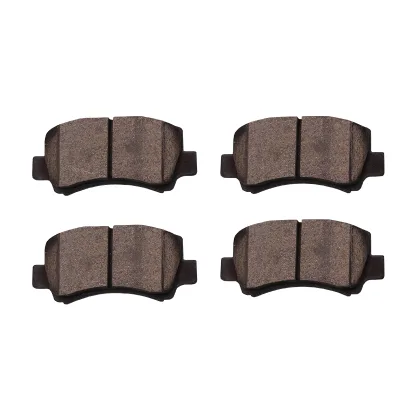
Find 30 listings for Standard Automotive Brake Pads from verified Chinese manufacturers. Buyers can compare specifications, certifications, and pricing for front and rear axle applications across global markets.
Key considerations
Products List




Comprehensive Sourcing Guide
Standard Automotive Brake Pads Sourcing Guide
Sourcing Standard Automotive Brake Pads requires a disciplined approach that balances performance reliability with commercial viability. These components are critical safety parts, meaning that procurement decisions must prioritize verified material composition, precise dimensional fitment, and consistent manufacturing quality over price alone. Buyers must navigate a complex supply chain where variations in friction material, backing plate steel quality, and shimming technology directly impact vehicle safety and driver experience. This guide provides a structured framework for evaluating suppliers, verifying technical specifications, and managing commercial risks associated with global brake pad procurement.
The market for brake pads is characterized by a wide range of product types, including semi-metallic, ceramic, and NAO (Non-Asbestos Organic) formulations, each suited to different driving conditions and vehicle classes. Procurement teams must align their sourcing strategy with the specific performance requirements of their target market, whether that involves high-heat resistance for performance vehicles or low-dust characteristics for urban commuter cars. Understanding the distinction between OEM (Original Equipment Manufacturer) and aftermarket specifications is essential, as is recognizing the importance of customization options that allow for brand-specific packaging or minor design adjustments to meet regional regulatory or aesthetic preferences.
Product Scope and Observed Listing Signals
The observed market landscape for Standard Automotive Brake Pads reveals a diverse array of product listings that cater to various global markets, including North America, Europe, Southeast Asia, and South America. Listings frequently highlight key attributes such as front or rear axle positioning, with some suppliers offering comprehensive solutions for both positions. The presence of customization options indicates that many manufacturers are equipped to handle OEM and ODM requests, allowing buyers to tailor products to specific vehicle models or branding requirements. This flexibility is particularly valuable for distributors and aftermarket retailers who seek to differentiate their offerings through exclusive designs or specialized packaging solutions.
Price points and minimum order quantities (MOQs) vary significantly across the supply base, reflecting differences in material costs, production volumes, and supplier capabilities. Buyers should expect to encounter MOQs ranging from small trial orders to large bulk purchases, with some suppliers requiring a minimum of fifty sets per order while others accommodate smaller quantities. The observed price range suggests that cost is influenced by factors such as material composition, certification levels, and packaging complexity. It is crucial for buyers to interpret these signals not as fixed market rates but as indicators of supplier tier and production capacity, using them to segment potential partners based on their volume needs and budget constraints.
Technical Specifications to Verify
Verifying technical specifications is the most critical step in ensuring that sourced brake pads meet the required performance and fitment standards. Buyers must confirm the exact model numbers and part codes, such as X01-90000272 or 00001-28888, to ensure compatibility with the intended vehicle applications. The material composition is a primary differentiator, with options including steel, ceramic, semi-metallic, and NAO formulations. Each material type offers distinct advantages in terms of friction stability, noise reduction, and wear characteristics, so buyers must align material selection with the expected driving conditions and customer expectations.
Dimensional accuracy and packaging standards are equally important for logistical efficiency and product protection. Specifications such as 807030cm for standard packaging or single package sizes of 15.8X14X7 cm provide essential data for warehouse planning and shipping cost calculations. Buyers should also verify the condition of the parts, ensuring they are new and have undergone 100% testing before shipment. The availability of customization for model numbers and packing methods allows for greater flexibility, but it requires clear communication of requirements to avoid discrepancies between ordered and delivered goods.
Compliance and Safety Documentation
Compliance with international quality and safety standards is non-negotiable for automotive brake pad procurement. Certifications such as ISO9001, ISO/TS, and SGS provide evidence that a supplier has implemented robust quality management systems and adheres to recognized industry benchmarks. These certifications are often linked to specific markets, with some suppliers holding certifications that are valid for South America, North America, Eastern Europe, and other regions. Buyers should request copies of these certificates and verify their validity and scope to ensure that the supplier’s quality systems are appropriate for the target market’s regulatory environment.
In addition to general quality certifications, buyers must ensure that the products comply with relevant regional standards, such as GB standards in China or other local regulations. The presence of OEM acceptance indicates that a supplier is capable of meeting the stringent requirements of original equipment manufacturers, which often involve rigorous testing and documentation processes. Buyers should also inquire about the specific testing protocols used by the supplier, including brake fade resistance, pad life, and noise performance tests, to gain confidence in the product’s reliability and safety under real-world driving conditions.
Cost Drivers and Commercial Terms
Understanding the cost drivers behind brake pad pricing helps buyers negotiate better terms and avoid unexpected expenses. Key factors include the type of friction material, the quality of the steel backing plate, and the complexity of the shimming and bonding processes. Suppliers located in regions like Cangzhou, Shandong, and Zibo in China may offer competitive pricing due to localized supply chains and manufacturing efficiencies. However, buyers should also consider the total cost of ownership, which includes shipping, tariffs, and potential costs associated with quality issues or returns.
Commercial terms such as delivery time, payment terms, and packaging options significantly impact the overall procurement strategy. A typical delivery time of 25 days allows for reasonable planning, but buyers should confirm lead times for customized orders or peak seasons. Packaging options, ranging from neutral packaging to color boxes or wooden cases, can affect product protection and branding opportunities. Buyers should negotiate clear terms regarding liability for damaged goods, return policies for defective parts, and the process for handling quality disputes to mitigate financial risks.
Supplier Qualification and Quality Control
Supplier qualification involves a thorough assessment of the manufacturer’s production capabilities, quality control processes, and financial stability. Buyers should conduct on-site audits or request detailed virtual tours to verify the supplier’s manufacturing facilities, including their molding, pressing, and testing equipment. The presence of advanced testing labs and 100% inspection protocols is a strong indicator of a supplier’s commitment to quality. Additionally, buyers should evaluate the supplier’s ability to handle customization requests, such as private labeling or specific packaging requirements, which can be crucial for building a competitive aftermarket brand.
Quality control extends beyond the initial production phase to include ongoing monitoring and performance tracking. Buyers should establish clear quality metrics and inspection criteria, such as dimensional tolerances, friction coefficient consistency, and visual defect limits. Regular communication with the supplier regarding quality performance and any issues encountered during installation or use is essential for continuous improvement. Implementing a robust supplier management system that includes periodic performance reviews and corrective action plans helps ensure long-term reliability and consistency in the supply of brake pads.
Long-Term Procurement Checks
Long-term procurement success depends on establishing a strategic partnership with suppliers who can adapt to changing market demands and regulatory requirements. Buyers should regularly review supplier performance against key metrics such as on-time delivery, defect rates, and responsiveness to issues. Building a diversified supplier base can mitigate risks associated with single-source dependencies, allowing buyers to switch suppliers if performance declines or market conditions change. Maintaining open lines of communication and fostering a collaborative relationship with suppliers encourages innovation and continuous improvement in product quality and service.
As automotive technologies evolve, such as the increasing adoption of electric vehicles and advanced driver-assistance systems, the requirements for brake pads may change. Buyers must stay informed about these trends and work with suppliers who are capable of developing new products to meet emerging needs. This may involve investing in research and development partnerships or exploring new material technologies that offer improved performance and sustainability. By proactively addressing these changes, buyers can ensure that their brake pad sourcing strategy remains relevant and competitive in the long term.
FAQs
What certifications do Standard Automotive Brake Pads have?
Standard Automotive Brake Pads typically hold ISO9001 and ISO/TS certifications. Some products also carry SGS certificates. These certifications ensure quality management systems are in place for manufacturing processes.
Which materials are used for Standard Automotive Brake Pads?
Common materials include steel, ceramic, semi-metal, and NAO compositions. The specific material depends on the application requirements and performance needs of the vehicle. Buyers should verify the exact composition for their use case.
Can Standard Automotive Brake Pads be customized?
Yes, customization is available for Standard Automotive Brake Pads. Buyers can request specific models, packaging, or branding options. This flexibility supports both OEM and ODM market requirements effectively.
How long is the delivery time for Standard Automotive Brake Pads?
The standard delivery time is approximately 25 days. This timeline applies to typical orders from manufacturers in China. Buyers should confirm specific lead times based on order volume and shipping method.
What is the minimum order quantity for Standard Automotive Brake Pads?
Minimum order quantities range from 1 to 2000 units depending on the supplier. Some specific listings require a minimum of 50 sets. Buyers should check individual supplier terms for exact MOQ requirements.
Where are Standard Automotive Brake Pads manufactured?
Manufacturing locations include various regions in China such as Cangzhou, Zibo, and Shandong. These areas host factories producing brake systems and chassis parts. Origin details vary by specific product model and supplier.
What packaging options exist for Standard Automotive Brake Pads?
Packaging options include cartons, pallets, plastic bags, and wooden cases. Customized packing is also available to meet specific buyer needs. Neutral or color packages may be used depending on the order specifications.