Source Standard Component Water Pump for Agriculture Irrigation
Find 30 Standard Component Water Pump options suitable for agriculture, irrigation, and clarified water applications. Buyers can compare specifications like head, capacity, and power source to select the right electric or diaphragm pump for their needs.
Key considerations
Products List

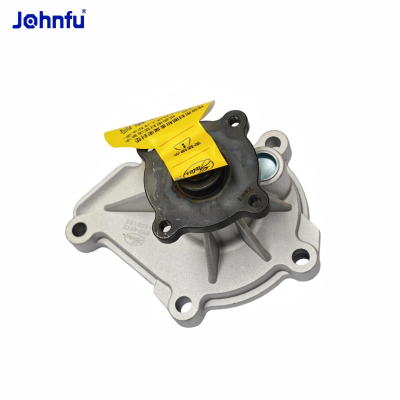


$50.00 - $120.00
MOQ: 20 Pieces


Comprehensive Sourcing Guide
Strategic Sourcing Guide for Standard Component Water Pumps
Navigating the global market for standard component water pumps requires a disciplined approach that balances technical compatibility, regulatory compliance, and supply chain reliability. Buyers entering this sector must understand that "standard component" does not imply a single, uniform product but rather a category defined by specific operational parameters, material constraints, and application requirements. The following guide synthesizes available market data to assist procurement professionals in evaluating potential suppliers and defining precise technical specifications for their operational needs.
Technical Specifications and Operational Parameters
The foundation of any successful procurement strategy lies in the accurate definition of technical specifications. In the current market, water pumps are characterized by a diverse array of theoretical mechanisms and structural designs. Buyers must verify the specific theory of operation, as products may be classified as Jet Pumps, Electromagnetic Pumps, or Diaphragm Pumps depending on the intended fluid dynamics. For instance, a Diaphragm Pump structure is often selected for applications requiring precise flow control, whereas a Jet Pump theory might be preferred for specific suction scenarios.
Power sources are a critical differentiator. The majority of standard components operate on electric power, utilizing specific voltage configurations such as 220V-50Hz or 120V-60Hz. The power consumption for these units typically ranges around 400W, though this varies based on the motor's driving type and efficiency. When evaluating the driving type, buyers should confirm whether the unit relies on a standard motor or specialized electromagnetic drives.
Performance metrics are equally vital. Maximum head, which represents the vertical distance the pump can lift water, is a key specification. Observed data indicates units with a maximum head of 7 meters, while other segments may offer capacities under 10 meters. Flow rates also vary significantly; some units are rated for a maximum discharge flow rate of 5800 liters per hour, while others in the agricultural sector may have a maximum capacity of 95 liters per minute or less than 50 liters per minute. The media being pumped is almost exclusively water, but the presence of solids must be considered. Specifications regarding the maximum grain size, such as 16mm, are essential for applications involving irrigation or agricultural use where debris may be present.
Physical dimensions and connection standards must also be aligned with existing infrastructure. Pipe diameters are commonly available in 1-inch, 1-4/1-inch, and 1-2/1-inch configurations. The cable specifications, such as H05rn-F 3G 0.75mm2, must be verified to ensure compatibility with local electrical codes and safety standards. Furthermore, the maximum submersion depth, often observed at 5 meters for submersible variants, dictates the suitability of the pump for deep well or pond applications.
Material Composition and Structural Integrity
The longevity and reliability of a water pump are directly tied to its material composition. Stainless Steel is a prevalent material choice for high-durability applications, offering resistance to corrosion and chemical degradation. However, the market also includes units constructed from general Steel, which may be suitable for less aggressive environments or specific industrial uses. The choice between Stainless Steel and Steel often depends on the application field, such as Agriculture, where exposure to fertilizers or varying water qualities is common.
The assembly type is another structural consideration. Buyers should distinguish between Booster Pumps, which increase pressure in a system, and Electric Clean Water Pumps, designed for potable or filtered water applications. The structure of the pump, whether it is a Diaphragm Pump or another configuration, influences its maintenance requirements and operational lifespan. For instance, Diaphragm structures are often favored for their ability to handle varying viscosities and prevent backflow issues.
Compliance, Certification, and Industry Standards
While specific certification names are not universally standardized across all listings, buyers must verify that suppliers adhere to relevant industry standards. The supply chain data indicates that products may conform to standards such as "1-6PCS/HOUSING" or "1" depending on the packaging and batch requirements. In some cases, standards are defined by customer needs, indicating a high degree of customization potential.
Compliance checks should extend to the origin of the product. Many standard component water pumps originate from China, a major manufacturing hub for this category. Buyers should request documentation proving that the manufacturing processes meet international safety and quality benchmarks. The industry classification, such as Oil Pumps or general Water Pumps, also dictates the specific regulatory framework that applies. For agricultural applications, additional environmental and safety certifications may be required to ensure the pump does not contaminate irrigation water or violate local agricultural regulations.
Cost Drivers and Pricing Dynamics
The pricing of standard component water pumps is influenced by a complex interplay of factors, including material costs, power specifications, and customization levels. The observed price range in the market spans from 1 USD to 12,000 USD, reflecting the vast difference between small, single-item units and large, industrial-grade systems. This wide variance underscores the importance of defining the exact scope of the purchase.
Key cost drivers include the power source and voltage requirements. Units operating at higher voltages or with specialized electromagnetic theories may command a premium. Additionally, the complexity of the assembly, such as the inclusion of a Booster Pump mechanism, can increase the unit price. Customization is a significant factor; while some products are available as single items with standard packing, others offer customization options that can alter the cost structure. The packing method, ranging from Carbon Boxes to Color Boxes or Ocean Freight solutions, also impacts the final landed cost.
Typical Applications and Industry Segments
Standard component water pumps serve a multitude of industries, with Agriculture being a primary application field. In this sector, pumps are utilized for irrigation purposes, requiring robust performance in handling water with potential particulate matter. The maximum grain size specification of 16mm is particularly relevant here, ensuring the pump can handle debris without clogging.
Beyond agriculture, these pumps are employed in clarified water applications, where the purity of the fluid is a concern. The distinction between a Wear Pump and a standard clean water pump is critical in these contexts. Industrial applications, such as those involving oil pumps, require specific materials and designs to handle different media and pressures. The driving type, often a motor, must be selected based on the continuous duty requirements of the specific industry.
Supplier Evaluation and Verification
Evaluating suppliers requires a rigorous assessment of their capabilities and history. Buyers should verify the brand reputation, with names like Hidrotek appearing in the market as a known entity. However, reliance on brand alone is insufficient; technical verification is paramount. Suppliers should be able to provide detailed specifications regarding the model number, such as BP-01, K003-1901, or 11401, to ensure the product matches the buyer's requirements.
The supplier's ability to offer customization is a key differentiator. The availability of customization options allows buyers to tailor the pump to specific operational needs, such as adjusting the voltage or modifying the pipe diameter. Buyers should also assess the supplier's capacity to meet demand, noting that the observed MOQ range spans from 1 to 5000 units. This flexibility is crucial for both small-scale projects and large industrial deployments.
Quality Control and Procurement Considerations
Quality control is essential to mitigate the risks associated with mechanical failures and safety hazards. Buyers should implement a robust inspection regime that includes verifying the physical dimensions, such as the measurement of 51x33x33 cm for 4-piece units, and checking the cable integrity. The packing method, whether it involves bubble wrap and plywood boxes or simple color boxes, plays a role in protecting the product during transit.
Long-term procurement considerations involve analyzing the total cost of ownership, including maintenance, energy consumption, and replacement parts. The power consumption of 400W is a baseline figure, but actual usage may vary based on the duty cycle. Buyers should also consider the lead time for delivery, although specific figures are not universally provided, the origin location in China suggests standard shipping timelines.
Comparative Analysis of Product Attributes
To facilitate decision-making, the following table summarizes key attributes observed in the market for standard component water pumps. This comparison highlights the diversity of options available and the specific parameters buyers must verify.
| Attribute | Observed Range/Value | Relevance to Procurement |
|---|---|---|
| Material | Stainless Steel, Steel | Determines corrosion resistance and longevity. |
| Power Source | Electric (220V/120V) | Ensures compatibility with local electrical grids. |
| Max Head | 7m, <10m | Critical for vertical lift requirements. |
| Max Capacity | 95L/Min, <50 L/min | Defines flow rate suitability for the application. |
| Structure | Diaphragm Pump, Booster Pump | Influences operational mechanics and maintenance. |
| Application | Agriculture, Clarified Water | Aligns pump type with end-use environment. |
| Customization | Available | Allows for tailored solutions to specific needs. |
| Origin | China | Affects shipping costs and lead times. |
| Packing | Carbon Box, Color Box, Plywood | Impacts protection during logistics. |
| Model Number | BP-01, K003-1901, 11401 | Essential for identifying specific product variants. |
Conclusion
Sourcing standard component water pumps requires a meticulous approach that integrates technical verification, market awareness, and strategic supplier evaluation. By focusing on the specific attributes such as material composition, power specifications, and application compatibility, buyers can ensure they procure units that meet their operational demands. The wide range of available options, from small single-item units to large industrial systems, offers flexibility but also necessitates careful due diligence. Ultimately, the success of the procurement process depends on the buyer's ability to align the product's technical specifications with their specific project requirements while maintaining a focus on quality and compliance.
FAQs
What materials are used for standard component water pumps?
Stainless Steel and Steel are the primary materials used. Stainless Steel offers high corrosion resistance for agricultural and clarified water applications, while general Steel is suitable for specific industrial uses like oil pumps.
How is the power source configured for these pumps?
The pumps operate on electric power with voltages of 220V-50Hz or 120V-60Hz. Power consumption typically ranges around 400W, driven by a motor or electromagnetic theory depending on the specific model structure.
Which pump structures are available in the market?
Diaphragm Pump and Booster Pump structures are commonly available. Diaphragm pumps provide precise flow control, while booster pumps are designed to increase system pressure for various fluid dynamics scenarios.
Can these pumps handle solid particles in water?
Yes, some models can handle solids with a maximum grain size of 16mm. This specification is critical for agricultural irrigation applications where debris may be present in the water source.
What is the maximum head capacity for these units?
Maximum head capacity is typically 7 meters, with some units offering less than 10 meters. This vertical lift capability determines suitability for deep well or pond applications requiring specific pressure.
How can I customize the pump specifications?
Customization is available for various product attributes and standards. Buyers can request specific configurations such as pipe diameters, packing methods, or voltage adjustments to meet unique operational needs.
What is the origin location for these water pumps?
The products originate from China, a major manufacturing hub for this category. Buyers should verify that manufacturing processes meet international safety and quality benchmarks given the specific origin location.