Source Straight Cargo Pants for Work, Travel, and Outdoor Use
Compare 30 listings of Straight Cargo Pants from verified Chinese suppliers. Buyers can evaluate sizes, materials like chinlon and twill, and customization options for workwear, casual wear, and outdoor activities.
Key considerations
Products List


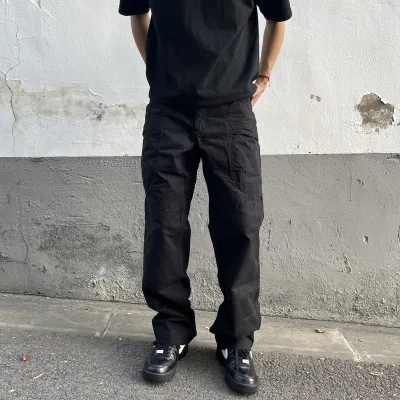


Mens Cargo Pants Classics Pants Cargo Mens Cargo Pants with Side Pockets
$9.50 - $14.60
MOQ: 200 Pieces


Comprehensive Sourcing Guide
Strategic Sourcing Guide for Straight Cargo Pants
The global demand for functional workwear and casual utility trousers continues to expand, with Straight Cargo Pants emerging as a versatile staple in both industrial and lifestyle sectors. For procurement professionals, sourcing these garments requires a disciplined approach that balances aesthetic consistency with rigorous supply chain verification. The straight cut offers a classic silhouette that accommodates a wide range of body types while providing ample room for the multiple pockets characteristic of cargo designs. This guide outlines the critical factors buyers must evaluate when engaging with manufacturers, focusing on the specific attributes observed in the current market, including model variations, material composition, and packaging standards.
Technical Specifications and Design Variations
When evaluating Straight Cargo Pants, the technical specifications serve as the primary filter for supplier qualification. The market data indicates a diverse range of model identifiers, such as WJMP-0048-2, CP-323, WP-323, and JX6213, each potentially representing distinct cuts or feature sets. A critical observation is the prevalence of the "Straight" style attribute, which defines the leg opening and overall silhouette. This is distinct from tapered or loose fits, ensuring a professional appearance suitable for workwear applications.
Size availability is another fundamental specification. The observed inventory includes standard sizing ranging from Small (S) to Large (L), with some listings specifying "Medium" length or "Short" length variations. Buyers must verify if the supplier maintains a consistent grading system across these sizes to ensure fit uniformity. Furthermore, the "Loose" model specification suggests that some manufacturers offer relaxed fits within the straight category, which may be preferable for specific labor-intensive tasks requiring greater mobility. The presence of "Multi Pockets" is a defining feature of cargo pants, and procurement teams should confirm the placement and reinforcement of these pockets, as they are critical for tool storage and utility.
Material Composition and Fabric Standards
The durability and comfort of Straight Cargo Pants are heavily dependent on the material composition. The supplied data explicitly identifies "Chinlon" as a material option, a synthetic fiber known for its strength and resistance to abrasion. Additionally, "Twill" is listed as a fabric type, a weave pattern that provides a diagonal rib texture, offering enhanced durability and a professional drape. The "Washed" technics attribute indicates that the fabric undergoes a finishing process to soften the hand feel and reduce shrinkage, which is essential for maintaining the garment's shape after repeated laundering.
Buyers should not assume that all listed products utilize the same fabric blend. While Chinlon and Twill are prominent, the specific weight and thread count of the fabric must be verified against the intended application. For workwear, higher density twill is generally preferred for tear resistance, whereas lighter blends may be suitable for casual spring and autumn wear. The "Season" attribute, listing Spring/Autumn or Spring specifically, suggests that the fabric weight is calibrated for moderate climates. Procurement teams must request fabric swatches to verify the GSM (grams per square meter) and ensure the material meets the thermal and mechanical requirements of the end-user environment.
Compliance, Certification, and Standards Verification
Navigating the regulatory landscape is a critical component of sourcing Straight Cargo Pants. The data reveals a mix of standardization approaches, with some products adhering to specific international benchmarks while others follow customer-specific demands. Notable standards mentioned include "CE" certification, which is mandatory for personal protective equipment (PPE) sold in the European Economic Area. If the cargo pants are intended for industrial use, verifying CE compliance is non-negotiable.
Other listings reference "International/EU/UK Standard" or "According to Customer's Size Spec," indicating a flexible approach to compliance. However, flexibility does not imply a lack of rigor. Buyers must explicitly request documentation proving that the manufacturing process adheres to the claimed standards. The "554936 cm 23kgs" and "65305" dimensions likely refer to carton specifications rather than product standards, yet they highlight the importance of logistics compliance. Ensuring that the packaging dimensions align with shipping container efficiency can significantly impact overall costs. Additionally, the "EU/Us /International" standard mention suggests that some suppliers are equipped to meet diverse regional regulatory requirements, but this must be confirmed on a per-order basis.
Cost Drivers and Pricing Dynamics
Understanding the cost structure of Straight Cargo Pants is essential for budgeting and negotiation. The observed price range in the market spans from 4.5 to 18 USD, a significant variance that reflects differences in material quality, production complexity, and order volume. Several factors drive these costs. First, the "OEM Service" and "Brand: OEM" attributes indicate that customization is a primary cost driver. Customization involves additional design time, pattern making, and setup costs, which are often passed on to the buyer.
The "Sample Time" of 5-15 days also influences the timeline and potential rush fees. Longer lead times for samples allow for more thorough quality checks but may delay the overall project. The "Supply Type: Oem Service" confirms that the manufacturing model is based on original equipment manufacturing, where the buyer's specifications dictate the production. Volume is another critical cost factor, with the observed Minimum Order Quantity (MOQ) ranging from 10 to 5000 units. Smaller MOQs offer flexibility for testing the market but result in a higher unit cost, while larger orders benefit from economies of scale. Buyers should analyze the total landed cost, including shipping and duties, rather than focusing solely on the unit price.
Supplier Evaluation and Operational Capabilities
Selecting the right supplier requires a deep dive into their operational capabilities and geographic location. The data indicates that the majority of suppliers are located in "China" and specifically "Fujian, China," a region known for its robust textile manufacturing infrastructure. The "Supply Type: Oem Service" and "Customization: Available" attributes suggest that these suppliers are agile and capable of adapting to specific buyer requirements.
However, buyers must verify the supplier's capacity to handle the full range of requested specifications. For instance, while "Customization" is available, the extent of this customization—whether it includes fabric sourcing, color matching, or unique pocket configurations—must be clearly defined. The "1PC/PP Bag" and "1PC/Polybag" packing variations indicate that packaging is a customizable element. Some suppliers offer "1PC/Polybag, 20-40PCS Per Carton," while others provide "1PC /Bag, 10PC/Carton, or Hanging in Container." These differences affect logistics efficiency and retail presentation. Buyers should request a detailed breakdown of the supplier's production capacity, quality control processes, and ability to scale production during peak demand periods.
Quality Control and Packaging Standards
Quality control (QC) is paramount in ensuring that the final product meets the buyer's expectations. The "Washed" technics and "Classic" feature attributes suggest a focus on aesthetic and functional durability. To maintain this quality, buyers should implement a rigorous QC protocol that includes pre-production sample approval, in-line inspections, and final random inspections. The "CE" certification mentioned earlier serves as a baseline for safety, but additional tests for colorfastness, seam strength, and pocket durability are often necessary for workwear applications.
Packaging standards also play a crucial role in product integrity. The data shows a variety of packing methods, from "1PCS Into 1 Polybag" to "1PC/Polybag, 40PCS/Carton Fold Packing." The choice of packaging depends on the distribution channel. For retail, hanging in a container or individual polybagging may be preferred to prevent damage and maintain presentation. For bulk industrial distribution, fold packing in cartons may be more efficient. Buyers must ensure that the packaging materials are durable enough to withstand shipping conditions and that the labeling complies with the destination country's regulations. The "1PC/PP Bag" and "1PC/Polybag" options highlight the need to specify the exact packaging material to avoid confusion and ensure consistency across the order.
Long-Term Procurement Considerations
Sourcing Straight Cargo Pants is not merely a transactional exercise but a strategic partnership that requires long-term planning. The "Age Group: Adults" and "Gender: Unisex" attributes indicate a broad market appeal, suggesting that these products have a long lifecycle and consistent demand. However, market trends shift, and buyers must remain agile. The "Spring / Autumn" and "Spring" seasonality suggests that inventory planning must align with seasonal demand peaks to avoid overstocking or stockouts.
Furthermore, the "OEM Service" nature of the supply chain means that intellectual property and design ownership are critical considerations. Buyers should ensure that contracts clearly define the ownership of designs and the exclusivity of the manufacturing arrangement. The ability to scale production, as indicated by the wide MOQ range, is also a key factor for long-term growth. As demand increases, the supplier must be able to ramp up production without compromising quality or lead times. Finally, sustainability is becoming an increasingly important factor in procurement. While not explicitly detailed in the current data, buyers should inquire about the environmental impact of the Chinlon and Twill materials used, as well as the supplier's waste management and labor practices, to ensure alignment with corporate social responsibility goals.
In conclusion, sourcing Straight Cargo Pants requires a meticulous approach that balances technical specifications, material quality, and supplier capabilities. By focusing on the observed data points such as model variations, fabric types, and packaging standards, buyers can make informed decisions that mitigate risk and ensure the delivery of high-quality products. The diversity in the market, from CE-certified workwear to casual spring trousers, offers ample opportunity for strategic procurement, provided that the buyer maintains a disciplined focus on verification and quality control throughout the supply chain.
FAQs
What sizes are available for Straight Cargo Pants?
Standard sizes including Small, Medium, and Large are available. Some listings also specify Medium or Short length variations to accommodate different body types and functional needs.
Which materials are used for these cargo pants?
Chinlon and Twill fabric types are explicitly identified in the product data. These materials offer durability and a professional drape suitable for both workwear and casual applications.
Can I request custom sizes for my order?
Customization is available for many models, with standards set according to customer size specifications. Buyers should verify specific customization limits regarding fabric and design elements before ordering.
What is the typical minimum order quantity?
The observed minimum order quantity ranges from 10 to 5000 units depending on the supplier. Smaller orders offer flexibility for testing, while larger volumes benefit from economies of scale.
How are the products packaged for shipment?
Packaging varies by supplier, including options like 1PC per polybag or 20 to 40 pieces per carton. Some vendors offer hanging in containers or specific fold packing configurations for retail display.
Are there any safety certifications for these pants?
Some products carry CE certification, which is mandatory for personal protective equipment in the European Economic Area. Other listings adhere to international, EU, or UK standards as requested.
What is the sample lead time for these items?
Sample preparation typically takes between 5 to 15 days. This timeframe allows for quality checks but may influence the overall project schedule if rush fees are not applicable.