Source Sugar-Free Green Tea Capsules for weight loss, energy, and metabolism
Compare 30 listings for Sugar-Free Green Tea Capsules from verified manufacturers in China and Thailand. Buyers can evaluate specifications, certifications like GMP and ISO, and packaging options for private label or bulk orders.
Key considerations
Products List


Private Label Herbal Food Natural Slim Green Tea Extract Herbal Capsule
$0.02 - $0.05
MOQ: 300000 units

Metabolic Boost Complex Advanced Weight Management & Blood Sugar Support Capsule
$0.01 - $0.05
MOQ: 100000 Pieces


Pure Natural Plant Extract Green Coffee Bean Extract Slimming Capsule
$0.02 - $0.03
MOQ: 300000 Pieces


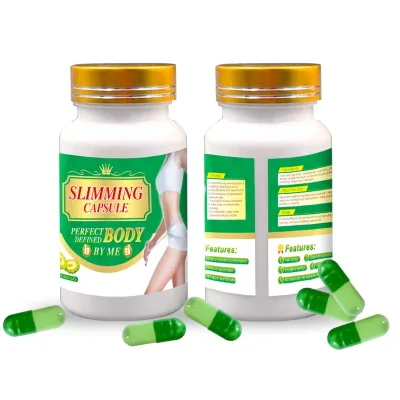


Comprehensive Sourcing Guide
Strategic Sourcing Guide for Sugar-Free Green Tea Capsules
Understanding Product Specifications and Formulation Variability
When sourcing sugar-free green tea capsules, buyers must first navigate a complex landscape of product specifications that vary significantly across different manufacturing batches and supplier capabilities. The core product category often encompasses herbal supplements designed for weight management and general health support. Based on available market data, these capsules are frequently marketed with claims of being "100% Natural" and "Slimming," though the specific formulation of green tea extract can differ. The physical form is consistently identified as a capsule, though some suppliers also offer tablet applications. The dosage form is critical for oral administration, with a typical recommendation of one capsule once a day, though this must be verified against the specific product label.
The physical specifications of the capsules themselves show considerable diversity. Some listings indicate a standard particle size that accepts customization, allowing buyers to tailor the product to specific extraction requirements. The dosage strength is another variable; observed specifications include 500mg and 800mg variants, suggesting that potency is not uniform across the market. The raw material state is often described as powder before encapsulation, which implies that the final product is a solid dosage form derived from a processed extract. Color options are available in multiple shades, and the appearance can be customized, which is a significant factor for brands seeking unique market positioning. The packaging formats range from bulk shipments to blister packs containing 10 pills per unit, or custom cartons. Buyers must recognize that "sugar-free" is a specific attribute that requires explicit verification, as not all green tea capsules in the market are formulated without added sugars, even if the primary ingredient is natural.
Compliance Framework and Certification Verification
Navigating the regulatory and certification landscape is paramount when importing health supplements. The market data indicates a wide array of certifications held by various suppliers, ranging from Good Manufacturing Practices (GMP) to international standards like ISO, HACCP, and QS. Some suppliers list additional certifications such as FDA, BRC, and RoHS, while others focus on regional standards like GMP and HACCP. It is crucial for buyers to understand that the presence of a certification on a product listing does not guarantee that every batch of the specific product being purchased is covered under that certification.
The certification status must be verified for the specific facility and product line. For instance, while one supplier may hold FDA and BRC certifications, another might only list GMP and ISO. The "Food Grade" and "Pharmaceutical Grade" distinctions are also present in the material specifications, indicating that the raw materials used can vary in purity and intended application. Buyers should demand current, valid certificates of analysis (COA) and certificates of compliance that explicitly name the manufacturing site and the specific product model. The standard for the product itself often references "10 Pills/Blister" or "1 capsule/blister" as a packaging standard, but the underlying quality standard for the capsule content must be confirmed.
| Certification Type | Typical Application | Verification Requirement |
|---|---|---|
| GMP (Good Manufacturing Practice) | Manufacturing process quality | Verify current facility audit report |
| ISO (International Organization for Standardization) | Management systems | Check specific ISO standard number (e.g., 9001) |
| HACCP (Hazard Analysis Critical Control Point) | Food safety management | Confirm scope includes dietary supplements |
| FDA (Food and Drug Administration) | US market compliance | Verify registration number and facility listing |
| QS (Quality Safety) | Regional quality standards | Check validity period and issuing authority |
| BRC (British Retail Consortium) | Retailer safety standards | Confirm scope covers private label production |
Cost Drivers and Pricing Structure Analysis
The pricing structure for sugar-free green tea capsules is highly variable, influenced by a multitude of factors including customization, volume, and certification levels. The observed price range in the market spans from as low as $0.01 to as high as $6,500, a discrepancy that reflects the difference between unit pricing for bulk raw materials and the cost of fully packaged, branded, or custom-formulated products. This wide range underscores the importance of defining the exact scope of the procurement before requesting quotes.
Several key drivers influence the final cost. First, the level of customization is a primary cost factor. Products offering "100% Natural" claims with specific "Slimming" effects often command higher prices due to the complexity of the formulation and the sourcing of high-grade green tea extract. Second, the packaging method significantly impacts cost. Options such as "10 Pills/Blister" with "Outside Carton Packaging" or custom "Box" designs with logo printing incur additional tooling and labor costs compared to bulk packaging. Third, the MOQ (Minimum Order Quantity) varies drastically, ranging from 1 unit to 1,000,000 units. High-volume orders typically reduce the unit cost, but the initial investment is higher. Buyers must also consider the cost of samples, which are often available for free, but the logistics of obtaining them should be factored into the timeline. Finally, the origin of the product, whether from China or Thailand, can affect shipping costs and tariff implications, which are often hidden in the final landed cost.
Typical Applications and Target Market Segmentation
Sugar-free green tea capsules are primarily targeted at the health and wellness sector, with a specific focus on weight management and metabolic support. The product is categorized as a "Food" or "Health Care Product" and is intended for "Oral Administration." The target demographic is predominantly adults, with specific listings noting suitability for males, though the general application is for the adult population. The "Slimming" and "Weight Loss" attributes are the most common use cases, positioning these capsules as dietary aids for individuals seeking to manage their weight through natural supplements.
The application extends beyond simple consumption; these products are often used in OEM (Original Equipment Manufacturer) and ODM (Original Design Manufacturer) contexts. Suppliers offer services for private labeling, allowing brands to create their own identity on the product. This makes the capsules suitable for a wide range of business models, from established supplement brands launching new lines to startups entering the market with private label products. The "Fast slimming" and "Green Tea" descriptors suggest a marketing angle focused on rapid results and natural ingredients, which appeals to consumers looking for quick, effective solutions. The versatility of the product allows it to be applied in various retail channels, including e-commerce, health food stores, and pharmacy chains, provided the regulatory requirements of the destination market are met.
Supplier Evaluation and Service Capabilities
Evaluating potential suppliers requires a deep dive into their service capabilities and operational flexibility. The market data highlights that suppliers offer a range of services including OEM, ODM, and private labeling, often accompanied by custom box packaging. This flexibility is essential for buyers who wish to differentiate their products in a crowded market. The ability to customize the logo, packaging, and even the capsule appearance is a significant advantage. However, buyers must verify that these services are available for the specific product model they intend to source.
Logistics and storage are also critical evaluation criteria. The recommended storage method for these capsules is to keep them sealed in a cool and dry environment, with a specific note to ensure moisture proofing. The shelf life is typically 36 months, which is a standard duration for high-quality herbal supplements. Buyers should assess the supplier's ability to maintain these conditions during transit and storage. Additionally, the availability of free samples is a positive indicator of supplier confidence, allowing buyers to physically inspect the product before committing to a large order. The origin of the product, whether from Hebei, China, or Thailand, should be considered in the context of the buyer's supply chain strategy, including lead times and import regulations.
Quality Control and Testing Protocols
Ensuring the quality of sugar-free green tea capsules involves rigorous testing and adherence to specific analytical methods. The market data indicates that suppliers utilize various assay methods, including UV (Ultraviolet), HPLC (High-Performance Liquid Chromatography), GPC (Gel Permeation Chromatography), and HPLC-MS (Mass Spectrometry). These methods are essential for verifying the potency and purity of the green tea extract, ensuring that the product meets the stated specifications. The "Test Method" often includes Tlv (Threshold Limit Value) and UV analysis, which are critical for safety and efficacy.
Buyers should insist on a comprehensive Quality Control (QC) plan that includes raw material testing, in-process testing, and final product testing. The "Assay Method" should be clearly defined in the product specifications to ensure consistency. Furthermore, the "Certificate" provided by the supplier should be backed by laboratory test results that confirm the absence of contaminants and the presence of active ingredients. The "Grade" of the material, whether Food or Pharmaceutical, dictates the level of purity required. Buyers must verify that the testing protocols align with the regulatory requirements of their target market. The "Standard" for the product, such as "10 Pills/Blister," should be consistent with the testing results to ensure that the final packaged product meets all quality benchmarks.
Long-Term Procurement and Supply Chain Resilience
For long-term success, buyers must consider the sustainability and resilience of their supply chain. The 36-month shelf life of the capsules offers a significant advantage in inventory management, allowing for strategic stockpiling without immediate risk of spoilage. However, the "Storage Method" requirements must be strictly adhered to throughout the supply chain to maintain product integrity. The "Moisture Proof" requirement is particularly critical, as humidity can degrade the quality of herbal supplements.
Scalability is another key consideration. With MOQs ranging from 1 to 1,000,000 units, suppliers can accommodate both small startups and large enterprises. Buyers should evaluate the supplier's capacity to scale production in response to market demand fluctuations. The availability of customization services, such as logo printing and packaging design, allows for brand evolution over time. Additionally, the "Sample" availability facilitates continuous product improvement and quality assurance. By maintaining a strong relationship with a supplier who offers comprehensive services and adheres to high standards, buyers can ensure a steady supply of high-quality sugar-free green tea capsules that meet their evolving business needs.
FAQs
What certifications do these capsules have?
The capsules hold GMP, HACCP, QS, and ISO certifications. Some listings also include FDA, BRC, and RoHS standards, but buyers must verify the specific facility certificate for the ordered batch to ensure compliance.
Can I get a free sample before ordering?
Yes, free samples are available for customers to evaluate the product. Buyers should contact the supplier directly to arrange the sample request, noting that shipping costs may apply depending on the destination.
What is the shelf life of the product?
The shelf period is 36 months when stored correctly. Products must be kept sealed in a cool, dry, and moisture-proof environment to maintain quality and potency throughout the entire duration.
Which packaging options are available for bulk orders?
Packaging options include 10 pills per blister with outside carton, bulk shipments, bottles, or custom boxes. Buyers can request specific packaging formats such as private label boxes or standard blister packs.
How is the dosage recommended for adults?
The recommended dose is one capsule once a day for oral administration. This dosage applies to the adult age group and should be followed strictly as per the product label instructions.
What customization services are offered by suppliers?
Suppliers offer OEM, ODM, private labeling, and custom box services. Buyers can request logo printing, specific capsule colors, and customized particle sizes to meet unique brand requirements.
Where are these capsules manufactured?
Products originate from China, specifically Hebei, and Thailand. The location affects shipping logistics and potential tariffs, so buyers should confirm the specific factory origin before placing large orders.