Find Textile Conveyor Belt Options for Mining, Cement, and Agriculture
Browse 30 Textile Conveyor Belt listings from suppliers in Hebei, Shandong, and other regions of China. Compare EP and NN series models, DIN and ISO standards, widths from 300 to 1600 mm, wear and heat resistance, and packing options before requesting quotes from manufacturers.
Updated
Key considerations
Products List


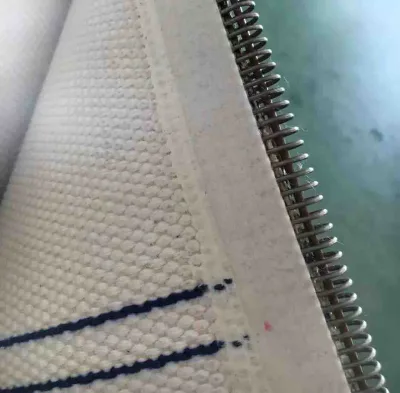
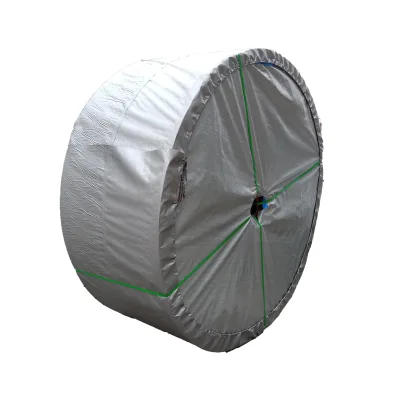
Cotton Conveyor Belt, Sidewall Rock Conveyor Belt, Cotton Sidewall Belt
$10.00 - $15.00
MOQ: 100 Meters


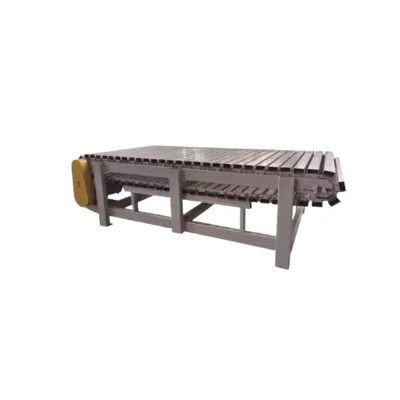




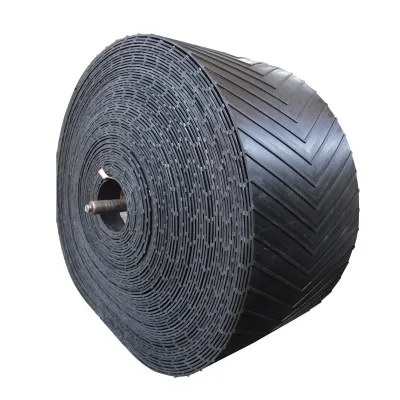
Airport Luggage Conveyor Belt Truck Load Belt Conveyor Wire Mesh Conveyor Belt
$4.7573 - $5.1702
MOQ: 50 meters
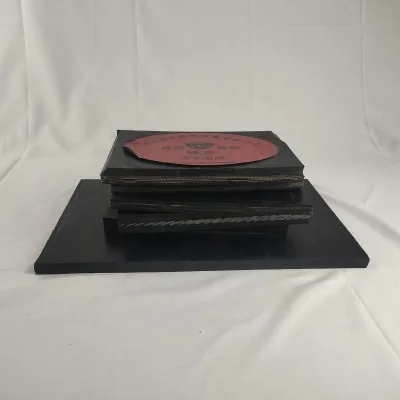
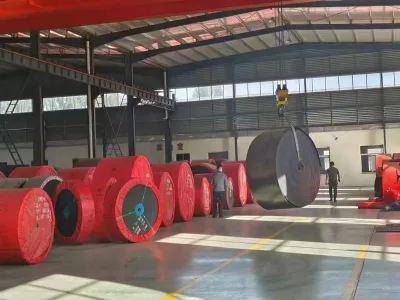
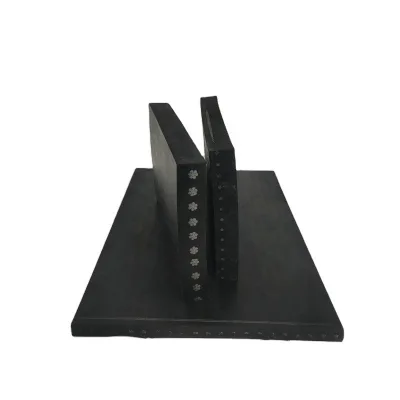
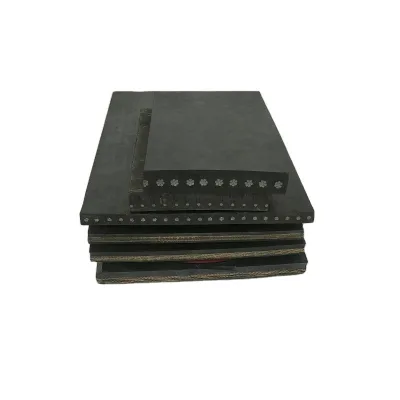
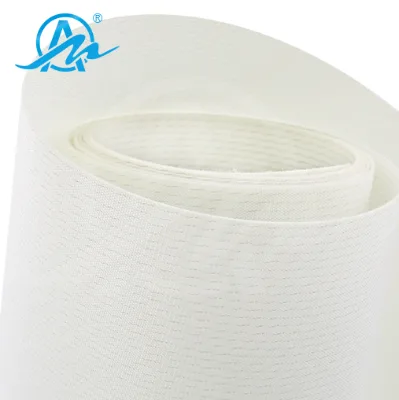
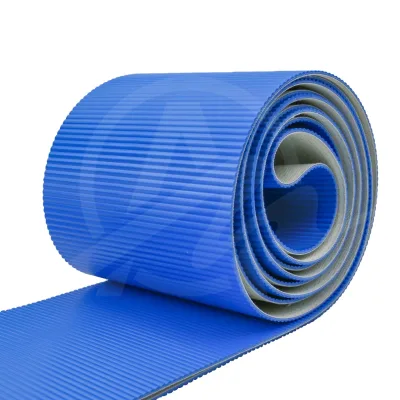
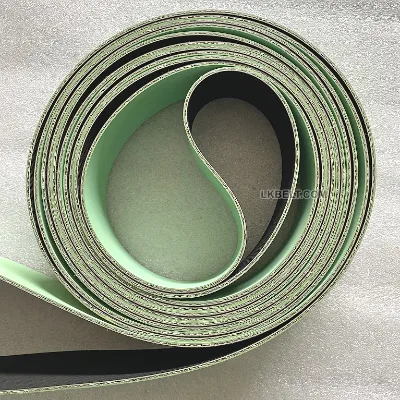
Comprehensive Sourcing Guide
Textile Conveyor Belt Sourcing Guide
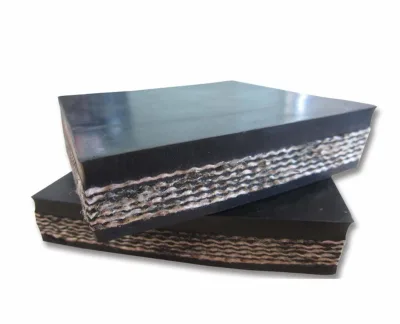
Textile conveyor belts remain the workhorse of bulk and unit material handling, combining a fabric carcass with rubber covers to deliver strong tensile performance at a manageable weight. For procurement teams, the category offers clear advantages: multi-ply EP, NN, and CC constructions allow engineers to match belt strength to conveyor geometry and load, while rubber compounds can be formulated for wear, heat, cold, tear, oil, and acid-alkali resistance. The listings observed in this category confirm that customization is widely available, from width and thickness through ply rating, which means buyers should treat specification discipline—not product discovery—as the central sourcing challenge.
This guide is written for buyers preparing a first purchase or auditing an existing supply arrangement. It walks through the signals visible on product pages, the technical details to confirm before ordering, the documentation that should accompany any serious quotation, and the commercial and quality-control practices that protect a multi-year belt supply program. Throughout, only attributes actually observed in current listings are treated as evidence; anything else is framed as a question to put to prospective suppliers.
Product Scope and Observed Listing Signals
Current listings cluster around fabric-carcass rubber belts. Model families span EP100 through EP400 and NN100 through NN400, alongside CC series constructions, confirming that polyester-carcass EP belts, nylon NN belts, and cotton CC belts are all actively quoted. Observed attributes include rubber as the primary material with polyester or fabric inside material, black as the dominant color, and wear-resistant, heat-resistant, cold-resistant, tear-resistant, oil-resistant, and acid-alkali-resistant variants. Flame-resistant conveyor belts appear as a named product, and some listings specify widths of 300–1600 mm with thicknesses of 6–20 mm.
Origin signals are consistent: Hebei (including Baoding City) and Shandong are the most common production locations, with some listings from Henan and elsewhere in China. Observed standards references include GB, DIN, RMA, ISO, AS, SABS, and BS, though individual listings vary—some cite only DIN, others ISO or CE or OEM. Packing is typically rolls covered by plastics and tied, or standard/international packing. One observed supplier states a supply ability of 10,000 meters per month. Buyers should treat these as listing-level observations and confirm which apply to the specific product quoted.
Technical Specifications to Verify
Start with the carcass. Confirm the exact series and strength rating—EP, NN, or CC with the appropriate number designation—and the number of plies, since the model alone does not tell you the full belt construction. Ask for the inside material in writing (polyester versus other fabric options changes elongation and tracking behavior). Then verify dimensions against your conveyor: observed listings show widths from 300 mm to 1600 mm and thicknesses from 6 mm to 20 mm, but you should confirm that your required combination of width, top-cover thickness, and bottom-cover thickness is actually producible rather than assumed from a range.
Next, pin down the rubber cover properties relevant to your duty. Listings advertise wear, heat, cold, tear, oil, acid-alkali, and flame resistance as options; require the supplier to state which resistances apply to your specific compound and to define the test method behind each claim. Confirm tensile strength figures rather than accepting a generic "strong" description. If your application involves coating with adhesive tape, metallurgy, chemicals, or agricultural handling—applications named in observed listings—state this explicitly so the supplier can match the compound. Finally, confirm whether OEM model designations or standard EP-series numbering will appear on the delivered belt.
Compliance and Safety Documentation
Standards claims on listings are inconsistent, so documentation review is essential. Observed references range from single standards (DIN only) to broad lists (GB, DIN, RMA, ISO, AS, SABS, BS), and one listing cites ISO 9001:2000 certification. Ask each shortlisted supplier to specify which standard their quoted belt is actually manufactured and tested against, and to provide the test reports that substantiate it. A belt quoted against DIN should arrive with DIN-referenced data; a belt merely "familiar with" multiple standards should be treated as unverified until documentation is produced.
For flame-resistant belts specifically, require written confirmation of the flame-resistance standard applied and the corresponding test results, since this attribute carries direct safety consequences in enclosed or combustible environments. Verify that the certification cited in the listing belongs to the manufacturing entity and covers the product family you are buying, not a related business. Request certificates in English or a language your compliance team can audit, and check certificate validity dates. Finally, confirm marking requirements: belt identification stamped on the belt edge or surface should match the specification, standard, and manufacturer details agreed in the contract.
Cost Drivers and Commercial Terms
Observed listing prices in this category span from single figures to over two thousand US dollars, with MOQs from 1 to 100—evidence that pricing depends heavily on specification rather than a category-wide rate. The main cost drivers you control are belt strength rating, ply count, width, thickness, cover compound (flame-resistant and specialty compounds typically price above general-purpose rubber), and order length. Customization adds cost and lead time, so decide early which parameters are genuine requirements and which can align with a supplier's standard production range to improve pricing.
On commercial terms, convert listed supply capability—such as the observed 10,000 meters per month—into a written commitment for your order volumes. Confirm packing in detail: rolls covered by plastics and tied is the observed norm, but long or wide belts may need additional protection for sea freight. Agree on Incoterms, payment structure, and warranty provisions in writing; one observed listing offers a 1-year warranty, but warranty scope must be defined for your conditions. For repeat purchasing, negotiate price validity periods tied to rubber raw-material movements rather than accepting open-ended quotations.
Supplier Qualification and Quality Control
Qualify suppliers on manufacturing capability, not listing polish. Prioritize factories over trading companies when possible—origin listings clustering in Hebei and Shandong suggest genuine production clusters—by asking for factory address, production equipment, and in-house testing capability. Verify the supply ability claim (10,000 meters per month in at least one observed listing) against your projected volumes, including seasonal peaks. Ask how customization requests are engineered: a capable manufacturer can explain how your duty conditions translate into ply count and cover compound choices, while an intermediary will simply forward requirements.
For quality control, define an inspection regime before the first order. Require pre-shipment inspection covering dimensions (width, thickness, length), carcass construction, cover hardness and tensile properties against the agreed standard, and appearance defects. For initial orders, consider third-party inspection at the factory before loading. Request retained samples or test coupons from the production batch so any field failure can be compared against as-delivered material. Agree in advance on the corrective process for nonconforming rolls, including replacement, rework, or credit terms, and record everything in the purchase contract rather than relying on correspondence.
Long-Term Procurement Checks
Long-term belt supply succeeds when spares and consistency are engineered in. Because belts are customized to width, ply, and compound, maintain a documented master specification for each conveyor in your fleet, including the exact model designation, dimensions, cover properties, and standard referenced. This prevents drift when suppliers change or when a replacement order is placed months later under a different contact. Confirm that your supplier can reproduce the identical construction on reorder, and ask about minimum reorder quantities for repeat belts.
Finally, monitor supplier performance with the same discipline used for the initial qualification. Track delivered conformity—dimensional accuracy, documentation completeness, on-time shipment—and review annually. Re-verify certificates and standards alignment periodically, since observed listing references vary widely across the market and supplier practices change. For critical conveyors in metallurgy, chemical, or agricultural duty, qualify a second source against the same master specification, even if the primary supplier performs well. Keep packing and handling requirements—rolls covered by plastics and tied, protected in transit—in the standing contract so replenishment orders require no renegotiation.
FAQs
What models of Textile Conveyor Belt are available for order?
Listed models include EP100 to EP400, EP150, EP200, EP300, and NN100 to NN400 series, with EP Series, NN Series, and CC Series also offered. Some listings use OEM model numbers, and specification details vary by product. Buyers should confirm the exact model, tensile rating, and width before requesting quotations, since multiple sizes and constructions are available from different listings.
Can textile conveyor belts be customized to specific requirements?
Yes, customization is listed as available for these conveyor belt products. Buyers can typically specify model type, size, and construction details such as rubber and fabric composition, and some listings note EP100-300 with width 300-1600mm and thickness 6-20mm. Because specifications differ across listings, request written confirmation of dimensions, materials, and packing before placing a purchase order.
What performance features do these rubber textile conveyor belts offer?
Listed product attributes include wear resistance, cold resistance, heat resistance, tear resistance, acid and alkali resistance, and oil resistance, with strong tensile strength noted. Some listings emphasize flame-resistant and heat-resistant grades for demanding applications. Performance descriptions come from individual product pages, so buyers should verify which features apply to the specific belt model being sourced.
Which production standards do listed textile conveyor belts follow?
Listings reference standards including DIN, GB, RMA, ISO, AS, SABS, and BS, and one listing cites ISO 9001:2000 certification. Standards vary by product and supplier, so the applicable standard should be confirmed for each order. When requesting quotes, specify the certification or standard your application requires so suppliers can match suitable belt models and documentation.
How are textile conveyor belts packed for shipment?
Packing descriptions vary by listing. Common formats include rolls covered by plastics and tied, standard packing, international packing, and general packing. Rolls are the typical delivery form for conveyor belts. Confirm the packing method, roll length, and any export crating requirements with the supplier before ordering, especially for sea freight where moisture protection matters.
Where are these textile conveyor belts produced and what capacity applies?
Listed origins include Hebei, Baoding City in Hebei, Shandong, Henan, and other locations in China. One listing states a supply ability of 10,000 meters per month, and another mentions a one-year warranty. Origin and capacity differ across listings, so buyers should confirm production location, monthly capacity, and warranty terms directly with the specific supplier.
What applications suit these fabric-reinforced conveyor belts?
Listed applications include metallurgy, chemicals, and agriculture, with usage noted for coating with adhesive tape in one case. The belts combine rubber with fabric, and some listings cite polyester inside material. Because construction and features vary by model, match the belt grade to your conveying conditions, such as temperature, load, and material type, before finalizing the purchase.
How do I choose the right EP or NN Textile Conveyor Belt?
EP series belts use polyester as the inside material, while NN and CC series use other fabric constructions, so start with your load and tensile requirements. Listed models run EP100 to EP400 and NN100 to NN400, with multiple sizes available. Confirm width, thickness, ply count, and cover grade with the supplier, and request the applicable standard such as DIN or ISO.