Source Toilet Units for Construction Sites, Parks, and Events
Compare 30 portable Toilet options including trailer and container styles. Review specifications for materials, dimensions, and sewage treatment methods to find the right fit for your project needs. Evaluate customization, certifications, and warranty terms to ensure quality and durability for outdoor or temporary installations.
Key considerations
Products List
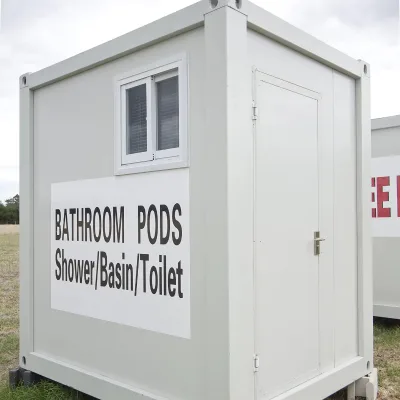

Container Toilet/Portable Toilet/Mobile Toilet
$250.00 - $300.00
MOQ: 20 Sets
Guangdong Wellcamp Steel Structure & Modular Housing Co., Ltd.

Economic Site Toilets Portable Toilet Movable Toilet
$250.00 - $300.00
MOQ: 20 Sets
Guangdong Wellcamp Steel Structure & Modular Housing Co., Ltd.

Portable Movable Toilet with Sanitary Container Toilet
$250.00 - $300.00
MOQ: 20 Sets
Guangdong Wellcamp Steel Structure & Modular Housing Co., Ltd.


Mobile Toilet Wholesale Portable Toilet Price Used Portable Indoor Toilet
$3000.00 - $3500.00
MOQ: 1 Pieces


Comprehensive Sourcing Guide
Toilet Sourcing Guide
Procurement professionals must first distinguish between fixed sanitation units and mobile solutions when sourcing toilets, as the supply chain dynamics differ significantly. The available market data indicates a strong presence of sandwich panel structures and HDPE portable units, which serve distinct operational needs from construction sites to temporary event venues. Buyers should prioritize understanding whether the requirement is for a permanent installation or a trailer-mounted unit, as this decision dictates the necessary logistics and foundation requirements.
The observed product range spans from compact squatting toilets to larger container-style accommodation units, each with unique customization potentials. While some listings highlight specific dimensions like 1100x1100x2300mm, others offer flexible assembly options that allow for on-site adaptation. Sourcing strategies must account for these variations in size and structural style, ensuring that the selected unit aligns with the intended application field, whether it be a park, a construction site, or a temporary office complex.
Product Scope and Observed Listing Signals
Buyers should carefully evaluate the material composition and structural integrity of the units, as the data confirms the prevalence of sandwich panels and painted steel structures. These materials are selected for their durability and ability to withstand varying environmental conditions, making them suitable for outdoor applications such as wedding venues or public parks. The presence of specific color options like chrome, frosted, and dark grey allows for aesthetic customization, which is critical for projects where visual integration with the surrounding environment is a priority.
The functional scope of these products extends beyond basic sanitation to include versatile uses in carports, kiosks, and dormitories. Listings indicate that units can be configured as composite units or trailer toilets, offering flexibility for mobile deployment. Procurement teams must verify the specific inner dimensions, such as the 1120x1120x1920 mm configuration, to ensure the unit meets the spatial requirements of the end-users while maintaining the advertised load capacity for both the roof and floor.
Technical Specifications to Verify
Technical due diligence requires a rigorous check of dimensional accuracy and load-bearing capabilities to prevent structural failures in the field. Buyers must confirm that the roof thickness and load capacity, often cited as 50-70kg per square meter, align with local weather conditions and safety codes. The floor load capacity, which can range from 100 to 300kg per square meter, is another critical metric that must be validated against the expected usage intensity, particularly in high-traffic areas like construction sites or public parks.
Verification of the sewage treatment method is equally essential, as the data points to ordinary water flush types being the standard for many units. Procurement teams should ensure that the selected model supports the necessary plumbing infrastructure or off-grid requirements, depending on the installation site. Additionally, the assembly process, described as flexible, should be reviewed to confirm that the unit can be installed efficiently without requiring specialized heavy machinery, thereby reducing overall deployment costs and time.
Compliance and Safety Documentation
Compliance verification is a non-negotiable step in the procurement process, with ISO and CE certifications appearing frequently in the product listings. Buyers must request valid certificates to confirm that the manufacturing processes and final products meet international safety and quality standards. The presence of SGS certification further reinforces the reliability of the product, but it is imperative to validate the specific scope of these certifications to ensure they cover the exact model and configuration being purchased.
Safety documentation should also include detailed information on the structural stability and fire resistance of the sandwich panels used in construction. Since these units are often deployed in temporary or semi-permanent settings, understanding the fire rating and material safety data sheets is crucial for risk management. Procurement teams should ensure that the supplier provides comprehensive safety manuals that outline proper installation procedures and maintenance schedules to maintain compliance throughout the product's lifecycle.
Cost Drivers and Commercial Terms
Cost analysis must account for the wide range of observed prices, which span from approximately 28 to 16,000 USD, reflecting differences in size, material quality, and customization levels. Buyers should scrutinize the unit price against the specific features required, such as the inclusion of a trailer or advanced sewage treatment systems, to avoid overpaying for unnecessary specifications. The minimum order quantity, ranging from 1 to 200 units, also plays a significant role in the total cost of ownership, influencing the unit price through economies of scale.
Commercial terms regarding packaging and shipping are critical factors that can impact the final landed cost. The data indicates that units are often packed in parts or sets, with some configurations designed specifically for container shipping in 20ft or 40ft containers. Procurement teams must clarify whether the quoted price includes freight, insurance, and customs duties, as these variables can significantly alter the budget. Additionally, understanding the lead time and production capacity is essential for aligning the delivery schedule with project timelines.
Supplier Qualification and Quality Control
Supplier qualification should focus on verifying the origin and manufacturing capabilities, with Foshan, Guangdong, and Shanghai emerging as key production hubs in the data. Buyers must assess the supplier's ability to deliver consistent quality across large orders, given the observed minimum order quantities and the potential for customization. The presence of online technical support and onsite installation services suggests that the supplier offers post-sales assistance, which is vital for resolving any issues that may arise during or after installation.
Quality control measures should be explicitly defined in the contract, including inspection protocols for materials like sandwich panels and steel structures. The warranty period, typically listed as one year, provides a baseline for accountability, but buyers should negotiate extended coverage for critical components if the project demands higher reliability. Regular quality audits and third-party inspections can help ensure that the delivered units meet the specified standards and performance expectations, minimizing the risk of defects and operational downtime.
Long-Term Procurement Checks
Long-term procurement success depends on establishing a robust after-sales support framework that includes ongoing technical assistance and maintenance guidance. The availability of onsite installation and online technical support indicates a commitment to customer satisfaction, but buyers must ensure these services are clearly defined in the service level agreement. Regular reviews of the supplier's performance and the product's condition in the field will help identify any recurring issues that require immediate attention or design improvements.
Sustainability and lifecycle management are also critical considerations for long-term procurement strategies. Buyers should evaluate the durability and service life of the units, as the data highlights a focus on long service life and strong, durable characteristics. Planning for end-of-life disposal or recycling of materials like HDPE and sandwich panels can help minimize environmental impact and ensure compliance with local regulations. Establishing a clear maintenance schedule and spare parts availability plan will further extend the useful life of the procurement investment.
FAQs
What materials are used in these portable Toilet structures?
These portable Toilet structures primarily use sandwich panels for the walls and roof. The structural framework is typically made of painted steel to ensure durability. This combination provides a strong and durable unit suitable for various outdoor applications, including construction sites and temporary offices.
What are the standard dimensions for these portable Toilet units?
Common dimensions include an outer size of 1150 by 1150 by 2300 mm and an inner size of 1120 by 1120 by 1920 mm. Some models may vary slightly, such as 1100 by 1100 by 2300 mm. These sizes are designed to fit standard container shipping requirements while providing adequate internal space for user comfort.
Can these portable toilets be customized for specific project needs?
Yes, customization is available for these portable Toilet units. Buyers can request specific colors, sizes, or configurations to match their project requirements. The manufacturer supports flexible assembly and can adjust the design to fit different usage scenarios, such as weddings, parks, or industrial sites.
What certifications do these portable Toilet products hold?
These portable Toilet products typically hold ISO and CE certifications. Some models may also have SGS certification. These standards ensure that the products meet international quality and safety requirements, providing buyers with confidence in the reliability and compliance of the units for global distribution.
How is the sewage treatment handled in these portable toilets?
The sewage treatment method for these units is generally an ordinary water flush type. This system allows for efficient waste management without requiring complex plumbing infrastructure. It is suitable for temporary installations where traditional sewer connections are not available, ensuring hygiene and ease of maintenance.
What is the warranty period for these portable Toilet units?
The standard warranty period for these portable Toilet units is one year. This coverage typically includes defects in materials and workmanship. Buyers can also access online technical support and onsite installation services to ensure proper setup and long-term functionality of the units.
What are the load capacities for the roof and floor?
The roof can support live and dead loads of 50 to 70 kg per square meter. The floor is designed to handle loads of 100 to 300 kg per square meter. These capacities ensure the structural integrity of the unit under normal usage conditions, supporting both the weight of users and any additional equipment.