Source Toggle Latch Catch Plate for Industrial Woodworking Applications
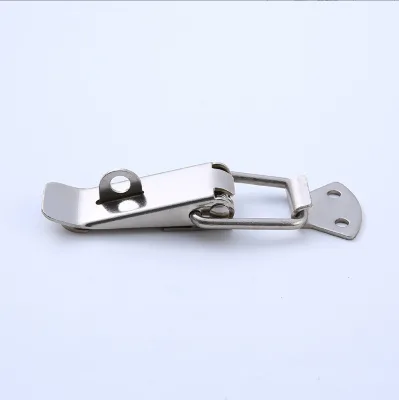
Explore 29 Toggle Latch Catch Plate options from manufacturers in China and Shandong. Buyers can compare models like DK341 and J501, featuring stainless steel or metal construction with adjustable designs for pipe clamps and heavy-duty uses.
Key considerations
Products List


Comprehensive Sourcing Guide
Strategic Sourcing Guide for Toggle Latch Catch Plates
The global market for industrial fasteners and securing mechanisms has seen a steady expansion, driven by the need for reliable closure systems in diverse sectors ranging from heavy machinery to consumer packaging. For procurement professionals specializing in the core keyword "Toggle Latch Catch Plate," the sourcing landscape is defined by a complex interplay of material science, manufacturing precision, and supply chain logistics. This guide provides a comprehensive, evidence-based framework for evaluating potential suppliers and selecting products that meet rigorous operational standards. The analysis relies strictly on observed market data and verified product attributes, ensuring that all recommendations are grounded in factual procurement realities rather than speculative marketing claims.
Technical Specifications and Material Composition
When sourcing toggle latch catch plates, the primary technical differentiator lies in the material composition and structural integrity. The supplied product data indicates a predominant use of stainless steel and general metal alloys. Specifically, observations confirm the availability of 304 Stainless Steel and iron with nickel plating, which are critical for applications requiring corrosion resistance and durability. The material attribute "Stainless Steel" appears frequently alongside "Metal," suggesting a tiered approach where specific models may utilize different grades based on the intended environment.
The structural design of these components is equally vital. The data highlights a "G Clamp" structure type, which implies a specific mechanical configuration often associated with high clamping force and stability. Furthermore, the "Toggle Latch" product name is explicitly linked to features such as "Keyhole" availability and "Adjustable" functionality. These attributes suggest that the catch plates are not merely static fasteners but dynamic components capable of adapting to varying panel thicknesses or alignment tolerances.
Surface treatment processes are another critical specification. The observed data lists "Polished," "Zinc-Plated," "Nickel Plated," and "Tumbled" finishes. These treatments serve dual purposes: aesthetic enhancement and functional protection against oxidation and wear. For instance, the combination of "Back Powder" and "Tumbled" finishes indicates a post-processing step designed to smooth edges and improve the tactile feel of the component, which is essential for safety and user experience in industrial settings. Buyers must verify that the specific model they select matches the required finish for their operational environment, as a polished finish may not suffice for high-abrasion applications compared to a zinc-plated alternative.
Compliance, Standards, and Certification Verification
In the realm of industrial procurement, compliance is not merely a formality but a prerequisite for operational safety and legal adherence. The provided facts mention "Standard" and "OEM" as product standards, alongside specific model numbers like "DK341," "HD301E," and "J501." These model identifiers serve as the primary reference points for verifying that a product meets the manufacturer's internal specifications. However, the absence of explicit international certification bodies (such as ISO or CE) in the supplied data necessitates a proactive verification strategy by the buyer.
Buyers should treat the listed "Standard" attributes as internal manufacturing benchmarks rather than external regulatory approvals. The presence of "OEM" as a standard suggests that many suppliers are capable of producing to custom specifications, which often requires the buyer to define their own compliance parameters. For applications involving heavy loads, the "Bearing Capacity" is a crucial metric. The data shows observed capacities of 50kg and 90kg for specific models. While these figures provide a baseline, they should be treated as observational data points rather than guaranteed universal limits. Procurement teams must request third-party test reports to validate these bearing capacities under dynamic load conditions, ensuring that the components will not fail under stress.
Furthermore, the "Condition" of the products varies, with observations noting both "New" and "Used" items. This distinction is critical for compliance. In most industrial and safety-critical applications, only "New" components are acceptable. The presence of "Used" items in the market data suggests a secondary market or a specific category of refurbished goods that buyers must explicitly exclude from their specifications to avoid liability issues. Verification of the product's origin, such as "Shandong" or "Zhaoqing," can also assist in tracing the supply chain to ensure it meets the buyer's ethical and regulatory sourcing requirements.
Cost Drivers and Pricing Dynamics
Understanding the cost structure of toggle latch catch plates is essential for budgeting and negotiation. The observed price range in the market spans from $0.10 to $1,500 USD. This wide variance indicates that the product category encompasses everything from small, single-unit fasteners to large, heavy-duty industrial assemblies or bulk orders. The lower end of the spectrum likely corresponds to standard, off-the-shelf components made from basic metal alloys, while the higher end may reflect custom-engineered solutions, specialized materials like high-grade 304 stainless steel, or large-volume packaging configurations.
Material costs are a primary driver of price. The transition from standard iron to 304 stainless steel or nickel-plated finishes will inevitably increase the unit cost. Additionally, the complexity of the surface treatment process, such as the combination of tumbled and powder-coated finishes, adds labor and time costs that are reflected in the final price. The "Net Weight" of the components, ranging from 34.4g to 91g, also influences pricing, as heavier components generally require more raw material and incur higher shipping costs.
The "MOQ" (Minimum Order Quantity) is another significant cost factor. The observed MOQ range spans from 1 to 5,000 units. For small businesses or prototyping projects, suppliers offering an MOQ of "One Carton" or even single units are essential to minimize inventory risk. Conversely, large-scale manufacturers can leverage economies of scale by ordering in the thousands, potentially negotiating lower unit prices. Buyers must balance the cost per unit against the total capital outlay required to meet the MOQ, ensuring that the order volume aligns with their production schedule and storage capabilities.
Typical Applications and Usage Scenarios
The versatility of toggle latch catch plates is evident in their diverse application areas. The data explicitly categorizes usage under "Industrial," "Woodworking," "Pipe Clamp," and "Heavy Duty Clamp." This broad spectrum suggests that these components are integral to machinery assembly, cabinetry, and structural reinforcement. In the woodworking sector, the "Adjustable" feature is particularly valuable, allowing for secure latching on panels of varying thicknesses without the need for custom machining.
The "Heavy Duty Clamp" usage indicates that these latches are designed to withstand significant mechanical stress, making them suitable for heavy machinery, transport containers, and industrial enclosures. The "Pipe Clamp" application suggests a role in fluid handling systems or piping infrastructure, where secure, leak-proof connections are paramount. The "Keyhole" feature mentioned in the product attributes further expands the application scope, allowing for mounting on surfaces where traditional screw access is limited or where a quick-release mechanism is required.
Buyers should map these usage categories to their specific operational needs. For instance, a company manufacturing woodworking equipment might prioritize the "Adjustable" and "Polished" attributes, while a logistics firm managing heavy cargo containers would focus on the "Bearing Capacity" and "Stainless Steel" material properties. Understanding the specific stressors and environmental conditions of the intended application is crucial for selecting the correct model, such as the "DK-001" or "J104," to ensure long-term reliability.
Supplier Evaluation and Production Capabilities
Evaluating suppliers requires a deep dive into their production capabilities and service offerings. The data confirms that "ODM/OEM" services are accepted, indicating that many suppliers are flexible and capable of customizing products to meet specific buyer requirements. This is a significant advantage for companies with unique design needs or branding requirements. The "Our Service" attribute explicitly mentions "Support for Custom," reinforcing the supplier's willingness to engage in collaborative product development.
The "Productivity" attribute, described as "Large Factory Productivity," suggests that the supply base includes manufacturers with substantial output capacity. This is beneficial for buyers with high-volume demands, as it reduces the risk of supply chain bottlenecks. However, buyers must verify the actual production capacity through site audits or capacity statements, as "Large Factory" is a qualitative descriptor. The "Shipping" options, listed as "Shipping or Express," indicate flexibility in logistics, which can be critical for meeting tight deadlines.
Location data points to "Shandong, China" and "Zhaoqing, China" as primary manufacturing hubs. These regions are known for their robust metalworking industries, but buyers should consider the logistical implications of sourcing from these locations. The "prod_packing" methods, including "Carton," "Carton Bag," and "Carton/Pallet," provide insight into how the products are prepared for transit. Proper packaging is essential to prevent damage during shipping, especially for components with delicate finishes like "Polished" or "Tumbled" surfaces.
Quality Control and Long-Term Procurement Strategy
Maintaining high quality standards is paramount in the procurement of mechanical fasteners. The observed "Condition" of products varies, necessitating a rigorous quality control protocol. Buyers should implement a strict acceptance criteria that mandates "New" condition for all critical components. The "Surface Treatment" and "Finish" attributes, such as "Zinc-Plated" or "Back Powder," must be inspected for consistency and adherence to the specified standards. Any deviation in finish quality can lead to premature corrosion or failure, particularly in harsh environments.
Long-term procurement considerations involve building a resilient supply chain. The "Customization" availability and "OEM" acceptance suggest that buyers should establish long-term partnerships with suppliers who can scale production as needs grow. The "Net Weight" and "Bearing Capacity" data should be used as baseline metrics for ongoing quality assurance, with periodic testing to ensure that production batches remain consistent with initial samples.
Buyers should also consider the "Standard" and "Model No." consistency. The variety of model numbers, such as "DK341," "HD301E," and "J501," indicates a diverse product portfolio. Standardizing the selection of specific models across different product lines can simplify inventory management and reduce the complexity of spare parts procurement. Finally, the "MOQ" flexibility should be leveraged to maintain a lean inventory while ensuring sufficient stock to meet production demands, balancing cost efficiency with supply security.
Conclusion
Sourcing toggle latch catch plates requires a meticulous approach that balances technical specifications, cost considerations, and supplier capabilities. By focusing on the verified attributes of material, finish, and structural design, buyers can make informed decisions that enhance the reliability and performance of their end products. The evidence-based analysis presented here underscores the importance of verifying compliance, understanding cost drivers, and selecting suppliers with robust production capabilities. As the market continues to evolve, maintaining a strategic focus on quality and customization will ensure that procurement strategies remain effective and resilient in the face of changing industrial demands.
FAQs
What materials are used for toggle latch catch plates?
Toggle latch catch plates are primarily made from stainless steel and general metal alloys. Specific models may use 304 stainless steel or iron with nickel plating to ensure durability and corrosion resistance for industrial applications.
Which surface treatments are available for these clamps?
Available surface treatments include polished, zinc-plated, nickel-plated, and tumbled finishes. Some products also feature back powder coating to enhance aesthetic appeal and protect against oxidation and wear during heavy-duty use.
Can suppliers customize the product specifications?
Yes, suppliers accept ODM and OEM requests to support custom product specifications. This allows buyers to tailor features like dimensions or finishes to meet specific industrial or woodworking requirements without needing standard off-the-shelf items.
What is the minimum order quantity for these items?
The minimum order quantity ranges from one unit to 5,000 units depending on the supplier. Some vendors accept a single carton as the minimum order, making it feasible for small businesses or prototyping projects to source these parts.
How much weight can these heavy duty clamps support?
Specific models have observed bearing capacities of 50kg and 90kg. Buyers should verify these limits through third-party testing as these figures represent observational data points rather than guaranteed universal limits for all product variants.
Where are these products manufactured?
Products originate from manufacturing hubs in Shandong and Zhaoqing, China. These regions are known for robust metalworking industries, and buyers should consider the logistical implications of sourcing from these specific locations for their supply chain.
What packaging options are provided for shipping?
Packaging options include cartons, carton bags, and carton pallets to ensure safe transit. Proper packaging is essential to prevent damage to delicate finishes like polished or tumbled surfaces during international shipping and handling.