Source Tractor Driven Farm Straw Shredder for Feed, Baling, and Processing
Find and compare 30 Tractor Driven Farm Straw Shredder options for livestock feeding, baling preparation, and agricultural processing. Evaluate specifications like capacity, voltage, and automation to select the right grinding equipment for your breeding industry needs; compare the available evidence and request quotations based on your requirements.
Key considerations
Products List

Tractor Driven Straw Bale Shredder Hammer Grass Cutter Mill Crusher
$7100.00 - $23000.00
MOQ: 1 Pieces

Tractor Driven Straw Bale Shredder for Cattle's Feed Hammer Grass Cutter Crusher
$7100.00 - $23000.00
MOQ: 1 Pieces

Rotary Straw Bale Cutter Rotary Shredder Hay Grass Straw Bale Shredder
$7100.00 - $23000.00
MOQ: 1 Pieces

Big Capacity Straw Bale Shredder Machine Corn Straw Shredder Feed Crusher
$7100.00 - $23000.00
MOQ: 1 Pieces


Rotary Straw Bale Cutter Rotary Shredder Hay Grass Straw Bale Shredder
$4000.00 - $20000.00
MOQ: 1 Pieces


Recycling Rice/ Corn/Wheat Straw Biomass Straw Cutter Rice Straw Shredder for Sale
$10000.00 - $200000.00
MOQ: 1 Sets


Farm Electric Tractor Crushing Splitter Wood Chipper Crusher Machine Shredder
$6800.00 - $9000.00
MOQ: 1 Pieces

Log Shredder Garden Crusher Machine Disc Wood Chipper Tractor Driven
$6800.00 - $7000.00
MOQ: 1 Pieces


Industrial Straw Shredder for Sale for Biomass Fuel and Agricultural Waste
$15000.00 - $300000.00
MOQ: 1 Pieces

Paddy Straw Shredder with High Efficiency System for Agricultural Straw Processing
$15000.00 - $300000.00
MOQ: 1 Pieces

Straw Shredder with High Efficiency System for Agricultural Straw Processing
$15000.00 - $300000.00
MOQ: 1 Pieces

Rice Straw Shredder with High Efficiency System for Agricultural Straw Processing
$15000.00 - $300000.00
MOQ: 1 Pieces

Straw Bale Shredder with High Efficiency System for Agricultural Bale Processing
$15000.00 - $300000.00
MOQ: 1 Pieces

Agricultural Machinery Double Shaft Straw Shredder for Recycling and Reuse
$10000.00 - $12000.00
MOQ: 1 Sets




Comprehensive Sourcing Guide
Tractor Driven Farm Straw Shredder Sourcing Guide
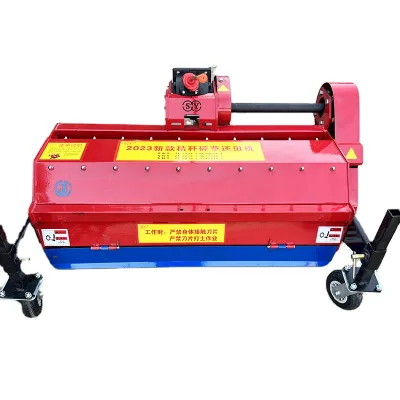
Tractor-driven farm straw shredders represent a critical class of agricultural machinery designed to process forage and straw through crushing-before-mixing techniques. These units are specifically engineered for large-scale breeding industries and farmland applications where high productivity is essential for efficient feed preparation. The observed market data indicates that these machines typically utilize a rotary working way and are constructed from durable steel to withstand the rigors of continuous agricultural operations.
Buyers must verify that the selected unit matches their specific tractor power requirements, as the power source is explicitly listed as tractor-driven in the available listings. The equipment often features an automatic grade and includes core components like gearboxes and motors to ensure reliable performance. Understanding the distinction between these shredders and other types of grinding equipment, such as feed hammer mills or scrap metal shredders, is vital for selecting the correct tool for livestock feeding operations.
Product Scope and Observed Listing Signals
The current market listings reveal a diverse range of specifications, with observed prices spanning from 200 to 300,000 USD depending on the model and capacity. While some units are identified as straw bale crushers with a maximum capacity of 20 tons per hour, others are categorized as round balers or scrap metal shredders, indicating a need for precise filtering during the sourcing process. The observed minimum order quantity is consistently one unit, allowing for flexible procurement strategies for individual farms or small cooperatives.
Prospective buyers should note that product dimensions vary significantly, with standard sizes ranging from 1300-1000-750mm to larger configurations like 6500x3200x3200mm. The cutting height for specific models is observed to range between 10 and 80mm, with a working width of 1400mm for certain rotary units. These physical attributes directly impact the machine's suitability for different field conditions and tractor compatibility, requiring careful measurement against the buyer's operational constraints before finalizing a purchase.
Technical Specifications to Verify
Technical verification must begin with the voltage and power requirements, as listings show both 380V fixed voltage and customizable voltage options. The structural design is predominantly horizontal, and the service life for high-quality units is observed to be at least 15 years, suggesting a long-term investment value. Buyers should confirm the specific model number, such as HTJ-1.3 or LB series, to ensure the machine's capacity aligns with their daily processing needs for forage and straw.
The screen mesh configuration is a critical technical feature, as the presence of a screen mesh determines the final particle size of the crushed material. The automatic grade and automation level must be confirmed to ensure the machine integrates smoothly with existing farm workflows. Additionally, the weight of the unit, observed at 5300 kg for certain models, influences the required tractor horsepower and transport logistics, making it a non-negotiable specification for operational planning.
Compliance and Safety Documentation
Compliance verification is paramount, as the supplied data indicates that many units carry CE and ISO certifications, including ISO 9001 and RoHS standards. These certifications serve as evidence that the manufacturing process adheres to international safety and quality benchmarks, which is essential for importing machinery into regulated markets. Buyers should request specific certification documents to validate that the listed CE and ISO marks apply to the exact model being purchased rather than a generic product line.
Safety documentation must also cover the warranty terms, which are observed to be one year for the core components and general machinery. This warranty period is a key indicator of the manufacturer's confidence in their product's durability and their commitment to after-sales support. Procurement teams should ensure that the warranty explicitly covers the gearbox and motor, which are identified as core components, to mitigate the risk of costly repairs during the initial operational phase.
Cost Drivers and Commercial Terms
Cost drivers in this category are heavily influenced by the customization options available, including voltage adjustments and specific model configurations. The observed price range suggests that basic models are significantly more affordable than high-capacity units with advanced automation features. Buyers should analyze the total cost of ownership, considering that the service life of 15 years or more can offset higher initial purchase prices for robust, heavy-duty machines designed for large-scale breeding industries.
Commercial terms regarding packaging and shipping are also critical, as units are typically packed in wooden cases or standard exported packages for ocean shipping. The origin of the machinery, primarily from Shandong and Henan provinces in China, impacts logistics costs and lead times. Buyers must clarify whether the quoted price includes the wooden case packaging and ocean freight to avoid unexpected expenses upon delivery, ensuring the final landed cost fits within the project budget.
Supplier Qualification and Quality Control
Supplier qualification should focus on their ability to provide OEM and ODM services, as the data confirms that many manufacturers accept these custom orders. This capability allows buyers to tailor the machine's specifications, such as the cutting width or structural dimensions, to their unique operational requirements. Verifying the supplier's location, whether in Yantai, Laizhou, or Zhengzhou, helps in assessing their logistical capabilities and their familiarity with international export standards.
Quality control processes must be validated through the supplier's adherence to the listed standards and certifications. The presence of ISO 9001 and CE marks suggests a structured quality management system, but buyers should request recent test results or factory audit reports to confirm ongoing compliance. Ensuring that the steel construction and core components meet the specified durability standards is essential to prevent premature failure in demanding agricultural environments.
Long-Term Procurement Checks
Long-term procurement success depends on verifying the availability of spare parts and the supplier's commitment to after-sales service. The one-year warranty provides a baseline, but buyers should negotiate extended support agreements for critical components like the gearbox and motor. Establishing a clear communication channel for technical support ensures that any operational issues can be resolved quickly, minimizing downtime during critical feeding seasons.
Buyers should also plan for the eventual replacement of wear parts, such as the screen mesh and cutting blades, which are subject to regular degradation. The observed service life of 15 years or more indicates that the machine is built for longevity, but regular maintenance is required to sustain this performance. Developing a maintenance schedule based on the manufacturer's recommendations will ensure the tractor-driven shredder remains a productive asset for the farm's livestock feeding operations for years to come.
FAQs
What is the maximum capacity of the Tractor Driven Farm Straw Shredder?
The maximum capacity reaches 20 tons per hour for efficient large-scale operations. This high productivity ensures rapid processing of forage and straw materials. The machine is designed specifically for animal, poultry, and livestock feeding applications in breeding industries.
Can the voltage be customized for different power requirements?
Yes, the voltage accepts customization to match specific site power conditions. While some models operate at 380V, the system allows flexibility for various electrical standards. This ensures the equipment integrates smoothly with existing farm infrastructure without requiring major electrical upgrades.
Which certifications does the grinding equipment hold for safety compliance?
The equipment holds ISO and CE certifications to ensure international safety and quality standards. Some models also include ISO 9001 and RoHS compliance for broader regulatory acceptance. These certifications verify that the machinery meets rigorous manufacturing and operational safety requirements.
How long is the warranty period for the tractor driven shredder?
The standard warranty period covers one year of operation for peace of mind. This coverage applies to core components like the gearbox and motor to ensure reliability. Buyers can rely on this support for initial maintenance needs and operational stability during the first year.
What is the service life expectancy of the steel construction shredder?
The service life expectancy is at least 15 years due to robust steel construction. This durability supports continuous heavy-duty use in large-scale breeding industries. The long lifespan reduces long-term replacement costs and ensures consistent performance over many years of operation.
Can the machine be customized for specific production needs?
Yes, customization is available to tailor the machine to specific production requirements. OEM services are accepted to modify features like voltage or structural dimensions. This flexibility allows buyers to adapt the equipment precisely to their unique agricultural processing workflows.
What is the typical weight of the large capacity grinding equipment?
The typical weight of the grinding equipment is 5300 kilograms for stability. This substantial mass ensures the machine remains secure during high-speed crushing operations. The heavy construction supports the high productivity required for processing large volumes of straw and forage.