Source Tractor Mounted Agricultural Chain Mower for Farmland, Lawn, and Paddy Field
Compare 30 Tractor Mounted Agricultural Chain Mower options with varying cutting widths, power sources, and working efficiencies. Buyers can evaluate models designed for farmland, lawn, and paddy field applications with specifications ranging from 10 to 80mm cutting height.
Key considerations
Products List


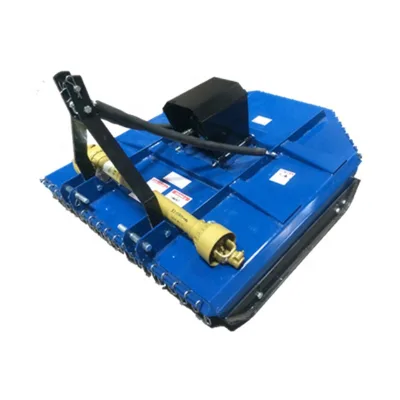
Tractor Rotary Mower Chain Mower Brazil Grass Cutter Rotary Lawn Mower
$700.00 - $1000.00
MOQ: 5 Pieces


Heavy Duty Tractor Mounted Drum Mower for Professional Agricultural Grass Cutting
$880.00 - $969.00
MOQ: 10 Pieces

Agricultural Grade Tractor Pulled Drum Mower for Large Scale Grass Cutting
$880.00 - $969.00
MOQ: 10 Pieces


Powerful Agricultural Mower for Efficient Field Management and Crop Cutting
$1054.00 - $1107.00
MOQ: 1 Pieces


Comprehensive Sourcing Guide
Strategic Sourcing Guide for Tractor-Mounted Agricultural Chain Mowers
Understanding the Core Technology and Operational Mechanics
When sourcing a tractor-mounted agricultural chain mower, buyers must first distinguish between the various mechanical architectures available in the current market. The core keyword implies a machine designed to be hitched to a tractor's Power Take-Off (PTO) or hydraulic system, utilizing a cutting mechanism that operates via a chain-driven or rotary motion to manage vegetation. Based on observed market data, the working ways for these units are predominantly categorized as either "Rotary" or "Reciprocating." Rotary mowers, often identified by their "Straight Metal Blade" or "Swing Straight Metal Blade" cutter kinds, are generally suited for high-speed mowing of grass and light brush. In contrast, reciprocating systems, sometimes described as "Sickle-bar Mower" types, offer a shearing action that is often preferred for wetter or denser vegetation where a clean cut is critical.
The physical dimensions of the cutting assembly are a primary determinant of efficiency. Market observations indicate a significant variance in cutting width, ranging from compact units to large-scale agricultural implements. Specific models have been observed with a cutting width of 2100mm, while other specifications suggest a standard range of 1400-2100mm. This width directly correlates with the "Working Efficiency," which for certain tractor-mounted units is observed to fall between 1.1 and 1.4 hectares per hour. Buyers should verify that the selected unit's cutting width aligns with the tractor's power output and the specific terrain constraints of the intended application area. Furthermore, the "Cutting Height" is a critical adjustable parameter; observed data suggests a functional range of 10-80mm, allowing operators to adapt the machine for different crop stages or lawn maintenance requirements.
Technical Specifications and Compatibility Requirements
Selecting the correct technical specifications is essential to ensure the mower integrates seamlessly with existing farm machinery. The "Type" of the mower is frequently listed as "Tractor" or "Rotary Mowers," but the specific "Moving Way" is often defined as "Tractor-Mounted." This indicates a direct mechanical linkage that requires the tractor to provide the necessary drive force. The "Matching Power" for these units is a crucial specification, with observed ranges spanning from 12 to 35 horsepower. This means a buyer must ensure their tractor's PTO output and hydraulic capacity meet or exceed the minimum requirements of the mower to prevent engine strain or mechanical failure.
Power sources for these independent units, where applicable, vary. While many rely on the tractor's PTO, some specifications list "Petrol / Gas" as the power source, with specific engine types such as "Gasoline Loncin224" noted in certain models. When evaluating these self-propelled or engine-driven variants, the "Total Weight" becomes a significant factor for transport and stability. For instance, larger models like the "6-Meter Mower" have been observed with a total weight of 2440kg, requiring a robust tractor and potentially specialized transport logistics. The "Number of Tires" and their specifications, such as "165/70r13 (8 Pieces)" on larger units, also influence the machine's ground pressure and traction capabilities, particularly in soft or uneven farmland conditions.
The "Applicable Area" is another vital technical consideration. Smaller units may be designed for areas between 500 and 1000 square meters, while larger agricultural implements are rated for areas exceeding 5000 square meters. The "Application" scope is equally broad, covering "Farmland," "Lawn," "Fruit Tree" orchards, "Paddy Field," and even specialized turf areas like "Golf Courses," "Soccer Field," and "Rugby Field." Buyers must match the mower's "Mowing Requirements," such as "Truncated Type," to the specific vegetation density and height they intend to manage.
Compliance, Certification, and Safety Standards
In the global agricultural machinery market, compliance with international standards is non-negotiable for both safety and market access. The most frequently observed certifications for these products include "CE" and "ISO 9001." The "CE" marking indicates conformity with health, safety, and environmental protection standards for products sold within the European Economic Area. The "ISO 9001" certification reflects adherence to quality management systems, suggesting that the manufacturer has established processes for consistent product quality. Some listings combine these, appearing as "ISO 9001:CE" or "ISO 9001:ISO 9001:Type:Tractor," which buyers should verify as distinct, valid certifications rather than marketing artifacts.
Beyond general certifications, specific product standards define the physical and operational parameters of the machinery. Observed standards include dimensional constraints such as "11001000500" and "960755320," which likely refer to packaging or storage dimensions, and power ratings like "7.5KW." For larger units, overall dimensions are critical for transport logistics; a specific model was observed with dimensions of "4.8m6.5m0.9m." Buyers must verify that these dimensions comply with local road transport regulations if the equipment needs to be moved between sites. Additionally, the "Product Model" varies significantly, with examples including "4discs," "Multi disks," "AMD R55," "AGL105," "9GB-1.8," and "9GXY-2.8." Each model number corresponds to a specific configuration of blades, gears, and chassis, requiring careful cross-referencing with the technical datasheet provided by the supplier.
Cost Drivers and Pricing Dynamics
The pricing for tractor-mounted agricultural chain mowers is influenced by a complex interplay of factors, including cutting width, power requirements, material quality, and customization options. The observed listed price range in the market spans from 85 USD to 8000 USD, indicating a vast disparity between small, basic units and large, heavy-duty agricultural implements. This wide range suggests that the "Total Weight" and "Cutting Width" are primary cost drivers; a 2100mm wide mower with a steel chassis and heavy-duty tires will naturally command a higher price than a compact 1400mm unit.
The "MOQ" (Minimum Order Quantity) is another significant factor affecting the unit cost. Observed MOQs range from 1 to 96 units. Buyers purchasing a single unit for personal farm use will likely pay a higher per-unit price compared to bulk purchasers who can negotiate based on an MOQ of 96. The "prod_packing" method also influences the final cost. Options such as "Pallet," "Carton Packaging," "Wooden Box," "Conventional Packing," and "Iron Crate Case" vary in material cost and protective capability. Heavy-duty "Iron Crate Case" packaging for large, 2440kg machines will add to the overall cost but is essential for preventing damage during international shipping. Buyers should also consider "Customization" availability, as the ability to tailor the mower to specific needs often incurs additional charges but can improve long-term operational efficiency.
Typical Applications and Operational Versatility
The versatility of tractor-mounted mowers makes them suitable for a diverse array of agricultural and landscaping applications. The "Application" field is not limited to a single use case; observed data lists "Farmland," "Lawn," "Fruit Tree," "Paddy Field," and "Common Lawn" as primary use cases. This versatility is supported by features such as "Height Adjustable Handles" and the ability to adjust the "Cutting Height" between 10-80mm. For orchard management, the mower must navigate between fruit trees without damaging the trunks, requiring precise maneuverability and potentially a narrower cutting width or specific blade configuration.
In the context of large-scale agriculture, such as paddy fields, the mower must handle wet, dense vegetation. The "Working Mode" of "Traction" and the "Moving Way" of "Tractor-Mounted" are designed to provide the necessary force to push through such resistance. For recreational and sports turf, such as "Golf Courses," "Soccer Field," and "Rugby Field," the quality of the cut is paramount. The "Cutter Kind," whether "Straight Metal Blade" or "Swing Straight Metal Blade," determines the finish of the grass. Swing blades are often preferred for sports fields as they can absorb impact from debris without damaging the blade, whereas straight blades provide a cleaner cut for uniform lawns. Buyers should ensure the selected mower's "Usage" classification matches their specific operational environment to avoid premature wear or inadequate performance.
Supplier Evaluation and Quality Control Protocols
Evaluating a supplier for agricultural machinery requires a rigorous assessment of their production capabilities and quality assurance processes. The "prod_origin" is consistently listed as "China" for the observed products, which is a major manufacturing hub for agricultural equipment. However, origin alone does not guarantee quality. Buyers should prioritize suppliers who hold valid "ISO 9001" and "CE" certifications, as these indicate a commitment to standardized quality management and safety compliance. The presence of "Customization" capabilities is also a strong indicator of a mature supplier who can adapt to specific buyer requirements rather than offering a rigid, one-size-fits-all product.
Quality control should extend beyond the final product to include the "prod_packing" standards. The use of "Wooden Box," "Iron Crate Case," or "Pallet" packaging reflects the supplier's understanding of the fragility and weight of their products. For heavy units like the 2440kg model, "Iron Crate Case" is a minimum requirement to ensure the equipment arrives undamaged. Buyers should also verify the "Working Efficiency" claims, such as the observed 1.1-1.4 Ha/H, by requesting third-party test results or case studies. While specific test data is not provided in the general listing, a reputable supplier should be able to demonstrate the machine's performance under real-world conditions. Additionally, the "Feature" set, such as a "Steel Chassis," should be verified for material thickness and welding quality, as these are critical for the machine's longevity in harsh agricultural environments.
Long-Term Procurement and Lifecycle Management
When engaging in long-term procurement of tractor-mounted agricultural chain mowers, buyers must consider the total cost of ownership, which includes maintenance, spare parts availability, and operational lifespan. The "Weight" of the machine, ranging from 125-145kg for lighter models to 2440kg for heavy-duty units, dictates the wear and tear on the tractor's PTO and hydraulic systems. Buyers should ensure that the "Matching Power" of their tractor is not only sufficient for initial operation but also has the capacity to handle the mower over its entire lifecycle without degradation.
The "prod_model" diversity, including models like "4discs," "Multi disks," and "9GXY-2.8," suggests that spare parts availability may vary. Buyers should inquire about the standardization of components across different models to simplify maintenance. The "Standard" dimensions and specifications, such as "1400-2100mm" for cutting width, should be maintained consistently to ensure compatibility with existing farm infrastructure. Furthermore, the "Application" scope, which includes demanding environments like "Paddy Field" and "Farmland," implies that the mower will be subjected to significant stress. A robust "Steel Chassis" and high-quality "Cutter Kind" are essential for minimizing downtime. Buyers should also evaluate the "Moving Way" and "Working Mode" to ensure that the machine's design aligns with their long-term operational strategy, whether that involves high-speed mowing of large areas or precise trimming in confined spaces. By carefully analyzing these factors, buyers can secure a reliable supply chain that supports their agricultural operations for years to come.
FAQs
What certifications do tractor mounted agricultural chain mowers have?
Most units carry ISO 9001 and CE certifications for quality and safety compliance. Some listings combine these as ISO 9001:CE or specify ISO 9001 alongside tractor type requirements. Buyers should verify these marks ensure adherence to international standards.
Which cutting width options are available for these mowers?
Cutting widths typically range from 1400mm to 2100mm depending on the model. Specific models like the 4discs variant offer a 2100mm width, while others fall within the 1400-2100mm range. Selecting the right width aligns with tractor power and field efficiency.
How is the cutting height adjusted on these machines?
The cutting height is adjustable within a functional range of 10mm to 80mm. This allows operators to adapt the mower for different crop stages or lawn maintenance requirements. Height adjustment ensures versatility across farmland, lawns, and orchard environments.
Can these mowers be customized for specific needs?
Yes, customization is available for many Tractor Mounted Agricultural Chain Mower models. This allows buyers to tailor specifications to unique operational requirements. Customization options help match the machine to specific terrain or vegetation density challenges.
What power sources are used for these mowers?
Power sources vary between tractor PTO drive and independent petrol or gas engines. Some models feature specific engines like the Gasoline Loncin224. Matching power requirements typically range from 12 to 35 horsepower to ensure sufficient drive force.
Where are these mowers manufactured and what is the origin?
The observed products originate from China, a major manufacturing hub for agricultural equipment. Buyers should verify supplier locations and production capabilities alongside certifications. Origin impacts logistics and shipping considerations for international procurement.