Source Tractor Rubber Track for Excavators, Harvesters, and Tractors
Explore 30 verified listings for Tractor Rubber Track components designed for excavators, harvesters, and agricultural machinery. Buyers can compare specifications, certifications, and delivery times to find suitable undercarriage parts and tires.
Key considerations
Products List


Hot Sale Mini High Quality Farm Rubber Track for Agricultural Crawler Tractors
$290.00 - $400.00
MOQ: 10 Pieces

Best Selling High Quality Farm Rubber Track for Agricultural Crawler Tractors
$290.00 - $400.00
MOQ: 10 Pieces

Factory Supply High Quality Farm Rubber Track for Agricultural Machinery
$290.00 - $380.00
MOQ: 10 Pieces

China Supplier Custom Made High Quality Rubber Track for Agricultural Machinery
$290.00 - $380.00
MOQ: 10 Pieces

Best Quality Custom Made Lightweight Farm Rubber Track with Great Performance
$290.00 - $400.00
MOQ: 10 Pieces


High-Performance Agricultural Combine Rubber Track for Optimal Traction
$500.00 - $900.00
MOQ: 10 Pieces



Comprehensive Sourcing Guide
Strategic Sourcing Guide for Tractor Rubber Tracks
Understanding Product Specifications and Technical Variability
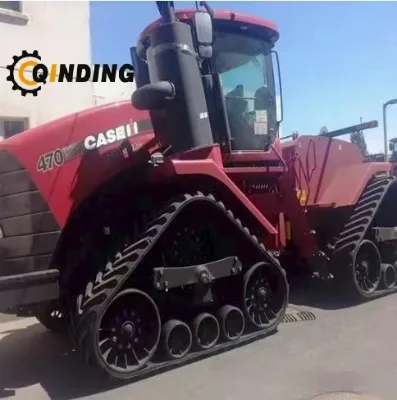
When sourcing tractor rubber tracks, buyers must first navigate a complex landscape of technical specifications that vary significantly between manufacturers. The core product is an undercarriage component designed to replace steel tracks on agricultural machinery, offering reduced ground pressure and improved traction. Based on available market data, the product is frequently categorized under "Crawler" types with a primary application in agriculture, specifically for harvesters, tractors, and farmland infrastructure.
The physical dimensions of these tracks are not uniform. Observed specifications include model numbers such as "500*90" and "350/90L," indicating a wide range of widths and lengths. Some listings reference a diameter of "≥22 inches," while others specify a model code of "YR60D" or "IH Stieger Quadtrac 600." This variability suggests that a single generic search term is insufficient; buyers must match the track's width, length, and pitch to the specific chassis of their machinery. The material composition is predominantly rubber, with some entries specifying "Natural Rubber" to denote higher quality or specific elasticity requirements.
Color is another observable attribute, with options typically ranging from yellow, black, to grey. While color may seem cosmetic, it often correlates with the specific rubber compound used or the manufacturer's branding standards. The power source for the machinery these tracks serve is generally diesel, which influences the torque and load requirements the track must withstand. Buyers should verify that the track's load-bearing capacity aligns with the diesel engine's output and the machine's operational weight.
Compliance, Certification, and Regulatory Standards
Navigating the certification landscape is critical for ensuring that purchased tracks meet international safety and quality benchmarks. The supply chain for these components is heavily regulated, with manufacturers often holding multiple certifications to demonstrate compliance. High-confidence data indicates that "CE" and "ISO9001" are common certifications, with some suppliers also listing "ISO," "ECE," "CCC," and "DOT."
The presence of "CE" certification is particularly important for buyers targeting the European market, as it signifies conformity with health, safety, and environmental protection standards. Similarly, "ISO9001" indicates that the manufacturer adheres to a quality management system, which is a strong indicator of consistent production processes. However, buyers must be cautious; while "ISO" is listed frequently, the specific version or scope (e.g., ISO 9001:2000) may vary. Some detailed entries mention specific standard codes like "DC70" or "1208090," which likely refer to internal or industry-specific testing protocols rather than universal standards.
For buyers in North America, "DOT" (Department of Transportation) and "ECE" (Economic Commission for Europe) markings may be relevant, especially if the machinery is used on public roads or in cross-border operations. The "CCC" mark suggests compliance with Chinese Compulsory Certification, which is mandatory for products sold within China. It is essential for procurement teams to request valid certification documents for each batch, as the mere presence of a logo on a product listing does not guarantee current validity.
Cost Drivers and Pricing Dynamics
The pricing structure for tractor rubber tracks is influenced by several factors, including material costs, manufacturing complexity, and order volume. The observed price range in the market spans from $50 to $15,001 USD. This vast disparity is not indicative of a single product type but rather reflects the difference between individual track links, complete sets, or specialized heavy-duty undercarriage assemblies. A price point near the lower end likely corresponds to a single component or a smaller, less complex unit, while the upper end may represent a full undercarriage system for a large-scale harvester or a specialized custom order.
The Minimum Order Quantity (MOQ) is a significant driver of unit cost. Data shows an MOQ range from 1 to 200 units. Some suppliers offer an MOQ of just 2 pieces, which is advantageous for small-scale repairs or testing, while others require orders of 200 units, which is typical for large fleet renewals. Buyers should understand that higher volumes generally yield better per-unit pricing, but the initial capital outlay increases. Additionally, the "Customization: Available" attribute suggests that bespoke tracks can be ordered, which will invariably carry a premium over standard off-the-shelf models.
Typical Applications and Operational Context
Tractor rubber tracks are engineered for specific operational environments, primarily within the agricultural sector. The documented usage cases include "Harvester," "Agricultural Products Processing," "Farmland Infrastructure," "Grain Threshing," "Cleaning and Drying," and general "Tractors." The versatility of these tracks allows them to be used in soft, muddy, or uneven terrain where steel tracks might cause excessive soil compaction or damage.
The classification of these products as "Tires" or "Crawler" components highlights their dual nature as both a mobility system and a protective element for the machine's undercarriage. The "Tubeless" design noted in some specifications indicates a modern construction method that reduces the risk of sudden pressure loss, a critical safety feature in remote farming locations. The "Fitted Machinery" attribute explicitly lists "Tractor" and "Harvester," confirming that these tracks are not universal but must be matched to the specific hydraulic and mechanical interface of the host vehicle.
Supplier Evaluation and Geographic Considerations
When evaluating potential suppliers, geographic origin plays a pivotal role in logistics and lead times. The majority of the supply originates from "China," with specific manufacturing hubs noted in "Jiangsu, China." The primary sea port for export is "Xiamen," which is a major logistics hub in southeastern China. Buyers should factor in the lead time, which is observed to be around "10 Days" for delivery preparation, though this does not include ocean transit time.
Supplier reliability can be assessed through their packaging standards. The data indicates a mix of "Export Wooden Pallet," "Wooden Pallet or Nude," "Bare Package or Pallets," and "Export Packing." Consistent use of export-standard wooden pallets suggests a supplier experienced in international shipping, as it minimizes the risk of damage during transit. Conversely, "No Packing" or "Nude" options may indicate a lower-cost, high-volume supplier where the buyer assumes the risk of packaging.
Buyers should also scrutinize the "H.S Code" provided, which is consistently listed as "84314999." This code is specific to parts for tractors and other agricultural machinery, ensuring that customs clearance is straightforward. Verifying that the supplier uses the correct H.S. Code prevents delays and unexpected duties at the destination port.
Quality Control and Inspection Protocols
Ensuring the quality of tractor rubber tracks requires a rigorous inspection protocol before and after shipment. The "Warranty Time" of "12 Months" is a standard offering, but buyers must understand the terms of this warranty. Does it cover manufacturing defects only, or does it include premature wear due to operational abuse? The "Standard" attribute varies, with entries ranging from "export standard" to "As customer required." This variability underscores the need for buyers to define their own quality acceptance criteria in the purchase order.
Inspection should focus on the material integrity, specifically the "Natural Rubber" content. Buyers should request material safety data sheets (MSDS) to verify the rubber compound's resistance to UV degradation, oil, and abrasion. The "DC70" and "1208090" specifications mentioned earlier may represent internal quality benchmarks; buyers should ask suppliers to clarify what these codes mean in terms of tensile strength or hardness.
Furthermore, the "Customization: Available" feature implies that the production process is flexible. This flexibility can be a double-edged sword; while it allows for tailored solutions, it increases the risk of production errors. Implementing a pre-shipment inspection (PSI) is highly recommended, particularly for custom orders. The inspection should verify dimensions, material composition, and the presence of any visible defects such as cracks or delamination.
Long-Term Procurement and Maintenance Strategy
For long-term procurement, buyers should consider the total cost of ownership rather than just the initial purchase price. The "12 Months" warranty provides a baseline for product longevity, but the actual service life depends heavily on the operating environment. Tracks used in harsh conditions, such as those involving heavy grain threshing or cleaning, may experience accelerated wear.
Maintenance strategies should include regular checks for track tension and alignment. Since the tracks are "Tubeless," there is no risk of a sudden blowout, but the internal structure can still degrade. Buyers should establish a relationship with a supplier that offers technical support for installation and maintenance. The availability of "Customization" suggests that suppliers may be willing to provide replacement parts or modified tracks as the machinery ages or changes.
Finally, buyers should monitor the supply chain for consistency. The "Export Wooden Pallet" and "Export Packing" standards indicate a commitment to logistics quality. Maintaining a relationship with suppliers who consistently meet these standards ensures that future orders will arrive in good condition, reducing downtime and maintenance costs. By focusing on these long-term factors, buyers can secure a reliable supply of tractor rubber tracks that supports their agricultural operations efficiently and effectively.
FAQs
How long is the delivery time for tractor rubber tracks?
The standard delivery time is 10 days for most orders. This period covers production and preparation but excludes ocean transit time to the destination port.
What certifications do Tractor Rubber Track manufacturers hold?
Common certifications include CE, ISO9001, and ISO. Some suppliers also provide ECE, CCC, and DOT certifications depending on the specific product model and target market requirements.
Which specifications are available for tractor rubber tracks?
Available specifications include model codes like 500*90, 350/90L, and YR60D. Buyers must match these dimensions to their specific machinery chassis for proper fitment.
Can I order custom tractor rubber tracks?
Yes, customization is available for specific requirements. This allows buyers to request bespoke dimensions or features, though it may affect the unit price and lead time.
What is the minimum order quantity for these tracks?
The minimum order quantity ranges from 1 to 200 units depending on the supplier. Some vendors offer low MOQs like 2 pieces for testing, while others require bulk orders.
Where are the tractor rubber tracks manufactured?
Products originate primarily from China, with specific hubs in Jiangsu. The main export sea port for these goods is typically Xiamen.
How long is the warranty period for tractor rubber tracks?
The standard warranty time is 12 months for manufacturing defects. Buyers should verify specific terms regarding wear and tear conditions before purchasing.