Source turbocharged water-cooled marine diesel engine for boats, ships, generators
Find 30 listings for the turbocharged water-cooled marine diesel engine to compare specifications like power, cooling systems, and aspiration types. Buyers can review models such as NTA855 and KTA19 from suppliers in China to match their marine applications.
Key considerations
Products List


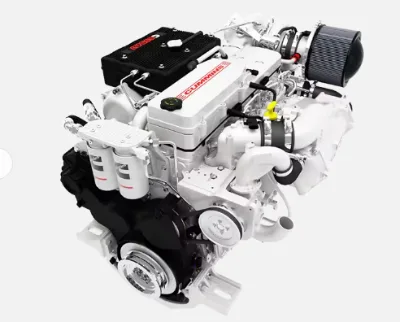


Hot Sale Water Cooled Inboard Marine Diesel Engine for Boats and Ships
$10000.00 - $11000.00
MOQ: 1 Pieces


Global Shipping Supported Diesel Marine Engine Durable Marine Diesel Engine
$26000.00 - $28000.00
MOQ: 20 GP

Advanced Marine Diesel Engine Diesel Marine Engine Supporting Biofuel and Diesel
$26000.00 - $28000.00
MOQ: 20 GP

280HP Turbocharged Marine Engine with Intercooler and Charge Air Cooling
$6000.00 - $8000.00
MOQ: 1 Pieces

360HP Turbocharged Marine Engine with Intercooler and Electronic Speed Governing
$16000.00 - $18000.00
MOQ: 1 Pieces


High Quality Efficient Diesel Marine Engine Advanced Marine Diesel Engine
$26000.00 - $28000.00
MOQ: 20 GP


Water Cooled Diesel Engine/ Marine Engine/Pump Engine with CE Certificate
$3550.00 - $9890.00
MOQ: 1 SET

Comprehensive Sourcing Guide
Strategic Sourcing Guide for Turbocharged Water-Cooled Marine Diesel Engines
Procuring a turbocharged water-cooled marine diesel engine requires a rigorous approach to technical verification and supplier evaluation. The marine environment imposes unique stressors on propulsion systems, making the selection of the correct engine configuration critical for operational safety and efficiency. Buyers must navigate a complex landscape of specifications, ranging from cylinder arrangements and aspiration methods to cooling systems and emission standards. This guide provides a structured framework for sourcing these critical assets, ensuring that procurement decisions are grounded in verifiable data rather than marketing assertions.
Technical Architecture and Core Specifications
The fundamental architecture of a marine diesel engine dictates its performance envelope and suitability for specific vessel types. In the current market, buyers frequently encounter engines with a vertical in-liner configuration and a four-stroke cycle. These designs are prevalent due to their balance of power density and mechanical reliability. A key distinguishing feature for many units is the aspiration method; while some engines rely on natural aspiration, the specific requirement for a turbocharged unit necessitates the presence of a turbocharger to force air into the combustion chamber, thereby increasing power output without significantly increasing displacement.
The cooling system is another paramount technical attribute. For marine applications, water-cooled systems are standard, often utilizing a combination of sea water pumps and heat exchangers to manage thermal loads. This configuration is essential for maintaining optimal operating temperatures in the fluctuating conditions of a marine environment. The piston movement in these engines is typically reciprocating, driving the crankshaft to generate mechanical power. Fuel delivery is generally achieved through direct injection, which ensures efficient combustion of diesel fuel.
Buyers should pay close attention to the cylinder arrangement and count. While some models feature a four-cylinder layout, others may utilize multi-cylinder configurations to meet higher power demands. The engine type is consistently identified as a combustion engine, distinct from electric motors, though some listings may present mixed attributes that require careful scrutiny. The ignition mode for diesel engines is compression-ignition, a process where fuel ignites due to the heat generated by compressing air in the cylinder. However, some product descriptions may also list electric ignition, which typically refers to the starting mechanism rather than the combustion cycle itself.
Performance Metrics and Operational Parameters
Understanding the performance metrics of a potential engine is vital for matching the power plant to the vessel's requirements. Speed calibration is a critical parameter, with observed ranges in the market spanning from 1500 rpm to 3000 rpm. Some units are specifically calibrated for low-speed operation, while others are designed for high-speed applications. The rated power for these engines often falls within the range of 80 to 260 horsepower, with a corresponding speed of approximately 1800 rpm for certain models.
Weight is a significant factor in marine engineering, affecting the vessel's center of gravity and stability. Observed weight multiples and specific unit weights vary considerably, with some units weighing as little as 230 kg or 260 kg, while larger, more robust models can reach weights around 2100 kg. The physical dimensions of the engine, often cited in dimensions such as 210110220 cm, must be accommodated within the engine room layout of the target vessel.
The color of the engine, typically available in white, grey, or red, is a secondary aesthetic consideration but may be relevant for specific fleet standardization requirements. The engine status is frequently listed as brand new, which is a crucial detail for buyers seeking to avoid the risks associated with refurbished or used machinery. The core component of the entire assembly is the engine itself, which drives the performance of the propulsion system.
Compliance, Emission Standards, and Certifications
Navigating the regulatory landscape is a non-negotiable aspect of marine engine procurement. Emission standards are a primary compliance concern, with the Euro 2 standard being a specific benchmark observed in the market. Buyers must verify that the engine meets the emission requirements of the flag state and the intended operating waters. While some background information may mention CE certification, this should be treated as a background note rather than a guaranteed attribute of every listed product.
International standards play a significant role in ensuring quality and interoperability. The ISO standard is frequently cited as a compliance benchmark for these engines. However, buyers must not assume that a mention of "ISO" implies full certification without requesting specific documentation. Machinery test reports are another area of scrutiny; in many cases, these reports are listed as "Not Available," which necessitates a more rigorous on-site inspection or third-party verification process before finalizing a purchase.
Certification status should be verified through official channels rather than relying solely on product descriptions. The absence of a specific certification in the listing does not necessarily mean the product is non-compliant, but it does require the buyer to initiate a formal verification process. The origin of the product, often listed as China or specifically Shandong Weifang and Shanghai, can influence the applicable regulatory frameworks and shipping logistics.
Cost Drivers and Economic Considerations
The pricing of marine diesel engines is influenced by a multitude of factors, including power output, complexity of the cooling system, and the level of customization available. The observed price range in the market is vast, spanning from 1 USD to 28,000 USD. This wide disparity suggests that the listed prices may represent different tiers of equipment, ranging from small auxiliary units to large main propulsion engines, or potentially incomplete listings that require clarification.
Minimum Order Quantity (MOQ) is another economic factor to consider. The observed MOQ range is between 1 and 20 units, indicating flexibility for buyers who may need a single engine for a small vessel or a fleet of engines for a larger operation. Customization is available for many models, which can impact the final cost. Buyers should anticipate that bespoke configurations, such as specific mounting arrangements or specialized cooling setups, will incur additional charges.
The packaging method, typically plywood packages or wooden cases, adds to the logistical cost and must be factored into the total landed cost. The warranty period, often cited as 1 year, is a standard industry practice but should be clearly defined in the contract regarding coverage for parts and labor. Buyers should also consider the long-term cost of ownership, including fuel efficiency, maintenance intervals, and the availability of spare parts, which are often tied to the specific engine model and brand.
Supplier Evaluation and Geographic Origins
Evaluating suppliers requires a focus on their geographic origin and manufacturing capabilities. The primary sources for these engines are located in China, with specific hubs in Shandong Weifang and Shanghai. These regions are known for their concentration of engine manufacturing facilities. When evaluating a supplier, buyers should verify the "place of origin" and ensure it aligns with the claimed manufacturing standards.
The brand name, such as "scdc," may appear in product listings, but buyers should exercise caution and verify the legitimacy of the brand and its association with the manufacturing facility. The supplier's ability to provide a machinery test report is a key indicator of their transparency and quality control processes. If such reports are not available, the buyer must be prepared to conduct their own due diligence.
Supplier reliability is also tied to their ability to meet lead times and handle logistics. While specific lead times are not provided in the general data, the complexity of the engine and the customization requirements will influence the production schedule. Buyers should establish clear communication channels regarding production milestones and shipping arrangements to mitigate the risk of delays.
Quality Control and Long-Term Procurement Strategy
Implementing a robust quality control strategy is essential for mitigating risks associated with marine engine procurement. Given the variation in test report availability, buyers should consider engaging third-party inspection agencies to verify the engine's condition and specifications before shipment. The focus should be on verifying the core components, such as the engine block, cylinder arrangement, and cooling system integrity.
Long-term procurement considerations include the availability of spare parts and the technical support provided by the supplier. Engines with models like NTA855, KTA19, and KTA38, or specific variants like ZH490C and 490, may have different levels of parts availability depending on the manufacturer. Buyers should ensure that the supplier has a reliable supply chain for critical components to minimize downtime during the vessel's operational life.
The use place of the engine, typically marine, dictates the specific environmental conditions it must withstand. Buyers should verify that the engine's design, including its aspiration and cooling systems, is suitable for the intended marine environment. The warranty terms should be reviewed carefully to understand the scope of coverage and the process for claiming repairs or replacements.
Comparative Analysis of Engine Configurations
To assist in decision-making, the following table summarizes key technical attributes observed in the market for turbocharged water-cooled marine diesel engines. This comparison highlights the variability in specifications and the need for careful verification.
| Attribute | Observation A | Observation B | Observation C |
|---|---|---|---|
| Aspiration | Turbocharged | Turbocharger | Naturally Aspirated |
| Cooling System | Water-Cooled | Sea water pump, heatexchanger | Water-Cooled |
| Cylinder Count | 4-Cylinder | Multi-cylinder | L Arrangement |
| Ignition Mode | Compression-Ignition | Electric Ignition | Compression-Ignition |
| Calibration Speed | 1500rpm-3000rpm | 1500rpm | 3000rpm |
| Weight | 230kg | 260kg | 2100 |
| Emission Standard | Euro 2 | Not Specified | Not Specified |
| Origin | China | Shandong Weifang | Shanghai, China |
This table illustrates that while the core requirement is a turbocharged water-cooled marine diesel engine, the specific implementation varies significantly. Buyers must use this data as a reference point for verification rather than a definitive specification list. The presence of conflicting data, such as varying aspiration methods or ignition modes, underscores the importance of direct communication with the supplier to confirm the exact configuration of the unit being purchased.
Final Procurement Recommendations
In conclusion, sourcing a turbocharged water-cooled marine diesel engine requires a meticulous approach to technical verification and supplier evaluation. Buyers must prioritize the verification of core specifications, including aspiration, cooling, and emission standards, against the specific needs of their vessel. The wide range of observed prices and specifications necessitates a thorough due diligence process to ensure that the selected engine meets all operational and regulatory requirements. By focusing on verified data and maintaining a clear understanding of the market landscape, buyers can secure reliable propulsion systems that ensure the safety and efficiency of their marine operations.
FAQs
What is the cooling system type for these engines?
These engines utilize a water-cooled system, often featuring sea water pumps and heat exchangers for marine applications. This configuration ensures optimal thermal management in fluctuating marine environments while maintaining engine efficiency.
Which ignition mode do these diesel engines use?
The primary ignition mode is compression-ignition, which is standard for diesel combustion. Some listings may also mention electric ignition, which typically refers to the starting mechanism rather than the combustion cycle itself.
Can I find engines with specific calibration speeds?
Yes, engines are available with calibration speeds ranging from 1500 rpm to 3000 rpm. Some models are specifically calibrated for low-speed operation at 1500 rpm, while others are designed for high-speed applications up to 3000 rpm.
What is the typical weight range for these units?
Observed weights vary significantly, with some units weighing around 230 kg or 260 kg, while larger models can reach approximately 2100 kg. The specific weight depends on the model configuration and cylinder arrangement.
Are these engines available with customization options?
Customization is available for many models to meet specific vessel requirements. Buyers can often request bespoke configurations, though such bespoke setups may incur additional charges and affect the final cost.
What emission standards do these engines meet?
Some models in the market meet the Euro 2 emission standard. Buyers must verify that the specific engine meets the emission requirements of the flag state and intended operating waters before purchase.
Where are these engines typically manufactured?
The primary manufacturing origins are China, with specific hubs in Shandong Weifang and Shanghai. Buyers should verify the place of origin to ensure alignment with claimed manufacturing standards and logistics.