Source Unisex Thin Wool Baby Cardigan for Daily Wear
Find 30 listings for a Unisex Thin Wool Baby Cardigan suitable for daily wear, layering, and outdoor activities. Buyers can compare customization options, material compositions, and lead times across multiple suppliers offering OEM services.
Key considerations
Products List


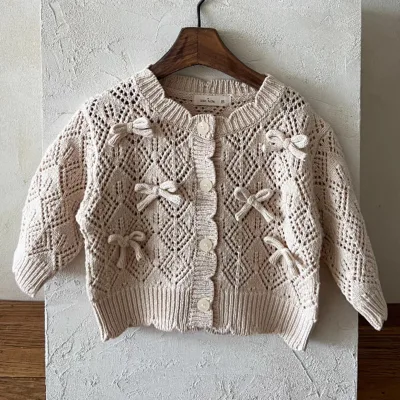
Baby Girl Sweater Cardigan 100%Cotton Knitted Cardigan with Flowers for Baby Girl
$11.00 - $25.00
MOQ: 2 pieces


Customized 100% Cotton Knitted Kids Infant Baby Sweater Cardigan with Button.
$10.00 - $18.00
MOQ: 2 pieces

100% Cotton Knitted Sweet Baby Cardigan Flower Pattern Infant Kids Sweaters.
$13.00 - $22.00
MOQ: 2 pieces




Comprehensive Sourcing Guide
Strategic Sourcing Guide for Unisex Thin Wool Baby Cardigans
The global market for infant apparel has seen a sustained shift toward high-quality, breathable, and customizable knitwear, with the Unisex Thin Wool Baby Cardigan emerging as a staple item for retailers and private label brands. Sourcing this specific category requires a nuanced understanding of material properties, manufacturing techniques, and supply chain logistics. Unlike general apparel procurement, baby clothing demands rigorous attention to safety, softness, and durability, as the end-user is a vulnerable demographic. This guide provides a structured approach to identifying, evaluating, and securing supply for unisex thin wool baby cardigans, focusing on technical specifications, compliance verification, and supplier assessment based on verified industry data and observable market parameters.
Technical Specifications and Material Composition
The foundation of a successful procurement strategy lies in defining precise technical specifications. For a "thin wool" cardigan, the term "thin" often refers to the gauge of the knitting machine rather than the weight of the fiber alone. In the current market, a 7-gauge (7gg) knitted fabric is a common standard for lightweight baby cardigans, offering a balance between warmth and breathability. The material composition is equally critical. While the core keyword specifies "wool," many suppliers offer a spectrum of options including 100% cotton, organic cotton, and blended fibers that mimic the softness of wool without the potential for itchiness.
Buyers must verify the specific material option listed in the product data. Some listings indicate "100% Cotton" or "Organic Cotton" as primary materials, while others mention "Buckle Cotton" or generic wool blends. The distinction matters for allergen management and care instructions. The knitting technique is typically "knitted," which allows for the necessary elasticity and stretch required for infant movement. The construction often features a "crew neck" or "round neck" design, paired with "long sleeves" and a "solid color" or "patterned" aesthetic. The presence of buttons is a standard feature, requiring specific attention to button security and material safety to prevent choking hazards.
| Feature | Common Specification | Verification Requirement |
|---|---|---|
| Knitting Gauge | 7gg (Standard) | Confirm gauge matches "thin" requirement |
| Material | Cotton, Organic Cotton, Wool Blend | Request fiber content certificate |
| Neck Shape | Round Neck / Crew Neck | Verify seam placement for comfort |
| Closure | With Buttons | Check button attachment strength |
| Fit | Loose Fit | Confirm sizing chart for growth allowance |
| Pattern | Solid Color, Striped, Patterned | Validate color fastness and print quality |
Compliance and Certification Verification
Safety compliance is non-negotiable in the baby apparel sector. While specific certification statuses like Oeko-Tex are often cited in the broader industry, buyers must not assume a supplier possesses these certifications without direct verification. The procurement process must include a request for current test reports that align with the target market's regulations, such as CPSIA in the United States or EN 14682 in Europe regarding small parts and flammability.
When evaluating a supplier, the buyer should look for evidence of adherence to international safety standards. The product origin, often listed as Sichuan, China, indicates a specific manufacturing hub known for textile production, but origin alone does not guarantee compliance. Buyers must explicitly ask for third-party laboratory test results regarding formaldehyde content, pH levels, and heavy metals. The "Standard" weight of the product, often listed as 0.5KG or 1KG, can serve as a proxy for fabric density, but it must be cross-referenced with the actual material weight per square meter to ensure the "thin" classification is accurate.
Furthermore, the customization options, such as "Customized Design, Size, Color, Logo," introduce variables that can impact compliance. A custom logo applied via "Digital Printing" must be verified for toxicity and durability. The "Sample Delivery" time of 5-10 days allows for rapid prototyping, but the sample itself must undergo the same rigorous testing as the bulk order. Buyers should never skip the sample testing phase, as the final bulk production must match the approved sample in every safety aspect.
Cost Drivers and Pricing Structures
Understanding the cost drivers for unisex thin wool baby cardigans is essential for budgeting and margin analysis. The observed price range in the market spans from 1 to 30 USD, a wide variance that reflects differences in material quality, customization complexity, and order volume. The Minimum Order Quantity (MOQ) is a significant factor; while some suppliers offer an MOQ of 1 piece for samples, bulk orders typically range from 1 to 1000 pieces.
The cost is heavily influenced by the material option. Organic cotton and high-grade wool blends command a premium over standard cotton or synthetic blends. Additionally, the "Customization" factor plays a pivotal role. Suppliers offering "OEM Service" for custom designs, sizes, and logos often charge setup fees or higher unit costs for smaller batches. The "Lead Time" for mass production, typically cited as 15-25 working days or specifically 15 days for bulk orders, also impacts pricing. Rush orders may incur expedited shipping fees, which can be substantial given the "DHL, EMS, UPS, FedEx, by Sea, by Air" shipping options available.
Buyers should also consider the packaging costs. The standard "Plastic Bag for Baby Sweater Cardigan" is a baseline, but eco-friendly or custom-branded packaging will increase the unit cost. The "Product Time" of 15-25 working days suggests a moderate production cycle, allowing for quality checks but potentially limiting flexibility for urgent restocks. When negotiating, buyers should clarify whether the quoted price includes the cost of the sample, the mold fees for custom logos, and the shipping terms (e.g., FOB, EXW, DDP).
Typical Applications and Market Segmentation
The Unisex Thin Wool Baby Cardigan serves multiple applications across different retail segments. Its "Spring/Autumn" and "Winter" versatility makes it a year-round essential in many climates, particularly in regions with mild winters or variable weather. The "Unisex" gender classification broadens the market appeal, allowing retailers to stock a single SKU for both male and female infants, reducing inventory complexity.
These cardigans are frequently used as layering pieces in baby clothing sets, paired with bodysuits, pants, or dresses. The "Loose Fit" version is particularly popular for newborns and toddlers, providing comfort and ease of dressing. The "Patterned" and "Solid Color" options cater to different aesthetic preferences; solid colors are often preferred for everyday wear and gift sets, while striped or patterned designs are popular for special occasions or seasonal collections.
The customization capabilities, including "Customized Design" and "Logo," make these cardigans ideal for private label brands and corporate gifting. Companies often order these items with their branding for baby showers, corporate events, or promotional merchandise. The ability to customize colors, with "More Than 300 Colors Available," allows brands to align the product with their specific brand identity or seasonal color palettes. This flexibility is a key differentiator in a competitive market where brand recognition and unique design elements drive consumer choice.
Supplier Evaluation and Selection Criteria
Selecting the right supplier requires a multi-faceted evaluation process that goes beyond price and lead time. The "Location" of the supplier, such as Sichuan, China, provides insight into the regional supply chain capabilities, but it is the supplier's operational history and reliability that matter most. Buyers should assess the supplier's capacity to handle "Customization" requests, including their ability to manage "Digital Printing" and "Logo Customized" orders without compromising quality.
The "Sample" availability is a critical indicator of supplier responsiveness. A supplier offering "Sample: Available to Try" with a "Sample Delivery" time of 5-10 days demonstrates agility. However, buyers must evaluate the quality of the sample against the bulk production standards. The "MOQ" of 1 piece for samples is a low barrier to entry, but the transition from sample to bulk order (MOQ 1-1000) must be seamless. Buyers should verify the supplier's ability to scale production while maintaining the "7gg" gauge and material consistency.
Communication and transparency are also vital. Suppliers that provide detailed "Product Time" estimates and clear "Shipping" options (e.g., "DHL\EMS\UPS\FedEx\by Sea\by Air") are generally more reliable. Buyers should request references or case studies of previous bulk orders to verify the supplier's track record. The "OEM Service" capabilities, including "Customized Design, Size, Color, Logo," should be confirmed with a detailed scope of work to avoid misunderstandings during the production phase.
Quality Control and Long-Term Procurement Considerations
Quality control (QC) is the final gatekeeper in the procurement process. Given the "Standard" weight of 0.5KG to 1KG, buyers must ensure that the fabric density and stitching quality meet the "Baby Sweater Cardigan" specifications. The "Pattern" and "Color" consistency must be maintained throughout the production run, especially for "Solid Color" and "Striped" designs. The "Buttons" must be securely attached and free from sharp edges, adhering to safety standards for infant wear.
For long-term procurement, buyers should establish a robust QC protocol that includes pre-production, in-line, and pre-shipment inspections. The "Lead Time" of 15-25 working days allows for sufficient time for these inspections. Buyers should also consider the "Product Time" variability and build buffer stock into their inventory planning. The "Customization" aspect requires a clear approval process for all design changes to prevent costly errors.
Sustainability is an emerging consideration in long-term procurement. While specific "Oeko-Tex" status cannot be assumed, buyers should inquire about the supplier's environmental practices, such as water usage in dyeing and waste management. The "Material Option" of "Organic Cotton" aligns with growing consumer demand for sustainable products. Building a long-term relationship with a supplier who can consistently deliver high-quality, compliant, and customizable products is essential for brand growth and market stability.
In conclusion, sourcing unisex thin wool baby cardigans requires a meticulous approach that balances technical specifications, compliance, cost, and supplier reliability. By focusing on verified attributes such as the 7-gauge knitting, material options, and customization capabilities, buyers can navigate the market effectively. The wide range of observed prices and MOQs offers flexibility, but success depends on rigorous quality control and clear communication with suppliers. As the market continues to evolve, staying informed about material innovations and safety standards will ensure that procurement strategies remain robust and competitive.
FAQs
Can I order a sample of the Unisex Thin Wool Baby Cardigan?
Yes, samples are available with a minimum order quantity of one piece. The sample delivery time typically ranges from 5 to 10 days, allowing for quick evaluation of the 7-gauge knitted fabric and button security before bulk production.
What material options are available for the baby cardigan?
The product offers options including 100% cotton, organic cotton, and buckle cotton. While the core keyword mentions wool, the actual listings specify cotton-based materials, ensuring softness and breathability suitable for infant skin without the itchiness of pure wool.
How long does mass production take for bulk orders?
Mass production generally requires 15 to 25 working days for completion. Some listings specify a lead time of 15 days for bulk orders, which includes time for customization of design, size, color, and logo application via digital printing.
What customization services are provided for the cardigan?
Customization is available for design, size, color, and logo placement. Buyers can choose from over 300 available colors and request specific patterns like solid, striped, or patterned designs, with OEM services supporting unique branding requirements.
Where are the unisex thin wool baby cardigans manufactured?
The products originate from Sichuan, China, a known textile manufacturing hub. This location supports the production of items with specific standards like 0.5KG or 1KG weight, ensuring consistent quality for the 7-gauge knitted baby sweater cardigans.
What are the shipping options for the baby cardigans?
Multiple shipping methods are available including DHL, EMS, UPS, FedEx, sea, and air freight. The standard packaging is a plastic bag, and delivery times vary by method, with some options offering around 6 days for specific routes.