Source Universal Automotive Led Headlights for Cars Trucks Buses
Explore 30 listings of Universal Automotive Led Headlights featuring COB chips, IP68 waterproofing, and 12-24V compatibility. Buyers can compare models like QYF-1525 with varying wattages, beam types, and customization options from Chinese manufacturers.
Key considerations
Products List


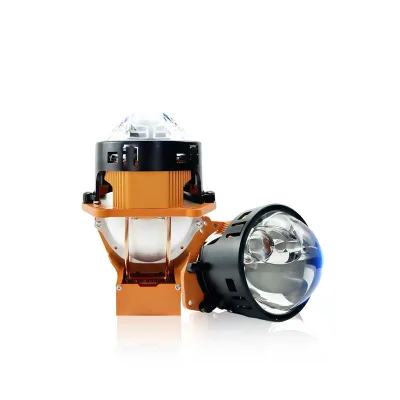
Factory Price 2.5-Inch 3-Inch Non-Destructive Automotive LED Headlights and Headlights
$13.14 - $14.79
MOQ: 100 Pieces




Comprehensive Sourcing Guide
Strategic Sourcing Guide for Universal Automotive Led Headlights
Technical Specifications and Performance Baselines
When evaluating Universal Automotive Led Headlights, buyers must first establish a clear understanding of the core technical specifications that define product viability. The market offers a diverse range of configurations, but specific attributes observed in current listings provide a concrete baseline for comparison. A primary differentiator is the voltage compatibility. While many modern vehicles operate on standard 12V systems, robust universal kits often support a broader input voltage range, specifically 12-24V, to accommodate both passenger cars and commercial trucks. This dual-voltage capability is a critical specification to verify before procurement.
The optical performance is equally vital. High-performance units in this category frequently utilize COB (Chip on Board) LED chips, which offer superior light distribution compared to traditional discrete chips. In terms of output, observed specifications indicate power ratings ranging from 48W to 80W per set, with luminous flux capabilities reaching up to 22,000 lumens. The color temperature is a standard metric for visual clarity; a consistent observation in high-quality units is 6500K, producing a crisp white light that mimics daylight. However, buyers should confirm that the specific unit selected matches their regional legal requirements, as some jurisdictions restrict color temperature or intensity.
Thermal management is the engineering challenge that separates durable products from premature failures. The heat dissipation mechanism is often cited as a "Turbo Fan" system, integrated into the design to maintain operating temperatures within safe limits. The working temperature range for these units is observed to span from -40°C to 105°C, ensuring functionality in extreme climates from arctic conditions to desert heat. The body material is predominantly aircraft-grade aluminum or aluminum alloy, chosen for its high thermal conductivity and structural rigidity. This material choice directly influences the lifespan, with reliable units boasting an operational life of over 30,000 hours.
Compliance and Certification Verification
Navigating the regulatory landscape is a non-negotiable aspect of sourcing automotive lighting. Unlike general consumer electronics, vehicle lighting components are subject to stringent safety and performance standards that vary by region. The observed product data indicates a wide array of certifications, including CCC (China Compulsory Certification), E-mark (European Economic Area), DOT (Department of Transportation, USA), GOST (Russia/CIS), SONCAP (Nigeria), PVOC (Kenya/Uganda), NRCS (South Africa), GCC (Gulf Cooperation Council), and ARAI (India).
Buyers must not assume that a single product listing satisfies all these standards. Instead, the procurement strategy should focus on matching the product's certification portfolio to the target market of the end-user. For instance, a shipment destined for the European market requires a valid E-mark, while a vehicle intended for the US market must meet DOT specifications. The presence of multiple certifications in a supplier's catalog suggests a robust compliance infrastructure, but it does not guarantee that every SKU in that catalog holds every certification. Verification of the specific certification for the specific model number is essential.
Furthermore, while background data may mention general environmental standards like RoHS or CE, these should be treated as supplementary rather than primary compliance markers for automotive lighting. The primary focus must remain on the vehicle-specific safety certifications listed above. Buyers should request valid test reports and certification documents for the exact model being purchased, rather than relying on general supplier claims. The absence of a specific regional certification can lead to customs seizures, legal liability, or the inability to register the vehicle for road use.
Cost Drivers and Pricing Dynamics
Understanding the cost structure of universal LED headlights requires an analysis of several variable factors. The observed price range in the market is substantial, spanning from approximately $0.72 to $100 per unit. This wide variance is not arbitrary; it is driven by the complexity of the components, the quality of the heat dissipation system, and the level of customization requested. Lower-priced units often utilize basic aluminum housings and standard cooling fans, while higher-priced units may incorporate advanced thermal management, higher-grade COB chips, and premium packaging.
The Minimum Order Quantity (MOQ) is another significant cost driver. The observed MOQ range extends from 1 unit to 1,100 units. For buyers seeking to test the market or fulfill small fleet needs, suppliers offering low MOQs are essential. However, for large-scale procurement, negotiating based on higher volume tiers can significantly reduce the unit cost. Customization is a major factor influencing price. While standard units are readily available, options such as laser logo engraving or custom box packaging typically carry a premium. The data indicates that custom box packaging often requires an MOQ of 500 sets, which impacts the total landed cost for smaller orders.
Packaging dimensions also play a role in logistics costs. The observed packing standards vary, with inner packing sizes ranging from 14x11x5.5 cm to 11x9x5 cm, and outer carton sizes ranging from 57x30x29.5 cm to 67x39x30 cm. These dimensions directly affect how many units can be loaded into a shipping container, thereby influencing the per-unit shipping cost. Buyers should calculate the total cost of ownership, including freight, by considering these packing efficiencies alongside the base unit price.
Typical Applications and Fitment Compatibility
The term "universal" in automotive lighting often implies broad compatibility, but the reality is defined by specific beam patterns and bulb types. The product specifications highlight a wide array of single beam and double beam options. Single beam configurations typically include H1, H3, H7, H11, 9005, 9006, 9012, 5202, and 880. Double beam configurations commonly cover H4, H13, 9004, and 9007. This extensive list suggests that these LED kits are designed to replace halogen bulbs in a vast majority of passenger vehicles and light commercial trucks.
The application scope is further defined by the intended use. These units are specified for "Car Lighting" and general "Car" usage, with functions covering dipped headlights, high beams, and front position lamps. The versatility is enhanced by the "All" applicable models designation, which implies that the mounting interfaces and electrical connectors are designed to be adaptable to various vehicle architectures. However, buyers must verify that the physical dimensions of the LED assembly do not interfere with the vehicle's headlight housing, especially in compact cars where space is limited.
The geographic distribution of sales provides insight into the adaptability of these products. The main sales areas observed include Africa, Europe, South America, and Southeast Asia. This global reach indicates that the products are engineered to withstand diverse environmental conditions and regulatory environments. The waterproof rating of IP68 is a critical specification for these applications, ensuring that the headlights can withstand heavy rain, car washes, and high humidity without electrical failure. This level of protection is essential for vehicles operating in tropical or monsoon-prone regions.
Supplier Evaluation and Operational Due Diligence
Selecting the right supplier is as critical as selecting the right product. The supply chain for automotive lighting is concentrated in specific manufacturing hubs. The observed data points to Zhongshan City and Zhongshan as the primary locations of origin. This region is known for its specialized lighting industry clusters, offering a high density of manufacturers with varying levels of expertise. Buyers should prioritize suppliers with a documented factory address in this region, as it indicates a direct relationship with the manufacturing source rather than a trading company intermediary.
When evaluating a potential supplier, the depth of their customization capabilities is a key indicator of their operational maturity. The ability to offer "Laser Logo" support and "Custom Box" packaging demonstrates a flexible production line capable of handling bespoke orders. However, buyers must be wary of suppliers who promise "Customization" without clear definitions of the associated MOQs and lead times. The data suggests that custom packaging typically requires a minimum order of 500 sets, a threshold that must be factored into the procurement plan.
Reliability is further assessed through the supplier's adherence to quality standards. While specific test results are not provided in the general data, the presence of multiple international certifications (CCC, E-mark, DOT, etc.) suggests that the supplier has undergone rigorous third-party audits. Buyers should request evidence of these certifications for the specific batch they intend to purchase. Additionally, the consistency of the product attributes, such as the use of aircraft aluminum and COB chips, should be verified through sample testing before committing to a large order.
Quality Control and Long-Term Procurement Strategy
Implementing a robust quality control (QC) protocol is essential to mitigate the risks associated with electronic components. Given the high power ratings and thermal demands of LED headlights, the integrity of the heat sink and the driver circuit is paramount. The internal driver design, observed in the product specifications, must be protected against voltage spikes and moisture ingress. The IP68 waterproof rating is a strong indicator of sealing quality, but this should be verified through independent testing or by requesting detailed waterproofing test reports from the supplier.
Long-term procurement considerations extend beyond the initial purchase price. The lifespan of the product, observed to be over 30,000 hours, is a significant value proposition. However, this lifespan is contingent on proper installation and the maintenance of the cooling system. Buyers should establish a relationship with the supplier that includes access to technical support for troubleshooting and warranty claims. The availability of "Free Service" options, such as laser logo customization, can also be a differentiator, but the core service expectation should be the ability to replace defective units quickly.
To ensure consistency in future orders, buyers should lock in the specific product models and specifications that performed well in initial trials. The observed model numbers, such as QYF-1525, QYF-1712, and V6, represent specific configurations that have met market demand. Standardizing on these models reduces the risk of specification drift. Furthermore, maintaining a clear record of the certifications and standards met by each batch ensures that the procurement remains compliant with evolving regulations in the target markets. By focusing on these technical and operational details, buyers can build a resilient supply chain for Universal Automotive Led Headlights that delivers consistent performance and value.
FAQs
What certifications are available for Universal Automotive Led Headlights?
Products often carry multiple certifications including E-mark, DOT, CCC, and GOST. Buyers must verify that the specific model holds the certification required for their target region, as a single listing does not guarantee all standards apply to every SKU.
How does the voltage compatibility work for these LED units?
Many universal kits support an input voltage range of 12-24V to fit both cars and trucks. This dual-voltage capability ensures compatibility with various vehicle electrical systems without requiring additional converters or adapters.
Which bulb types are supported by these universal headlight kits?
The kits support single beams like H1, H7, and H11, as well as double beams such as H4 and H13. This extensive list covers most passenger vehicles and light commercial trucks for direct halogen replacement.
Can I get custom packaging with a low minimum order quantity?
Custom box packaging is available but typically requires a minimum order of 500 sets. Standard packaging is available for smaller orders, while laser logo customization may also be offered depending on the supplier.
What is the typical lifespan of these Universal Automotive Led Headlights?
Reliable units boast an operational life of over 30,000 hours under normal conditions. This longevity depends on proper installation and the effectiveness of the integrated turbo fan cooling system in managing heat.
Where are these Universal Automotive Led Headlights manufactured?
The primary manufacturing location is Zhongshan City in China. Buyers should prioritize suppliers with a documented factory address in this region to ensure a direct relationship with the production source.
How waterproof are these LED headlights for outdoor use?
The units feature an IP68 waterproof rating to withstand heavy rain and car washes. This protection ensures functionality in high humidity and tropical climates without electrical failure or corrosion issues.