Source Universal Cattle Artificial Insemination Sheath for Cattle, Sheep, and Pigs
Find 15 listings for the Universal Cattle Artificial Insemination Sheath designed for veterinary use. Buyers can compare specifications like length and material, including options for 0.25ml and 0.5ml straws, to find suitable AI accessories for cattle, sheep, and pigs.
Key considerations
Products List


Cattle Bovine Cow Artificial Insemination Universal Split Ai Sheaths with Green Insert
$0.01 - $0.03
MOQ: 20000 Pieces


Good Quality Artificial Insemination Sheaths with Insert for Cattle Bovine Ai
$0.01 - $0.02
MOQ: 100000 Pieces


Comprehensive Sourcing Guide
Strategic Sourcing Guide for Universal Cattle Artificial Insemination Sheaths
The global livestock industry relies heavily on the efficiency and safety of artificial insemination (AI) protocols to maintain genetic progress and herd health. Among the critical consumables in this process, the Universal Cattle Artificial Insemination Sheath serves as a primary interface between the semen straws and the reproductive tract of the animal. Sourcing these components requires a disciplined approach that balances technical precision, material integrity, and supply chain reliability. This guide provides a comprehensive framework for procurement professionals to evaluate potential suppliers and select products that meet rigorous veterinary standards without relying on unverified marketing claims.
Technical Specifications and Material Composition
The foundational requirement for any AI sheath is its ability to protect the semen straw while ensuring a smooth, damage-free insertion. Based on available market data, the most common specifications for universal sheaths include a length of 440mm, which is designed to accommodate the anatomical requirements of cattle and sheep. The outer diameter typically ranges around 4.6mm, a dimension critical for fitting standard 0.25ml and 0.5ml straws without causing slippage or excessive friction. Buyers must verify that the product is explicitly labeled as "Universal for 0.25 and 0.5 Straws," as this ensures compatibility across the most widely used semen storage formats in the industry.
Material selection is equally paramount, as the sheath must be chemically inert and physically robust. The supply chain currently offers products manufactured from New Polyethene Material, which provides the necessary flexibility and transparency. Transparency is a key visual attribute, allowing veterinarians to inspect the interior of the sheath for any debris or defects before use. Some listings also indicate the availability of PVC-based options, categorized as thermoplastic pipes with a round shape and hollow structure. When evaluating these materials, procurement teams should confirm the hardness rating, as the product is often described as a "Hard Tube" to prevent kinking during the insemination procedure. The material must also be capable of withstanding the sterilization processes required in veterinary settings without degrading.
Compliance, Certification, and Standard Verification
In the veterinary medical device sector, compliance is not merely a regulatory formality but a critical safety mechanism. While specific certification bodies are not universally mandated for all regions, buyers must demand evidence of adherence to recognized standards. The supplied data indicates that products often reference "polyethene" as a standard material type and "Split" or "Unsplit" configurations as structural standards. These terms refer to the manufacturing process and the final geometry of the sheath. A "Split" sheath may allow for easier loading of the straw, whereas an "Unsplit" version offers a continuous barrier.
Buyers should verify that the supplier can provide documentation confirming the product origin, with China (Mainland) and specific regions like Henan being prominent sources. However, the country of origin is not a substitute for quality assurance. Procurement teams must request proof that the manufacturing facility adheres to Good Manufacturing Practices (GMP) or equivalent ISO standards for medical devices. The absence of specific certification names in general listings does not imply non-compliance, but it necessitates a direct inquiry to the supplier regarding their quality management system. Without explicit verification, the risk of receiving non-compliant goods that could compromise animal health or semen viability remains high.
Cost Drivers and Pricing Dynamics
The pricing landscape for universal cattle AI sheaths is characterized by significant variability, with observed market ranges spanning from $0.01 to $2.86 per unit. This wide disparity is driven by several factors, including material quality, packaging configuration, and order volume. The lowest price points often correspond to bulk orders of basic polyethene sheaths with minimal packaging, while higher prices may reflect premium materials, specialized sterilization, or smaller batch sizes.
The Minimum Order Quantity (MOQ) is another critical cost driver. Market observations show MOQs ranging from as low as 1 unit to as high as 100,000 units. For small-scale veterinary practices or research facilities, suppliers offering "Small" MOQs are essential to prevent inventory obsolescence. Conversely, large breeding farms or distributors require high-volume suppliers capable of meeting the 100,000-unit threshold to secure economies of scale. Buyers must calculate the total cost of ownership, factoring in shipping costs for heavy carton loads, as the standard export packing often involves large quantities per container. Understanding the relationship between unit price and MOQ is vital for budgeting and negotiating favorable terms.
Typical Applications and Operational Utility
The primary application of these sheaths is in the artificial insemination of cattle, sheep, and pigs. The product is explicitly designed for "Veterinary, Animals Insemination" and is often categorized as an "Inside AI accessory." The operational utility extends beyond simple containment; the sheath acts as a protective barrier that prevents cross-contamination between animals and protects the delicate semen straw from external environmental factors.
The "Front Is Smooth No Damage" feature is a critical functional attribute. During the insemination procedure, the sheath is advanced into the reproductive tract. Any roughness or imperfection on the front end could cause trauma to the animal, leading to inflammation, infection, or reduced conception rates. Therefore, the smoothness of the tip is a non-negotiable quality metric. Additionally, the sheath must be compatible with various AI gun models, including those identified by model numbers such as A. I gun, FV0209, KD720, and KD739. This universality ensures that veterinary professionals can use the sheath with their existing equipment without requiring specialized adapters or modifications.
Supplier Evaluation and OEM Capabilities
When selecting a supplier, buyers should prioritize those who offer Original Equipment Manufacturer (OEM) services. The availability of OEM capabilities allows breeding organizations to brand the sheaths with their own logos, enhancing brand recognition and traceability. The data confirms that suppliers generally "Accept" OEM requests and can provide samples for evaluation. This flexibility is crucial for large-scale operations that require consistent branding and specific packaging configurations.
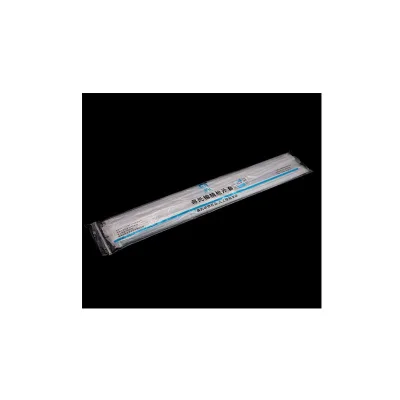
Packaging standards also play a significant role in supplier evaluation. Products are typically supplied in "Single Wrapped" units or bulk bags containing 20 to 50 pieces. The standard export carton is the norm for international shipping, ensuring that the sheaths remain sterile and protected during transit. Buyers should verify the specific packaging details, such as "20pcs/bag" or "50PCS/Bag," to ensure they align with their inventory management systems. Furthermore, the supplier's ability to provide samples is a strong indicator of confidence in product quality. A reputable supplier will readily provide samples for testing before committing to a large order, allowing the buyer to verify the material thickness, transparency, and smoothness firsthand.
Quality Control and Long-Term Procurement Considerations
Effective quality control (QC) is the backbone of a reliable supply chain for veterinary consumables. Buyers must implement a rigorous QC protocol that includes visual inspection for transparency and structural integrity, as well as dimensional checks to ensure the length and diameter match the specified 440mm and 4.6mm. The material must be free from defects such as bubbles, discoloration, or uneven walls, which could indicate poor manufacturing processes.
For long-term procurement, consistency is key. The market offers various models, including custom options and specific model numbers like xm026. However, relying on a single model number for all needs may limit flexibility. Instead, buyers should establish a relationship with a supplier capable of producing "Custom" models to meet evolving veterinary needs. The ability to source "Split" or "Unsplit" variants allows for adaptation to different insemination techniques. Additionally, the supplier's location, such as Henan, China, should be considered in the context of logistics and lead times. While the specific lead times are not provided in the general data, buyers should negotiate clear timelines to ensure that stock levels are maintained, especially during peak breeding seasons.
Comparative Analysis of Product Attributes
To facilitate decision-making, the following table summarizes the key attributes observed in the current market for universal cattle artificial insemination sheaths. This comparison highlights the diversity in specifications and helps buyers identify the most suitable product for their specific operational needs.
| Attribute | Observation 1 | Observation 2 | Observation 3 |
|---|---|---|---|
| Material | New Polyethene Material | PVC | Stainless Steel (for accessories) |
| Length | 440mm | 440mm / 245mm | Variable |
| Outer Diameter | 4.6mm | Dia 4.5mm | N/A |
| Straw Compatibility | Universal for 0.25 and 0.5 Straws | 0.25ml/0.5ml | N/A |
| Color | Transparent | Transparent | N/A |
| Shape | Round | Round | N/A |
| Hardness | Hard Tube | Hard Tube | N/A |
| Packaging | Single Wrapped | 20pcs/bag | 50PCS/Bag |
| Standard | Polyethene | Split / Unsplit | Split |
| Origin | China | China (Mainland) | Henan, China |
| OEM | Accept | Yes | N/A |
This table illustrates that while the core dimensions remain relatively consistent, variations in material and packaging exist. Buyers should prioritize products that align with their specific workflow requirements, such as the need for single-wrapped units for hygiene or bulk packaging for cost efficiency.
Conclusion
Sourcing universal cattle artificial insemination sheaths requires a meticulous evaluation of technical specifications, material quality, and supplier capabilities. By focusing on the verified attributes such as the 440mm length, 4.6mm diameter, and polyethene composition, buyers can ensure the safety and efficacy of their AI programs. The wide range of pricing and MOQs necessitates a strategic approach to procurement, balancing cost efficiency with the need for high-quality, consistent supplies. Ultimately, the success of the procurement process depends on the buyer's ability to verify compliance, request samples, and establish long-term partnerships with suppliers who demonstrate a commitment to quality and customization.
FAQs
What materials are used for universal cattle artificial insemination sheaths?
Most sheaths are made from New Polyethene Material or PVC to ensure flexibility and transparency. Some accessories may use Stainless Steel, but the sheath itself is typically a thermoplastic pipe. Buyers should verify the specific material composition to ensure it meets veterinary safety standards.
How long are the standard universal sheaths for cattle?
The standard length is 440mm, designed to accommodate the anatomical requirements of cattle and sheep. Some variations may include shorter lengths like 245mm, but 440mm is the primary specification. This dimension ensures proper insertion without causing damage to the animal.
Which straw sizes are compatible with these universal sheaths?
These sheaths are universal for 0.25ml and 0.5ml straws, fitting standard semen storage formats. The outer diameter is typically 4.6mm or 4.5mm to prevent slippage. This compatibility ensures they work with the most widely used semen storage formats in the industry.
Can suppliers provide samples for quality evaluation before bulk orders?
Yes, suppliers generally provide samples for evaluation to verify material thickness and smoothness. This allows buyers to inspect the front end for damage-free insertion before committing to large quantities. Samples are a standard offering to ensure product quality matches requirements.
What is the typical packaging configuration for these sheaths?
Sheaths are typically supplied in single wrapped units or bulk bags containing 20 to 50 pieces. Standard export cartons are used for international shipping to maintain sterility. Buyers should confirm if they need 20pcs/bag or 50PCS/Bag based on their inventory management needs.
Do manufacturers offer OEM services for branding these sheaths?
Yes, most manufacturers accept OEM requests to brand the sheaths with specific logos. This allows breeding organizations to enhance brand recognition and traceability. Buyers can request custom packaging and branding options when negotiating with suppliers.
Where are these sheaths primarily manufactured?
The primary manufacturing origin is China, with specific regions like Henan being prominent sources. Buyers should verify the specific factory location to ensure compliance with quality standards. While origin is noted, it does not replace the need for quality assurance documentation.