Source Update for A4 LED Taillights for BMW, Audi, and VW
Find 30 listings for Update for A4 LED Taillights to compare specifications like voltage, lumens, and fitment for BMW G22, Audi A4 B8.5, and VW Golf 6. Buyers can review OEM standard options with 12V LED technology and waterproof resistance for repair or retrofit needs.
Key considerations
Products List
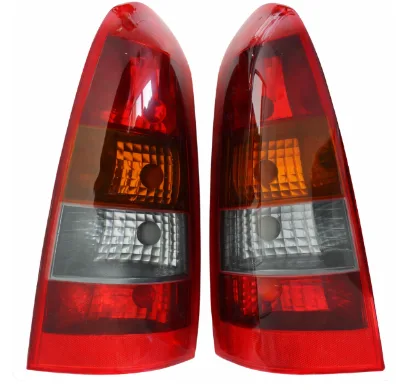


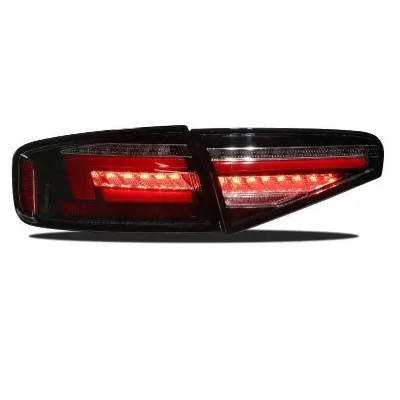

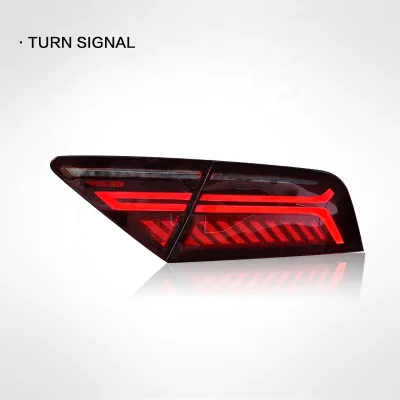
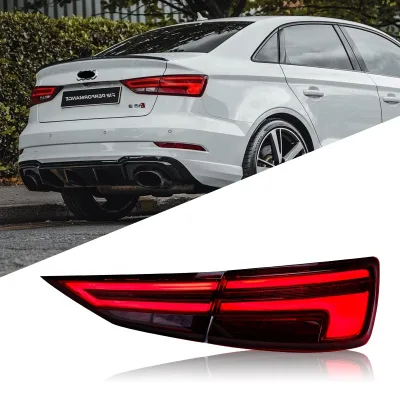


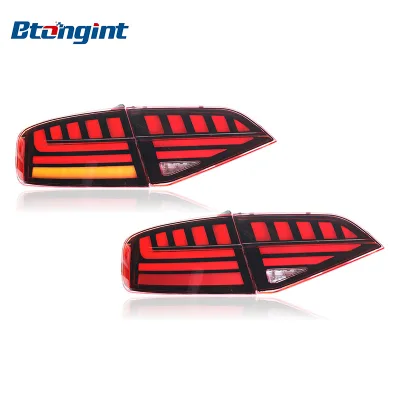


Factory Price 20 * 47mm Decoding LED High-Power Steering Brake Tail Lights
$4.40 - $4.95
MOQ: 300 Pieces

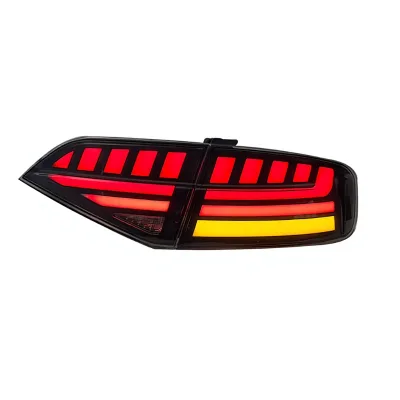

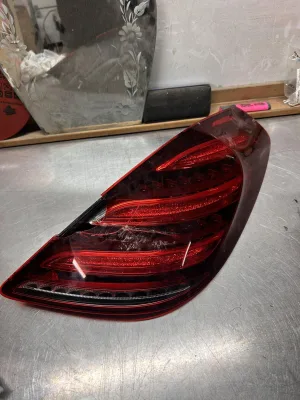
Auto Taillight Assembly Modified LED Through Type Tail Lamp for Audi A4 2016 -2022
$555.00 - $560.00
MOQ: 50 Pieces






Comprehensive Sourcing Guide
Strategic Sourcing Guide for Audi A4 LED Taillight Upgrades
Understanding Technical Specifications and Compatibility
When sourcing LED taillights specifically for an update or retrofit on an Audi A4, the primary challenge lies in navigating the complex landscape of vehicle fitment and electrical compatibility. The market data indicates that "Car Make" specifications often explicitly target the "Audi A4 B8.5 2013-2016" model range, suggesting that successful procurement requires precise alignment with this generation. Buyers must recognize that "Universal Fitment" is frequently marked as "No," meaning generic aftermarket parts are unlikely to function correctly without significant modification. The core product attributes highlight that these units are designed for "replace/repair" and "Retrofit/Upgrade" purposes, serving as direct functional replacements for original equipment.
Technical verification begins with the electrical interface. The supplied product facts consistently list a "Voltage" of "12V" or "12 V," which aligns with standard automotive electrical systems. However, the internal technology varies; some listings specify "LED" as the material, while others describe the "Lamp Type" as "LED Modified Style." This distinction is critical for a buyer seeking a high-performance upgrade. The performance metrics observed in the dataset include a "Lumens" output of "3000lm" and a "Color Temperature" of "5000K," which represents a bright, neutral white light often preferred for modern visibility standards. Conversely, other entries in the same category list the "Light Color" as "Red," which is the standard regulatory requirement for rear taillights. This apparent contradiction in the data suggests that buyers must carefully distinguish between the LED bulb technology used for daytime running lights (DRL) or turn signals versus the red housing and lens required for brake and tail functions.
Furthermore, the physical dimensions and packaging standards vary significantly across suppliers. Observed product standards range from compact dimensions like "20.37.57cm" to larger shipping boxes measuring "504540" or "504840." These variations often reflect the difference between individual bulb replacements and full "Headlight Assembly" or "Taillight" units. For an Audi A4 B8.5, the "Model Number" is a crucial identifier, with specific examples like "APJ10103/APJ10104" appearing in the data. These alphanumeric codes often correspond to specific left-hand (LH) and right-hand (RH) assemblies. Buyers should verify that the "Specification" explicitly states "LH/RH" to ensure they are purchasing a complete pair rather than a single side unit, which would necessitate a second order and complicate the installation process.
Compliance, Certification, and Regulatory Standards
Navigating the regulatory landscape for automotive lighting components requires a rigorous approach to compliance, particularly when importing parts from China. The "Place of Origin" for these products is frequently listed as Zhejiang, Guangdong, or Chongqing, indicating a high concentration of manufacturing in these regions. While the data confirms that "Inspection" involves "100% Inspection before delivery," this is an internal quality control measure and does not equate to external regulatory certification. Buyers must understand that "100% Inspection" ensures the product functions upon arrival but does not guarantee compliance with the specific safety standards of the destination country, such as ECE regulations in Europe or DOT/FMVSS standards in the United States.
The "prod_standard" field in the provided data lists dimensions rather than regulatory codes, which is a common observation in general product listings. This absence of explicit certification data (such as E-mark or DOT approval) means that buyers cannot assume legal roadworthiness based solely on the product description. For a vehicle upgrade like the Audi A4, the legal implications of non-compliant lighting can be severe, including failed vehicle inspections and liability issues in the event of an accident. Therefore, the procurement strategy must include a direct inquiry to the supplier regarding specific certifications. Buyers should request documentation proving that the "Waterproof" resistance, a key attribute listed in the data, meets the IP65 or IP67 standards required for outdoor automotive use.
Additionally, the "Warranty" period is a significant indicator of supplier confidence. The observed data mentions a "12 MONTHS" warranty, which serves as a baseline for after-sales support. However, warranty terms are not a substitute for safety certifications. A supplier offering a long warranty on a non-certified product is still providing a product that may be illegal to use on public roads. Buyers should verify if the "Brand Name," such as "Smart Star," holds any recognized industry accreditations. In the absence of explicit certification data in the product facts, the buyer's responsibility is to demand proof of compliance before finalizing the purchase. This includes verifying that the "Material," specifically the LED components, adheres to RoHS (Restriction of Hazardous Substances) directives if the product is destined for the European market.
Cost Drivers and Pricing Dynamics
The pricing structure for LED taillight upgrades is influenced by several distinct factors, creating a wide range of potential costs. The observed "listed price range" spans from $0.89 to $700, a variance that reflects the difference between individual LED bulbs, small components, and complete assembly units. A price at the lower end of this spectrum, such as $0.89, likely corresponds to a single LED bulb or a minor accessory, whereas a price near $700 suggests a full, high-end "Headlight Assembly" or a premium taillight set with advanced features. For a complete upgrade of an Audi A4 B8.5, buyers should anticipate costs closer to the higher end of the spectrum if they are purchasing full assemblies, while bulb replacements will fall into the mid-to-low range.
The "MOQ" (Minimum Order Quantity) is another critical cost driver. The data shows an MOQ range of 1 to 1000, with specific instances of "1 PAIR" being available. This flexibility allows individual buyers or small workshops to procure a single set without needing to buy in bulk. However, suppliers with higher MOQs often offer lower unit prices, which can be beneficial for fleet operations or large-scale refurbishment projects. The "Selling Units" are typically listed as "Single item," but the "Packaging Details" often indicate that a "ONE SET IN ONE PACKAGE" is the standard for complete assemblies. Buyers must calculate the total cost of ownership, including shipping, which can be substantial given the "Port of dispatch" locations like Ningbo, Shanghai, or Guangzhou.
Customization is another factor that can drive up costs. The attribute "Customization: Available" suggests that suppliers can tailor products to specific requirements, such as unique color temperatures or lens designs. While this adds value, it often incurs additional tooling or setup fees. The "Supply Ability" of "1000 pairs per Month" indicates that while the market is active, high-volume custom orders might require lead time adjustments. Buyers should also consider the "Condition" of the product, which is listed as "New." Refurbished or used parts, while cheaper, are not represented in the current data set and carry higher risks of failure. Therefore, the cost premium for "New" parts with a "12 MONTHS" warranty is a necessary investment for reliability.
Typical Applications and Use Cases
The primary application for these LED taillights is the "Retrofit/Upgrade" of existing vehicles, specifically targeting the "Audi A4 B8.5 2013-2016" model. The "Purpose" is explicitly defined as "for replace/repair," indicating that these parts are designed to restore the vehicle to its original operational state or to enhance it with modern technology. The "Function" of the products includes "Back Position Lamp" and "Parking Light," which are essential for vehicle visibility and safety. The "Car Fitment" is listed as "Other" in some contexts, but the specific "Car Model" entries like "G22" and "F49" suggest that the same product lines may be adapted for other BMW or Audi models, requiring careful verification before purchase.
Beyond simple replacement, these components are often used for aesthetic and functional upgrades. The "Lamp Type" described as "LED Modified Style" implies a shift from traditional halogen or incandescent bulbs to LED technology, offering faster response times and improved energy efficiency. The "Color Temperature" of 5000K provides a crisp, white light that enhances the modern look of the vehicle, while the "Red" light color ensures compliance with rear lighting regulations. The "Waterproof" attribute is particularly relevant for applications in regions with harsh weather conditions, ensuring that the electrical components remain functional despite exposure to rain or snow.
The "Inspection" process of "100% Inspection before delivery" ensures that the "Quality" is "Good quality," which is vital for applications where safety is paramount. The "Warranty" of "12 MONTHS" provides a safety net for buyers, covering potential defects that might arise during the initial period of use. The "Port of dispatch" locations, including Ningbo, Shanghai, and Guangzhou, indicate that these products are readily available for international shipping, making them accessible to buyers globally. The "Packaging Details" suggest that the products are shipped in "Carton" or "Paper Box" formats, designed to protect the delicate LED components during transit.
Supplier Evaluation and Selection Criteria
Selecting the right supplier for LED taillight upgrades requires a multi-faceted evaluation process that goes beyond price and product specifications. The "Place of Origin" data reveals a concentration of suppliers in Zhejiang, Guangdong, and Chongqing, China. While these regions are known for their manufacturing capabilities, buyers should not assume uniform quality across all suppliers. The "Brand Name" "Smart Star" is one example of a supplier or brand appearing in the data, but buyers should not limit their search to a single name. Instead, they should evaluate suppliers based on their "Supply Ability," which is listed as "1000 pairs per Month" for some vendors. This metric provides insight into the supplier's capacity to fulfill orders, especially for larger quantities.
The "MOQ" of "1 PAIR" is a significant advantage for buyers who do not require bulk quantities. However, suppliers with higher MOQs may offer better pricing and more robust support structures. Buyers should also assess the "Customization" capabilities of the supplier. The availability of customization suggests a level of flexibility that can be crucial for meeting specific vehicle requirements. The "Inspection" process is another key evaluation point; suppliers who perform "100% Inspection before delivery" demonstrate a commitment to quality control, reducing the risk of receiving defective products.
The "Warranty" period is a critical differentiator among suppliers. A "12 MONTHS" warranty is a standard benchmark, but buyers should verify the terms and conditions of this warranty. Does it cover labor costs? Does it cover shipping for returns? These details can significantly impact the total cost of ownership. Additionally, the "Port of dispatch" locations can influence lead times and shipping costs. Suppliers dispatching from Ningbo, Shanghai, or Guangzhou may have different logistics networks and shipping rates, which buyers should factor into their decision-making process.
Quality Control and Long-Term Procurement Considerations
Ensuring the long-term success of an LED taillight upgrade requires a robust quality control strategy. The "Material" of "LED" is a key component, but the quality of the LEDs themselves can vary widely. Buyers should verify the "Lumens" output and "Color Temperature" to ensure they meet the desired performance standards. The "Waterproof" attribute is essential for durability, and buyers should request specific IP ratings to confirm the product's resistance to water and dust. The "Condition" of "New" is a basic requirement, but buyers should also inspect the physical condition of the product upon arrival to ensure there is no damage during transit.
The "Packaging Details" provide insight into how the product is protected. The use of "Carton" or "Paper Box" packaging is standard, but the internal packaging should be sufficient to prevent damage to the delicate LED components. The "Specification" of "LH/RH" ensures that the correct side is purchased, preventing installation errors. The "Model Number" is another critical factor; buyers should cross-reference the model number with their vehicle's requirements to ensure compatibility.
Long-term procurement considerations include the availability of spare parts and the reliability of the supply chain. The "Supply Ability" of "1000 pairs per Month" suggests that the supplier has a steady production capacity, which is beneficial for ongoing maintenance and replacement needs. The "Warranty" of "12 MONTHS" provides a safety net, but buyers should also consider the supplier's reputation and customer service. A supplier with a strong track record of honoring warranties and providing timely support is essential for long-term success.
In conclusion, sourcing LED taillights for an Audi A4 B8.5 upgrade requires a careful balance of technical verification, regulatory compliance, cost analysis, and supplier evaluation. By focusing on the specific attributes and specifications provided in the data, buyers can make informed decisions that ensure the safety, reliability, and performance of their vehicle upgrades. The wide range of prices and MOQs offers flexibility, but buyers must remain vigilant in their selection process to avoid pitfalls associated with non-compliant or low-quality products.
FAQs
What is the voltage requirement for these LED taillights?
The voltage requirement is 12V, which aligns with standard automotive electrical systems. This specification ensures compatibility with the vehicle's existing wiring without needing complex adapters or voltage converters for proper operation.
Which car models are compatible with these LED taillight assemblies?
These units are specifically designed for the Audi A4 B8.5 model years 2013 to 2016. They are not universal fitments and require precise alignment with the designated model number to ensure correct installation and function.
Can I purchase a single pair of these taillights as a minimum order?
Yes, the minimum order quantity is one pair, allowing buyers to purchase a complete set without bulk commitments. This flexibility supports individual upgrades or small workshop repairs without requiring large inventory investments.
How are these LED taillights packaged for international shipping?
Products are typically packed in cartons, paper boxes, or regular packaging depending on the specific item. Dimensions vary from compact units to larger boxes measuring 50 by 45 by 40 centimeters to protect the assembly during transit.
What warranty period is provided for these new LED light assemblies?
A 12-month warranty is offered for these new products to cover potential defects upon delivery. This warranty period provides buyers with a safety net for initial performance issues while ensuring the parts meet quality standards.
Are these taillights waterproof for outdoor automotive use?
Yes, the products are designed with waterproof resistance to withstand exposure to rain and varying weather conditions. This feature ensures reliable operation for rear position and parking lights in diverse environmental scenarios.
What is the typical supply capacity for these LED taillight units?
Suppliers demonstrate a supply ability of 1000 pairs per month for these specific automotive lighting components. This capacity indicates a steady production flow capable of meeting moderate demand for retrofit and upgrade projects.