Source Used Luxury SUV Electric Car for fleet, family, and touring
Compare 30 available Used Luxury SUV Electric Car listings with varying battery capacities and performance specs. Buyers can evaluate models like the Avatr 07 and Zeekr 9x for fleet, family, or touring applications.
Key considerations
Products List


Smart/Intelligent Luxury/Comfortable Economic 2WD/4WD New Energy EV/Electric SUV Car
$37200.00 - $50000.00
MOQ: 2 Pieces


Top Quality Electric Vehicle Fast Charging Luxury SUV Efficient Energy Car
$9130.00 - $9365.00
MOQ: 1 sets

Luxury Electric Car with High Performance Hybrid SUV and Energy Efficient Motor
$5364.00 - $5662.00
MOQ: 1 sets

Luxury Electric SUV Affordable High-Speed Charging Top Quality Pure Electric Car
$9130.00 - $9365.00
MOQ: 1 sets

Voyah Luxury 5-Door 7-Seater Electric Car 650km Long-Range New Energy Used Car
$33990.00 - $63300.00
MOQ: 5 Pieces

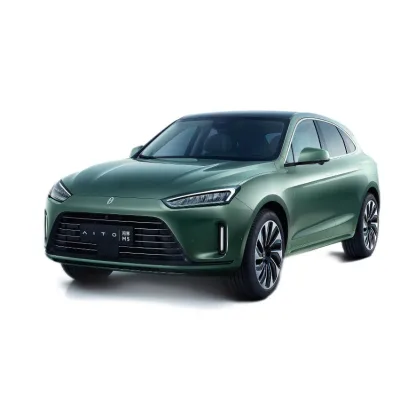

$1700.00 - $1800.00
MOQ: 1 Pieces


Pure Electricity Vehicle Five Seats for Five People Compact SUV Used Car
$20000.00 - $200000.00
MOQ: 1 Pieces
Yuncheng City Yanhu District Changchi Auto Service Co., Ltd.

Used Electric Car ID. 6 Crozz Electric Vehicle
$20000.00 - $200000.00
MOQ: 1 Pieces
Yuncheng City Yanhu District Changchi Auto Service Co., Ltd.

Used Electric Vehicle ID. 6 Crozz Electric Car with 5 Seats
$20000.00 - $200000.00
MOQ: 1 Pieces
Yuncheng City Yanhu District Changchi Auto Service Co., Ltd.


Electrocars Electric City Car Electric SUV Vehicle Electric Car Used
$29780.00 - $29980.00
MOQ: 1 Pieces


Electric Car Used E-Car Electric City Car Electronic Car for Adult
$35800.00 - $36400.00
MOQ: 1 Pieces


2021 Electric Vehicle Used EV SUV New Energry Electricial Car
$42800.00 - $45800.00
MOQ: 1 Pieces
Chengdu Himore Zhonghuan Automobile Exports Trading Co., Ltd.

Luxury Car Model S New Energy Cars Edition 672km 715km EV Sedan Used Automobile Electric
$18000.00 - $22000.00
MOQ: 1 Pieces


Comprehensive Sourcing Guide
Strategic Sourcing Guide for Used Luxury Electric SUVs
The global market for used luxury electric SUVs has evolved into a complex B2B procurement landscape where technical precision and compliance verification are paramount. Buyers seeking these vehicles must navigate a dataset that often presents conflicting or overlapping specifications, requiring a disciplined approach to sourcing. The core keyword "Used Luxury SUV Electric Car" implies a vehicle that combines premium build quality, advanced electrification, and a secondary market status. In this context, procurement professionals must rely strictly on observable product attributes and verified facts rather than marketing claims. The following guide outlines the essential technical, compliance, and operational factors necessary for a successful acquisition strategy.
Technical Specification Analysis and Verification
The first step in sourcing a used luxury electric SUV is a rigorous analysis of the technical specifications provided in the product listing. A critical observation in the current market data is the variance in reported dimensions and performance metrics for similar vehicle models. For instance, while one listing identifies a vehicle as an SUV with a body style labeled "Open," another entry for a similar model classifies it as a "Van" or "Type: Van." This discrepancy necessitates a strict verification protocol where the buyer must confirm the physical body style against the intended use case. The observed data indicates specific dimensional ranges, such as an overall length of 4825mm, 4880mm, or a width of 1980mm to 1970mm. A procurement specialist must cross-reference these figures to ensure the vehicle fits the intended logistical or operational requirements.
Performance metrics further complicate the verification process. The data presents a wide range of battery capacities, from 82.16 kWh to 90.38 kWh, and varying energy densities around 180 Wh/kg. Crucially, the listed endurance mileage and curb weights show significant variation, with endurance figures cited as 650/610 km and curb weights ranging from 2315 to 2434 kg. These figures suggest that the "used" status of the vehicle may involve significant wear or that the listings represent different trim levels or battery degradation states. Buyers must verify the actual State of Health (SOH) of the battery, as the listed "Endurance Mileage" of 650 km may not reflect the current reality of a used unit. Additionally, the powertrain specifications vary, with some entries listing a maximum power of 230 kW and a torque of 370 N.M, while others suggest a maximum horsepower of 313 PS. The acceleration capability is cited as 1.93s, a figure that requires independent validation through third-party testing or verified historical data, as such performance is atypical for a standard used vehicle without specific context regarding its condition.
Compliance, Certification, and Regulatory Standards
Navigating the regulatory landscape for used electric vehicles requires a meticulous review of certifications and standards. The provided data includes references to "Mgnt Certification: ISO," which implies a management system certification, likely ISO 9001 or similar, though the specific standard is not explicitly detailed in the text. Buyers must verify that the supplier holds valid ISO certifications that cover the specific handling and reconditioning of electric vehicles. Furthermore, the product standard is listed as "Medium" or "medium-size," which serves as a classification rather than a regulatory compliance mark. In the context of international trade, the "prod_standard" field must be cross-referenced with the destination country's import regulations for electric vehicles.
The origin of the vehicle is a critical compliance factor. The data explicitly states "prod_origin: China," which dictates the need for specific export documentation and adherence to Chinese manufacturing standards. For buyers in other regions, this origin point necessitates a review of trade tariffs, safety standards, and homologation requirements. The "prod_packing" is noted as "CBU" (Completely Built Unit) or "Container," indicating that the vehicle is shipped in its original factory configuration. This is a vital detail for customs clearance, as CBU imports often face different duty structures compared to knocked-down kits. Buyers must ensure that the "CBU" status aligns with the vehicle's actual condition and that no unauthorized modifications have been made that would void the original manufacturer's warranty or compliance status.
Cost Drivers and Pricing Dynamics
The pricing structure for used luxury electric SUVs is influenced by a complex array of factors, including battery health, mileage, and market demand. The observed listed price range in the current market data spans from $1,050 to $200,000. This extreme variance suggests that the listings include a mix of severely damaged units, parts vehicles, and high-end, low-mileage luxury models. A buyer must be cautious not to equate the lower end of this range with a functional, road-ready vehicle. The Minimum Order Quantity (MOQ) is observed to range from 1 to 10 units, indicating flexibility for both single-unit acquisitions and fleet purchases.
Several cost drivers directly impact the final procurement price. The battery capacity, ranging from 82.16 kWh to 90.38 kWh, is a primary determinant of value. Vehicles with higher capacity batteries and better energy density (180 Wh/kg) will command a premium. Additionally, the charging infrastructure compatibility, such as the fast charging time of 0.25 hours to reach 80% energy, adds value to the vehicle. The "Service Life" is listed as 1-3 years, which may refer to the remaining warranty period or the expected operational lifespan of the used unit. Buyers must factor in the potential cost of battery replacement or reconditioning, as the "Runing Mileage" of 600 km or "Mileage: ≤10000 km" suggests varying degrees of usage. The "Condition: New" attribute in some listings contradicts the "used" nature of the search, implying that some sellers may list refurbished or reconditioned units as "new," which requires careful financial due diligence.
Typical Applications and Operational Use Cases
Understanding the intended application of the vehicle is essential for matching the right asset to the buyer's needs. The data lists diverse usage categories, including "Novice Car," "Experience Car," "Family Car," "Commercial Vehicle," and "Touring Car." This wide range indicates that the used luxury electric SUV market serves multiple sectors. For commercial applications, the "Rear Trunk Capacity" of 500-1325 liters and "Front Trunk Capacity" of 90 liters provide significant utility for logistics or passenger transport. The "Road Conditions: off-Road" attribute suggests that certain models are suitable for rugged terrain, which is a critical consideration for buyers in industries like mining, agriculture, or emergency services.
The "Class of Assistance Driving: L2" indicates a level of autonomous driving capability that can enhance safety and efficiency in commercial fleets. However, the "Gearbox" type varies between "Automatic" and "Manual," which may impact the suitability for different driver skill levels or operational environments. The "Drive" configuration is listed as "RWD" (Rear Wheel Drive) or "Rear Drive," which affects traction and handling characteristics. Buyers must align these technical attributes with their specific operational requirements. For instance, a "Family Car" application might prioritize the "Interior Atmosphere Light" and spacious trunk capacity, while a "Commercial Vehicle" might focus on the "Fast Charging Function" and durability of the "Mechanical" braking system.
Supplier Evaluation and Quality Assurance
Evaluating suppliers for used luxury electric SUVs requires a multi-faceted approach that goes beyond simple price comparison. The "Service Life" of 1-3 years and the "Condition: New" status highlight the importance of verifying the supplier's reconditioning processes. Buyers should demand detailed inspection reports that cover the battery health, motor integrity, and chassis condition. The "Battery Cooling Method: Liquid Cooling" is a specific technical feature that must be verified to ensure the vehicle has not suffered from thermal degradation, which is a common issue in used electric vehicles.
Quality control protocols should include a review of the "Braking System: Mechanical" and the "Fast Charging Function: Supported" status. These components are critical for safety and operational continuity. Buyers should also verify the "Mgnt Certification" and ensure that the supplier adheres to the "Medium" or "medium-size" product standards. The "prod_packing: Container" detail suggests that the supplier has established logistics capabilities, but buyers must confirm that the packaging protects the vehicle during transit, especially for high-value luxury units. The "Type: Van" or "Body Type: Open" discrepancies observed in the data underscore the need for a rigorous pre-shipment inspection to ensure the vehicle matches the description provided in the listing.
Long-Term Procurement and Lifecycle Management
Long-term procurement considerations for used luxury electric SUVs involve planning for maintenance, battery replacement, and regulatory compliance over the vehicle's lifecycle. The "Battery Kwh/100km" figure of 17.1 provides a baseline for energy consumption, which is crucial for calculating total cost of ownership. Buyers must anticipate the costs associated with battery degradation, especially given the "Endyrance Mileage" variations. The "Slow Charging: 10.5h" and "Fast Charging Time: 0.25h" metrics indicate the charging infrastructure requirements, which must be factored into the operational budget.
The "Usage" categories, such as "Commercial Vehicle" and "Touring Car," suggest that the vehicle may be subjected to high mileage and varied driving conditions. Buyers should establish a maintenance schedule that accounts for the "Service Life" of 1-3 years and the potential need for component replacements. The "Mileage: ≤10000 km" and "Runing Mileage: 600 km" figures indicate that some units may have low usage, while others may have been driven extensively. This variance necessitates a flexible procurement strategy that can accommodate different lifecycle stages. Finally, buyers must stay informed about evolving regulations regarding electric vehicles, particularly those related to battery recycling and disposal, to ensure long-term compliance and sustainability.
Summary of Key Technical Attributes
| Attribute Category | Observed Data Points | Verification Requirement |
|---|---|---|
| Dimensions | 482519801620 mm; 488019701601 mm | Confirm physical measurements against listing. |
| Battery | 82.16 kWh; 90.38 kWh; Ternary Lithium | Verify State of Health (SOH) and cooling method. |
| Performance | 200 km/h max speed; 1.93s 0-100 km/h | Validate acceleration and top speed claims. |
| Charging | 0.25h (80%); 10.5h (Slow) | Check charging port compatibility and infrastructure. |
| Condition | New; ≤10000 km; 600 km mileage | Inspect for wear, damage, and reconditioning history. |
| Origin | China | Review export documentation and import regulations. |
| Certification | ISO (Management); Medium Standard | Confirm valid ISO certificates and product standards. |
In conclusion, sourcing used luxury electric SUVs requires a disciplined, evidence-based approach. Buyers must navigate the complexities of varying specifications, verify compliance with international standards, and evaluate suppliers based on rigorous quality control metrics. By focusing on the observable facts and avoiding unverified claims, procurement professionals can secure high-value assets that meet their operational and financial objectives. The dynamic nature of the electric vehicle market demands continuous vigilance and a commitment to due diligence to ensure successful long-term procurement outcomes.
FAQs
What battery capacity options are available for these electric SUVs?
Available battery capacities range from 82.16 kWh to 90.38 kWh depending on the specific model listed. Buyers should verify the State of Health for used units as endurance mileage varies between 610 and 650 km.
How fast can these vehicles charge to reach 80 percent energy?
Fast charging capability allows these vehicles to reach 80 percent energy in approximately 0.25 hours. Slow charging typically requires 10.5 hours, so infrastructure compatibility must be confirmed before purchase.
Which certifications do the suppliers hold for managing these vehicles?
Suppliers list Mgnt Certification as ISO, indicating a management system standard is in place. Buyers must verify the specific ISO standard covers reconditioning processes for electric vehicles before finalizing any transaction.
Can I find these luxury SUVs with specific driving assistance levels?
Yes, some listings specify a Class of Assistance Driving as L2 for autonomous capabilities. This feature enhances safety but requires verification against local regulations for autonomous driving in the target market.
What is the typical minimum order quantity for purchasing these cars?
The observed minimum order quantity ranges from 1 to 10 units per transaction. This flexibility allows buyers to acquire single units or small fleets depending on their immediate procurement needs.
How does the curb weight vary across different listed models?
Curb weight observations show values ranging from 2315 kg to 2434 kg for the listed units. These figures indicate significant variance that may reflect different trim levels or battery configurations.
What is the origin location for these electric vehicle listings?
The product origin is explicitly stated as China for the majority of the listed vehicles. Importers must account for specific export documentation and trade tariffs associated with this origin point.