Source UV-Vis Spectrophotometer for Industrial Lab Analysis
Compare 30 UV-Vis Spectrophotometer options from verified Chinese manufacturers. These instruments feature dielectric coatings, grating spectrometers, and wavelength ranges suitable for industrial and laboratory applications with customizable manufacturing; compare the available evidence and request quotations based on your requirements.
Key considerations
Products List

$150.00 - $200.00
MOQ: 5 Pieces
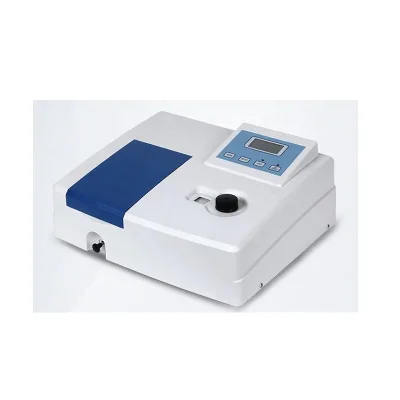


$216.00
MOQ: 5 Pieces

Comprehensive Sourcing Guide
UV-Vis Spectrophotometer Sourcing Guide
Procuring UV Vis spectrophotometers requires a clear understanding of the distinct operational parameters that define instrument performance in both industrial and laboratory environments. Buyers must first distinguish between general-purpose visible spectrophotometers and specialized units designed for high-precision analytical tasks. The market offers a wide array of models, ranging from basic single-beam devices to advanced systems featuring grating spectrometers and solid-state detectors. Understanding these foundational differences is critical for aligning procurement with specific analytical needs, ensuring that the selected instrument delivers the necessary resolution and accuracy for your intended applications.
The sourcing landscape for these instruments is characterized by significant variation in technical specifications and commercial terms. Observed listings indicate a broad price range, reflecting differences in detector technology, wavelength accuracy, and build quality. Buyers should note that customization options are frequently available, allowing for tailored solutions such as specific mounting standards or custom manufacturing of optical components. However, this flexibility requires careful verification of how modifications impact the instrument’s core performance metrics, warranty coverage, and long-term maintenance requirements.
Product Scope and Observed Listing Signals
The current market for UV Vis spectrophotometers includes a diverse range of products, with observed listings showing prices from low-cost entry-level units to high-end specialized systems. Key technical attributes often highlighted include wavelength ranges spanning from the ultraviolet to the near-infrared spectrum, such as 320~1000nm or specific bands like 488-694 Nm. Buyers should pay close attention to the dispersive element, with grating spectrometers being a common choice for achieving high resolution. Additionally, detector types vary, with options including SDD and TCD detectors, each offering different sensitivity and speed characteristics that influence the instrument’s suitability for specific analytical workflows.
Listing signals also reveal important details about physical dimensions and packaging, which are crucial for logistics and facility planning. Products are often described with specific dimensions, such as 400x400x500mm or 540x440x300mm, and gross weights ranging from 18kg to 35kg. Packaging is typically specified as cartons or wood cases, indicating the need for robust handling during transit. Furthermore, some listings emphasize customization capabilities, offering standard sizes like 12.7mm, 25.4mm, or 50.8mm, or allowing for custom manufacturing of optical components. These details help buyers assess the physical footprint and logistical requirements of the procurement.
Technical Specifications to Verify
When evaluating technical specifications, wavelength accuracy and resolution are paramount for ensuring reliable analytical results. Buyers should verify that the instrument meets strict wavelength accuracy standards, such as ±1.0 nm, to guarantee precise spectral data. The focal length and energy resolution are also critical factors, with some models offering energy resolutions of ≤7% to enhance signal clarity. Additionally, the stability of the light source, indicated by drift rates such as ≤0.001A/h at 500nm, is essential for maintaining consistent performance over time. These parameters directly impact the instrument’s ability to deliver reproducible and accurate measurements in demanding laboratory or industrial settings.
Optical quality and coating types further define the performance capabilities of UV Vis spectrophotometers. Surface quality standards, such as 40-20 Scratch-Dig, and surface flatness specifications, like Lambda/10 at 632.8nm, indicate the precision of optical components. Dielectric coatings are commonly used to enhance reflectivity and transmission efficiency across specific wavelength ranges. Buyers should also consider the principle of operation, with new spectrometer technologies offering advantages in speed and sensitivity. Verifying these optical specifications ensures that the instrument can handle the required spectral range and provides the necessary resolution for your specific analytical applications.
Compliance and Safety Documentation
Compliance with international standards is a critical requirement for UV Vis spectrophotometers, particularly when used in regulated industries. Buyers should verify that instruments carry recognized certifications such as CE, ISO, IEC, and GMP, which indicate adherence to safety and quality management systems. These certifications are essential for ensuring that the equipment meets legal and regulatory requirements in various markets. Additionally, some products may hold TUV certification, providing further assurance of safety and performance. Confirming these certifications is a vital step in the procurement process, as it mitigates legal risks and ensures that the instrument can be legally operated in your facility.
Beyond certifications, documentation related to calibration and maintenance procedures is equally important for long-term compliance. Buyers should request detailed manuals that outline calibration protocols, ensuring that the instrument can be regularly verified against known standards. This documentation should also include safety guidelines for handling optical components and electrical systems. Proper maintenance records and calibration certificates help maintain the instrument’s accuracy and reliability over its lifespan. By prioritizing comprehensive compliance documentation, buyers can ensure that their UV Vis spectrophotometers remain operational and compliant throughout their service life.
Cost Drivers and Commercial Terms
The cost of UV Vis spectrophotometers is influenced by several key factors, including detector technology, optical quality, and customization options. High-resolution instruments with advanced detectors, such as SDD or TCD, typically command higher prices due to their superior performance and sensitivity. Custom manufacturing of optical components or specific mounting standards can also increase costs, as these modifications require specialized production processes. Buyers should carefully evaluate the total cost of ownership, considering not only the initial purchase price but also the long-term costs associated with maintenance, calibration, and potential upgrades.
Commercial terms, including minimum order quantities (MOQ) and warranty coverage, play a significant role in the procurement decision. Observed listings indicate MOQs ranging from 1 to 10 units, offering flexibility for both single-unit purchases and bulk orders. Warranty periods are commonly offered for over one year, providing protection against manufacturing defects. Buyers should negotiate clear terms regarding warranty coverage, including what components are included and the process for claiming repairs or replacements. Understanding these commercial terms helps buyers manage budget constraints and ensures that they receive adequate support for their investment.
Supplier Qualification and Quality Control
Supplier qualification is a critical step in ensuring the reliability and quality of UV Vis spectrophotometers. Buyers should verify the supplier’s manufacturing capabilities, including their ability to produce high-quality optical components with precise surface flatness and coating standards. Suppliers with experience in custom manufacturing can offer tailored solutions, but buyers must ensure that these customizations do not compromise the instrument’s core performance. Additionally, suppliers should have robust quality control processes in place, including rigorous testing of wavelength accuracy, energy resolution, and detector sensitivity.
Quality control extends beyond the manufacturing process to include pre-shipment inspections and documentation. Buyers should request detailed test reports and calibration certificates for each unit, verifying that the instrument meets the specified technical parameters. Suppliers with a strong track record in the industry are more likely to provide consistent quality and reliable after-sales support. Buyers should also assess the supplier’s ability to provide comprehensive training and technical support, ensuring that their staff can operate and maintain the instrument effectively. By prioritizing supplier qualification and quality control, buyers can minimize the risk of receiving substandard equipment.
Long-Term Procurement Checks
Long-term procurement success depends on establishing a sustainable relationship with suppliers who can provide consistent quality and support. Buyers should implement regular performance audits to ensure that UV Vis spectrophotometers continue to meet specified technical parameters over time. This includes verifying wavelength accuracy, energy resolution, and detector stability through periodic calibration and testing. Maintaining detailed records of these audits helps identify potential issues early and ensures that the instrument remains reliable for critical analytical tasks.
Additionally, buyers should monitor the availability of spare parts and consumables to minimize downtime. Suppliers with a robust supply chain can ensure that replacement components, such as detectors or optical filters, are readily available. Buyers should also stay informed about technological advancements in spectrophotometry, as newer models may offer improved performance or features. By proactively managing these long-term procurement checks, buyers can maximize the value of their UV-Vis Spectrophotometer investment and ensure continued operational efficiency.
FAQs
What certifications do UV-Vis Spectrophotometer products typically hold?
Most UV-Vis Spectrophotometer products hold CE and ISO certifications, with some also featuring TUV or IEC marks. These certifications ensure compliance with international safety and quality standards for industrial and laboratory applications. Buyers should verify specific certificate types like GMP or RoHS depending on their regional regulatory requirements and intended usage environment.
Can UV-Vis Spectrophotometer devices be customized for specific needs?
Yes, customization is available for many UV-Vis Spectrophotometer models. Manufacturers offer options for standard sizes like 12.7mm or 25.4mm, or custom manufacturing based on specific requirements. Buyers can request tailored specifications for wavelength ranges, coating types, and surface quality to match their precise experimental or industrial testing protocols effectively.
What is the typical warranty period for UV-Vis Spectrophotometer equipment?
The typical warranty period for UV-Vis Spectrophotometer equipment is one year or more. This coverage ensures reliability for laboratory apparatus and industrial applications. Buyers should confirm the exact warranty terms with suppliers, as some models may offer extended support. A robust warranty protects against defects and ensures long-term operational stability for critical measurement tasks.
Which wavelength ranges are supported by UV-Vis Spectrophotometer models?
Supported wavelength ranges vary by model, with common options including 488-694 nm, 700-950 nm, and 320-1000 nm. These ranges cover visible and near-infrared spectra for diverse analytical needs. Buyers should select models based on their specific detection requirements, ensuring the device aligns with the target wavelengths for accurate spectral analysis and data collection.
How is the surface quality specified for UV-Vis Spectrophotometer components?
Surface quality is often specified as 40-20 Scratch-Dig or through custom manufacturing processes. This ensures high precision for optical components used in spectrophotometers. Buyers requiring specific flatness, such as Lambda/10 at 632.8nm, should request detailed specifications. Proper surface quality is critical for minimizing light scattering and maintaining accurate spectral measurements in sensitive applications.
What packaging options are available for shipping UV-Vis Spectrophotometer units?
Packaging options typically include cartons or wood cases to ensure safe transport. These methods protect sensitive optical and electronic components during shipping. Buyers should specify their preferred packaging based on the unit size and weight, such as the 18kg or 35kg gross weights observed. Secure packaging minimizes damage risks and ensures the equipment arrives in optimal condition for immediate installation.