Source V-Line Blunt PCL Thread for Face Lifting, Anti-Wrinkle, and Jawline Contouring
Source v-line blunt pcl thread from 30 verified listings. Compare specifications including 18G-30G gauges, 90-190mm lengths, and Class III instrument classifications for aesthetic procedures.
Key considerations
Products List




High Quality Korea Barbed 4D Cog W Blunt Pcl Pdo Thread for Cheek Lifting
$0.50 - $2.00
MOQ: 20 Pieces


Comprehensive Sourcing Guide
V-Line Blunt PCL Thread Sourcing Guide
The v-line blunt PCL thread represents a specialized subset of aesthetic sutures designed for facial contouring and lifting, specifically targeting the jawline and chin area to create a defined, tapered appearance. Based on observed market listings, these products are categorized under Class III medical instruments, indicating a high level of regulatory scrutiny due to their invasive nature and direct interaction with deep tissue layers. Buyers must recognize that while the core material is Polydioxanone (PCL), the specific geometry—often described as 3D or 4D cog structures—is engineered to provide enhanced anchoring points within the subcutaneous fat layer, distinguishing them from standard smooth threads used for superficial tightening.
Procurement of these devices requires a clear understanding that they are intended for single-use applications by trained medical professionals, with a specific suitability for adult patients seeking beauty and anti-wrinkle treatments. The market data indicates a diverse range of packaging formats, from sterile individual bags to bulk aluminum foil packaging, which directly impacts logistics and inventory management for clinics. Sourcing decisions should prioritize suppliers who explicitly define the thread length and gauge, as the observed specifications range from 18G to 30G with lengths varying between 70mm and 190mm, ensuring the selected product matches the anatomical requirements of the v-line procedure.
Product Scope and Observed Listing Signals
When evaluating product listings, buyers should look for specific signals that confirm the item is a genuine PCL thread rather than a generic suture or a different biodegradable material like PDO. The observed product attributes frequently highlight "PCL Cog 3d" or "PCL Multi thread" models, often accompanied by color variations such as red, yellow, orange, blue, brown, or gray, which may indicate different coating types or manufacturing batches. It is critical to verify that the listing explicitly states the material as 100% Cotton or Polydioxanone, as some entries conflate these materials, and the mechanical properties of PCL differ significantly from cotton-based blends in terms of tensile strength and absorption rates.
The commercial signals in the market show a wide variance in Minimum Order Quantities (MOQ), ranging from as low as 5 pieces to 1200 pieces, which suggests a market segmented between trial orders for new clinics and bulk procurement for established distributors. Pricing observations indicate a broad range from $0.15 to $30 per unit, a disparity that often reflects differences in packaging sterility, thread gauge precision, and the inclusion of branding or logo printing services. Buyers must scrutinize the "Usage Mode" and "Type" fields, ensuring the product is listed as a "Blunt Tip" cannula needle or thread, as sharp-tip variants pose different safety risks and are not suitable for the blunt dissection techniques required in v-line contouring.
Technical Specifications to Verify
Technical verification begins with the physical dimensions of the thread, as the v-line procedure demands precise control over needle length and thread gauge to navigate the dense connective tissue of the lower face. The observed specifications include needle lengths ranging from 70mm to 150mm and thread gauges from 18G to 30G, with some listings specifying exact combinations like 18G-23G or 19G-21G. Procurement teams must confirm that the selected model matches the intended injection depth and tissue volume, as using a thread that is too short may fail to reach the target anchor points, while one that is too long could increase the risk of migration or tissue trauma.
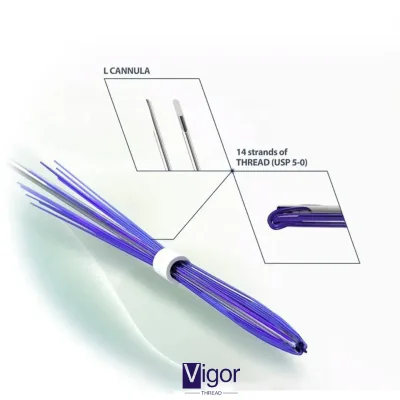
Beyond dimensions, the structural design of the thread is a primary technical differentiator, with listings frequently citing "3D Cog" or "4D Cog" specifications that define the orientation and density of the barbs. These cog structures are essential for the lifting mechanism, as they allow the thread to grip the tissue effectively without slipping, a feature that is distinct from smooth or simple barbed threads. Buyers should also verify the "Disinfecting Type" and "Ethylene Oxide Sterilization" claims, ensuring the product is delivered in a sterile package, as the integrity of the sterilization process is paramount for preventing infection in Class III medical devices.
Compliance and Safety Documentation
Given that v-line blunt PCL threads are classified as Class III instruments, the compliance documentation required is rigorous and non-negotiable for any legitimate procurement. The product attributes explicitly list "Instrument Classification: Class III," which mandates that the supplier must provide evidence of regulatory clearance from relevant health authorities, such as CE marking or equivalent national approvals, to legally market and sell the device. Buyers must request the specific registration certificates and ensure that the "Quality Guarantee Period" stated in the listing, which varies between one and two years, aligns with the manufacturer's liability terms and the expected shelf life of the sterile packaging.
Safety verification also extends to the sterilization method and packaging integrity, as the observed listings mention "Ethylene Oxide Sterilization" and "Sterile Package" or "Disposable Aluminum Foil Bag" configurations. It is essential to confirm that the sterilization process has not compromised the mechanical properties of the Polydioxanone material, and that the packaging is designed to maintain sterility until the point of use. The "Disinfection" and "Disinfecting Type" attributes, including references to Far Infrared, should be cross-referenced with the manufacturer's quality control protocols to ensure that the final product meets the necessary hygiene standards for invasive cosmetic procedures.
Cost Drivers and Commercial Terms
The cost of v-line blunt PCL threads is influenced by several factors, including the complexity of the cog design, the precision of the manufacturing process, and the level of customization available. Listings indicate that "Logo Printing" is available, which can add value for private-label distributors but may also increase the unit cost or require a higher MOQ to be economically viable. Additionally, the "Customization" attribute suggests that buyers can request specific thread lengths or gauges, but such bespoke orders often come with longer lead times and higher per-unit pricing compared to standard stock items.
Commercial terms vary significantly across the market, with observed MOQs ranging from 5 pieces for small clinics to 1200 pieces for large distributors, and packaging options ranging from 5 PCS/Bag to 10 PCS/Plastic Bags in Aluminum Bags. Buyers should negotiate based on the "Supply Type," which is listed as OEM Service, allowing for potential adjustments in packaging and branding. It is crucial to clarify the "Quality Guarantee Period" in the contract, as the observed range of one to two years implies different levels of manufacturer confidence and potential liability coverage for product failures or adverse events.
Supplier Qualification and Quality Control
Selecting a supplier for Class III medical devices requires a thorough vetting of their manufacturing capabilities and quality assurance systems. The observed product origin is primarily China, with specific mentions of Heibei as a production hub, which suggests a concentration of manufacturing expertise in this region. Buyers should verify that the supplier has established protocols for maintaining the "Quality Guarantee Period" and can provide traceability for each batch, ensuring that the "Material" composition remains consistent with the advertised Polydioxanone specifications.
Quality control checks should focus on the consistency of the "Thread Length" and "Needle Length" specifications, as deviations can affect the clinical outcome of the v-line procedure. The "Product Name" variations, such as "Pdo Thread Lift Color" or "Pcl Multi thread," indicate a need for suppliers to maintain clear inventory segregation to prevent mix-ups between different material types. Buyers must ensure that the supplier's "Packing" methods, whether "Carton Packing" or "Foil Bag," are robust enough to prevent damage during transit and maintain the sterility of the device until it reaches the medical facility.
Long-Term Procurement Checks
Sourcing v-line blunt PCL threads is not a one-time transaction but requires ongoing monitoring of supplier performance and product consistency over time. Buyers should establish a schedule for re-evaluating the "Quality Guarantee Period" and the supplier's ability to maintain the "Ethylene Oxide Sterilization" standards, as regulatory requirements and manufacturing processes can evolve. Regular audits of the "Product Model" consistency, such as the "131" or "nose thread" models, are necessary to ensure that the specific technical attributes required for v-line procedures remain unchanged across different production batches.
Long-term procurement strategies should also include monitoring the "MOQ" flexibility and the "Supply Type" reliability to ensure a steady supply chain for clinical operations. As the market for aesthetic devices expands, buyers must stay informed about changes in "HS" codes, such as 90183220, and any updates to international standards like ISO13485 that may impact import and export regulations. By maintaining a proactive approach to supplier qualification and quality control, clinics and distributors can mitigate risks associated with product variability and ensure the continued safety and efficacy of the v-line blunt PCL threads they utilize.
FAQs
What material is used for v-line blunt pcl threads?
The product is made from 100% Cotton and Polydioxanone materials. These components ensure biocompatibility for adult beauty applications while providing the necessary structural integrity for lifting procedures.
Can these threads be customized with a logo?
Yes, logo printing is available for these v-line blunt pcl threads. This customization option allows buyers to brand the sterile packages or foil bags according to their specific business requirements.
What is the minimum order quantity for these threads?
The minimum order quantity starts at 5 pieces for specific models. Other variants may require up to 20 pieces, with some bulk options reaching 1200 pieces depending on the selected specification.
How are the threads packaged for shipping?
Threads are packed in sterile packages, disposable aluminum foil bags, or plastic bags within cartons. This ensures the product remains sterile and protected during transit from the factory in China.
What is the quality guarantee period for these products?
The quality guarantee period is either one year or two years depending on the specific product model. This warranty covers the integrity of the threads for single-use beauty applications.
Which needle specifications are available for these threads?
Available specifications include sizes ranging from 18G to 30G with lengths between 70mm and 150mm. These dimensions support various lifting techniques including 3D and 4D cog configurations.
Are the threads sterilized before use?
Yes, the threads undergo Ethylene Oxide Sterilization to ensure safety. They are classified as Class III instruments and are designed for single-use to prevent cross-contamination during beauty treatments.