Source V Hull Outboard Fishing Boat for Sea, River, Lake
Explore 30 available V Hull Outboard Fishing Boat options featuring aluminum construction and deep-V designs. Buyers can compare specifications like beam, weight, and engine compatibility to find the right vessel for sea, river, or lake applications.
Key considerations
Products List


6m/20FT Factory Cheap Outboard Deep V Hull Aluminium Fishing Boat for Sale
$13900.00 - $14900.00
MOQ: 1 Pieces


5.1m High Quality Deep V Aluminum Alloy Fishing Boat with Outboard Motor
$8500.00 - $11500.00
MOQ: 1 Unit


18FT 5.5m High Quality Deep V Aluminum Fishing Boat with Outboard Motor
$8500.00 - $11500.00
MOQ: 1 Pieces


Professional Fishing Boat Aluminum Sport Speed Boats with Outboard Hot Selling
$60900.00 - $67900.00
MOQ: 1 Pieces


Aluminum Bass Boat Fishing Boat Outboard Boat 5.7m Bass Boat for Sale
$4990.00 - $6900.00
MOQ: 1 Pieces

Small Outboard Aluminium Boat 16FT Fishing Boat Speed Boat with Painting
$6500.00 - $9800.00
MOQ: 1 PIECE

2021 Inshore Boat Center Console 4.5m/5m Fishing Boat with T-Top and Outboard Engine
$2000.00 - $2800.00
MOQ: 1 PIECE

Inshore Boat Center Console 4.5m/5m Fishing Boat with T-Top and Outboard Engine for Sale
$1999.00 - $4999.00
MOQ: 6 PIECE

25FT /7.5m Deep V Hull Welded Fully Enclosed Cabin Aluminum Boat Fishing Boat Sport Boat for Sale
$16800.00 - $19800.00
MOQ: 1 PIECE


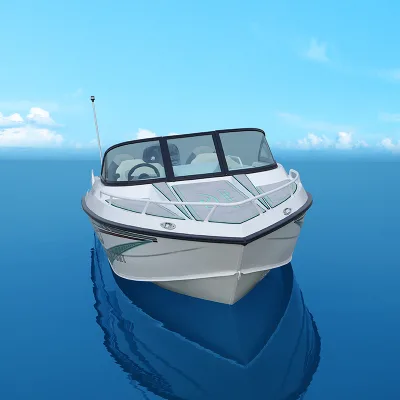
6m Outboard Engine Carp Fishing Boat for Sport Entertainment Leisure
$40712.24 - $46106.61
MOQ: 1 sets


19.7 FT Fiberglass 6 People High Speed Deep V Fishing Boat Yacht with Outboard Engine
$16300.00 - $17730.00
MOQ: 1 Pieces

Outboard Engine Motor Fishing Boat with 5 Person Capacity for Sale
$15200.00 - $16500.00
MOQ: 1 Pieces
Comprehensive Sourcing Guide
Strategic Sourcing Guide for V Hull Outboard Fishing Boats
The global market for aluminum fishing vessels has expanded significantly, driven by the demand for durable, low-maintenance platforms capable of handling diverse water conditions. For procurement professionals targeting a "V Hull Outboard Fishing Boat," the primary objective is to identify a vessel that balances structural integrity with operational efficiency. The supply chain for these assets is dominated by manufacturers in specific maritime regions, where aluminum alloy expertise and welding capabilities are concentrated. This guide provides a disciplined framework for evaluating potential suppliers, interpreting technical data, and mitigating procurement risks associated with this specific vessel category.
Technical Architecture and Hull Configuration
The fundamental differentiator for a V Hull Outboard Fishing Boat is its hydrodynamic profile. Unlike flat-bottomed jon boats, the V-shaped hull is engineered to cut through choppy waters, providing a smoother ride in rough seas. When reviewing supplier specifications, buyers must scrutinize the beam and depth dimensions, as these directly influence stability and load-bearing capacity. In the current market, observed configurations for mid-sized vessels often feature a beam width around 2.22 meters to 2.25 meters, with a hull depth of approximately 1.1 meters. These dimensions are critical for determining the vessel's stability index and its ability to carry heavy fishing gear without compromising safety.
The material composition is another non-negotiable technical factor. High-quality aluminum fishing boats utilize Marine Al-Mg 5083 alloy. This specific grade offers superior corrosion resistance, particularly in saltwater environments, and maintains structural strength under stress. The construction method is typically welded, ensuring a seamless hull that eliminates the leak points common in riveted designs. Buyers should verify that the supplier employs certified welders and utilizes automated or semi-automated welding processes to maintain consistency. The bottom thickness of the hull is a key indicator of durability; observed specifications for robust models indicate a bottom thickness of 6mm, while topsides may be slightly thinner at 4mm. This variation in plate thickness is a standard engineering practice to reinforce the areas most susceptible to impact and abrasion while reducing overall weight.
Performance Metrics and Propulsion Systems
The performance of a V Hull Outboard Fishing Boat is inextricably linked to its propulsion system. The core keyword "outboard" implies the use of external engines mounted on the transom. However, procurement data reveals a divergence in engine configurations. Some models are designed for single outboard engines with a recommended horsepower range of 115 to 175 HP, suitable for smaller crews and lighter loads. In contrast, larger commercial or semi-commercial vessels may utilize twin stern drive engines or high-horsepower outboard setups, such as twin 270 HP units, to achieve speeds in the 40 to 45 knots range.
Fuel capacity is a critical operational parameter that dictates the vessel's range. Specifications vary widely depending on the intended application. Smaller recreational models may carry 200 liters of fuel, while larger offshore fishing vessels can be equipped with tanks holding up to 1300 liters. Buyers must align the fuel capacity with their intended operational radius. Additionally, the transom shaft length for single-engine setups is typically standardized at 25 inches, a dimension that must match the specific engine model selected to ensure proper propeller submersion and efficiency. It is also important to note that while the primary power source is often internal combustion, some modern listings indicate battery-powered options, suggesting a hybrid or electric capability that requires specific electrical system verification.
Compliance, Certification, and Regulatory Standards
Navigating the regulatory landscape is essential for international procurement. The most frequently observed certification for aluminum fishing boats in the current market is the CE mark. This certification indicates conformity with health, safety, and environmental protection standards for products sold within the European Economic Area. However, the presence of a CE mark does not automatically guarantee compliance with local regulations in other regions, such as the United States or Australia. Buyers must verify that the certification is valid and issued by an accredited body.
Beyond general safety certifications, specific standards regarding vessel dimensions and construction are vital. Market data shows that some manufacturers adhere to a standard of 6.25 meters by 2.22 meters, while others may list 6.25 meters by 2.25 meters. These slight variations in standard dimensions can impact docking requirements and transport logistics. Furthermore, the "Deep V Aluminum Fishing Boat" classification implies a specific design philosophy that must be validated against the intended water conditions. If the vessel is intended for ocean use, the hull design must be proven to handle significant wave heights. Buyers should request documentation proving that the vessel meets the specific classification society standards required for their operational zone, rather than relying solely on the manufacturer's self-declared standards.
Cost Drivers and Pricing Structures
The pricing of V hull outboard fishing boats is influenced by a complex matrix of factors, including hull size, material thickness, engine inclusion, and customization levels. The observed price range in the market spans from approximately $1,999 to $300,000. This wide disparity reflects the difference between small, entry-level recreational boats and large, custom-built commercial vessels. The lower end of the spectrum typically covers smaller models with basic configurations, while the upper end includes vessels with advanced electronics, larger fuel capacities, and premium engine packages.
A significant cost driver is the customization availability. Many suppliers offer tailored solutions, allowing buyers to specify seating arrangements, storage configurations, and hull modifications. This flexibility comes at a premium but ensures the vessel meets exact operational needs. Another critical cost factor is the warranty structure. A standard offering in the market includes a 5-year warranty on the hull, with some suppliers providing a 3-year warranty specifically for the aluminum hull. Understanding the scope of these warranties is essential for total cost of ownership calculations. Buyers should also consider the Minimum Order Quantity (MOQ), which typically ranges from 1 to 6 units, allowing for flexibility in procurement strategies whether for a single fleet addition or a small commercial fleet expansion.
Supplier Evaluation and Logistics Planning
When evaluating potential suppliers, the geographic origin and logistics capabilities are paramount. The majority of aluminum fishing boat manufacturers are located in China, with specific hubs in Qingdao and Shandong province. These regions have developed specialized supply chains for marine aluminum and welding infrastructure. The place of origin should be explicitly stated in the supplier's documentation to ensure transparency regarding labor standards and manufacturing practices.
Logistics planning is heavily influenced by the packing method. Suppliers utilize various packing configurations, including 40HQ containers, 40FT High Cube (HC) containers, and flat racks. The choice of packing depends on the vessel's dimensions and whether the boat is assembled or shipped in sections. For instance, a 6.25-meter vessel might fit within a 40HQ container, whereas larger models, such as a 15.2-meter leisure vessel, may require a flat rack for transport. Buyers must calculate the total landed cost, including freight, insurance, and port handling fees, which can vary significantly based on the packing method. Additionally, the lead time for production and delivery should be confirmed, as customization and shipping schedules can impact project timelines.
Quality Control and Long-Term Procurement Considerations
Ensuring long-term value requires a rigorous quality control (QC) process. Buyers should implement a pre-shipment inspection protocol that verifies the weld quality, hull thickness, and paint finish. The workmanship should be consistent, with no visible defects in the welding seams. It is also crucial to verify the weight specifications; observed data indicates a dry hull weight of approximately 1150 kg for smaller models, while larger vessels can weigh up to 5500 kg. Discrepancies in weight can indicate the use of substandard materials or construction shortcuts.
Long-term procurement considerations extend beyond the initial purchase. The application of the vessel—whether for sea, river, lake, or ocean fishing—dictates the maintenance requirements. Saltwater fishing, in particular, demands high corrosion resistance, making the 5083 aluminum alloy a critical choice. Buyers should also assess the supplier's after-sales support, including the availability of spare parts and technical assistance. The recommended power source and engine compatibility should be documented to ensure future engine replacements are seamless. Finally, the person capacity, typically ranging from 6 to 12 passengers depending on the model, must be strictly adhered to for safety compliance. By focusing on these technical and operational details, buyers can secure a reliable V Hull Outboard Fishing Boat that meets their specific needs while minimizing long-term risks.
Comparative Analysis of Vessel Specifications
To facilitate informed decision-making, the following table summarizes key technical specifications observed across different market segments. This comparison highlights the variance in dimensions, capacity, and power requirements that buyers must evaluate against their operational requirements.
| Specification Category | Small/Recreational Model | Mid-Size Commercial Model | Large/Offshore Model |
|---|---|---|---|
| Overall Length | 6.25m | 6.25m | 15.2m |
| Hull Length | 6m | 6m | N/A |
| Beam Width | 2.22m | 2.25m | N/A |
| Hull Depth | 1.1m | N/A | N/A |
| Bottom Thickness | 6mm | N/A | N/A |
| Topsides Thickness | 4mm | N/A | N/A |
| Material | Marine Al-Mg 5083 | Marine Al-Mg 5083 | Marine Al-Mg 5083 |
| Person Capacity | 6 | 6 | 12 |
| Engine Type | Outboard (Single) | Outboard (Single) | Twin Stern Drive / Outboard |
| Recommended HP | 115-175 HP | N/A | 2*270 HP |
| Fuel Capacity | 200L | N/A | 1300L |
| Dry Hull Weight | 1150kg | N/A | 5500kg |
| Warranty (Hull) | 5 Years | 5 Years | 3 Years (Aluminum Hull) |
| Certification | CE | CE | CE |
| Packing Method | 40HQ | 40FT HC | 40FT Flat Rack |
| Origin | China | Qingdao, China | Qingdao, China |
This comparative data underscores the importance of aligning specific technical requirements with the intended use case. A buyer seeking a vessel for coastal fishing must prioritize the 6mm bottom thickness and 5-year hull warranty, while a buyer looking for a large offshore platform must focus on the fuel capacity and twin-engine configuration. By systematically evaluating these parameters, procurement professionals can navigate the complex market of V hull outboard fishing boats with confidence and precision.
FAQs
What is the recommended horsepower for this boat?
The recommended horsepower ranges from 115 to 175 HP for single engine setups. Larger models may require twin engines up to 270 HP each depending on the specific configuration and intended load capacity.
Can I customize the seating and layout of this vessel?
Yes, customization is available for this aluminum fishing boat. Buyers can specify seating arrangements and storage configurations to meet exact operational needs, though this may affect the final price and lead time.
How many passengers can this boat safely carry?
The standard capacity is six persons for the 6.25-meter model. Larger offshore variants listed in the market data can accommodate up to twelve passengers depending on the specific hull design and safety regulations.
What material is used for the hull construction?
The hull is constructed from Marine Al-Mg 5083 alloy for superior corrosion resistance. This material ensures structural strength and durability, particularly when used in saltwater environments for fishing applications.
What is the warranty period for the aluminum hull?
A five-year warranty is standard for the hull structure on most models. Some specific large-scale offshore vessels may offer a three-year warranty specifically for the aluminum hull, so verify the terms with the supplier.
Which certification does this boat hold for safety compliance?
The vessel holds CE certification indicating conformity with European safety standards. Buyers should verify that this certification is valid for their specific region of operation before finalizing the procurement.
What is the typical fuel capacity for this fishing boat?
Fuel capacity varies by model, with smaller vessels holding 200 liters and larger offshore boats holding up to 1300 liters. Select the capacity that aligns with your intended operational radius and fishing duration.