Source V Belt for Automotive, Industrial, and Agricultural Use
Find 30 V Belt options from verified Chinese suppliers with features like wear resistance and heat resistance. Compare specifications including pitch width, top width, and model numbers to match your machinery needs.
Key considerations
Products List


Comprehensive Sourcing Guide
Strategic Sourcing Guide for V-Belt Procurement
Understanding Technical Specifications and Variability
When sourcing V-belts, buyers must first navigate a complex landscape of technical specifications that vary significantly across different product listings. The core keyword "V-belt" encompasses a wide array of profiles, dimensions, and material compositions, making a one-size-fits-all approach ineffective. Based on observed market data, the product attributes reveal a high degree of customization. The standard or nonstandard classification often leans toward "Nonstandard," indicating that many suppliers cater to specific machinery requirements rather than generic off-the-shelf inventory.
The dimensional data presents a critical area for verification. Observed specifications list "Top Width" ranges from 10mm to 50mm, with specific entries noting ranges like 13.6mm to 32.8mm and 10mm to 22mm. Similarly, "Pitch Width" varies between 8.5mm and 42.5mm, with narrower ranges such as 8.5mm to 19mm also present. The "Height" of the belts is equally diverse, spanning from 6mm to 30mm, with specific observations of 10mm to 21.5mm. These variations correspond to different belt profiles, including standard designations like A, B, AX, BX, and specific series such as 3L, 4L, 5L, 3V, 5V, 8V, SPZ, SPA, SPB, and SPC. The "Angle" of the belt groove is frequently cited as 40 degrees, a standard parameter for many V-belt applications, but this must be confirmed against the specific pulley system of the buyer's machinery.
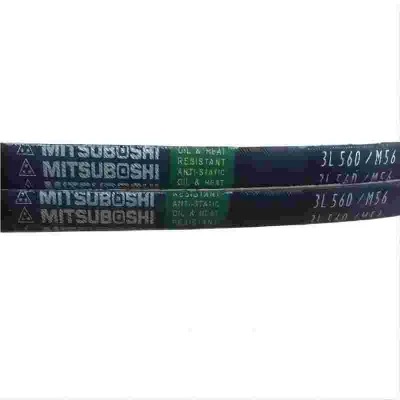
Furthermore, the "Length" of the belts is not uniform. Data indicates lengths ranging from 20 inches to 200 inches, with other entries showing spans from 13 inches to 600 inches. This suggests that suppliers offer both cut-to-length options and pre-manufactured loops. The "Teeth Number" is listed as "other," which implies that while some belts are toothed (timing belts), the broader category includes smooth-sided V-belts, and buyers must explicitly distinguish between these types based on their drive requirements. The "Model Number" entries, such as 3L560/M56, 3L570/M57, and 3L580/M58, highlight the importance of matching the exact alphanumeric code to the equipment manual to ensure compatibility.
Material Composition and Performance Characteristics
The material selection for V-belts is a primary determinant of performance and longevity. The supplied facts indicate that "Rubber" is the dominant material, with specific mentions of "Nr" (Natural Rubber) as a rubber material type. However, the "Material" attribute is also broadly categorized as "Other," suggesting the existence of synthetic compounds or composite materials that may offer superior properties for specific industrial environments. Buyers should not assume that all listed products are made of natural rubber; the specific compound must be verified.
Performance attributes are heavily emphasized in the product descriptions. Common features listed include "Wear-resistant," "Heat-resistant," "Flame-resistant," "Cold-resistant," and "Tear-resistant." These characteristics are not merely marketing terms but functional requirements for belts operating in harsh conditions. For instance, "Heat-resistant" and "Flame-resistant" properties are crucial for applications involving high-friction drives or environments with potential fire hazards. The "Cold-resistant" attribute is vital for operations in unheated warehouses or outdoor machinery in colder climates. The "Tear-resistant" feature ensures durability against mechanical stress and potential snagging.
The "Usage" field provides insight into the versatility of these products. While primarily identified as "V Belt," the data also links them to "Automotive Sealing Strip," "Electrical Insulating Tape," "Waterproof Tape," "Packing Tape," and "Medical Adhesive Tape." This suggests that the supply chain for V-belts often overlaps with general rubber extrusion and tape manufacturing. Buyers sourcing V-belts for heavy machinery must ensure they are selecting the correct product variant and not inadvertently purchasing a sealing or insulating tape that shares similar material properties but lacks the structural integrity required for power transmission. The "Color" is predominantly "Black (Default)," which is standard for rubber belts to protect against UV degradation, though custom colors may be available under "Customization: Available."
Compliance, Certification, and Standard Verification
Navigating the compliance landscape is essential for ensuring that sourced V-belts meet international safety and quality expectations. The observed data highlights several certifications and standards. "ISO" and "ISO9001" are explicitly mentioned as certificates, indicating that suppliers adhere to quality management system standards. Additionally, "SGS" is listed as a standard or certificate, suggesting third-party verification of product quality. However, the "Standard or Nonstandard" attribute is frequently marked as "Nonstandard," which requires buyers to exercise caution. This classification implies that while the product may meet general quality benchmarks, it might not conform to a specific, universally recognized industry standard (such as specific ISO or DIN standards for V-belt dimensions) unless explicitly stated.
Buyers must verify the specific standard codes associated with the belt profile. The data lists "prod_standard" values including "A B AX BX," which likely refer to the cross-sectional profiles defined by industry norms. Other entries mention "0.2~3Kgs Per Piece" as a standard, which appears to be a weight specification rather than a technical standard, further emphasizing the need for precise definition. The "prod_model" entries, such as "HYRUBBERS-43," "HYRUBBERS-23," and "HYRUBBERS-152," serve as internal identifiers that buyers should cross-reference with the supplier's technical datasheets to ensure they align with the required mechanical specifications.
When evaluating compliance, buyers should request documentation that explicitly links the product to recognized standards. The presence of "ISO" and "SGS" is a positive indicator, but the "Nonstandard" flag necessitates a deeper review. Buyers should ask for test reports or certificates that confirm the belt's dimensions, tensile strength, and heat resistance match the specific requirements of their application. Relying solely on the generic "ISO" label without verifying the specific standard number (e.g., ISO 4184 for V-belts) can lead to procurement of components that do not fit the intended machinery.
Cost Drivers and Pricing Dynamics
The pricing structure for V-belts is influenced by a multitude of factors, resulting in a wide observed price range of $0.1 to $5,000 USD. This vast disparity is not indicative of a single product type but rather reflects the diversity of the market, ranging from small, single-item rubber seals to large, custom-engineered industrial drive systems. The "Selling Units" are listed as "Single item," suggesting that pricing is often per piece, but the "MOQ" (Minimum Order Quantity) ranges from 1 to 2,000, indicating that volume significantly impacts the unit cost.
Several key drivers influence the final price. First, the "Customization" availability is a major factor. Custom belts, which may require specific lengths, widths, or material compounds, will inherently cost more than standard off-the-shelf items. The "Model Number" variations, such as the 3L, 4L, and 5L series, also carry different price points based on their complexity and the raw material costs associated with their specific profiles. Second, the "Material" composition plays a critical role. Belts made from natural rubber (Nr) may have different cost structures compared to those using synthetic compounds designed for extreme heat or flame resistance. The inclusion of features like "Flame-resistant" or "Heat-resistant" often commands a premium due to the specialized additives required.
Packaging and logistics also contribute to the cost. The "prod_packing" options include "Plastic Bages or Plastic Films," "Bags or Cartons," "Plywood," and "Cartons. Pallets." The choice of packaging affects the shipping weight and volume, which in turn influences the total landed cost. For example, "Plywood" packaging suggests heavy-duty protection for large or high-value items, likely increasing the cost compared to simple plastic film. Additionally, the "Place of Origin" is consistently listed as "China," with specific mentions of "Jiangsu, China." This location data helps buyers estimate shipping costs and lead times, as logistics from Jiangsu to global markets vary based on the destination and the volume of the order.
Supplier Evaluation and Operational Capabilities
Evaluating suppliers requires a focus on their operational capabilities and after-sales support. The "After-sales Service Provided" is listed as "Online support," which is a baseline expectation for modern B2B transactions. However, buyers should probe deeper to understand the scope of this support. Does it include technical assistance for belt selection, troubleshooting drive issues, or handling warranty claims? The "Customization: Available" attribute suggests that suppliers are willing to engage in collaborative design, but buyers must assess the supplier's capacity to handle custom orders efficiently.
The "Place of Origin" and "prod_origin" being "China" and "Jiangsu, China" respectively, provides a geographical context for the supply chain. Jiangsu is a major manufacturing hub, known for its industrial base. Buyers should verify the specific factory location to ensure it aligns with their logistical preferences and risk tolerance. The "prod_packing" details, such as "Carton Packing" with dimensions "653726," offer insight into the supplier's packaging efficiency and ability to optimize container loads.
When assessing supplier reliability, the "Standard" and "Certificate" data points are crucial. A supplier listing "ISO9001" and "SGS" demonstrates a commitment to quality management, but the "Nonstandard" classification of the product requires buyers to ensure the supplier has the technical expertise to maintain consistency in custom production. The "Model Number" diversity, ranging from specific codes like "AVX53" to general profiles like "M,O,A,B,C,D," indicates a broad product portfolio. Buyers should select suppliers who demonstrate expertise in the specific profile they require, rather than those who simply offer a wide range of generic items.
Quality Control and Long-Term Procurement Strategy
Implementing a robust quality control (QC) strategy is vital for long-term procurement success. Given the "Nonstandard" nature of many products, buyers cannot rely on generic quality checks. Instead, they must establish specific acceptance criteria based on the observed specifications. For example, verifying the "Top Width" (10-50mm) and "Pitch Width" (8.5-42.5mm) against the actual delivered goods is essential to ensure proper fit and function. The "Height" (6-30mm) and "Angle" (40 degrees) must also be measured to confirm they match the pulley specifications.
The "Feature" list, including "Wear-resistant," "Heat-resistant," and "Tear-resistant," should be validated through sample testing. Buyers should request test reports or conduct their own trials to verify these claims, especially for critical applications where belt failure could lead to significant downtime. The "Usage" data, which includes "Electrical Insulating Tape" and "Waterproof Tape," suggests that some products may have dual purposes. Buyers must ensure that the V-belt selected is specifically engineered for power transmission and not just a general-purpose rubber product.
For long-term procurement, establishing a relationship with a supplier who offers "Online support" and "Customization" is beneficial. This allows for continuous improvement and adaptation to changing machinery needs. The "MOQ" range of 1-2,000 offers flexibility for both small-scale testing and large-scale production runs. Buyers should aim to negotiate favorable terms based on volume, leveraging the "Selling Units" of "Single item" to build up inventory gradually. Finally, maintaining a clear record of the "Model Number" and "Standard" for each order ensures traceability and consistency, reducing the risk of receiving non-compliant products in future shipments. By adhering to these guidelines, buyers can navigate the complexities of the V-belt market and secure reliable, high-performance components for their operations.
FAQs
What materials are used to make these V belts?
The primary material is rubber, specifically natural rubber (Nr). Some listings also categorize the material as other, indicating potential synthetic compounds or composite materials for specialized applications.
Which certifications do the V Belt suppliers hold?
Suppliers commonly hold ISO and ISO9001 certifications for quality management. SGS is also listed as a standard or certificate, providing third-party verification of product quality and compliance.
How do the dimensions vary across different V Belt models?
Dimensions vary significantly, with top widths ranging from 10mm to 50mm and pitch widths from 8.5mm to 42.5mm. Heights span from 6mm to 30mm, and lengths can range from 13 inches to 600 inches depending on the model.
Can I request customization for specific V Belt requirements?
Yes, customization is available for buyers with specific needs. This allows for tailored dimensions, material compounds, or profiles to match unique machinery requirements rather than relying solely on standard inventory.
What features make these V belts suitable for harsh environments?
These belts feature wear-resistance, heat-resistance, flame-resistance, cold-resistance, and tear-resistance. These attributes ensure durability in demanding industrial conditions involving high friction, extreme temperatures, or mechanical stress.
Where are the V Belt manufacturers located?
The place of origin is consistently listed as China, with specific mentions of Jiangsu, China. This location data helps buyers estimate logistics costs and lead times for global shipments.
What is the minimum order quantity for purchasing V belts?
The minimum order quantity ranges from 1 to 2000 units depending on the supplier and product type. This variability allows buyers to order single items or bulk quantities based on their specific inventory needs.