Source Vacuum Sealing Food Saver for Kitchen, Hotel, and Commercial Use
Find and compare 30 Vacuum Sealing Food Saver options for household, hotel, and commercial applications. Evaluate features like handheld designs, double chamber machines, and semi-automatic models to find the right fit for your business needs; compare the available evidence and request quotations based on your requirements.
Key considerations
Products List


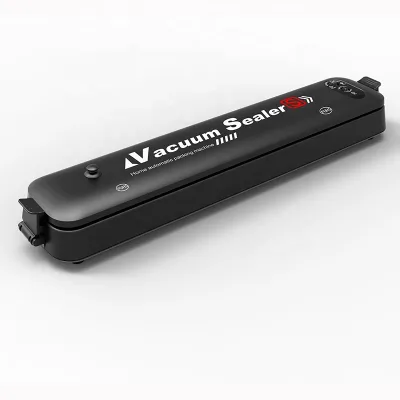


The High Quality Home Use Food Vacuum Sealer
$9.00 - $28.00
MOQ: 10 Pieces
Qingdao Zhongkang Printing and Packaging Machinery Co., Ltd.




Comprehensive Sourcing Guide
Vacuum Sealing Food Saver Sourcing Guide
Vacuum sealing food savers span a wide spectrum of equipment, from pocket-sized handheld units to double-chamber commercial machines, and buyers who enter sourcing without mapping this spectrum routinely mismatch product to channel. The listings observed in this category confirm that breadth: mini handheld battery-operated sealers intended for household kitchens sit alongside semi-automatic vacuum sealing machines and full double-chamber industrial units. Each tier carries different expectations for durability, throughput, documentation, and after-sales support, so the first procurement decision is not "which supplier" but "which product class."
This guide walks through the decisions in sequence: defining your product scope from listing signals, verifying the technical specifications that actually determine performance, assembling compliance documentation, understanding the commercial cost drivers, qualifying suppliers with structured quality control, and setting up long-term procurement checks. The intent is to give sourcing teams a repeatable framework grounded in what the category's product pages genuinely disclose, rather than assumptions. Where a specification matters but is not stated in typical listings, the guidance flags it as a verification item to raise directly with candidate suppliers before any purchase order is issued.
Product Scope and Observed Listing Signals
The observed listings cluster into three recognizable groups. At the consumer end, compact handheld sealers such as models HK-2451B and HD-2261 appear, described as mini, compact, and handy, operating on 2 AA batteries (not included), vacuumizing bags of roughly 26×28 cm, and offered in white, pink, and blue with color box or color card packaging. These are positioned for household kitchen use and food fresh keeping. At the mid-tier, semi-automatic vacuum sealing machines such as HD-2654 target household, hotel, and light commercial applications, with 220 V and 110 V voltage options and video technical support listed as after-sales service.
At the industrial end, double-chamber vacuum packing machines such as DZ-400/2SB and DZ-280A are listed, with wooden export packing, machine dimensions stated at 1100×540×950 mm for the DZ-400/2SB, electric drive, gear core components, and applicability to food, drugs, electronic components, precision instruments, and rare metals. Notably, the category shows claimed throughput figures (up to 75 pieces per minute on some listings) and very wide price dispersion, so treat listing attributes as starting observations, not verified performance. Map your intended channel—retail shelf, e-commerce bundle, or commercial kitchen backline—before shortlisting.
Technical Specifications to Verify
For handheld and consumer units, verify the sealing mechanism and bag compatibility first. Listings state bag sizes around 26×28 cm and a vacuumizing function, but you should confirm whether the unit works with embossed dedicated bags only or also with smooth universal bags, since this affects consumable revenue and customer satisfaction. Battery type is another decision point: the observed 2 AA battery configuration (batteries not included) keeps unit cost low but shapes the out-of-box experience, so confirm what is printed on retail packaging. Dimensional claims such as 9×3.5×3.3 cm for compact models should be validated against your own product samples.
For semi-automatic and double-chamber machines, the verification list expands substantially. Confirm voltage matching for your destination market—the listings show both 220 V and 110 V variants—and clarify whether dual-voltage or convertible wiring is available. Verify chamber dimensions against your largest intended bag or tray, pump capacity and achievable vacuum level, seal bar length, and cycle time against the stated 75 pieces per minute maximum speed, which is likely a peak figure under specific conditions. Also confirm object-state capability: listings mention solid, liquid, powdery, and paste handling, but liquid-rich products demand different pump protection than dry goods.
Compliance and Safety Documentation
One handheld listing references CE marking, which is the right starting question for any European Union-bound electrical product, but CE status must be evidenced, not assumed. Request the Declaration of Conformity and identify which directives it covers—typically the Low Voltage Directive and EMC Directive for powered sealers—and ask for the underlying test reports from a recognized body. For machines sold into other regions, ask which equivalent approvals exist, and never accept a marking claim without documentation, because customs authorities and retail platforms increasingly audit listings against filed certificates.
Beyond electrical compliance, request material safety documentation for food-contact surfaces, since the sealing bars, bags, and chamber interiors touch consumables directly. One observed listing states that a machinery test report is provided and that video technical support is available—both are useful signals, and both should be requested as concrete deliverables before order confirmation. For the industrial double-chamber units, ask for factory acceptance test protocols covering vacuum performance and seal integrity. Document everything in your compliance file per SKU, including which model number (for example, HK-2451B versus HD-2654) each certificate applies to, because variants within a product family are frequently certified separately.
Cost Drivers and Commercial Terms
Observed prices in this category range from under one dollar to tens of thousands of dollars, which tells you the category is not one market but several. For handheld units, cost drivers include battery compartment design, bag size, packaging format (color box versus white box versus color card, all observed in the category), and color assortment—listings show white, pink, and blue options, and multiple SKUs raise tooling and inventory complexity. Minimum order quantities in the observed range span from single units to 1,000 pieces, so negotiate MOQ against your actual channel velocity rather than accepting the first quoted figure.
For semi-automatic and double-chamber machines, price is driven by chamber count and size, pump brand and capacity, stainless steel versus coated construction, automation grade (semi-automatic versus automatic), and optional features such as inflatable gas-flush devices—one observed listing explicitly states "without inflatable device," which is a meaningful cost and capability distinction. Wooden export packing is listed for the DZ-400/2SB, so confirm whether crating and freight terms are included. Clarify warranty coverage—the observed listings cite a 1-year warranty—and whether consumable parts such as sealing strips and gaskets are stocked for post-warranty supply.
Supplier Qualification and Quality Control
Qualify suppliers against the product tier you are buying. For consumer handheld sealers, audit the assembly line and incoming material inspection for plastics and sealing-wire components, and confirm customization capability in writing—the observed listings state customization is available, which typically covers logo printing, packaging design, and color variants. Ask for a pre-production sample and a golden sample agreement so that subsequent batches are comparable. Confirm the stated origin—Ningbo and Hebei appear in the observed data—and, where relevant, whether the supplier manufactures or trades, since this affects corrective-action speed.
For machine-tier purchases, apply heavier qualification. Request the machinery test report referenced in the listings and review it for vacuum draw-down time, seal strength, and continuous-operation endurance. Insist on a factory acceptance test with your own product and bags before shipment, ideally witnessed or recorded on video, since the after-sales model in this category relies on video technical support. Verify the warranty terms line by line: which components are covered, what voids coverage, and how spare parts ship. Check that core components such as gears and pumps are identified by make and model, so replacements can be sourced independently if the relationship ends.
Long-Term Procurement Checks
Build repeat-purchase discipline around batch consistency rather than one-off inspections. For handheld sealers, re-verify sealing performance and battery-contact reliability on every new production lot, and track return-rate data by defect mode—weak vacuum, seal failure, and battery-compartment issues are the typical failure categories in this class. If you carry multiple colors or packaging variants, audit each SKU separately, because quality drift frequently appears in only one variant. Maintain an updated specification sheet per model number, including packaging dimensions, so logistics costs do not silently change with carton revisions.
For machine-tier relationships, schedule annual performance revalidation against the original acceptance test, and monitor consumable-part availability—sealing strips, gaskets, and pump oil—since these determine total cost of ownership more than the initial invoice. Keep the 1-year warranty calendar with claim windows tracked per shipment, and test the supplier's video technical support responsiveness before you need it urgently. Finally, review compliance certificates annually for renewals and standard updates, and re-confirm that any customization you approved remains reflected in production. Suppliers in this category range from small workshops to established manufacturers, so periodic requalification protects you as their own sourcing of gears, pumps, and electronics changes over time.
FAQs
What models are available for Vacuum Sealing Food Saver devices?
Several models are available including HK-2451B, HD-2261, HD-2654, and DZ-400/2SB. These range from handheld units to double chamber machines. The selection depends on whether you need a compact handheld tool or a larger industrial machine for solid, liquid, or powdery items.
Can Vacuum Sealing Food Saver machines handle different object states?
Yes, specific models like the DZ-400/2SB handle solid, liquid, powdery, and paste states. Other handheld units are primarily designed for solid food items. Always check the product specifications to ensure the machine supports your specific packaging material and food type requirements.
What certifications do Vacuum Sealing Food Saver products typically have?
Products often carry CE certification for safety compliance. Some listings also provide machinery test reports and offer a one-year warranty. These certifications ensure the equipment meets standard electrical and operational safety requirements for household, hotel, or commercial kitchen applications.
How are Vacuum Sealing Food Saver machines packaged for shipping?
Packaging varies by model and scale. Handheld units typically use color boxes or white boxes. Larger industrial machines like the DZ-400/2SB are packed in wooden crates. This ensures safe transport and protects the equipment during international shipping from origins like Ningbo or Hebei.
What is the voltage requirement for Vacuum Sealing Food Saver devices?
Most devices support 220 V and 110 V inputs for global compatibility. This flexibility allows use in various regions without needing voltage converters. Ensure the selected model matches your local power supply to avoid electrical issues during operation in household or commercial settings.
Are customization options available for Vacuum Sealing Food Saver machines?
Customization is available for many models, allowing tailored specifications. Buyers can often choose colors like white, pink, or blue. Custom packaging and specific bag sizes, such as 26x28cm, can also be arranged to meet unique branding or operational needs for your business.